Thanks to those who have taken risks and engaged in the battle against Russian-style porn-hacker Gregory Wolfe, the "censorship publisher."
This post remains offline, thanks to Gregory Wolfe's hacking talents. But at least 94,000 people have viewed this page due to word of mouth and post sharing.
"You are obviously the victim of a crime," wrote Oregon attorney John Walsh in April 2024
"I wouldn't put up with this either," said Judge Charles Carlson in 2022.
There is a general smell of murder in this hacker's work, even the threat to harm a child.
FBI News
December 14, 2024. After a review of these materials, a Eugene Police Department supervisor, CSO Kelsey Anderson, yesterday said this case is "beyond our expertise" and had already referred it to the FBI. That's great news. FBI investigations can take a while to get started. In the meantime, I was pleased that EPD took the initiative to forward my files. I didn't ask them to do it.
Featured Posts
Enemy Email
Everything started with the following email exchange, when my hacker was my publisher, in 2014.
"You decide if you want to make an enemy of me or not," he said, all because I didn't want to write articles for Christian blogs. Some of his audience disliked my book, and he said he wanted to try to make me more "human" to his Christian audience.
The first email is mine, and the second is my hacker's, both from 2013. He had rejected my first two attempts to write blog posts, saying they should be lighter for his audience, and I was starting to feel "snotty"--his number one complaint about me.

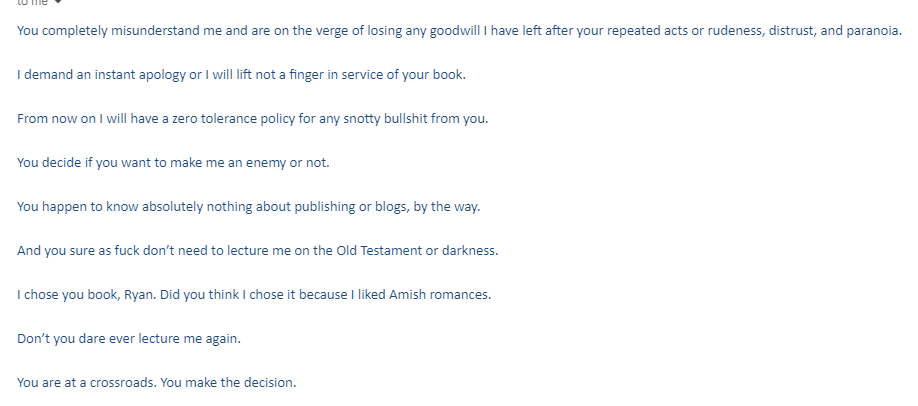
It is telling that my hacker, a Christian leader, threatened to make me an enemy, simply because I disagreed with him. I figured he must really go through the roof if a person actually disrespected him.
He asked me to apologize--he emailed that he wanted to talk to me by phone to see if I was truly sorry. When he didn't follow through with the phone call but began dropping my Google content, I emailed him he wasn't any kind of Christian and told him to F-off.
The email in which he told me he wanted to talk on the phone to see if I was truly sorry was deleted. He has restored some of the emails he deleted, as if fearing getting caught, but has neglected to restore others.
Everything started with the following email exchange, when my hacker was my publisher, in 2014.
"You decide if you want to make an enemy of me or not," he said, all because I didn't want to write articles for Christian blogs. Some of his audience disliked my book, and he said he wanted to try to make me more "human" to his Christian audience.
The first email is mine, and the second is my hacker's, both from 2013. He had rejected my first two attempts to write blog posts, saying they should be lighter for his audience, and I was starting to feel "snotty"--his number one complaint about me.


It is telling that my hacker, a Christian leader, threatened to make me an enemy, simply because I disagreed with him. I figured he must really go through the roof if a person actually disrespected him.
He asked me to apologize--he emailed that he wanted to talk to me by phone to see if I was truly sorry. When he didn't follow through with the phone call but began dropping my Google content, I emailed him he wasn't any kind of Christian and told him to F-off.
The email in which he told me he wanted to talk on the phone to see if I was truly sorry was deleted. He has restored some of the emails he deleted, as if fearing getting caught, but has neglected to restore others.
from Greg Manipulates Google Entries
April 11, 2026. Please be careful of items you find in a Google search. Greg is alerted when anyone Googles my name. I've gone to the library without my phone, Googled my name, and he hacks me immediately.
When others look up my name, he can lift items in the Google ranking that he wants the viewer to see, and lower other items . . .

My first Google page has been vacated of almost everything that is prestigious. That's because Greg knows that most employers and publishers only look at the first Google page.
Gregory Wolfe Continues to Use Death Images to Harass Me and My Family
September 20, 2024. Greg has communicated his death wish for me a thousand times--and threats against my son. One of his favorite places to do this is on my Facebook friends list. Here is a pic of a tiger pursuing Winnie the Pooh--an attempt to keep it light--and next to it is a body lying on its face in cruciform, possibly a child's body, if you look at the ankles. It's probably not a dead body, but it suggests the appearance of one, and that's what matters to Greg. Take a look at the comments on the second photo. "Nailed it!" It might be AI-generated.
I have never seen these "friends" before. I believe Gregory Wolfe has swapped my actual friends for these friends.

[Greg has edited the above narrative, removing any mention of a child. I restored it.]
My screen shot seems to have been darkened and blurred, when compared to the profile pic (I had blocked this profile, so I looked it up on my ex's computer). Greg often blurs posts I include on my blog, possibly to make them harder to see, so that I have to repost.

As I have mentioned in earlier sections of this post, he hacks into my Facebook app, not into the Facebook website . . .
More Dead Kids
September 20, 2024. Greg has communicated his death wish for me a thousand times--and threats against my son. One of his favorite places to do this is on my Facebook friends list. Here is a pic of a tiger pursuing Winnie the Pooh--an attempt to keep it light--and next to it is a body lying on its face in cruciform, possibly a child's body, if you look at the ankles. It's probably not a dead body, but it suggests the appearance of one, and that's what matters to Greg. Take a look at the comments on the second photo. "Nailed it!" It might be AI-generated.
I have never seen these "friends" before. I believe Gregory Wolfe has swapped my actual friends for these friends.
[Greg has edited the above narrative, removing any mention of a child. I restored it.]
My screen shot seems to have been darkened and blurred, when compared to the profile pic (I had blocked this profile, so I looked it up on my ex's computer). Greg often blurs posts I include on my blog, possibly to make them harder to see, so that I have to repost.

As I have mentioned in earlier sections of this post, he hacks into my Facebook app, not into the Facebook website . . .
More Dead Kids
February 7, 2025. I Googled Anne Lamott, but I hadn’t read her for twenty years, so I couldn’t recall her name. Her quote that yelling at her son made her feel like she was bitch slapping ET is a famous and funny one. But I got a bunch of stuff on the search results that looks like presents from Greg. Most of it is Greg’s favorite theme: dead kids. He’s certainly going to want revenge at this time. (The one entry about "my adult son" doesn't clear Greg of his repeated attack on me and my family).
The Google search did find the quote and the author. You may have noticed, when you search this and that, Google doesn't throw in other random results about dead kids and suicide. But Greg certainly does.
Some of the screenshots didn't stick, so I returned to the search and screenshotted those too.


The Google search did find the quote and the author. You may have noticed, when you search this and that, Google doesn't throw in other random results about dead kids and suicide. But Greg certainly does.
Some of the screenshots didn't stick, so I returned to the search and screenshotted those too.


Sorry for Your Loss
May 5, 2026. Greg is pretty much always enraged at home, and he steps outside and smiles warmly at times. He has the facility for absolute layering that NPDs enjoy, now violent and psychotic, now friendly and easygoing.
He's angry now because, for the second time, much of his audience has left him, this time for his practice of suicide baiting (the last time he did that was this morning). He lost his first audience last year due to his digital attacks on children and women.
We've seen his communication about child death in my "featured posts" and in other posts. Today he loaded up my white noise app with two different videos about Sandy Hook, each describing the murder of children. He also placed a Sorry for Your Loss T-shirt ad front and center on my Goodreads page today.
Wow, we get the picture, Greg. It goes well with the evil voice you created on the Best of Friends documentary. You're evil. We get it. Coincidences don't play into it when there have been so many attacks using this theme.


Swaps Digital Info on Caller ID
In November 2023 my hacker switched the name of my doctor and my pest control in my phone's address book, to suggest that I needed to be treated like a pest. He often switches caller ID so I don't know who is calling. My digital world is so full of glitches, I don't believe in glitches anymore.

from Greg and His Catholic Buddy
May 24, 2025 . . . When I first met Greg, he used a radio voice. I find the radio voice unsettling because it's false, suggesting the person is not who he says he is. That has proved true with Greg a thousand times. Christian humanist? Not quite. He has devoted his life to porn hacking, harassment, child-targeting, and censorship.
When I voiced my concerns about Gregory Wolfe in 2015, Ron Hansen said in public that I needed professional help. Even to raise questions about the public figure Gregory Wolfe suggests mental illness.

. . . Ron continues to ignore the mental health of his friend who has narcissistic personality disorder, who sexually harassed young women on his staff at Image and targeted my son. He has counseled colleagues to leave my email list. He has invited Greg to speak at public lectures. Greg's body count doesn't interest Ron . . .
In November 2023 my hacker switched the name of my doctor and my pest control in my phone's address book, to suggest that I needed to be treated like a pest. He often switches caller ID so I don't know who is calling. My digital world is so full of glitches, I don't believe in glitches anymore.

from Greg and His Catholic Buddy
May 24, 2025 . . . When I first met Greg, he used a radio voice. I find the radio voice unsettling because it's false, suggesting the person is not who he says he is. That has proved true with Greg a thousand times. Christian humanist? Not quite. He has devoted his life to porn hacking, harassment, child-targeting, and censorship.
When I voiced my concerns about Gregory Wolfe in 2015, Ron Hansen said in public that I needed professional help. Even to raise questions about the public figure Gregory Wolfe suggests mental illness.
. . . Ron continues to ignore the mental health of his friend who has narcissistic personality disorder, who sexually harassed young women on his staff at Image and targeted my son. He has counseled colleagues to leave my email list. He has invited Greg to speak at public lectures. Greg's body count doesn't interest Ron . . .
Greg Places Violent Video of a Falling Horse
April 16, 2026. Greg has a history of placing "country" ads next to my book Horses All Over Hell on Amazon and elsewhere, to give it a Hee Haw vibe or worse.
But recently he attached pictures and videos of horses alongside my Facebook posts of my book. They are designed to turn people off and turn them away. The first one, a video, shows a horse climbing out of a trailer and falling on its back--an ugly moment of violence.
The second photo uses my post "I left my publisher today!" (That was when I decided to leave Slant Books.) But he cuts off "I left," so he communicates that my current publisher Wipf & Stock is very small town. Slant Books used to be an imprint of Wipf & Stock.
In the third one, I present kind words from the Antioch Review page. They had posted about both of my books. Greg wanted to give a hickish, subliterate vibe here, alongside one of the most prestigious literary journals in the country.
Greg published my stories at Image Journal, so this campaign has nothing to do with how he feels about my short stories.
I'll probably delete these tomorrow. Greg may remove some of these, since he's always at his desk and watches the posts I make.


April 16, 2026. Greg has a history of placing "country" ads next to my book Horses All Over Hell on Amazon and elsewhere, to give it a Hee Haw vibe or worse.
But recently he attached pictures and videos of horses alongside my Facebook posts of my book. They are designed to turn people off and turn them away. The first one, a video, shows a horse climbing out of a trailer and falling on its back--an ugly moment of violence.
The second photo uses my post "I left my publisher today!" (That was when I decided to leave Slant Books.) But he cuts off "I left," so he communicates that my current publisher Wipf & Stock is very small town. Slant Books used to be an imprint of Wipf & Stock.
In the third one, I present kind words from the Antioch Review page. They had posted about both of my books. Greg wanted to give a hickish, subliterate vibe here, alongside one of the most prestigious literary journals in the country.
Greg published my stories at Image Journal, so this campaign has nothing to do with how he feels about my short stories.
I'll probably delete these tomorrow. Greg may remove some of these, since he's always at his desk and watches the posts I make.
Greg has restored my Amazon page, but the copies of Down in the River are tattered and few. This book was recently for sale on the Wipf & Stock website on my author page, with Horses All Over Hell. The CEO told me they have a whole pallet of Down in the River and he wanted to sell them. Then suddenly they were unavailable on my author page. I believe Greg hacked them so they'd remove that book. He has hacked them before. I've posted about it a few times.
Greg included the book "Black and Blue" on my Amazon page. The last name Ryan wouldn't justify its presence here. "Black and Blue" is both a warning and an admission of his violent nature.

from The Pugilist Never at Rest
February 15, 2026 . . . The other day I took a long walk and found that I heard Greg's computer psyops in my head. That may sound crazy, but everyone has gotten a song stuck in their head. I may not be able to prove it, but I know that he plays the psyops for a deeply destructive purpose.
Greg included the book "Black and Blue" on my Amazon page. The last name Ryan wouldn't justify its presence here. "Black and Blue" is both a warning and an admission of his violent nature.

from The Pugilist Never at Rest
February 15, 2026 . . . The other day I took a long walk and found that I heard Greg's computer psyops in my head. That may sound crazy, but everyone has gotten a song stuck in their head. I may not be able to prove it, but I know that he plays the psyops for a deeply destructive purpose.
Greg Harassed My Class Again
September 28, 2025. Once again, Greg dropped my phone call several times with one of my private students. He also muted our call three times so that we couldn't hear each other.
Greg cares deeply about education in public, but in private he couldn't care less--just as he feels about literary publishing.
I believe he wanted to create a frustrating situation so that the class seems difficult to continue with, as he did with Varsity Tutors. The last time he did this, in late July, I had mentioned Gregory Wolfe by name on the phone, and so Greg dropped that phone call several times, thereby showing he was listening. Today he must have done it just for sport.
If Greg believes he has a right to do this because my testimony is hurting his business, he's wrong. I report on his behaviors only, so it's his behaviors that are hurting his business. He might want to make some corrections there. But never in a thousand years would I keep my abuser's secrets.
This call dropped nine times in two hours.

Professor Osteen Hacked
In March 2023 I wrote an email to the scholars on my email shoutout page in which I update them about my hacker. I thanked someone in the group for helping me figure out if they were receiving my missives, but I didn't mention a name.
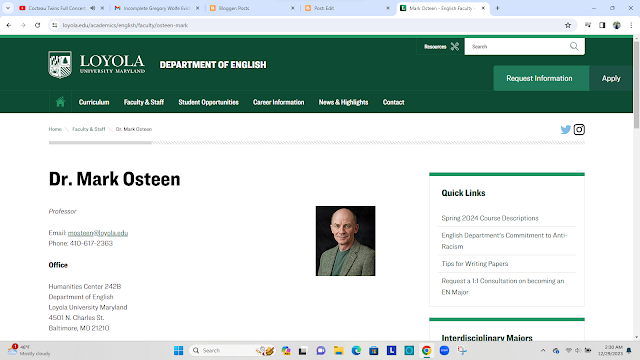
The same day, Mark Osteen wrote me and asked to be removed from the email list (after eight years). I told him that the emails were grayed out and I couldn't remove him now, but I'd keep trying. The next day he wrote, in all caps, "Please remove me from this list. I do not want to receive any more emails from you. Comply at last!"
It seemed an exaggerated response for someone who had been with me since the beginning of my email list eight years earlier. I believe my hacker had gone hunting and found that Mark was a fiction writer and a professor of "neurodiverse" literature, and figured that he was the one who had helped me, and that he was weak and old enough to hack without consequence. Mark is an elderly man, and I believe his behavior was evidence that he was hacked abusively that day.
Amazon Page Restored and Broken Again
February 20, 2026. I mentioned that Greg seemed to be cleaning up the other day. My Amazon page was semi-fixed, for instance. Below you can see my name was still changed to Ryan Blackett, but my books were showing up anyway.

Today my Amazon page was returned to broken. My name changed to Blackett, but my books don't show up. These frequent changes appear to be part of Greg's new strategy. He also removed the negative review from Google Control Panel, but put it back, many times. He changes my Amazon page, and changes it back.
Hacked Editor Who Asked to See My Work
In September 2023, Elizabeth Ellen invited my submission of short stories to Hobart after we had emailed back and forth. Then she went quiet and has not contacted me since. Her enthusiasm was interrupted suddenly, and continues a pattern of sudden silence exhibited by editors I have contacted. I believe she was hacked and knew not to have contact with me.
[Note: 4/27/25]. This screenshot has recently been blurred by Greg the censor (and the original email deleted) because it shows that the editor invited me to submit. She says, "Please send me any of your writing you'd like me to consider for hobart." She also says she'd love to hear what I've done with my writing since graduating from Iowa.

Spoofs My Landlord and Tries to Get Me Kicked out of My House
On January17 2024 I received a spam letter that stated my Facebook account was going to close. I took a screenshot of it. The next day I saw that the letter had been texted to my landlord from my phone, known as spoofing. But I hadn't texted her this.
When I tried to explain spoofing to her, she didn't understand it. She said, "This was obviously sent by you. I can see your email in the screenshot." Of course my folders are in the picture. I was the one who took the screenshot.
I tried to explain that a hacker has total control of your phone. He controls all your photos and screenshots, and all the functions. If you take a nude selfie, for instance, your hacker can send it to your husband's best friend, from your phone, so that it appears that you sent the pic. One purpose of spoofing is for a hacker to send disturbing images etc. to your boss, your spouse, your kid--to cause rancor and distrust in relationships, because such texts appear to come from your phone, your name. But it's just a spoof, a trick. Your hacker is the one who sent it.
My hacker wanted my landlord to believe that I'm the type of person who sends spammy, creepy, and threatening letters of this kind.

from Law Enforcement Tips the Scale
June 24, 2025. I had a terrific conversation with the Eastern University HR manager last month. When Greg announced that he was teaching there this summer--and exclaimed how happy he was--I called HR. Greg has shot down several of my applications to teach at universities, as I have discussed. But more than that, I wanted to let her know that Greg sends child porn and all the rest of it. People like Greg should be challenged.
HR's biggest concern was that Eugene law enforcement had found alarming items in this GW file. She said it wouldn't be legal to fire Gregory Wolfe without having been convicted first. But she agreed it was a brand issue for the college, and my city's law enforcement action gave credibility to my allegations. She said she was going to look at these pages and have some "meaningful conversations." . . .
Another Editor Hacked
In October 2023 I was going to submit a story to my friend who runs a literary journal in Serbia. She had asked me to send a story, and seemed disappointed when I had told her I couldn't separate a story from my published book. Then I found two stories for her. In the exchange below, she reveals that she was being hacked.


My hacker wants to shut down any notice I might receive, even in Serbia.
Greg Targets Class Again
November 1, 2025. Greg attacks my class again, dropping calls and making static on the line. Greg loves this kind of harassment. He can use his hacking tools and try to sour professional relationships.

My Blog Disappears
October 17, 2024. After I posted that Greg is an absolute fraud, I discovered that my blog was empty, as if he deleted everything. I saw that it was still there later. He likes to show me his hacking abilities, often by using two screens.

Interaction with Eugene Weekly Editor
December 26, 2024. I ran into Camilla, the editor of Eugene Weekly the other day, out front of the magazine's office--the one who volunteered to do an article about Gregory Wolfe's hacking months earlier but went silent. I believe she went silent because she was hacked. She was about to go into the office when I was stopping by to tell her the news about the police referral to the FBI. She seemed quite spooked. She put on a mask and didn't want to make eye contact. When I asked if she'd been hacked, she said, "Nope."
After I told her the news, she said nothing. I said, "Well, it seems like a momentous development, right?"
"Thanks for stopping by," was all she said about it. "Thanks for stopping by."
You never know for sure what's going on with someone, but I have learned that the hacked do not like to talk about being hacked . . .
Greg Places His Face on My Blog as Warning
March 20, 2024. Greg placed his face on my blog after I posted "A Christian Leader's Life." My blog has always used the picture on the top post for the site picture (after two or three days), no matter how popular a post below it might be. This Moses pic was on my blog for two weeks.

Deleted Blog Followers
March 11, 2024. Greg deleted all of my blog followers, a few hundred of them, presumably before this post about him went live. I noticed it a few weeks later. Only one follower remains, my ex-wife.

Third Appearance of My Lost Friend
June 11, 2024. For the third time, Greg has placed my friend Michael, who committed suicide a year ago, on my friend list. First he placed his profile pic on the bottom right, then on the bottom left, and now in the middle. Suicide and death images are among Greg's favorite messages as a Christian humanist. Farther below, I provide screenshots of the other times he placed his profile pic on my friends list. On this screenshot, Michael's profile is at the bottom center.

When I tried to explain spoofing to her, she didn't understand it. She said, "This was obviously sent by you. I can see your email in the screenshot." Of course my folders are in the picture. I was the one who took the screenshot.
I tried to explain that a hacker has total control of your phone. He controls all your photos and screenshots, and all the functions. If you take a nude selfie, for instance, your hacker can send it to your husband's best friend, from your phone, so that it appears that you sent the pic. One purpose of spoofing is for a hacker to send disturbing images etc. to your boss, your spouse, your kid--to cause rancor and distrust in relationships, because such texts appear to come from your phone, your name. But it's just a spoof, a trick. Your hacker is the one who sent it.
My hacker wanted my landlord to believe that I'm the type of person who sends spammy, creepy, and threatening letters of this kind.

from Law Enforcement Tips the Scale
June 24, 2025. I had a terrific conversation with the Eastern University HR manager last month. When Greg announced that he was teaching there this summer--and exclaimed how happy he was--I called HR. Greg has shot down several of my applications to teach at universities, as I have discussed. But more than that, I wanted to let her know that Greg sends child porn and all the rest of it. People like Greg should be challenged.
HR's biggest concern was that Eugene law enforcement had found alarming items in this GW file. She said it wouldn't be legal to fire Gregory Wolfe without having been convicted first. But she agreed it was a brand issue for the college, and my city's law enforcement action gave credibility to my allegations. She said she was going to look at these pages and have some "meaningful conversations." . . .
Another Editor Hacked
In October 2023 I was going to submit a story to my friend who runs a literary journal in Serbia. She had asked me to send a story, and seemed disappointed when I had told her I couldn't separate a story from my published book. Then I found two stories for her. In the exchange below, she reveals that she was being hacked.


My hacker wants to shut down any notice I might receive, even in Serbia.
Greg Targets Class Again
November 1, 2025. Greg attacks my class again, dropping calls and making static on the line. Greg loves this kind of harassment. He can use his hacking tools and try to sour professional relationships.
My Blog Disappears
October 17, 2024. After I posted that Greg is an absolute fraud, I discovered that my blog was empty, as if he deleted everything. I saw that it was still there later. He likes to show me his hacking abilities, often by using two screens.

Interaction with Eugene Weekly Editor
December 26, 2024. I ran into Camilla, the editor of Eugene Weekly the other day, out front of the magazine's office--the one who volunteered to do an article about Gregory Wolfe's hacking months earlier but went silent. I believe she went silent because she was hacked. She was about to go into the office when I was stopping by to tell her the news about the police referral to the FBI. She seemed quite spooked. She put on a mask and didn't want to make eye contact. When I asked if she'd been hacked, she said, "Nope."
After I told her the news, she said nothing. I said, "Well, it seems like a momentous development, right?"
"Thanks for stopping by," was all she said about it. "Thanks for stopping by."
You never know for sure what's going on with someone, but I have learned that the hacked do not like to talk about being hacked . . .
Greg Places His Face on My Blog as Warning
March 20, 2024. Greg placed his face on my blog after I posted "A Christian Leader's Life." My blog has always used the picture on the top post for the site picture (after two or three days), no matter how popular a post below it might be. This Moses pic was on my blog for two weeks.
Deleted Blog Followers
March 11, 2024. Greg deleted all of my blog followers, a few hundred of them, presumably before this post about him went live. I noticed it a few weeks later. Only one follower remains, my ex-wife.
Third Appearance of My Lost Friend
June 11, 2024. For the third time, Greg has placed my friend Michael, who committed suicide a year ago, on my friend list. First he placed his profile pic on the bottom right, then on the bottom left, and now in the middle. Suicide and death images are among Greg's favorite messages as a Christian humanist. Farther below, I provide screenshots of the other times he placed his profile pic on my friends list. On this screenshot, Michael's profile is at the bottom center.

The Censorship Publisher
January 6, 2025. I got an email from a publisher this morning telling me that an old manuscript I submitted to her years ago had been rejected without their knowledge, due to a "possible bug." I think that bug was named Gregory Wolfe.

An Assault Against Art and the Life of the Mind
August 20, 2024. For many years, Gregory Wolfe has made alterations of spelling and grammar in my stories and books before I send them out . . .
Before I was about to submit this story yesterday, I found this awkward line. I had edited the story many times and I knew all the lines. This was certainly not my edit. And Greg has blurred the page. Greg's ungrammatical edit reads, "Two exploded, before shaking out the pack and picking the slivers from the tips."

Places Alarming Books on My Amazon Page
On my Amazon page, my hacker has posted several books that sound like I am about to get hurt--one of his many subtle threats. He posted this one in August 2022. Notice the spelling doesn't justify its place on my Amazon page.

Illegal Porn
In 2015, during the first year of hacking, he sent me illegal porn via a spoofing technique. He was hacking my and my then-wife's phone and making our computers hiss. I contacted the FBI and Idaho state police. I believe he wanted to get me in trouble. He is the master of the spoof, presenting digital items that seem one way on the surface, but are something else underneath. Russian-style hackers use porn and illegal porn often, to terrify and silence.
Spoofs Dick Pics to my Date
December, 2022. I met a Latina who managed a bowling alley at Valley River Center. We planned to go out on a date.

When she and I began texting, she said she received "strange" pics, and said she liked the internet at first but now she didn't trust anyone. I never heard from her again.
Deleting More Libraries on WorldCat
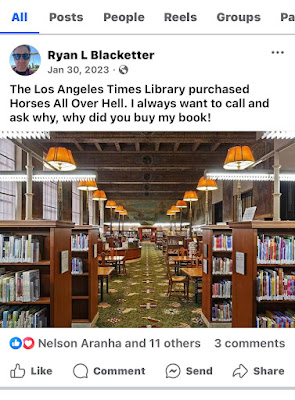
August 10, 2024. Greg deleted the LA Times Library notice on my WorldCat for Horses All Over Hell. It appears that he has deleted this library on the actual site. He has spent years deleting libraries that carry my books on WorldCat. I discuss this elsewhere.
First Threat Against My Son
In late March 2022 my hacker wallpapered the water-burial cover art of my book (a book cover Greg helped to create) onto my son's computer. It was the day before I was scheduled to meet with the third judge, Charles Carlson.
(In February, 2024, my hacker, Gregory Wolfe, deleted this picture from this blog, along with the brief narrative that accompanied it, and deleted the picture from my laptop. He wants to use children as a harassment tool, but doesn't like being known for that. I found it elsewhere and put it back up on March 5th).
This is a picture of my son sitting in front of his computer.

Wallpapered My Google Page with Porn Descriptions
In July 2019, Wolfe wallpapered about twenty pages of my Google pages with Danish porn descriptions. When anyone Googled my name, these porn descriptions came up, including some English words like cock and cunt. My name was in each description. I had asked my friends to Google my name, and these pages appeared for them to see too.
I had mentioned at the time that he sent underage porn. I believe he posted these porn descriptions to show people that his porn hacking wasn't so bad. I'll admit it's preferable to his illegal porn, but let's not pretend Greg is a "porn lite" hacker. Here are two of the screenshots.


The screenshots were deleted from my phone. It's lucky that I had posted them in a private Facebook post.
January 6, 2025. I got an email from a publisher this morning telling me that an old manuscript I submitted to her years ago had been rejected without their knowledge, due to a "possible bug." I think that bug was named Gregory Wolfe.

An Assault Against Art and the Life of the Mind
August 20, 2024. For many years, Gregory Wolfe has made alterations of spelling and grammar in my stories and books before I send them out . . .
Before I was about to submit this story yesterday, I found this awkward line. I had edited the story many times and I knew all the lines. This was certainly not my edit. And Greg has blurred the page. Greg's ungrammatical edit reads, "Two exploded, before shaking out the pack and picking the slivers from the tips."

Places Alarming Books on My Amazon Page
On my Amazon page, my hacker has posted several books that sound like I am about to get hurt--one of his many subtle threats. He posted this one in August 2022. Notice the spelling doesn't justify its place on my Amazon page.

Illegal Porn
In 2015, during the first year of hacking, he sent me illegal porn via a spoofing technique. He was hacking my and my then-wife's phone and making our computers hiss. I contacted the FBI and Idaho state police. I believe he wanted to get me in trouble. He is the master of the spoof, presenting digital items that seem one way on the surface, but are something else underneath. Russian-style hackers use porn and illegal porn often, to terrify and silence.
Spoofs Dick Pics to my Date
December, 2022. I met a Latina who managed a bowling alley at Valley River Center. We planned to go out on a date.

When she and I began texting, she said she received "strange" pics, and said she liked the internet at first but now she didn't trust anyone. I never heard from her again.
Deleting More Libraries on WorldCat
August 10, 2024. Greg deleted the LA Times Library notice on my WorldCat for Horses All Over Hell. It appears that he has deleted this library on the actual site. He has spent years deleting libraries that carry my books on WorldCat. I discuss this elsewhere.

First Threat Against My Son
In late March 2022 my hacker wallpapered the water-burial cover art of my book (a book cover Greg helped to create) onto my son's computer. It was the day before I was scheduled to meet with the third judge, Charles Carlson.
(In February, 2024, my hacker, Gregory Wolfe, deleted this picture from this blog, along with the brief narrative that accompanied it, and deleted the picture from my laptop. He wants to use children as a harassment tool, but doesn't like being known for that. I found it elsewhere and put it back up on March 5th).
This is a picture of my son sitting in front of his computer.

Wallpapered My Google Page with Porn Descriptions
In July 2019, Wolfe wallpapered about twenty pages of my Google pages with Danish porn descriptions. When anyone Googled my name, these porn descriptions came up, including some English words like cock and cunt. My name was in each description. I had asked my friends to Google my name, and these pages appeared for them to see too.
I had mentioned at the time that he sent underage porn. I believe he posted these porn descriptions to show people that his porn hacking wasn't so bad. I'll admit it's preferable to his illegal porn, but let's not pretend Greg is a "porn lite" hacker. Here are two of the screenshots.


The screenshots were deleted from my phone. It's lucky that I had posted them in a private Facebook post.
Spoofy--Yet Another Threat against My Son
October 15, 2025. I'm losing count of how many threats Greg has made against my son, but this morning I found one more, in a file called "Spoofy," on my desktop. It shows a photo of my son below, and a cropped, meaningfully blurred, almost absent, photo of my son above.

He also placed a file called "Spoofy Files" that shows a thousand hacks Greg has done, not worth showing as most of them come from this post.

from Greg Hacks Another Publisher
July 14, 2025. Greg hacked Lawrence Knorr at Sunbury, who had accepted "The Lord's Hacker," and they released me from my contract after he was hacked. It's true I had complained that my editor was rewriting my characters, but I doubt it was the first time an author had complained.
Publisher Lawrence Knorr accepted "The Lord's Hacker" in September 2024. A couple of months later, he told me on the phone that the Christian leader's character was interesting. I asked him if the hacking moments seemed too fantastic, and he told me he believed they could be done.
Five months after that, he released me from my contract. He said that I had complained too much about my editor's rewriting my characters and the staff had lost their generosity toward me. They insisted they were only trying to "help" my book.
Lawrence included these lines in the email that he said was a precursor to the termination of contract: "The antagonist, StJohn, is not believable . . . Additionally, many of the hacks he performs would require an incredibly high level of technical knowledge and skill that seem very out of character."
He obviously arrived at an about face, and I believe he had Greg's help in that. Also, a publisher writing a negative review about a character in an email that promised a termination letter, seven months after the book's acceptance, seems unaccountably strange--especially since the publisher had read the book before and claimed to like that character . . .

from Google Control Panel
February 20, 2026. Let's put Greg's admonition to see things with our own eyes to the test. We can see that Greg restores my one bad review into my Google Control Panel, removes it, and puts it back. I took this photo yesterday at the library.

This is my favorite thing to capture because it shows without any doubt that Greg is my hacker. Greg controlled my Google Panel when he was my publisher, and now he still controls it. I don't control it, though it's my legal right to do so. And if I did, I wouldn't place negative reviews inside of it.
Someone Has Made Changes
June 22, 2025. For two days now, when I got up to work on my short story "A Study of Adam," I found the note that Greg often places on the first page of a manuscript I'm working on: "Someone has made changes since you were last here." He uses this note as harassment, to let me know that I'll have to find his changes, and also to tell me that he'll "edit" the story before I send it--or after I send it. He can easily get into Ploughshare's Submittable, or any other magazine's, and edit my story on that end.

June 22, 2025. For two days now, when I got up to work on my short story "A Study of Adam," I found the note that Greg often places on the first page of a manuscript I'm working on: "Someone has made changes since you were last here." He uses this note as harassment, to let me know that I'll have to find his changes, and also to tell me that he'll "edit" the story before I send it--or after I send it. He can easily get into Ploughshare's Submittable, or any other magazine's, and edit my story on that end.

Psychotic Harassment
July 26, 2025. Greg has been making my computer hiss again. It's hard to talk about this because it sounds crazy. I repeat the telling of this since it's ongoing. Also, my previous post about this issue has been deleted.
Criminals use these dark webs techniques more than we know, and Greg is more of a criminal than we might know.
I mentioned the woman, a friend of a friend, who claimed that someone had planted a microscopic radio in her nasal cavity [Post deleted. Greg might restore it, but I can't find it now]. From a remote distance, this psychopath could fill her head with shrieks and sounds by moving his joy stick. Who's going to believe that? Nobody. She's obviously crazy! But the FBI believed her and worked to find the villain who did this to her.
Greg is also very high-tech and interested in achieving similar torments. When I was writing "The Lord's Hacker"--a book he didn't want me to write--he repeatedly employed a rhythmic hissing at a certain pitch, and it affected my inner ear. Then he finished it off with a volley of hacking techniques that wore me out and reduced me to an incoherent state and I went to the hospital for five days.
It was an impressive hack, with a rising arc, a climax, and a skillful denouement, almost as if he were laying me out for the night or beyond--in a long box, perhaps.
Greg seems to save the hissing for when he's really angry, such as when I introduced new email addresses to my shoutout page the other day.
He uses this psyops method because it does physical and psychological damage. I've captured the sound on a video recording and posted it in another entry here, but it's hard to experience it through the recording. After all, computers do hiss sometimes. It's normal.
But when my computer awakens to sustained and rhythmic hissing, at times when Greg would be especially angry--like when I was writing a book about him--I witness a meaningful pattern. It's not a normal computer sound. Also, this psyops seems of a piece with his other death-dealing hacks presented here. He's surely one of the evil characters who hunts the skies in the dark webs.

Image Cover, Summer 2024
Greg Doctored My Screenshots of Image on AI
September 3, 2025. Greg has doctored my screenshots I took when initially reporting about his fake Image Journal AI content. He changed the initial language "details of closure" to "elaborate on closure." The original language suggests it's closed. The changed language suggests a level of openness to the topic of closure. It's subtle, but I believe Greg wanted to demonstrated that I was wrong about the language and wrong about a definite closure.
Here is the original post:
Greg's Fake AI Image Journal Content
September 1, 2025. I found some more sneaky GW handiwork. When I Googled Image Journal on AI, it presented Gregory Wolfe as founder, which is true, then the closure of the journal, which happened briefly. But you have to go down to the bottom of the page to see the "Details of closure," and click to a new page, to discover that the closure was only a brief one.
The presentation suggests that the closure was due to Greg's absence. Of course, Greg wanted to give that impression. And there is an obvious intention to communicate that it's still closed! You have to select an ambiguous link at the bottom ("details of closure") to see that the journal is now open.
How is the fact that it's still open a "details of closure" issue? Most viewers would catch a glimpse of the closure and move on.
This AI content is designed to reduce interest and business. It also states that "work first published in Image was featured in prestigious publications . . ." as if recent Image content is lacking. This is quite obviously a Gregory Wolfe fake.
Image Journal continues to be ranked as a top journal for writers seeking the best places to submit their work. I've been published there, and I see it often on "best of" lists. It has the added distinction of having nothing to do with the toxic Gregory Wolfe. Given what we now know about Gregory Wolfe, there is no chance that Image would still be open if he had been allowed to continue there.
I am certain this fake entry suggests only the tip of the iceberg regarding Greg's hacking of Image.

[I added another original screenshot to capture the "Details of closure" message]

[I had to click on "Details of closure" to see that Image "did not close." This information was not on the main page.]
July 26, 2025. Greg has been making my computer hiss again. It's hard to talk about this because it sounds crazy. I repeat the telling of this since it's ongoing. Also, my previous post about this issue has been deleted.
Criminals use these dark webs techniques more than we know, and Greg is more of a criminal than we might know.
I mentioned the woman, a friend of a friend, who claimed that someone had planted a microscopic radio in her nasal cavity [Post deleted. Greg might restore it, but I can't find it now]. From a remote distance, this psychopath could fill her head with shrieks and sounds by moving his joy stick. Who's going to believe that? Nobody. She's obviously crazy! But the FBI believed her and worked to find the villain who did this to her.
Greg is also very high-tech and interested in achieving similar torments. When I was writing "The Lord's Hacker"--a book he didn't want me to write--he repeatedly employed a rhythmic hissing at a certain pitch, and it affected my inner ear. Then he finished it off with a volley of hacking techniques that wore me out and reduced me to an incoherent state and I went to the hospital for five days.
It was an impressive hack, with a rising arc, a climax, and a skillful denouement, almost as if he were laying me out for the night or beyond--in a long box, perhaps.
Greg seems to save the hissing for when he's really angry, such as when I introduced new email addresses to my shoutout page the other day.
He uses this psyops method because it does physical and psychological damage. I've captured the sound on a video recording and posted it in another entry here, but it's hard to experience it through the recording. After all, computers do hiss sometimes. It's normal.
But when my computer awakens to sustained and rhythmic hissing, at times when Greg would be especially angry--like when I was writing a book about him--I witness a meaningful pattern. It's not a normal computer sound. Also, this psyops seems of a piece with his other death-dealing hacks presented here. He's surely one of the evil characters who hunts the skies in the dark webs.

Image Cover, Summer 2024
Greg Doctored My Screenshots of Image on AI
September 3, 2025. Greg has doctored my screenshots I took when initially reporting about his fake Image Journal AI content. He changed the initial language "details of closure" to "elaborate on closure." The original language suggests it's closed. The changed language suggests a level of openness to the topic of closure. It's subtle, but I believe Greg wanted to demonstrated that I was wrong about the language and wrong about a definite closure.
Here is the original post:
Greg's Fake AI Image Journal Content
September 1, 2025. I found some more sneaky GW handiwork. When I Googled Image Journal on AI, it presented Gregory Wolfe as founder, which is true, then the closure of the journal, which happened briefly. But you have to go down to the bottom of the page to see the "Details of closure," and click to a new page, to discover that the closure was only a brief one.
The presentation suggests that the closure was due to Greg's absence. Of course, Greg wanted to give that impression. And there is an obvious intention to communicate that it's still closed! You have to select an ambiguous link at the bottom ("details of closure") to see that the journal is now open.
How is the fact that it's still open a "details of closure" issue? Most viewers would catch a glimpse of the closure and move on.
This AI content is designed to reduce interest and business. It also states that "work first published in Image was featured in prestigious publications . . ." as if recent Image content is lacking. This is quite obviously a Gregory Wolfe fake.
Image Journal continues to be ranked as a top journal for writers seeking the best places to submit their work. I've been published there, and I see it often on "best of" lists. It has the added distinction of having nothing to do with the toxic Gregory Wolfe. Given what we now know about Gregory Wolfe, there is no chance that Image would still be open if he had been allowed to continue there.
I am certain this fake entry suggests only the tip of the iceberg regarding Greg's hacking of Image.

[I added another original screenshot to capture the "Details of closure" message]

[I had to click on "Details of closure" to see that Image "did not close." This information was not on the main page.]
This Shows My Essay Title was Changed
December 7, 2025. I've mentioned that Greg rewrote my essay originally titled "Polemical Literature" years ago. Recently he renamed the essay to the more clickable "ZZ Packer."
These screenshots show that the essay in my Observer app continues to be "Polemical Literature." And the essay--currently on page four of my Google pages--has been altered, now with the new title "ZZ Packer."
I've shown that Greg has made many changes to my writing. This is another one of those changes. I last wrote for the Observer in 2017. Who else is going to come along, detach the essay from the Observer app, and change the title after all these years? Greg changed the essay in 2017 for future use, to make it sound more political and shrill than it was, and now he has made these further changes. (Check out "Greg Changes Observer Article").


Questions
I wanted to address any who might believe I have no evidence, simply because I lack an IP or a photograph of my hacker caught in the act.
For instance, who wrote the fake Image search results for Gemini? It had to be someone who is a master hacker and who hates Image. I doubt there are two people who fit this description. It was Greg.
December 7, 2025. I've mentioned that Greg rewrote my essay originally titled "Polemical Literature" years ago. Recently he renamed the essay to the more clickable "ZZ Packer."
These screenshots show that the essay in my Observer app continues to be "Polemical Literature." And the essay--currently on page four of my Google pages--has been altered, now with the new title "ZZ Packer."
I've shown that Greg has made many changes to my writing. This is another one of those changes. I last wrote for the Observer in 2017. Who else is going to come along, detach the essay from the Observer app, and change the title after all these years? Greg changed the essay in 2017 for future use, to make it sound more political and shrill than it was, and now he has made these further changes. (Check out "Greg Changes Observer Article").


Questions
I wanted to address any who might believe I have no evidence, simply because I lack an IP or a photograph of my hacker caught in the act.
For instance, who wrote the fake Image search results for Gemini? It had to be someone who is a master hacker and who hates Image. I doubt there are two people who fit this description. It was Greg.
Who placed Greg's picture on my blog for two weeks, a threatening gesture, after my post went live? Only my hacker would place his image on my blog.
Who removed the many followers of this blog right before I posted the Gregory Wolfe post? Some other nemesis?
Who took this post about Gregory Wolfe offline, so that it didn't interact with the internet and rise on Google? Who else would want to hide it?
Who disabled comments at the same time?
Who edited this post many times after it went live, to convey a frivolous and unedited and sometimes confusing vibe so that I had to keeping rewriting it?
Who deleted the photo I took of my son sitting in front of his computer, after Greg had installed the cover art on my novel that he'd helped create?
Who else would spoof my police report about my hacker, placing my landlord’s name and email and phone on the report?
If it was a different hacker, he must have been very sympathetic to Gregory Wolfe and spent a lot of time covering for him and concealing his crimes.
End of Featured Posts

"Now It's Dark." --Frank Booth, Blue Velvet
Harsh with the Hacked
June 2, 2026. Sometimes I feel that I have been too harsh with the hacked ones who chose to follow the hacker's implied directions and stay silent.
My old friend J.T. Bushnell started getting hacked in 2022. He turned standoffish and finally out of touch. J.T. wrote reviews for Down in the River in Fiction Writers Review and Poets & Writers. Those reviews were valuable, and J.T. was a valuable friend.
I believe it was 2023 when his many Poets & Writers articles vanished from his top Google page, and I knew he was in deep trouble with Gregory Wolfe.
Greg did it because J.T. had written about me in that magazine and he didn't want anyone to find me through any of his P&W content. Greg had commenced a project of daily erasure of my work, and so J.T.'s enormous accomplishment as a P&W author also had to be erased. You could still find his work at the P&W site, but no one would see any evidence of me on J.T.'s page anymore.
By the way, Poets & Writers is an international magazine. An author's article flies up the Google pages as if rocket-fueled and remains at the highest page of the writer. There's no chance that four or five of those articles are going to vanish like that.
I referred to J.T. as one of the "weenies" who had climbed under his bed when a tyrant's shadow crossed his lawn. In a different post, I said he was hacked and hiding.
In part I was miffed we couldn't be friends anymore. Some neighborhood dad named Gregory Wolfe had separated us and we couldn't talk.
It seemed that people shouldn't allow themselves to be mishandled. They shouldn't hang their heads and tramp about doing humiliating chores in compliance, playing good boy or girl.
Standing up always comes with a risk, but allowing someone else to tell you when to use the bathroom, etc., kills dignity, even when you are terrified of that person.
J.T. is one of the most generous people I've known. He'll be known for that, and he'll be known for his books and articles. But he'll be known, too, for allowing a tyrant to dominate him, all without a word of protest.
We know it's important to speak up for others. We voice our discontent. But when the tyrant comes for us, many have the impulse to hide and do as told.
Such terrible aggressiveness amounts to smaller versions of the French Resistance or the Spanish Civil War. They're smaller because we are up against one person. Our lives are the ones we're fighting for.
But we ought to fight nevertheless. We might get killed, but if we fail to fight, we can lose our spirit and our dignity.
Hacking doesn't feel like a Nazi invasion. It's just one person smashing your life, with no way to trace him, and the police are no help. Going to war against a hacker feels like going to war against the stars--a senseless act.
Even to admit that you're hacked is to admit that you have bunny friends as tall as trees. There's something shameful about being hacked. A nasty violation occurred. It involved a lot of crying. You were scared to death. You saw images of women and children you didn't want to see. And who's going to believe any of it?
But that might change. At this time, more hacking cases are allowed nationally in courts. Judges outside of the Northwest are learning about hacking. Law enforcement is beginning to see what hackers do and know it's real.
It will take time for tech and education to catch up. At the very least, we can tell our story, and most people believe us. Without at least telling our story, we remain ashamed of our silence, our refusal to act, and that can follow us through our entire lives.
The Censor at Work
June 1, 2026. Greg is restricting my ability to paste The Lord's Hacker into a new post on my main blog. He has gone to some trouble hacking the copy that exists, and he doesn't want to deal with a fresh copy. I've tried several times to paste my word doc into this new post this morning. When I click paste, nothing happens.

Here is another ominous notice I received after copying The Lord's Hacker. It seems to suggest that my book might be erased if I don't wait around.

[Note: The copy on my main blog has been miraculously cleaned up. I suppose that's why he didn't want me to open a new post for The Lord's Hacker].
Greg Altered The Lord's Hacker
June 1, 2026. I took a LinkedIn article's advice to ditch all the dashes you can part with. The author's publisher had asked him if he'd written his book with AI when he saw so many dashes. Tonight I edited my copy of The Lord's Hacker on my main site, not on the manuscript.
I had scrolled the manuscript at least twice looking for Greg's font changes. It all looked okay. But this time I saw that the indents were wonky, and some of the spacing between paragraphs altered.
Yes, it was Greg. He intended to slow readers down or frustrate them. But it's still readable. In fact it's interesting that our hacker has hacked the book about him. He doesn't start messing with the indentions until the Pittsburgh section.
I'm sure he'll say the book is AI-generated now, though he was there hacking me through every draft. My email group saw my almost daily reports and documentation of his interference with this manuscript. You can find many of them yourself by looking through my post.
It's probably easy enough for a reader to cut and paste it into a word doc and change indentions or convert to digital format. I don't believe Greg would make that process easy for me.
Greg has converted this file to the same fake HTML that he uses for my posts about him. It's necessary to click a note that says I may lose parts of this document if I proceed to "compose."

Greg Manipulates GW Post II
May 31, 2026. Tonight I saw that only The Lord's Hacker post was in view on my Greg in Spring post. It seemed like Greg's next chess move in the game to get me to change or hide something.
By placing The Lord's Hacker front and center, the Greg in Spring post was hidden, and I thought it might confuse some viewers.
I believed he wanted me to remove The Lord's Hacker post. I know he doesn't like the easy availability of the book. He hacked me when I put it up.
While I hated to give Greg what he wants, The Lord's Hacker is available on my main blog, and can be found there--unless he finds a way to smash that one too.
Greg used to be very subtle in his hacking. When many people know he's a hacker, when he's exposed in this or that, he seems to enjoy doing things that could never happen on their own, such as moving posts around an app, and changing how many are in view, first three, then two, then one.
I placed Featured Posts on top of the Greg in Spring post as well, so that it wouldn't be hidden. It might be a good idea to keep those posts in view. We'll see what Greg's next act of censorship will be.
I hope you will open The Lord's Hacker post on my main blog soon and make a copy if you don't already have it.
Take Me to Court
May 31, 2026. It's time for Gregory Wolfe to take me to court. If he really believes I've been trolling him for ten years and writing defamatory content, then he should allow the law to decide.My defense is that I believe what I'm saying. Defamation only comes into it when a person fabricates information for the purpose of harming someone. But I've experienced a few courtrooms in Eugene when I sought a restraining order, and I was surprised to find some very low-tech, low-education black robes who know nothing about hacking and have no interest in learning more.
Therefore Greg has the upper hand. Since cops and judges in the Northwest have no tech and no ability to track hackers, they pretend that hackers don't exist. Most judges wouldn't even consider my side in court.
But a few of them might. In 2022, Judge Charles Carlson believed my evidence and suggested I take Greg to civil court, where a preponderance of the evidence test might allow my side to prevail.
But grisly harassment and suppression of my reporting are unlawful, especially considering the fact that I am breaking no laws. If Greg wants to prove otherwise, he should serve me with papers.
Greg Manipulates GW Post Display on Phone
May 31, 2026. Today I found that only two posts were allowed in view, on my phone, and the "Greg in Spring" post was hidden.

When I placed The Lord's Hacker on the bottom, only one, Featured Posts, was allowed in view.
But you should be able to click the blue arrow next to "home" to get to "GW in Spring."
It's characteristic that he would do this right after I wrote that he has made me a censored author. First and foremost, he wants to show that he doesn't care. And we know that he doesn't. NPDs don't care about anything but themselves--no principles, no morals.
It's funny, too, that he gets such hurt feelings when he's exposed in child-targeting or censorship, etc. But that's the way NPDs are. He gets angry often. He has been very angry since we exposed him earlier this week.
I'm no expert, but I've read around in university psychological journals. It's common for an NPD to do something like bash his coworker's head against the wall in the bathroom or grope someone in an elevator--or harm them remotely, in Greg's case.
When news gets around and people are mad at the NPD, he might stalk the hallways cursing, trying to communicate that he's innocent of the charges and deeply hurt. NPDs are highly performative creatures. Since they are the only ones that matter, they actually feel abused when others complain about their abuse.
I get this impression from Greg quite a lot. That's why he took this so scared selfie a few months ago, after he continued to target my son, kill my unemployment application, and suicide-bait me daily, etc. He felt so abused and hurt that people were finding out.

Greg lacks the values necessary for a literary publisher or a modestly respectable Catholic. He has the most dangerous mental disorder out there, and he attacks often.
It's impossible to see his daily hacks and interference as glitches. This or that glitch might happen once in a while, but not every day.
I got this notice after I clicked on the link I provided to my email group.

Censored Author
May 30, 2026. Greg uses memes to communicate to me quite a bit. I may sometimes imagine that it's him when it's not, but usually his memes are found sucking at the top of my feed too long, so that I'll be sure to see them. His favorite meme that he used to place was the dancing skeleton with the words "Take Your meds."
He has sent memes stating that it's better to be feared than respected. And one saying it's a horrible thing to do to ruin someone's life. I think that was a Morgan Freeman quote. There are many others that pop up often.
He has placed this meme many times.

Much of his communication includes warnings. But it's Greg whose behavior runs him the risk of losing everything, since he occupies a higher status than I do. I'm already near the bottom. He has brought me farther down, by canceling my Amazon page many times, deleting my book from people's personal blogs, nearly erasing my books from Facebook, & etc.
But every time he diminishes me or hacks an editor, he builds a brighter future for my books and the manuscripts he has deleted. I'm not turning a liability into an asset here. It's just something that happens.
Not only that, but he hurts his own chances of being known for anything but a Christian, Russian-style porn hacker and censor, with a publishing company that seems to work as a kind of front to hide his daily evil. I'm sorry, but I wouldn't want to be him.
He has made me a censored author, and that's a very foolish thing to do to your enemy. But I owe him a very strange and unlikely thank you.
Donna Reed's Daughter Mary Owen
May 29, 2026. Greg hid this quote that was on my post of The Lord's Hacker, so I replaced it. He can seamlessly hide paragraphs on digital pages. I added a photo and placed it on the first page of my blog too.
Imagine being such a sneaky loser, covering things on other people's blogs. Greg is a slanted stack of old lunchmeat with a dead mouse for a heart, waiting for rapture, but I don't think they're going to take old meat-stacks with no human hearts. St. Paul spells this out more than once.
“Ryan Blacketter’s writing is often humorous and melancholy in the same breath.” –Mary Owen, daughter of Donna Reed

Important Work
May 29, 2026. Thanks so much to those who are boosting my posts and sending them around.
Two years ago, when I started sending out posts and saw the hundreds of new visitors to my blog every day, I knew everything had changed. Post-boosting and word of mouth had started a fire. Now the numbers are even higher, as more people are part of it.
I had to shut down this identical post on my main blog the other day (again) because too many people were visiting. I open and close that one depending on the level of privacy I need. I think it's probably good that Greg has taken these posts offline--criminal, but good. To many newcomers and employers, it looks like too much conflict. A random person clicks "older posts," and he stumbles into a nightmare of crying children.
Sometimes people need to carve out evidence of terrible, unheard-of crimes that at first weren't believed, so that others can see, later, that it was real. And it will be harder to hack and gaslight people in the future. They can point to our cases as verification of their own experience.
We know that others are being hacked as well, not just me, and we have recorded some of those crimes.
I hope people can make a copy of these pages from time to time, as we know that Greg cuts posts that are especially convincing.
It seems like important work. Thank you for being a part of it.

Signs and Wonders
May 29, 2026. This was a shocking and incredible moment. I submitted something to an editor, and it didn't get deleted. He wrote back! My message got through to him, and his got through to me. It came back as spam, but at least it came back.
I don't know how many of you have experienced this, sending an email to an editor and receiving a reply, but I can tell you it's wonderful. I have heard that some people experience this two-way email traffic on a regular basis.
I had written a pro-Miller argument to people who have the wrong idea about him, but the editor wrote that his audience are already big fans.

Fake Sextortion
May 28, 2026. I saw in my spam inbox this morning that someone was writing on behalf of my ex, Becca, demanding money for the sex videos we made. I thought it was funny, typical spam stuff, so I texted Becca. She seemed to think it was fairly normal spam traffic too. All she said was, "Weird."
I thought about it more later. I’m the only one who has ever called her Becca. Her name is Rebecca. What average phishing person is going to know what I call her? When I returned to spam the email was gone--yet another email that is only for me to read, just harassment, and then vanishes.
This is why I say Greg is a sloppy hacker.
I thought about it more later. I’m the only one who has ever called her Becca. Her name is Rebecca. What average phishing person is going to know what I call her? When I returned to spam the email was gone--yet another email that is only for me to read, just harassment, and then vanishes.
This is why I say Greg is a sloppy hacker.
[Font changed and screenshot of text deleted. Trying to restore it.]

He changed the font and deleted the screenshot:

More on Greg's Rage Today
May 28, 2026. I decided to place my BSU content on my site again, and found that Greg had cut my review of My Father, the Pornographer in half. If people were allowed to read only half, they might not know it's a book about a writer's dad, with nothing pornographic at all.
Then he started changing fonts and font sizes in my BSU post. When I got it sorted out, he changed more fonts. Then he cut a screenshot of some wacky fonts.
Then he started changing fonts and font sizes in my BSU post. When I got it sorted out, he changed more fonts. Then he cut a screenshot of some wacky fonts.
He has talked up my firing a lot. He wants people to believe that I slept with a cheerleader or something like that. He has placed pics of BSU on my phone as a form of gaslighting, as if to say, Look what you did, Ryan.
Since I removed that BSU content a few weeks ago, he is back to selling his book. He probably tells people, even now, about the crazy Ryan Blacketter who burned down BSU.
He has told people that I've been trolling him for ten years, and he's scared of me. He actually says this stuff, and some of his friends repeat it.
By presenting what actually happened at BSU, I'm interfering with his narrative. That's probably why the first view of my blog dropped down to the bio, so that his audience wouldn't see prestigious content above. He wants them to think I'm a loser who is jealous of his stature as a Christian leader.

You may recall that he placed this title, Black and Blue, at the bottom of my Amazon page, when my page was available and my books visible--a few months ago. But today that title appeared when I looked up Ryan Blacketter and it defaulted to Ryan Blackett.

I Google myself at the library sometimes to look for trouble. When I clicked on my blog today, it went straight to the bottom of my bio. My short stories were highlighted in purple. I don't always know that I'm looking at a hack. When I tried the process again in the same browser, it went to my first blog page.


By presenting what actually happened at BSU, I'm interfering with his narrative. That's probably why the first view of my blog dropped down to the bio, so that his audience wouldn't see prestigious content above. He wants them to think I'm a loser who is jealous of his stature as a Christian leader.
Miscellaneous Censorship and Manipulation
May 28, 2026. I checked Amazon about an hour ago at the library, to see if my books were still available there, and they were not. This is the fourth or fifth time Greg has shunted a search of "ryan blacketter" to "ryan blackett."
That shows he's manipulating both pages. As I've said, he can be a sloppy hacker--or he's too angry to care if he gets caught. Or he wants people to see his nasty, bloody little hacking levers.
Greg uses private businesses as playgrounds for hacking paybacks--not quite legal. He could clean it up, but that's how it was an hour ago.
On my Google Control Panel, visible on the first page of Google, he has changed the Horses All Over Hell publication date from 2019 to 2004. That's intended to diminish interest in the book.
While it's true my Iowa thesis with that title was registered at the UI library in 2004, the "Horses" publication date on my first Google page has been 2019 since it was published--until a few weeks ago. Greg often inserts a small truth with his larger lie.

I Google myself at the library sometimes to look for trouble. When I clicked on my blog today, it went straight to the bottom of my bio. My short stories were highlighted in purple. I don't always know that I'm looking at a hack. When I tried the process again in the same browser, it went to my first blog page.
He directed the initial view to the bottom of my bio to suggest that I've only published a few short stories.
Greg manipulates my blog posts and even my published writing on Google. He can hide introductory, conciliatory paragraphs so that the reader opens to a part of the essay or post that he thinks will seem negative right off the bat.
A year ago, he renamed my Observer essay "Polemical Literature" to the more clickable "ZZ Packer," and hid the opening paragraphs.
This is the truly amazing part: The first visible paragraph was the one he had rewritten years before himself! My essay was carefully written and conciliatory, but he changed a paragraph so that it sounded like InfoWars material.
He changed it before I sent it to my editor, and I didn't catch it until I saw Greg's "edit" in the published essay. It may sound too wacky to believe, but Greg is that tedious. I've written about his Observer manipulation elsewhere in here.
He also has hid paragraphs on my blog posts that he doesn't want readers to see. These are examples of very high-skilled censorship that Greg uses.
Keep Them in the Dark
May 26, 2026. I've never understood the impulse to shun Christians. While I have taken Christian leaders to task, my friends and the people I meet day to day are a different story. I simply have to like them to consider a friendship, whether they are Christians or atheists.
My friend Jason is an evangelical Christian. He's a strong literary reader and always down for a discussion. Evidence of his beliefs come through now and then, but he never uses language like "my walk with Christ." He uses his own words. He lacks the stereotype of the joyful Christian.
But he does have a sticking point with Virginia Woolf, Anne Sexton, Hemingway, and others who dealt with any mental illness.
When he read a story of mine recently, about a guy whose wife brings him to a clinic, he made polite comments about the first paragraph and last. He refused to mention anything about the hospital stay.
But he's a pretty conservative and conventional guy. Since he's also a strong Christian, I can expect he will keep the door to that subject closed. That said, he's willing to be friends with me, and I particularly like the touched writers. He knows that. He engages me on that subject now and then, but he seems to think it's the devil's territory.
I'm curious how many in the Christian community disdain those with mental illnesses. I'm not sure, but I suspect there are many Christians who are individualistic, more introspective than outward in their views, like Marilynne Robinson, who's a strong believer but not striving for a persona to project to churchgoers.
These ones are probably more liberal. I use "liberal" in the old sense, accepting, nonjudgmental, open to difference, understanding that creative people often have such struggles.
I'm turned off by the joyful Christians, the ones who strain to show the world that God is working wonders in their lives. Some Christians really are that way, but in general I find it a fraudulent expression that promotes shunning, for there are people in their churches who don't measure up, or don't want to, and they usually take a hit.
Yesterday I remembered Madison Holleran, a college track star and strong Christian who exerted enormous energy trying to look happy to her Christian friends. But she was terrified to confide in her friends about her depression. She was a savvy enough person to know she would've been cut off by a lot of people.
Isolated and depressed, she killed herself. That big smile was a lie, as it so often is--not always, but often--and yet all she wanted was one friend among a thousand fakers.
I suspect attitudes are changing in some quarters. The priest who was my drinking buddy confessed to the church that he had clinical depression. He was gay and many in the parish didn't like him anyway, but at least he was tough enough to deliver that news.
Now Gregory Wolfe, who hates mental illness but suffers from NPD, is forming a new audience, mostly comprised of conservative Christians. Some of them might have more substance than Pete Hegseth, but he picked them to work as a kind of fortress.
They don't tend to be concerned about multiple and credible accusations. Accusations are usually invented by Democrats who try to bring strong Christian men down, they believe.
There are conservative Christians who have morals, but let's face it, this isn't their time. Now what matters is politics. A Trump term is a good time for Greg.
The other day I watched an interview between Gregory Wolfe and a "joyful Christian," who used a lot of religious language. He seemed born-again. It was on Greg's first Google page. I wasn't sure if this guy was a leader, but Greg seems to be getting some action.
Others are coming out from the cornfield to smile at Greg. They've been gone for a while now, hiding, as if waiting instructions from Christian leaders for the right time. At the last NY Encounter, Ron Hansen gave them the Hegseth salute, and said it was time to bring Greg back into the fold.
Something very disturbing occurred to me recently. Although I know there were Christians who cared about Greg's targeting of my son and saw all of the other evidence of Greg's evil, I believe the majority of conservative Christians were just waiting for the right time to embrace Greg. They care about the unborn, of course. But not so much about my son.
I wonder if it would be too much for these Christians if Greg actually hurt my son, not just enacted a theater of death around him, but actually harmed him, like he has promised to do.
As we've discussed, many churchgoers and leaders have a mania to restore fallen leaders, even if they've committed hideous acts. They know the guy from church, and that's the guy they're rooting for.
No matter that Greg is a Russian-style porn hacker whose evidence of child death and child porn and suicide-baiting are all over my featured posts. No matter that he continues to place false ads on my Goodreads like "Sorry for Your Loss." No such advertisement would be allowed above someone's Goodreads profile in a million years. What if someone had experienced a recent death in the family? It wouldn't happen.
It's not even that they're forgiving Greg. It's just that it doesn't matter what the fallen Christian leader has done. We have seen this in many Christian communities, not only among Georgia Baptists.
There are many good Christians, but it occurred to me that many, many Christians don't care about real evil. They care about looking good on social media, seeming happy at church, restoring dangerous leaders to power, & etc.
There are some scary demographics out there. The social, surface-loving conservative Christian is one of them.
Many secular people believe all Christians are like that. But the good ones should call out the bad ones more.
It's hard to know exactly what's going on with Greg. We know conservative Christian leaders like Ron Hansen are giving the okay signal. We know Greg keeps his new conservative audience hidden and protected, but they probably play a role.
I don't believe very many of his old audience, who are actually moral Christians, are coming back. From my limited vantage point, it seems the people who are returning to Greg, or appearing for the first time, are conservative Christians.
The ones who know about Greg's evil are risking their good names in a story that will be told later.
I have seen some of Greg's new audience when they look me up on LinkedIn, and I study them. They are a right-wing bunch that Greg can wield for his purposes. Maybe Greg could give a TedTalk on navigating the Dark Webs for Christians.
Russian porn hackers usually try to terrify people out of their money. When they refuse or lack the money, they use effective methods of suicide baiting. It's a common technique in Russia and it's gaining popularity here. Greg doesn't need money. He does it for power and fun.
After Greg suicide-baited me in March, I went into the hospital. I've described his gravely psyops many times, the careful sound patterns that emit from my computer, and the state of mind they put me in. I got out and he did it again. Then I had a manic attack.
It was the first manic attack I'd had in fifteen years, because I take medication. Greg's suicide-baiting was so bad that I experienced "breakthrough mania." It comes through despite your medication.
I posted some items about this adventure, about mania and ideation. I don't think it was a mistake. I'm not a Christian, and I'm not trying to seem perfect for anyone. If something dangerous is happening, I want people to know it. As Tobias Wolff said, "We are old enough to stay in the kitchen when the other adults are talking."
But I know Greg and Ron pointed at that as evidence of my craziness. It didn't matter that Greg had produced the result. All that mattered was that I was writing about things people don't write about in public--at least not in most Christian communities. It also mattered little that I had been taking medication for fifteen years without any manic symptoms--until Greg changed that.
One positive of a manic episode is that you meet people you wouldn't otherwise know. At the library I met Sarah, who has cerebral palsy. She was friendly and nice to talk to, although her husband is a drug dealer. Greg deletes her picture often, because he's an ugly, brutal, and psychotic man, not a Christian. He wouldn't interact with the lowest among us, unless he was suicide-baiting them.

In Russia, people are suicide-baited every day, by government and private hackers. The target experiences an obliterated consciousness. I have felt that, twice. It's a nightmare feeling. You don't know who you are and you want it to end.
In some cases, a parent might leave his or her children by jumping out of a high window. To that news, most conservative Christians would shake their heads at the sin of the suicide.
But Russian-style porn hacking is now in America, and growing. What moral person would say it's a sin to be a victim of these criminals? I know Ron Hansen would, and many other Christians, out of a stupid, reprehensible, and performative innocence.
But I hold out hope that at least thirty percent of Christians don't hold crime victims accountable for the deeds of criminals.
Greg would shake his head in disgust at any suicide, even though he's a porn hacker and suicide baiter who very skillfully puts people in that state. He would be disgusted with the suicide even if he was the suicide baiter, in that case, the murderer.
It's amazing the kind of evil and dissembling we are talking about here. I'm not sure how many Christians are returning to him, despite what they know. We ought to get binoculars on these meetings, as much as possible. The chuckling Ron Hansen with the three-beat laugh isn't the only creep.
I believe many good people are still stunned. They're not sure what to do. The public consideration of Gregory Wolfe will happen at a later date, when he's gone.
But it looks like Ron Hansen is the ringleader gunning for Greg's return. Now others are coming out of the cornfields, and Greg's hidden audience is receiving the good news on social media feeds.
It's a solid strategy. Post photos and quotes from your Christian leader buddies. The new audience buys your books. Keep them in the dark about who you really are.
But hell (insert Ron Hansen's chuckle here), it doesn't matter if they find out anyway. No one is going to care.
Dean and Professor of Ethics
May 25, 2026. Brian Williams, dean and professor of ethics, hired Greg to teach part-time in the summer program at Templeton Honors College at Eastern University, affiliated with American Baptist Churches. (Baptist Affiliation). Greg and Brian are both Oxford graduates.

In 2022, when I presented evidence of Greg's child targeting and sexual harassment, I was threatened with a lawsuit and later my emails were blocked university wide.
She said that it would be illegal to fire anyone who had not been convicted of a crime, but that she was concerned by my news and planned to have some meaningful conversations. Her position seemed reasonable, as she acknowledged the seriousness of events.
But Brian Williams--professor of ethics, no less--has jeopardized the safety of students and proved himself to be another of Greg's shady pals in an old boy Christian network.
Christian organizations have a seriously negligent history of ignoring abuse, especially some Baptist ones, and Dean Williams has become complicit in his lack of care shown. If any student is hacked or harassed, Dean Williams shares the responsibility.
HR director Caroline Tate revealed concern about serious allegations and a documented history, while at the same time spelling out legal realities. She's a professional person. Dean Williams closed the door on legitimate concerns and allowed Greg to do what he does. He's risking his students and the brand of his university.
I believe this university deserves some phone calls. It seems likely that at least one of these students is going to receive abuse and harassment at the hands of Gregory Wolfe. Maybe one of them will fall victim to his suicide baiting, or some other crime. When anyone challenges Greg, he can't help himself.
A few red flags came up when I Googled Templeton Honors College:
"The program has faced student critiques regarding elitism, and the broader university has experienced controversies regarding discrimination and a hostile work environment. [1, 2, 3]
"Key contexts regarding these issues include:
- Student Critiques of Culture: In student-led publications like the Waltonian, peers have sometimes characterized Templeton's tight-knit cohort environment as exclusive, identifying concerns with elitism and a lack of diversity in the perspectives taught.
- Broader University Lawsuits: The wider Eastern University has faced controversies and legal scrutiny in recent years. In 2023, a former university professor filed a federal lawsuit against administrators accusing the school of civil rights violations, claiming she suffered retaliation after reporting racist and sexist remarks from faculty members."
Retaliating, ignoring complaints, and closing doors all track with my experience with most of the people at Eastern.
Greg Deletes Two Posts, Psychotic Harassment and Greg Harassed My Class Again
May 26, 2026. Greg shows his boundary issues once again by deleting my post "Psychotic Harassment" from my Greg in Spring blog, in featured posts. I restored it. He has deleted this post before, as he has deleted many posts. I have been able to catch some of them, but of course there are many I haven't caught.

He deleted the post below as well. He doesn't think that harassing a creative writing class is a good look. He's right.

Greg Manipulates Call with My Son
May 25, 2026. Last night my son rode his bike to the grocery store a mile away, and he seemed to take a while to get back. I called to see how he was doing and the call seemed to end after one ring.
Later I called again, and I knew instantly Greg had put together one of his phone hacks: My son's voice was coming through as strange digital bits, with static. There seemed to be a slight delay in the audio and I couldn't tell if he was okay or not.
The call went on for a minute like that. With the audio delay, it didn't sound like normal phone static. It seemed engineered.
Luckily, he got back soon after. It wasn't windy last night. He said he'd stopped his bike to call me, so I believe it was Greg's interference. It wasn't the wind.
That's Greg's bread and butter. He likes to set up something that worries me about my son. You can see this on my featured posts.
We have seen his ability to manipulate phones at Eugene Weekly, EPD, and the employment department. He monitors my calls. For months, he was dropping my calls with a creative writing student, many times over each two hour class. He enjoys the authority of phone surveillance, especially when he can interfere during the call.
He has even set up fake voicemails when I have tried to call my doctors. He manipulated the movie The Best of Friends so that the audio sounds like slow monster voices, but without any delay in the video. It's on my Facebook page.
The only thing Greg gets from this behavior is growing national disgust.
Greg and Father Maskell
May 25, 2026. Last night I watched the documentary The Keepers, about Father Maskell and the girl Jean he raped and loaned out for many rapes among his friends.
I'm not sure about Greg's complete history of sexual abuse, of course, but his targeting of my son, and his child death images and sexual content in hacking, and his history of gaslighting women, make me wonder what might come out about him later.
Once, at a Hillsdale guest lecture, Greg poked fun at those people the church has harmed, for it caused them to lose their faith. It seemed like a shot at the myriad children who had been raped by priests, as if Greg believes such criminal behaviors are small potatoes next to the grand mission of the church.
Greg is an NPD. Of course he doesn't care about crossing boundaries or killing the spirit of children or anyone else. In fact, he enjoys it.
Father Maskell was known to have a warm voice. During mass, many people felt soothed by it, kids and adults. In his office, he set up gynecological exams for the pretty girls in school, and he picked up Jean in his car at night and drove to wooded places where his police friends could rape her.
Later, other leaders in the church and the police voiced support for Maskell. Some insisted he was a great priest.
It's possible Greg has never gone that far in his crimes, and yet it's possible that he has. We know he has gone very, very far, much too far, and behaved without care for human rights and feeling.
Therefore I believe we are only glimpsing this story. There are many other people out there he has tried to destroy, attempting to terrify them about their own children, and spoofing illegal porn, as a method to silence them. If he has done it once in his senior years, a hacking spree that spans ten years now, it's reasonable to suggest that he has done it many times before.
If Pope Leo finds out about Greg and the people who stand up for him, I know he's not going to be pleased. Leo is a deeply moral man, not a faker or dissembler. He doesn't just say nice Christian things to work his audience.
Corleone Family
May 24, 2026. I suspect Gregory Wolfe has a strong crush on the Corleone family. Vito and Michael resonate deeply in the culture. I love the movies myself, especially Vito's love for his family alongside his criminal behavior. That has been much discussed.
But I've known a few people who connect with the characters as power identities. The father of a friend was a chubby country guy who ran a farm and watched Fox and Friends every day, but my friend and his brothers all called him "Vito." It was corny but they took it seriously. If he had to play the heavy with an employee, he "made him an offer he couldn't refuse." If he had to negotiate with a neighbor or two, they said it was like when Vito had to talk to the five families.
When Greg published my first book, I had dinner with one of his colleagues. He said Greg was rude, demeaning, and he wanted everyone to "kiss his ring." Greg also referred to Image Journal as "the family" or "the Image family."
I learned the cost of going against the family. When I disagreed with Greg once, he said I was making an enemy of him. Then he targeted me with a child-porn hit that set off ten years of criminal activity.
His comfort and skill regarding criminal behavior showed that he was practiced at breaking the law. He'd unleashed his Russian-style porn hacks on many victims. You don't become an expert hacker without a lot of real-world experience.
Most recently, I have endured his suicide-baiting. And he targeted my son. In the Godfather films, targeting an enemy's son is the ultimate strongman move.
Greg loves power most of all. He has the feeling of entitlement that many mafia people have, but he's no Vito. Vito loves his family and spends time with them. Greg spends his time locked in an office twenty hours a day, protecting his brand and destroying it. He gives people warnings and hacks them, but some people don't like it and spread the word about him.
The only time he sees his wife is when she cooks an elaborate and wonderful meal that he can shove into his face while muttering about the business. Outside of that, he doesn't see her much, unless he calls her in to clean his office bathroom or some other chore.
But I believe there are many American men who watch The Godfather, maybe while smoking a cigar, and think, "That's me." Greg could be a mafia guy, but he would be a better fit at New Jersey Cement and Supply. He's not Vito.
Corleone Family
May 24, 2026. I suspect Gregory Wolfe has a strong crush on the Corleone family. Vito and Michael resonate deeply in the culture. I love the movies myself, especially Vito's love for his family alongside his criminal behavior. That has been much discussed.
But I've known a few people who connect with the characters as power identities. The father of a friend was a chubby country guy who ran a farm and watched Fox and Friends every day, but my friend and his brothers all called him "Vito." It was corny but they took it seriously. If he had to play the heavy with an employee, he "made him an offer he couldn't refuse." If he had to negotiate with a neighbor or two, they said it was like when Vito had to talk to the five families.
When Greg published my first book, I had dinner with one of his colleagues. He said Greg was rude, demeaning, and he wanted everyone to "kiss his ring." Greg also referred to Image Journal as "the family" or "the Image family."
I learned the cost of going against the family. When I disagreed with Greg once, he said I was making an enemy of him. Then he targeted me with a child-porn hit that set off ten years of criminal activity.
His comfort and skill regarding criminal behavior showed that he was practiced at breaking the law. He'd unleashed his Russian-style porn hacks on many victims. You don't become an expert hacker without a lot of real-world experience.
Most recently, I have endured his suicide-baiting. And he targeted my son. In the Godfather films, targeting an enemy's son is the ultimate strongman move.
Greg loves power most of all. He has the feeling of entitlement that many mafia people have, but he's no Vito. Vito loves his family and spends time with them. Greg spends his time locked in an office twenty hours a day, protecting his brand and destroying it. He gives people warnings and hacks them, but some people don't like it and spread the word about him.
The only time he sees his wife is when she cooks an elaborate and wonderful meal that he can shove into his face while muttering about the business. Outside of that, he doesn't see her much, unless he calls her in to clean his office bathroom or some other chore.
But I believe there are many American men who watch the Godfather, maybe while smoking a cigar, and think, "That's me." Greg could be a mafia guy, but he would be a better fit at New Jersey Cement and Supply. He's not Vito.
Greg and Facebook
May 22, 2026. I've written about strange things happening on Facebook. In 2023 I mentioned that my Facebook followers included prostitutes and Russian soldiers. A video played of a soldier holding a small girl and speaking in Russian. I wasn't sure what it was about, but I believe Greg chose it as a scary item. These illegal followers were at the top of my followers list. It seems clear that Greg wanted them to show prominently if anyone looked up my followers. I don't know if that post has been deleted or not.
I have seen incremental restrictions on my Facebook use. I haven't been able to friend anyone in three or four years. Once when I tried to friend several people from the comment section of a magazine article, a handful of guys accepted my request, but they were all Mexican men who worked with huge industrial trucks. I believe that was Greg's message that they were the only guys I was allowed to friend.
I was working blue-collar jobs then, so I believe he was saying, "These are your guys." I was happy to be friends with blue-collar Mexican guys--my first wife was Mexican--but I believe it was Greg's aristocratic, slightly racist personality that set it up like that.
About six months ago, I received many likes about a comment I made, and I believe Greg thought there was too much notice for me and that it might reflect back on him, since he was my first publisher. So, he began restricting or deleting my comments after that. He can be a tedious hacker, and I believe he did that.
The other day I discovered Julian Gallo at the top of my FB feed, a few times. His page said I followed him, but I had never seen him before. We have a similar sensibility and we have had a couple of exchanges. I believe Greg followed him via my phone so that he and I could have some interactions, and Greg could point at those comments and say it's clear Ryan Blacketter was having discussions with people on Facebook.
Greg can get into any site, but he doesn't have to go to FB Hacker Way to do it. He gets into my apps and he does everything from there.

Greg's Psychological Playground: Targeting Kids and Attacking Women
November 7, 2025. There's something about Gregory Wolfe that never quite adds up--until you look a little deeper.
His wife used to say that he stayed in his office twenty hours a day because he's such a hard worker. But I learned many years ago that Greg mostly hacks people while he's "working." Therefore I believe the hard work persona is a ruse.
When Greg ran Image, he had more work to do. I imagine that he worked hard there and hacked occasionally for pleasure. Now he mostly hacks throughout the day, and takes care of his light administrative duties on the side.
I can say from experience that he doesn't work much as a publisher. He works his psyops machine throughout the day, here using a light touch, here pulling that lever with a manic hostile force. He also has time to set up false hold music for the employment department calls, and shunts my Author Central phone calls to criminal scammers. He has time to hack my publisher and delete other submissions.
The overall profile presented in this post is of someone who hacks hard and does it a lot. Since I know he uses AI to create social media avatars, I suspect he relies on AI to read incoming manuscripts.
At this stage of his career, Greg is employed as a full-time criminal. Almost every day I feel his rage. But these emotions were evident when he ran Image, too, when he hacked me with child porn and seized on my then-wife's phone to get his peeks. Therefore Greg has been possessed with this great sexual rage and need to cause harm for a long time.
His child targeting and child death hacks are the most disturbing to me, naturally. Something happened to Greg to make him do these things. I have speculated that he was molested as a child. A person doesn't simply emerge into the world with a desire to target kids.
His need to sit in a locked room for twenty hours a day suggests that he has a Titanic load of hostility and plenty of time to unload it. He needs time to place people under surveillance, to track their movements, to kill their job prospects, to listen to their calls. And this narcissist wants to let people know it's him. That's the fun of it. He doesn't just listen to my calls when I'm tutoring students. He drops the calls, as many as nine times in a two-hour period. He wants to show me that he's there, that he's the one, and it increases his pleasure.
I was reading about the rage and frustration that incels feel. Incels are young virgin men who fail to attract women so they gather in groups online to express misogynistic feeling. They tend to live isolated lives. While Greg isn't an exact fit here, we know that he tried to seduce a young woman on the Image staff and was shot down. Since he has emotionally abandoned his wife--preferring his solitary life in his locked office--it seems clear that his family life is dead to him and he cobbles together a life alone.
It makes sense that he sends dick pics to women, as he did to my date, and torments women like Camilla at Eugene Weekly. When she signed up to investigate Greg, I never heard from her again. But I did hear from someone in her office who told me their voicemail had been mysteriously replaced. I'm sure he hacked Camilla every which way, until she wept and Greg smiled at the pleasure of her suffering.
I believe Greg's predator behaviors with respect to women serve as an enjoyable activity in the absence of sex. He's isolated and sexless, enraged by rejection and the circumstance of age, and he's getting back.
He doesn't only hack women. But the adolescent porn he spoofed to me supported the sex trafficking of girls and financed the killers who made the film.
Greg is a Russian-style porn hacker. When he goes to the Dark Webs for more techniques, he's learning from men who traffic girls. Even when Greg hacks men, he's a misogynist. One time he loaded the top of my Facebook followers with Russian soldiers, prostitutes, and what seemed like a child porn operation. Greg likes to keep it scary. Guys who cut women on gurneys and sell toddlers on the black market are "strong men." They assist Greg in his campaign of terror. He uses this material because he wants you to shut the hell up, now. He wants to show that he's the one in charge.
Greg acts from a long-term frustration that probably reaches into his teen years or earlier. We can speculate about what happened, but whatever it was, it was likely something that damaged his innocence. People who were harmed as kids often seek to harm kids later. That could be why he wants to be pious now and hold to his Catholic front, as if to compartmentalize that old abuse and live apart from it. That's an old story. Many pedophile priests tried it, and most returned to their old ways.
I believe Greg's twin interest in targeting children and attacking women online derive from the same source--they go back to whatever happened to Greg long ago. Such behavior doesn't appear in a person for no reason.
November 7, 2025. There's something about Gregory Wolfe that never quite adds up--until you look a little deeper.
His wife used to say that he stayed in his office twenty hours a day because he's such a hard worker. But I learned many years ago that Greg mostly hacks people while he's "working." Therefore I believe the hard work persona is a ruse.
When Greg ran Image, he had more work to do. I imagine that he worked hard there and hacked occasionally for pleasure. Now he mostly hacks throughout the day, and takes care of his light administrative duties on the side.
I can say from experience that he doesn't work much as a publisher. He works his psyops machine throughout the day, here using a light touch, here pulling that lever with a manic hostile force. He also has time to set up false hold music for the employment department calls, and shunts my Author Central phone calls to criminal scammers. He has time to hack my publisher and delete other submissions.
The overall profile presented in this post is of someone who hacks hard and does it a lot. Since I know he uses AI to create social media avatars, I suspect he relies on AI to read incoming manuscripts.
At this stage of his career, Greg is employed as a full-time criminal. Almost every day I feel his rage. But these emotions were evident when he ran Image, too, when he hacked me with child porn and seized on my then-wife's phone to get his peeks. Therefore Greg has been possessed with this great sexual rage and need to cause harm for a long time.
His child targeting and child death hacks are the most disturbing to me, naturally. Something happened to Greg to make him do these things. I have speculated that he was molested as a child. A person doesn't simply emerge into the world with a desire to target kids.
His need to sit in a locked room for twenty hours a day suggests that he has a Titanic load of hostility and plenty of time to unload it. He needs time to place people under surveillance, to track their movements, to kill their job prospects, to listen to their calls. And this narcissist wants to let people know it's him. That's the fun of it. He doesn't just listen to my calls when I'm tutoring students. He drops the calls, as many as nine times in a two-hour period. He wants to show me that he's there, that he's the one, and it increases his pleasure.
I was reading about the rage and frustration that incels feel. Incels are young virgin men who fail to attract women so they gather in groups online to express misogynistic feeling. They tend to live isolated lives. While Greg isn't an exact fit here, we know that he tried to seduce a young woman on the Image staff and was shot down. Since he has emotionally abandoned his wife--preferring his solitary life in his locked office--it seems clear that his family life is dead to him and he cobbles together a life alone.
It makes sense that he sends dick pics to women, as he did to my date, and torments women like Camilla at Eugene Weekly. When she signed up to investigate Greg, I never heard from her again. But I did hear from someone in her office who told me their voicemail had been mysteriously replaced. I'm sure he hacked Camilla every which way, until she wept and Greg smiled at the pleasure of her suffering.
I believe Greg's predator behaviors with respect to women serve as an enjoyable activity in the absence of sex. He's isolated and sexless, enraged by rejection and the circumstance of age, and he's getting back.
He doesn't only hack women. But the adolescent porn he spoofed to me supported the sex trafficking of girls and financed the killers who made the film.
Greg is a Russian-style porn hacker. When he goes to the Dark Webs for more techniques, he's learning from men who traffic girls. Even when Greg hacks men, he's a misogynist. One time he loaded the top of my Facebook followers with Russian soldiers, prostitutes, and what seemed like a child porn operation. Greg likes to keep it scary. Guys who cut women on gurneys and sell toddlers on the black market are "strong men." They assist Greg in his campaign of terror. He uses this material because he wants you to shut the hell up, now. He wants to show that he's the one in charge.
Greg acts from a long-term frustration that probably reaches into his teen years or earlier. We can speculate about what happened, but whatever it was, it was likely something that damaged his innocence. People who were harmed as kids often seek to harm kids later. That could be why he wants to be pious now and hold to his Catholic front, as if to compartmentalize that old abuse and live apart from it. That's an old story. Many pedophile priests tried it, and most returned to their old ways.
I believe Greg's twin interest in targeting children and attacking women online derive from the same source--they go back to whatever happened to Greg long ago. Such behavior doesn't appear in a person for no reason.
Deletes Video
May 21, 2026. Gregory Wolfe is deleting posts that present his crimes. He has killed the video of the fake OED hold music that I posted last August:
Fake OED Music
August 16, 2025. I recently posted that Greg made a fake, generic hold music for my call to the Oregon Employment Department. They have a distinctive hold music, and this is not it. The whole call was fake, and no one answered after nearly three hours. That is Covid era hold time. You have to click twice to hear the fake music. [Video no longer available].

This is how OED hold music actually sounds:
https://www.youtube.com/watch?v=57QX9XICGTY
August 16, 2025. I recently posted that Greg made a fake, generic hold music for my call to the Oregon Employment Department. They have a distinctive hold music, and this is not it. The whole call was fake, and no one answered after nearly three hours. That is Covid era hold time. You have to click twice to hear the fake music. [Video no longer available].
This is how OED hold music actually sounds:
https://www.youtube.com/watch?v=57QX9XICGTY
5/21/26. You might be able to see the video on my Facebook.
Greg's Criminal Bounce-Back Subterfuge
May 20, 2026. I figured out why Greg has sent me bounce-back, "undeliverable" notices after I email my group. (Some of my emails appear to go through, but I can't be sure how many). I believe he does it so that he can temporarily block emails to some people in the group, and I won't receive certain individual bounce-back emails. If they're all coming back as undeliverable, I won't see the emails he has selected for non-delivery. It's a guess, but I imagine he does that for a reason.
He wouldn't like the Iowa Writers Workshop, for instance, to receive emails that he has broken the Iowa Facebook page. And there are others in the email that he would prefer to remain in the dark about his actions.
Greg Hacked Eugene Weekly and Created a Fake Phoneline
May 20, 2026. It looks like Gregory Wolfe has deleted yet another post. A year ago, after Camilla at Eugene Weekly was hacked, he lingered at her office and set up a false phoneline.
I wanted to advertise my creative writing classes, and I called the person in charge of advertising at EW. I'd called EW before, and there was always a signature message, mentioning the name of the business. This time there was a generic message and it seemed fishy.
So I appeared at the business and spoke to the woman in charge of advertising. I asked her to call Eugene Weekly, though we were standing inside of that building. I said I didn't believe their voicemail was the normal one. She called the number and said the voicemail recording didn't sound like theirs.
Greg has gotten into the phonelines of many places. When I got out of the hospital in 2023--I went in due to Greg's suicide baiting--I tried to call my doctor at G-street Integrated Health, but I found a generic voicemail and hold music that wasn't theirs. No one ever picked up.
Later, in 2025, when I tried to claim unemployment, Greg set up false hold music again, and I couldn't get through. Finally an OED person called me and said she saw I was trying to get through, after four months or so of calling, and my claim was accepted.
Gregory Wolfe is a dangerous person. I believe he hacked Camilla and monitored her phoneline as a warning.
Greg didn't like this post. I received all bounce-back, blocked notifications.

Greg Denies These Charges
May 19, 2026. Gregory Wolfe is a gaslighter. When he was fired for sexual harassment and challenging workplace--after his staff gave him many chances--he said he didn't do anything. But the four women who fired him really did offer several opportunities for Greg to change course. When Greg was asked if he harmed the Image women, he said no, he didn't do anything.
Even now, the Image women continue to invite Greg's friends to teach classes at Image. These are people who have stood up for Greg recently. Some of them are people I would consider adversaries. But the Image women demonstrate their faith and goodwill by such welcoming gestures.
Based on their actions now, it's doubly clear they gave Greg every chance, every regard, before they had no other choice but to let him go.
But we can see that Greg gaslights in almost any situation. He changes the stats on my Blogger, for instance. Two years ago, when people began boosting my posts, I saw that as many as 500 to 700 were visiting every day. Then Greg saw these numbers and started changing the states to 1 or 5 visits. But every so often he forgets to change the stats and I can see the high numbers.
Greg plays some kind of game with changing the fonts in my posts as well. I believe he wants to create doubt in some readers, just as he tried to create doubt about inviting an intern to bed nine years ago, when he denied everything.

He often makes the font larger than the one I use, but the font I use is the largest one available. So he clearly uses a hacking trick to create an even larger font.
He's an NPD boundary-crosser. He shouldn't be signing into my Blogger account, but here he is, almost every day, seeking to challenge our assertions. But the reprobate who signs into your accounts and makes changes isn't someone to trust. He's got his pants down. He's done bad things.
In 2015, Greg was all over my young wife's phone. It was hot to the touch. He was enjoying her pretty face and other assets she may have displayed in the bathroom, no doubt. He also deleted some of her photos from Facebook, as if he was moving in and pushing me out.
I had also seen a bizarrely sexy video he made of his interns called "The Interns." There was cleavage and glimpses of panties. Greg made that in 2013. Anyone who was FB friends with Greg at the time had seen it. Then it was taken down.
I have no doubt that Greg would say he didn't do it, though a few thousand people saw that he had done it. He doesn't do the things that he does. That's his game. Greg hopes that some people will believe this evasive and dissembling nonsense.
When I filed charges of sexual harassment against Gregory Wolfe at SPU, the HR man simply said, "Greg denies these charges." Wow. It sounded like young women at SPU were highly protected in this environment, if all it took was a "Nope" to dismiss a case.
Greg expanded the font on this post. I changed it back in the morning.

I can imagine what it's like to work with Greg or live with him. I have lived with him daily, in a sense. In the beginning, he denied all charges, and most people believed him--until he was fired at Image. When he lost Image, he lost his power identity. He lost his little empire, and he continues to hack Image and others. Rage chews tunnels through his mind and heart. His Christianity is narcissism, power, and revenge.
His hacking identity he keeps in the dark, where he believes it doesn't exist. He employs the same strategy of "I deny everything" that he used from the start, though it hasn't worked very well. Word continues to get out. He's a "serious Christian" who inflicts enormous harm that he believes is unseen. It's a fascinating case of outright, daily NPD abuse and flat denials of the abuse.
From the American Psychological Association, July 19, 2021. "The Link Between Narcissism and Aggression."

Interfering with Jobs, etc.
May 19, 2026. Greg isn't cancelling all jobs that I apply for at this time. Instead, he's creating minor complications. I was able to apply for a job yesterday, but this server message appeared, and I wasn't able to choose an interview time. Later, on my computer, I was able to do it.

He does this kind of thing often, just for fun. During my online counseling appointment last week, there was one box where the counselor appeared, to the right, and my video image appeared on the left. Then Greg placed my video image on top of the counselor's box, and on top of that, he placed "Ryan Blacketter, the patient." I'm sure it was only for me to see. I couldn't take a screenshot because the counselor would have been altered.
The previous week, the counselor said he was only able to see himself on his screen. I switched to phone and that worked.
I believe Greg thinks that if I continue to write about his illegal behaviors that cost him income, he's going to meddle with my income or counseling or anything else. But telling the truth about criminal activity is no crime. Retaliating against someone who reports on your criminal activity is, in fact, a crime. Those are two very different situations.
Northwest FBI Is Way Behind
May 18, 2026. The FBI wants me to produce a note from Greg that says, "I'm going to kill you." But Greg uses images of child death and suicide to communicate this promise, so that I am left wondering how to protect my family in the absence of law enforcement.
He has placed my friend Michael on my friends list profile lineup so many times I've lost count. Michael committed suicide in 2023. Greg places his profile in a different box each time. Obviously Michael and I are not in touch on Facebook or Ouija board, so his inclusion in my friends list below isn't generated by Facebook.
When Greg sends me so many images about suicide, I can tell you it's not his way of making friends. Michael's profile is the middle, on the left.

A careful reading of this larger post shows that my hacker is psychotic, and a careful reading points to Gregory Wolfe.
In my "Questions" section in Featured Posts, I pointed out that, before my first post about him went live, he deleted my followers, about 350, disabled comments, and removed the blog post from the internet.
He has recently tried to create the appearance that my two different posts about him are online. But when I Google sentences from the posts--the true test--nothing appears. Greg does clean up his hacking work now and then, often temporarily. He seems to enjoy the game of creating convincing appearances to show that he's not doing any of this. He also knows that law enforcement take quick glances, and not long looks, in general.
EPD Officer Kelsey Anderson was sharp enough to find these death images alarming. He was one officer who gave this material a long look. But the FBI say they are trained to look for bodily harm. They want to see bodies or evidence of trafficking etc. I understand that, but at the same time I recognize a blind spot.
If any FBI agent received child death images and photos of their children--and countless suicide images directed at the agent--they wouldn't believe it was a frivolous concern. They would probably appeal to FBI in San Francisco or DC for help.
But the Northwest FBI isn't interested in hacking cases. This is partly due to the "bodily harm" criterion in their agency, and again, I get that. But it has mostly to do with the lack of tech training and education available to fight hackers like Gregory Wolfe. I believe that's 90% of why they don't deal with hacking cases. They can't deal with them.
The FBI has an online reporting app for hacking cases, but it's vulnerable to hackers and therefore useless. Since they have no tech, you can be sure their site is wide open for intrusion.
I have a particularly ardent hacker who monitors my online activities. When I submitted a police report about Greg three years ago, all my contact info was changed. When I tried to get a restraining order at court last year, some of the child death images in my evidence were removed.
Believe me, Greg is on it. He loves the CIA and he thinks he's more intelligent than everyone. When it comes to entering buildings remotely and general online manipulation, rapid fire, he is smarter than almost anyone, certainly smarter than any judge, cop, or FBI agent in the sleepy Northwest. Greg is Pentagon level. I believe he got into hacking to protect his brand, but it became a pleasurable way to control and harm people from a distance.
I believe the FBI uses the "bodily harm" criterion as a shield in some cases. Imagine that someone came by and taped random child death pictures to your door and pictures of your child, over many years. And they taped profile photos of your friend who committed suicide. And they issued a gravelly, dark psyops music through the ductwork of your house--a sound that messed up your inner ear and seemed designed to harm you psychologically, and actually did send you to the hospital twice.
I'm sure the FBI would look into it, not because there's more bodily harm suggested, but because it's physical, in the real world, and that's what the FBI is used to. The FBI has no hacking option to select when you call. They won't talk seriously about hacking, because they have nothing to offer for you in that area of crime, so they pretend there's no big concern there.
Of course, there's usually more than one reason for any decision. Greg is capable of concealing his crimes and cleaning up, so that he appears like a Christian leader. Sure, he was busted for sexual harassment of his staff a few years ago, but never prosecuted. And the guy loves church and baseball, let's give him a break. Etc.
Greg hacks people so hard they feel as if they are being flipped and thrown around their house. Important items fly out of their computer. Contents of ten files become all mixed together. Photos of their kids along with dead children appear on the screen, and dick pics, and anguished animals, and tortured women.
I have mentioned several people who have been hacked by Gregory Wolfe. None of them have gone after Greg or tried to help our cause by getting the word out, because they're scared to death. When most people encounter a naked man with his face painted green and holding a knife in his hand, who promises in subtle fashion that he's going to harm you and people you love, they get under the bed and stay there.
And since the FBI can't fight this person, they claim it doesn't meet the bodily harm criterion. The fact is, there is much bodily harm in suicide-baiting, and that's exactly what Greg is doing. His psyops sounds that issue from my computer have a few times created a kind of nightmare oblivion in which I hardly know my name or where I am. He's been using this psyops for three years, on three different computers, and I've gone to the hospital because of it twice.
Greg likes to advertise that I have bipolar disorder, but I have taken medication for it for fifteen years. I hadn't had a manic attack for fifteen years--until his last suicide baiting, in March 2026, sent me to the hospital. Greg's violent NPD behaviors are a more legitimate concern.
Gregory Wolfe is a Russian-style porn hacker. If you look it up, you see that porn hacking creates terror and makes people instantly amenable. If it doesn't work and revenge is needed, the hacker uses the surprisingly effective techniques of suicide-baiting, and the target might leap from a window or fall before a train. Greg uses the full suite of Russian-style porn hacker techniques.
Hacking cases are increasingly allowed into US courts--not in the Northwest, of course, but in states that have high tech, like New York and DC. Up to 5% of hacking cases are allowed into court now. That's not much, but they were next to zero a few years ago, with judges tossing hacking cases as a matter of course. This chucking of cases gave the illusion that hacking cases were frivolous. But in most cases it meant that judges were stumped.
Let us stop pretending that the FBI is making careful decisions, with trenchant analysis, about hacking cases. They can't make clear decisions, because they are not trained in that admittedly advanced and chaotic world of hacking.
It's admittedly a difficult situation. They need Pentagon-level hackers, when the people they consult are chubby goateed IT dudes who say "Change your passwords" all day. Great hackers don't need passwords. They use a technique called "forced entry." The FBI does fine work on the ground, in "the real world," but more and more, the internet is part of our real world.
Law enforcement is slowly getting the message in big cities. It's time for the Northwest to follow their lead. College-level IT isn't cutting it.
Names of the Hacked
August 20, 2025. I want to name a few people who were hacked, silenced, and manipulated when I submitted books or applied to teach. Hacking is an act of violence committed in secret, and the hacked know to stay silent or to pretend they weren't hacked. They stay silent--or make up a story--because hacking is a scary business and they don't want to invite any more attention. It's a response almost anyone would have.
That said, editors, publishers, and academics, who might become enraged at the sight of books burned in censorship, all went silent when after Gregory Wolfe--a literary publisher!--hacked them. He communicated they should turn away from me, and they did. These communities tend to care about the written word. They become angry at the mention of censorship. And yet they tiptoe, weeping, into their closets when they're hacked for the purpose of censorship.
But this world of hacking is too secretive. People are too easily frightened. We have to learn to stand up to tyrants who don't value books, who see human beings as avatars they can silence, manipulate, or destroy.
Greg hacked these people on the following list. In the case of the department chairs, he positioned my firing notice, published in the BSU Arbiter, in my top Google pages. This firing notice was offline at the time, or so far down the Google pages I couldn't find it before, but I saw that Greg placed it high on my Google pages when I was applying for teaching jobs.
A former BSU journalist discovered that the Arbiter article contained a few lies about me. I present a screenshot of her email in a different post. ("Red-State Freakout"). Greg knew the article was fabricated, but he was feeding it to department chairs anyway.
It's possible that some didn't know they were hacked, if they were just Googling me, but usually Greg uses a combination of techniques. He likes to let you know you've been thumped. But he probably wouldn't send porn to a department chair, at least not a white department chair. He sent dick pics to my Latina date and ridiculed me for dating a black woman ("Manipulates Dating Site"). He hacked a black Slant Books author who was on my email list, and he hacked a professor who taught "neurodivergent literature." He was also on my email list. Greg hacks anyone he identifies as weak socially. ("Professor Osteen Hacked').
But he never hacked David Chinitz, the department chair at Loyola, who was on my email list for ten years, though we emailed each other often. Chinitz finally claimed my emails were too much to keep up with. At any rate, Greg knew to leave the powerful white-male Loyola department chair alone.
I discuss a few of these cases elsewhere in this post, and present the original title, when available, in case anyone wants to control-find it.
The List
Lawrence Knorr at Sunbury Press was hacked in June 2025, and he released me from my contract for dubious reasons. I describe his strange and panicked emails that make no sense--behaviors common to the hacked. I present my argument in "Greg Hacks Another Publisher."
In 2023 Elizabeth Ellen of Hobart invited me to submit a story, with warmth and enthusiasm, when she was suddenly hacked and the email conversation went dead ("Hacked Editor Who Asked to See My Work").
In 2023 Camilla Mortenson, editor of the Eugene Weekly, was on my GW email list for a while. She wrote an email saying Greg was "on my list" for an investigative article. I never heard from her again, and she didn't respond to a follow up email or a phone call. Many other strange things happened with her. ("Interaction with Eugene Weekly Editor")
August 20, 2025. I want to name a few people who were hacked, silenced, and manipulated when I submitted books or applied to teach. Hacking is an act of violence committed in secret, and the hacked know to stay silent or to pretend they weren't hacked. They stay silent--or make up a story--because hacking is a scary business and they don't want to invite any more attention. It's a response almost anyone would have.
That said, editors, publishers, and academics, who might become enraged at the sight of books burned in censorship, all went silent when after Gregory Wolfe--a literary publisher!--hacked them. He communicated they should turn away from me, and they did. These communities tend to care about the written word. They become angry at the mention of censorship. And yet they tiptoe, weeping, into their closets when they're hacked for the purpose of censorship.
But this world of hacking is too secretive. People are too easily frightened. We have to learn to stand up to tyrants who don't value books, who see human beings as avatars they can silence, manipulate, or destroy.
Greg hacked these people on the following list. In the case of the department chairs, he positioned my firing notice, published in the BSU Arbiter, in my top Google pages. This firing notice was offline at the time, or so far down the Google pages I couldn't find it before, but I saw that Greg placed it high on my Google pages when I was applying for teaching jobs.
A former BSU journalist discovered that the Arbiter article contained a few lies about me. I present a screenshot of her email in a different post. ("Red-State Freakout"). Greg knew the article was fabricated, but he was feeding it to department chairs anyway.
It's possible that some didn't know they were hacked, if they were just Googling me, but usually Greg uses a combination of techniques. He likes to let you know you've been thumped. But he probably wouldn't send porn to a department chair, at least not a white department chair. He sent dick pics to my Latina date and ridiculed me for dating a black woman ("Manipulates Dating Site"). He hacked a black Slant Books author who was on my email list, and he hacked a professor who taught "neurodivergent literature." He was also on my email list. Greg hacks anyone he identifies as weak socially. ("Professor Osteen Hacked').
But he never hacked David Chinitz, the department chair at Loyola, who was on my email list for ten years, though we emailed each other often. Chinitz finally claimed my emails were too much to keep up with. At any rate, Greg knew to leave the powerful white-male Loyola department chair alone.
I discuss a few of these cases elsewhere in this post, and present the original title, when available, in case anyone wants to control-find it.
The List
Lawrence Knorr at Sunbury Press was hacked in June 2025, and he released me from my contract for dubious reasons. I describe his strange and panicked emails that make no sense--behaviors common to the hacked. I present my argument in "Greg Hacks Another Publisher."
In 2023 Elizabeth Ellen of Hobart invited me to submit a story, with warmth and enthusiasm, when she was suddenly hacked and the email conversation went dead ("Hacked Editor Who Asked to See My Work").
In 2023 Camilla Mortenson, editor of the Eugene Weekly, was on my GW email list for a while. She wrote an email saying Greg was "on my list" for an investigative article. I never heard from her again, and she didn't respond to a follow up email or a phone call. Many other strange things happened with her. ("Interaction with Eugene Weekly Editor")
But Camilla's situation is very sympathetic. Before she got hacked, she discovered she had a thief working for her who embezzled a lot of money, and that turned her world upside down. And here comes Gregory Wolfe, who can smell a beat-up woman a mile away. He especially preys on anyone he considers weak or in a weakened situation.
In 2023 Bernard Schweizer, editor of Heresy Press, invited me to submit a book. We hit it off, agreed on a lot of things, and sent occasional friendly emails. Then I made the mistake of telling him I had a hacker, since I figured he'd get hacked anyway if he accepted my book. I thought he might bristle at the censorship and stand up to it. Part of his mission involves standing up for free speech. But he went gloomy and wasn't interested anymore. This is a different case, since I was the one who mentioned it, but I figured telling him directly was my only chance. I don't know if he was hacked.
In 2023 Lara Dodds, English chair at Mississippi State, was warm and friendly in our phone conversation. She believed she could find some online classes for me. During our next conversation, the following month, she was distant and rude. She had no classes--a complete switch in tone--and there was no invitation to apply again. Such things happen, but when they are always happening, it feels very suspicious. It was the severe change in tone that was telling. I know that class availability can change in a department.
In 2023 Rain Taxi Review of Books interviewed me, a great magazine that welcomed Salman Rushdie as a special guest at an event. Editor and Executive Director Eric Lorberer is a hero in this story. When Greg kept blocking most of our emails, I told him I was getting hacked. Greg wouldn't allow him to email me the cover art.
Eric decided to place the interview in the print edition. I was proud of that because they always do a fine job, and they send free copies to libraries and bookstores around the country. The interview is on my main site above. Eric was likely hacked, but he didn't simply throw me out. He confronted Greg's censorship directly. (Check out my FB video titled "Spoofy" on this subject, dated March 15, 2024)
Margaret Perrow, English department chair at Southern Oregon University, emailed in 2022 that she was sure she could find a couple of classes for me. She complemented my resume and wrote back a hasty sorry, no jobs, and she would be in meetings for a month etc., adios forever. She seemed to have the panic that hacked people tend to have.
In 2022, the assistant of publisher Dennis Stovall, at Ooligan Press, invited a manuscript because I was friends with one of their authors. Then I received a rejection without comment. Since she invited the manuscript, I counted the lack of a single greeting in the rejection to be highly unusual and a likely hack. Publishers write back when rejecting a book that they invited, at least to say it's not a good fit, best of luck. Hacked people know they can't be in communication with me at all.
In 2022 an English chair in Ohio whose name I can't locate, because we only spoke on the phone, told me my experience sounded amazing. She looked at my site. She said they had ten positions opening up the next term, and advised me to apply immediately. When I applied and hit submit, there was no "success" note. The application simply disappeared--a common story because Greg deletes many of my applications. I called the chair and spoke to her secretary, who told me that none of those ten jobs were open. They had all been filled since the previous day.
Again, I understand the terror of a hack. I've felt it myself. But it's time to understand that hacking is a form of censorship--or a criminal nudge in a hiring decision--and remaining still and silent amounts to working hand in hand with a censor and a criminal. It's impossible to bemoan censorship in one case and capitulate to it in another. Things might change the more we learn about the Dark Web world of Russian-style porn hackers.
Gregory Wolfe remained silent as this post was passed around for a year, and he lost his audience. Now he's trying to gather a new audience, and suddenly he denies all of it. A liar before, and a liar he remains, the publisher at Slant Books has changed his strategy. My friends and I are continuing to fight back. I hope you can join us by spreading the news.
In 2023 Bernard Schweizer, editor of Heresy Press, invited me to submit a book. We hit it off, agreed on a lot of things, and sent occasional friendly emails. Then I made the mistake of telling him I had a hacker, since I figured he'd get hacked anyway if he accepted my book. I thought he might bristle at the censorship and stand up to it. Part of his mission involves standing up for free speech. But he went gloomy and wasn't interested anymore. This is a different case, since I was the one who mentioned it, but I figured telling him directly was my only chance. I don't know if he was hacked.
In 2023 Lara Dodds, English chair at Mississippi State, was warm and friendly in our phone conversation. She believed she could find some online classes for me. During our next conversation, the following month, she was distant and rude. She had no classes--a complete switch in tone--and there was no invitation to apply again. Such things happen, but when they are always happening, it feels very suspicious. It was the severe change in tone that was telling. I know that class availability can change in a department.
In 2023 Rain Taxi Review of Books interviewed me, a great magazine that welcomed Salman Rushdie as a special guest at an event. Editor and Executive Director Eric Lorberer is a hero in this story. When Greg kept blocking most of our emails, I told him I was getting hacked. Greg wouldn't allow him to email me the cover art.
Eric decided to place the interview in the print edition. I was proud of that because they always do a fine job, and they send free copies to libraries and bookstores around the country. The interview is on my main site above. Eric was likely hacked, but he didn't simply throw me out. He confronted Greg's censorship directly. (Check out my FB video titled "Spoofy" on this subject, dated March 15, 2024)
Margaret Perrow, English department chair at Southern Oregon University, emailed in 2022 that she was sure she could find a couple of classes for me. She complemented my resume and wrote back a hasty sorry, no jobs, and she would be in meetings for a month etc., adios forever. She seemed to have the panic that hacked people tend to have.
In 2022, the assistant of publisher Dennis Stovall, at Ooligan Press, invited a manuscript because I was friends with one of their authors. Then I received a rejection without comment. Since she invited the manuscript, I counted the lack of a single greeting in the rejection to be highly unusual and a likely hack. Publishers write back when rejecting a book that they invited, at least to say it's not a good fit, best of luck. Hacked people know they can't be in communication with me at all.
In 2022 an English chair in Ohio whose name I can't locate, because we only spoke on the phone, told me my experience sounded amazing. She looked at my site. She said they had ten positions opening up the next term, and advised me to apply immediately. When I applied and hit submit, there was no "success" note. The application simply disappeared--a common story because Greg deletes many of my applications. I called the chair and spoke to her secretary, who told me that none of those ten jobs were open. They had all been filled since the previous day.
Again, I understand the terror of a hack. I've felt it myself. But it's time to understand that hacking is a form of censorship--or a criminal nudge in a hiring decision--and remaining still and silent amounts to working hand in hand with a censor and a criminal. It's impossible to bemoan censorship in one case and capitulate to it in another. Things might change the more we learn about the Dark Web world of Russian-style porn hackers.
Gregory Wolfe remained silent as this post was passed around for a year, and he lost his audience. Now he's trying to gather a new audience, and suddenly he denies all of it. A liar before, and a liar he remains, the publisher at Slant Books has changed his strategy. My friends and I are continuing to fight back. I hope you can join us by spreading the news.
Greg is Constantly Manipulating Google Content
May 17, 2026. My always manic, NPD hacker says I'm unwell whenever I write a post about a local organization, job, college, etc. Henry David Thoreau didn't mind commenting on the locals, whom he didn't fit in with. That was why he went to jail. It had nothing to do with his taxes.
I Googled "Ryan Blacketter Kiva," hoping I wouldn't find anything. But I found that Greg changed the general description of this article. He can change items to match certain Google searches.

But the same article is on page two of my Google pages, and this is the original description. It's high-tech stuff, but he does it.

In the Tradition of Catholic Censorship
May 17, 2026. I took a screenshot of Greg's most recent alteration of my post, using complicated italics, with one word made smaller and in bold. But Greg deleted it.
I have mentioned that he has cut paragraphs and pages of my novels I was working on over the last ten years. He rewrites certain passages or creates spelling or grammatical errors, sometimes right before I send them out.
We can say that Greg is one of the worst kinds of people, rivaling other Catholic censors and torturers in Toledo, Spain a few hundred years ago. I think Greg would be right at home using those killing devices that the Christian leaders of the day used back then.
It's interesting, almost comical, that Greg is a publisher. He calls books "sacraments." He probably thinks of targeting children and women as sacraments too, blood sacraments that he offers to Christ. We know that medieval torturers believed killing people in those wicked devices was a sacrament, the same as butchering cows for God.
I believe Gregory Wolfe is insane, in the absolutely legit use of the word. Only an insane person would do what he does. If he believes he's carrying on Toledo's Catholic traditions, that's insane too.
It's too bad we can't talk about it publicly now. But the conversation we'll have later--and the biographies written--will be enjoyable and interesting to behold.
Greg censors in small ways and large. He wants to communicate that he's there. My emails bounce back, most of the time, even though they seem to be read. He wants me to think the email was blocked. He deletes certain blog posts I write. He italicizes posts that he takes issue with. On both of my identical posts, he recently created an HTML when I open the post, with a note saying that I might lose contents if I switch to compose. But only the Gregory Wolfe posts have that HTML.

I mention his censorship less because it's not as bloody and satanic as his other activities, but for a publisher, censorship is nevertheless a serious crime.
Reconsidering
May 15, 2026. I've decided not to submit my Kiva story in this form. I hadn't finished it anyway, but I'd like to make it more conciliatory, maybe funnier.
This decision is partly due to my brief interaction with Mellissa, the owner. I don't know her situation, and anyway the piece seems a bit hard. She's definitely the nicest person in the place.
I'd like to mention a little more about what's positive about the place.
NPD Psyops Party
May 14, 2026. We are approaching 100,000 visits to this post, after much posting and sharing. The work of exposing a highly skilled, abusive NPD hacker is valuable, and it's also dangerous.
NPDs become even more toxic, violent, and murderous when you expose them. Some NPDs are actual killers, while others kill the human spirit. Nothing gives them more pleasure than snuffing out human life, one way or another.
The NPD abuser works very hard to keep his sickness a secret. Gregory Wolfe hides among Christians. He hides in his love for the church and baseball.
He feels assaulted and mistreated now. He has come up with all manner of justification regarding his death threats against my son and his sexual harassment etc. NPDs live in unreality, believing their most heinous crimes were okay.
I don't know if Greg has killed anyone, but I know he tried to kill me with his psyops treatment, and he's still trying. It could be that's as close to murder as he'll go--something he can achieve online.
But a lot of people are watching now, nationally. His ego won't let him stop, but he pays a price.
Nobody's going to tell him what to do. He is now unafraid, enraged, confident, now licking his wounds and concerned about what people think. Then the rage returns.
But we are watching, and whatever he does, there's a consequence. One price is that he won't be remembered except as a dangerous and disturbed Christian leader.
The Kiva
May 13, 2026. Today after reading at the library, I went to the side of the building to stand in the sun. A man left the Kiva natural food store and crossed the parking lot toward me. He wore a blue and black rag tied onto his head, and the same patterned skirt tied around his waist.
He said, "Would you commit suicide right now, this second, if you could? I saw your picture. I'm a healer, man." He was dragging a cart with a sleeping bag and other items in it.
"No thanks," I said, and he walked on.
I wondered if the Kiva had my photo and credentials taped on the wall, near the exit. It occurred to me that alternative Eugene isn't the same place that I knew in the 80s and 90s.
In fact, I didn't go to the hospital for a suicide attempt this time, but for ideation. It was in 2023 that I went to the hospital for an ambiguous suicide attempt.
My hacker was suicide-baiting me with patterned psyops noises on my computer, a surprisingly successful technique that obliterates your consciousness.
I also had someone calling me demanding money. I believed my hacker had placed me on some demand-money list, as he had done before. I didn't know where I was, but I took sleeping pills to get out of it and go to sleep. My doctor believed it was a suicide attempt.
This last time I got out of the hospital due to ideation, two people in the library said, "That's the dude," and "He's the one," right in front of me. They were informing others that I was the guy everyone was talking about.
Someone at the library had dug into the deep reaches of my blog to find my hacking post, and spread the news.
Though I don't mind people reading my public blog, I disliked them talking in front of me, as if I wouldn't have any feelings about it.
Now even homeless guys are privy, thanks to the Kiva.
This is supposedly a progressive crowd in Eugene. But some tend to act more like Maga people or born-again Christians--quite punitive and a bit scary. I believe some are sympathetic, but others seem to get off on the show.
Questions
May 13, 2026. I'd like to revisit the "Questions" section at the end of "Featured Posts." I know Greg is hacking me and I know he's hacking Image Journal, where he was fired. In addition to writing fake negative content about Image on Gemini, he recently defaced the journal with digital graffiti that covered up the name of an author he didn't like. He defaced two pages.
He also removed this larger post from the internet. And he removed the second, identical post. They were both on my literarycraft.blogspot blog. And he removed from the internet the blog I created later, called "GW." Both of them have received many thousands of visits, and yet they are all offline. That's not a coincidence. Greg did this to control information about him.
Most telling are his many actions to control and contain my posts, deleting all of my followers on literarycraft.blogspot, disabling comments, and removing the posts from the internet. In November last year, he removed two of these questions, the one about removing my followers, and the one about moving my posts offline. He often deletes items that, of course, he doesn't want others to see.
There are many hacks that point to his motivation, but these ones discussed here show the hacker very carefully concealing Gregory Wolfe's crimes, and no one but Gregory Wolfe is going to do that.
Greg placed his photo on my blog the first two weeks it was live. He wants to hide, but as a narcissist he likes to give warnings and show me what he does, at the same time.
Questions
I wanted to address any who might believe I have no evidence, simply because I lack an IP or a photograph of my hacker caught in the act.
For instance, who wrote the fake Image search results for Gemini? It had to be someone who is a master hacker and who hates Image. I doubt there are two people who fit this description. It was Greg.
I wanted to address any who might believe I have no evidence, simply because I lack an IP or a photograph of my hacker caught in the act.
For instance, who wrote the fake Image search results for Gemini? It had to be someone who is a master hacker and who hates Image. I doubt there are two people who fit this description. It was Greg.
Who placed Greg's picture on my blog for two weeks, a threatening gesture, after my post went live? Only my hacker would place his image on my blog.
Who removed the many followers of this blog right before I posted the Gregory Wolfe post? Some other nemesis?
Who took this post about Gregory Wolfe offline, so that it didn't interact with the internet and rise on Google? Who else would want to hide it?
Who disabled comments at the same time?
Who edited this post many times after it went live, to convey a frivolous and unedited and sometimes confusing vibe so that I had to keeping rewriting it?
Who deleted the photo I took of my son sitting in front of his computer, after Greg had installed the cover art on my novel that he'd helped create?
Who else would spoof my police report about my hacker, placing my landlord’s name and email and phone on the report?
If it was a different hacker, he must have been very sympathetic to Gregory Wolfe and spent a lot of time covering for him and concealing his crimes.
Freak
May 12, 2026. In Flannery O'Connor's short stories, there are certain reputable religious "freaks" who experience violence as a method of delivering them finally to God. The grandmother in "A Good Man is Hard to Find," for example, endures the violence of the Misfit, and discovers the true nature of the divine, right before she dies. Gregory Wolfe loves Flannery O'Connor because she was Catholic.
But Greg is a freak on whom her method wouldn't work. As an NPD, Greg is incapable of change. In any situation, he would think only about himself. He might be the greatest freak of all, incapable of experiencing true faith which would involve love for another.
Three years ago I wrote in a Facebook post, set to private, "only me," that I would blow his head off if he ever touched my son. He hacked me very hard in punishment. But he's not supposed to be able to see my posts that are set to "only me." He can see them because he's a hacker and he views my entire screen.
This morning, when all of my emails to my group were coming back as blocked notices, I said once again, "If you harm my son I will blow your head off."
Then he commenced to hacking me in ways I described in the previous post today. He's often listening, and most especially when he's hacking. He wants to listen to my response. I believe his greatest hope is that I'll show fear.
It's a tricky conversation between protecting a family member and avenging a family member--one legal and the other illegal. As I've said before, I don't own guns nor like them. But I'm free to say whatever I want to in my own apartment, even if I believe he's surveilling me (illegally) and can hear me.
Greg isn't supposed to be able to see my "only me" posts, and he's not supposed to be listening in on my phone. Therefore I have no remorse about writing and saying things that he's not supposed to be privy to.
Last year Greg took some selfies that were very sad and upset and posted them online. He wanted to communicate that I had hurt him deeply. This man who lives to make other people afraid of their and their children's lives cares about his own life more than any other thing.

But please give us a break regarding the scared selfies. You can't instigate death threats to a child and then feel so, so scared that the father might respond.
Greg Exposes Pure Psychos
May 12, 2026. Greg did these things this morning. After I received a LinkedIn invitation from a prominent publisher, I accepted. Then I received another LinkedIn-generated notice from the same person, saying "I want to connect." But Greg has done this before. I knew the "Accept" button on the second notice was really the "Unfriend" button.
Good God. What a nasty, useless stretch of old gum and roaches he is.
Later I was taking a walk when I saw that an email from last week was open on my phone. Its contents ballooned slightly, as if Greg wanted to show me that he had opened it. The email was a reminder that I had a counseling appointment today.
With anything related to meds or counselors, Greg likes to remind me of them or send memes of skeletons taking meds etc. After all, people who take medication or see counselors are pure psychos.
And it's incredibly well-adjusted, mentally sound Russian porn guys who target women and children and spend their days harassing people. Sometimes I'm fascinated by Greg's ignorance. He seems to have an awful lot of it. But I'm glad he makes it so easy to show people what he's like.
Unlawful Entry
May 12, 2026. I watched Unlawful Entry the other day, with Ray Liotta and Kurt Russell. It's not a great film, but it presents a situation where a powerful cop (Liotta) stalks a couple after the husband (Russell) tells him to leave his wife alone.

Soon the husband finds his car booted, his credit cards canceled, drugs planted in his home, and he goes to jail.
The police don't believe his story about the criminal cop. "You're accusing a highly decorated officer here."
It reminded me of the time Greg spoofed me adolescent porn in 2015, when it was clear I was going to be a combative victim, and he wanted to get me in trouble. That's some very scary business. It's no joke to say that Greg is a Russian-style porn hacker. In Russia they will spoof you or plant things on your computer or in your house. They will suicide-bait your wife or child until they leap from a high window. Remember that suicide-baiting puts you in a kind of nightmare trance, and you don't really know what you're doing.
The NPD Gregory Wolfe has a lot more in common with these Russian criminals than with most Christians.
One thing the movie gets right is how far some criminals go to create a respectable record that can't easily be challenged, and how effective this image bolstering really is.
Greg has done that. He's a Christian leader, an Oxford grad. He loves baseball. All most cops need to do is pass a slow glance over his first Google page. Two years ago, Greg placed a green-lighted LinkedIn verified checkmark on his Google page to show he was okay. That would probably mean something to an average cop. "LinkedIn says he checks out."
We have seen time and again how criminal narcissists like Jeffery Epstein create an almost impenetrable surface. He was too rich and connected to challenge. Although the FBI had received many complaints of trafficking and child grooming, they ignored it, and allowed all of those girls to be raped. They encouraged it. The rich can do what they want.
It was twenty years later when the FBI finally believed it was safe enough to climb out of their bunker and investigate Epstein. Twenty years--after many tips, after many people gave them actual names of raped children. And now those children were about thirty-five, trying to deal with being ignored by people they thought they could trust.
The FBI are largely servants of respectability and power. They won't take any long looks until it's safe to do so. Due to such flaws, they are themselves a criminal organization in some ways, as they give some criminals a pass.
All exceptions granted. They do good work here and there. But if you need front-line courageous men and women who will protect your family, don't call the FBI. If it's an unusual case--not traditional law enforcement--don't call the police either. You might have to take matters into your own hands. That's partly why I took up this project of telling people my story.
I might be cooling off to some extent, believe it or not. When someone puts you in the hospital and threatens your son, you might get a little pissed. And it's amazing there is not one judge in his robe, or cop in his suit, or agent in his blue jacket who could help you, not in America.
My local police department forwards my files to the FBI, due to alarming images of child death, and the FBI can't look at it. They are repeating the Epstein mistake. They are probably hard-wired to do so.
You begin to see American law enforcement and judiciary as a sloppy soup of very average, cowardly types waiting for directions, whose greatest career achievement was to be professionally careful. I've seen the 1% of good ones, but that's a slim margin when you need justice.
I finished my review of The Killer Inside Me on my main page. I'm sort of fascinated by monster narcissists right now, though I hope I don't meet any new ones.
The Killer Inside Me
May 11, 2026. Some of you might remember my post about Jim Thompson's classic crime novel The Killer inside Me, from two years ago. It explores a deputy sheriff who is likable and respectable in his town, but who has a taste for hurting women when no one can see him.
The comparison to Greg is obvious, and I found the other day that it was deleted from my computer. I had taken it down maybe a year ago, as I take posts down from time to time. When I tried to find it again in my computer, it was gone.
I wrote a hasty post of it yesterday, but took it down again today, as I would need to do a good job of it before reposting.
The deputy's underground life of violence while masquerading as a law-abiding man was too close to home for Greg.
Greg has a habit of removing items on this post too. He removed my EPD post about his possibly hacking the phone lines there, and I made a new one. I have restored other posts that he has removed, and mentioned it each time.
Law School Goons
May 11, 2026. Greg's suicide baiting should ideally open my case to greater interest at the FBI, but it doesn't look like that's going to happen. I called two days ago and encountered the same type of personality I always encounter on the intake line.
I choose the option regarding suspicious emails and impending violence. There was no choice for hacking. When I spoke to the intake person, I said there's some email activity but for the most part the crimes are hacking related. He said, "First you mentioned emails, and now you're on to something else. Which is it?"
When I told him about the death threats against my son, he began the characteristic fast talking before hanging up, and said I should continue to work with my local police department (ha ha).
I seem to have lost some of my patience after getting out of the hospital. Before he hung up, I told him he was an f-ing idiot, and he should go f-himself with all of the other low-tech airheads in the FBI who can't fight crime in the modern world. I said they are unfit, amateurish, and bumbling.
Once again, the office showed an instant dismissal of hacking due their lack of tech. He refused to look at this post. They can only deal with traditional crimes, in a world that is increasingly digital and hacking based.
If they start an FBI file on me, at least they'll read this stuff!
The FBI in this area mostly deals with protecting federal buildings. Outside of that, they tackle some trafficking cases and hate crimes. A couple of times, the FBI has reached out to racial groups when investigating hate crimes, by posting ads in newspapers. I applaud that, as it wouldn't have happened twenty years ago--if it's substantive and not just a nice-looking gesture. But I'm afraid it's mostly a gesture. Since they also investigate ICE protesters, they seem generally adrift and confused in their mission.
They seem to work for Trump primarily, but throw in public social justice efforts to appease the progressive area. A hacking case involving suicide baiting and death threats against a child should register on the FBI's radar. But they're trying to appease too many people at once, instead of taking it case by case. Since they have no tech to fight hackers, they are forced to dismiss it and move on.
The world should remember that the FBI ignored death threats against a child--and they ignored the monster who's responsible--without even taking a look at my material.

The cinematic aura surrounding the FBI seems very silly when you read about them, at least in this area. They have nothing in common with Donnie Brasco or Clarice Starling. They are simply another local police department, in a world changing beyond their grasp. And the law degrees aren't helping.
Blackball
May 10, 2026. For years, Greg has used fb avatars to comment about suicide, porn, prostitution, etc., on my page, but especially suicide. Greg is opposed to suicide in every case, and thinks little of Hemingway's and Virginia Woolf's choices, and yet he has tried to get me to commit suicide many times. That's a perfect illustration of Greg's nature. He's moral up top, and evil below.
Both Hemingway and Woolf had suffered severe and permanent plummets in mental capacity, around sixty. To heft one's Bible against them seems cruel.
Greg's avatar is Rick Rose. If you look him up, you can see he has only one post, with the fake invitation to friend him if you want to see more posts.

Also it's funny because he has censored my books in a thousand ways, all because I fought back. I'm simply telling people what he does. If he has a problem with people knowing, then he should stop committing crimes.
After I posted the above, Greg sent me this meaningful Spotify post. I've had Spotify since 2013, but I only started receiving Spotify updates about two weeks ago, the messages all meaningful and hinting at his power.

Christian Leaders Often Ignore Friends' Crimes
May 10, 2026. In 2015, before people knew what Gregory Wolfe does, Ron Hansen emailed my group that I had been "trolling" Greg for two years, and that I needed professional help.
Ron seems to have the same opinion now. But he has heard many credible stories about Greg's sexual harassment, child death obsession, child targeting, suicide baiting, etc. A careful reading of my featured posts reveals what Greg has done, and many signs point to him.
And it can't be explained away by saying I need professional help. I have had professional help lately, due to Greg's suicide baiting. That's a common technique among Russian-style porn hackers. I've also very responsibly taken medication every day for over fifteen years. But Greg's murder attempt was too much for my medication to handle.
Greg is disgusted by any mental health issue, partly because he has NPD and has a surface personality to defend. He speaks in radio voices and declares his love for church and baseball--a regular guy.
Ron strikes me as a similarly fabricated personality. He wears sailing clothes and has a nervous, three-beat chuckle that seems to cover a falseness in him. He has people take pictures of him administering the host at mass, grinning wildly. He, too, seems to despise anyone with a mental health issue, despite the fact that many authors have had bipolar disorder etc., including Virginia Woolf and Robert Lowell.
Based on the things Ron has told me, I believe he's a bully. Greg used to send me memes showing skeletons who need to take their meds, despite his neglect of his own mental health. Ron took his friend's assertion about me at face value, and ridiculed me in public when we were strangers with no history of tension. That was an act of bullying, and it shows he and Greg are a similar type.
It's important to this story that they are both Christian leaders. Among the Georgia Baptists, for instance, Christian leaders have a strong history of helping each other after they have fallen, even though many of them were accused of tween rape and child molestation. Greg and Ron are Catholics, but we can see similar patterns in the Catholic church, of leaders helping other leaders who were accused of harming kids. Ron seems influenced by this emotional pull that clearly sways many leaders in quite disgusting directions.
Both Greg and Ron embrace an almost fiendish surface love of their faith. To me, that means nothing without real Christian behaviors. But I believe it means a lot to Ron that Greg worked to spread the Catholic message, and it means little to him that Greg targets women and children.
In the Christian leader culture, women and kids get trampled all the time in "moments of weakness." Maybe Ron feels that everyone takes their pants off in strange rooms once in a while, or sends parents photos of their children along with child death images, but that what matters most to him is they accept the holy host with maniacal glee.
I've heard Greg can do a little dance of pure joy when he's going up to communion. So can a lot of other perverts and creeps who hurt women and kids. No points given.
Imagine championing a friend who was accused of sexual harassment by four women, and accused later of child porn spoofing, child targeting, suicide baiting, and sending dick pics to women, with a lot of evidence and screen shots to demonstrate it.
Ron might try to make supporting Greg seem reasonable, but it seems clear he's doing what so many Christian leaders do. They ignore all manner of terrible crimes for their friend. It's in the air. They can't help it. Maybe Ron is only dimly aware of what he's doing.
Ron Hansen's Moral Failure
May 9, 2026. Ron Hansen has been trying to drag Greg back to his position as Christian leader for years. He invited him to NY Encounter in 2023 when people were starting to talk about Greg's sexual harassment and child targeting. Ron said I needed professional help, and left it at that. In 2024, Greg's audience left him, and many of his friends backed away, including Ron.
At NY Encounter 2025, Ron stood for a picture with Greg, and soon afterwards Slant's trajectory seemed to rise. Greg's submissions increased. One of his friends from National Review mentioned him in the WSJ.
I believe Ron stood for the picture to restore his buddy, and he very cynically did it to thwart concerns about his death threats to my son. After all, he didn't take a picture with him at NY Encounter 2024, when Greg had lost his audience and he was down. He waited for the right time, when Greg wasn't conspicuously in his hole. Greg had moved on to form a new audience, and has worked like the devil to keep them in the dark about who he is.
Ron behaves in a very foolish manner, risking his reputation as an author and a Christian leader. He has demonstrated that he has little regard for women and children, or a child's father, who has been suicide-baited, censored and harassed, and received child death images and pictures of his son in meaningful juxtaposition. And continues to receive such death threats.
I'm not sure if Ron is forgiving Greg or choosing to look the other way. My sense is that they are part of a corrupt old boy network of Christian leaders, and Ron is helping his evil buddy.
I believe Greg should continue to pay the price of increased exposure. And Ron's Christian audience, too, ought to know the very unchristian things he has done.
I read a few pages of Ron Hansen's Jesse James book today. It wasn't as bad as I had hoped, but it was far worse than I would want. The first problem is that, in the first paragraph, we see a woman drying her hands on her apron. That's quite a big cliche to see on page one.
Then there's the problem that the book feels researched in a fake way, like many popular books. The narrator explains the landscape, for instance, instead of allowing us to see it through POV. He explains often that this or that thing isn't like today.
It feels like a Grisham novel. If Grisham writes about South Boston, too many characters talk about Irish things. They say their prayers and they love taters and pints. But in fact most people don't seem like that in South Boston. It's fake, top-down research, relying on stereotypes, and it feels like BS.
Another problem is Hansen's poorly presented characters. Jesse James is described as lacking good math and believing in superstitions, and it feels like mockery. That's another issue with popular writing. The author spoon-feeds us everything. An author needs to present characters as they are, without telling us his opinion.
As Flannery O'Connor observed, we speak with character, not about character.
I don't believe Ron Hansen's novels are literary or built to last. Nor would I trust his opinions in workshop.
It's true I only read five pages of the Jesse James book in as many minutes. But you can read an entire book in its first five pages, and decide whether to continue. The early pages are supposed to contain the best writing.
Greg's Creepy Folders
May 9, 2026. Greg enjoys targeting certain posts and emails. Then he creates similarly titled folders that contain many unopenable docs. You might remember the "Spoofy" folder he created, with hundreds of docs in it. Maybe he intends them to seem like they contain scary videos or pics, who knows.
Two days ago I discovered that the people who are paying my rent are also paying all of my bills. Greg listens to my calls. He wouldn't like that. Since he has been trying to be a Christian conservative for his new audience over the past year, he has canceled my food stamps application and my unemployment application.
He doesn't mind fraudulently pretending that he's some kind of Christian and cashing in, but I'd better not receive any services. He interferes with my getting jobs, and gets angry that I ask for help. That alone shows that he's crazy.
I called Xfinity and they gave me the form I would need to allow my case manager to pay for my phone bills. Greg deleted it from email and from my desktop. But he placed one of his creepy folders on my desktop.

When I opened the folder, this is what appeared, below. None of the docs can be opened. Greg is insane, tedious, and stupid, or at least he applies his intelligence in very stupid ways.

Rushdie
May 8, 2026. I'm touchy about words that mock, scorn, or dismiss my experience with suicide-baiter, child-targeter, and fake Christian Gregory Wolfe. I respond harshly to Alex Jones types who dismiss or deny what I'm going through, whether they are judges, cops, dates, or professors.
In the case of my recent response to a professor who seemed unaccountably rude, I recognize that he may have been hacked. That experience can make you feel as though you were stripped and slapped while the hacker's middle finger goes right up your ass. It can fill you with dread and panic.
If that was the case, I understand his need to show Greg he was on his side. But since we don't know what happened, I remain ambivalent. After all, we're talking about death threats against a child. Since he's my child, I have a natural instinct to challenge anyone who seems not to care about him.
But I have seen the desperate behavior of the hacked, and I know people act in a way that doesn't show their true character. When Salman Rushdie was hiding and feared for his life after the fatwa, he signed a statement affirming the superiority of Islam and asked that Satanic Verses not be published in paperback. There's no shame in that response. He was out of his mind with fear.
Gregory Wolfe uses similar tactics of death threats and censorship, and I know firsthand that it can be frightening, especially in the beginning.
I hope the professor won't be hacked anymore, if he was hacked. I'll remove his email later today.
Felony
May 7, 2026. For the new people on my email list, Gregory Wolfe of Slant Books has been targeting my twelve-year-old son and suicide-baiting me with a sophisticated online method. I entered two hospitals last month, one for a week, and another overnight. My doctor took the initiative to get the ball rolling on six months of paid rent for me, and that was approved. Otherwise, I'd probably be homeless. It takes a while to recover from a hospital stay.
I looked up a couple of Greg's crimes. There are serious penalties nationally and in Oregon. Greg is confident in his hacking mastery and invisibility. But he hacks Image Journal quite a lot (the journal he founded), and he hacks others to keep them in line, so really he's not so invisible.
The only question is, would the Northwest FBI have the tech to do anything about it? EPD Officer Kelsey Anderson, who forwarded my case to the FBI, told me they probably don't have the tech. The twisted dark reality is that they'd need a dead body, though we aren't going to provide one. But we can at least spread the word.
I added a few more emails that I had added before. Some of them had been mysteriously dropped or blocked.


Pantheon of Evil
May 7, 2026. This must be the twentieth time that Greg has included the profile of my old friend who died by suicide, years ago. He's in the bottom left row.

I mentioned that Greg has made some good moves at Slant recently. But I don't believe that's worth very much. His behaviors have canceled out those achievements.
Imagine if Jefferey Epstein were an architect who built the most gorgeous, medieval-style castles for his fifteen-year-old guests. Fact is, we wouldn't care about those castles except as macabre museums of rape and assault.
Let's Take Him Down
May 6, 2026. I know what's going on with Greg. He fell from grace when he was fired from Image years ago. He was the most bewildered victim the world had ever seen. But he kept hacking and harassing people while he was running Slant later. He'd pulled together a new audience. When people discovered that he was targeting children, he lost his second audience as well, last year.
Now he's been pouring as many Christians as possible into his third audience, especially conservatives, since they don't mind sexual harassment and child targeting as much.
Recently it got out that he's been suicide-baiting me and that it put me into the hospital. Many in his new audience have backed away. That made him livid, so he's been hacking me with new threats about my son, just to show he's the monster grandpa alpha he was trying to be.
I believe he's trying to seem scary now, not just for my sake, but for others. As if he's saying to his audience and others, "You'd better fucking watch it, bitch. I'll be on you like a rapid hog."
He has made some good moves at Slant, and one of his right-wing buddies mentioned him in a WSJ article. He feels his arc rising once again, and meanwhile we keep showing the world what he does. He's angry about it. We're getting in the way.
He's clearly threatening the life of my son, again. He knows he'd be a suspect if he ever did anything, and he has a pretty good idea what I'd do. And I sure wouldn't care what happened to me afterward. Cuff 'em!
Now I believe Greg will pick a few people who seem weak and cowardly to hack. That's how he does it. He's done seducing the world with all that beauty. Now he's bringing all the force of a 320-pound Christian, Russian-style porn hacker, and he's going to claim power that way. He wants it so badly, and he is a little insane now with that intense want.
Some people will go along with him, out of fear, and some won't. There are people who can watch from their living room while a rapist enters a house across the street to harm a woman inside, as they have watched it happen for years, doing nothing because they're afraid. They might even go out to their lawn afterward and wave and smile at the rapist and say, "Watch the game?"
Fear is relatable, but weakness and refusal to act at such a moment is repellent.
Greg actually tried to murder me, and he continues to suicide-bait me from the safety of his computer. I'm not sure if he has tried to harm my son on his computer, but he wants me to believe he has or will.
But it's all over for Greg now. You can't rule an audience with terror for long. Word's getting out. Most people are good and disfavor tyrants, liars, hackers, sexual harassers, child targeters, porn spoofers, suicide-baiters, censors, and gaslighters.
Greg will have no place in history, except as a Jeffery Epstein narcissist and psycho. No one will care that he founded Image and a Christian MFA program. No one will see him as a "bridge builder" or "one of the most incisive voices of his generation," as his Catholic collaborator and creepy friend Ron Hanson has called him.
Greg's rage shows he feels it all slipping from him. Let's take everything. And if he tries to sneak off and build yet another audience, we're going to take that too, in the light of day.
Stats
May 6, 2026. Did you notice that Greg slowed the voices, but not the images on that movie? Once, I tried to watch the Firm. The music played but the voices were mute. He likes to show off his skills. He can be very high-tech even when he's doing something trivial.
We definitely shouldn't trust the viewer number on that FB video. It's about 230. It's closer to 1000. Two years ago, when people started boosting my posts, I saw that 500 to 700 people were visiting me. Those numbers were in my blogger stats. Then Greg got wind of it, and my blogger stats have shown 2 or 10 visits ever since. Even before the high numbers, the count was at least 40 per day.
That's why I call Greg Father Seems in my book. He tries to control the seemingness of things.
Sorry for Your Loss
May 5, 2026. Greg is pretty much always enraged at home, and he steps outside and smiles warmly at times. He has the facility for absolute layering that NPDs enjoy, now violent and psychotic, now friendly and easygoing.
He's angry now because, for the second time, much of his audience has left him, this time for his practice of suicide baiting (the last time he did that was this morning). He lost his first audience last year due to his digital attacks on children and women.
We've seen his communication about child death in my "featured posts" and in other posts. Today he loaded up my white noise app with two different videos about Sandy Hook, each describing the murder of children. He also placed a Sorry for Your Loss T-shirt ad front and center on my Goodreads page today.
Wow, we get the picture, Greg. It goes well with the evil voice you created on the Best of Friends documentary. You're evil. We get it. Coincidences don't play into it when there have been so many attacks using this theme.
Greg Broke the Iowa Workshop Facebook
May 4, 2026. This may sound paranoid or just too much to believe, but I believe Gregory Wolfe broke the Iowa Writers Workshop FB page. He did it because I had started posting about him once in a while.
About three years ago, on the workshop FB page, I wrote about Greg, explaining what he was up to, and included my site that contained a new article about him. One Iowa grad commented, "There's a banner on your post that says it's infected."
I've written here many times about Greg's habit of infecting emails and posts to keep people away.
But the Workshop FB page remained active. Sometimes I'd get ten to twenty likes, and it was an active page. I made two or three more posts about Greg. I saw one was deleted.
At some point, maybe two years ago, the interest in the page dried up--at the country's most successful writing program. It seemed no one was interacting with the posts.
Greg uses high-tech methods to censor or limit posts. On my own FB page, my likes have dwindled consistently. Instead of getting fifty likes on a post, I'll get one or nine. One year three years ago, I received exactly five likes for every post, for a year. Greg is able to set likes that any post will receive.
It's almost unbelievable that he'd be so tedious, but he is, and more so.
I don't think he'd mess with every post at Iowa. He could allow AI to give one or two likes here, and zero likes for most posts. He wants to diminish the experience there, so that most people will turn away and not come back. That seems to be what happened.
Some people who are on the Iowa FB page have expressed mystification at the lack of activity. But I'm familiar enough with Gregory Wolfe to say it's him. He's an NPD, so he has no boundaries or feeling for others at all.
Here are a few recent posts on the Iowa page that would have been popular.


I received no bounce-back emails when I sent this one, which could mean it was blocked. Greg knows I also look for automatic messages that show the email is reaching people. Here is one that looks fake, since it communicates nothing.

The Best of Friends
April 5, 2026. I was watching The Best of Friends at my ex's house, watching my son while he was sick, when I had a demon visitor. He had hacked me moments ago when I was using her computer to write the Robert Cording post, the key functions slowed so much that it took fifteen minutes to write two sentences.
Greg tracks me by my phone. He takes a special pleasure in hacking me at her house or at the library, to show that he can find me anywhere. Big deal. We have many nasty hackers in our country right now. It's not a very exemplary activity.

After posting this, I went back to the edit page and found the familiar invalid HTML notice.

Robert Cording
May 4, 2026. Best wishes to Robert Cording, who can't really help it that Greg is his publisher. He seems like a good man.

Miscellaneous
1
May 4, 2026. I wrote that I pushed buttons at BSU, and that I was pleased to do so. But this was a public university, and not a private, religious college. I felt that I was expected to teach to "the Mothers" and their children, and I didn't want to.
I have an instinct against tyrants. Sometimes I might push it farther than I should. Next to Gregory Wolfe, the BSU people don't seem so bad.
2
I remain curious about Mitch Weiland's influence in events at BSU. He's a good writer who founded the reputable Idaho Review, and he was kind to me at first. But he was upset that I took issue with my treatment there, even to the point of panic, as if it might influence perception of the MFA program. He seemed to deny that I had any right to my own experience there.
When I published an account of my BSU days in Quillette, the editor, Clare, wrote me and said that someone had called her about my essay. I got the impression that this person wanted it removed. I'll probably never know what the caller said. Was it Mitch? I can't be sure. But the essay remained on the Quillette site, as it does today, and I stand by it a hundred percent.
3
There were fine and famous Iowa writers who graduated in my class, or right before or after me, but I don't believe I took workshops with any of them. Throughout Iowa's history, many students with a working-class background weren't loved by the ivy-league students. Raymond Carver was one of them. He'd worked in lumber mills and, as some preppy student said, he talked like a hick. His whole face collapsed when he inhaled from a cig, and his teeth were bad.
But I was a quiet figure at Iowa. I was mentally competitive, and that helped me work very hard.
Greg Tightens Controls Further
April 4, 2026. I Googled several sentences on my main blog. When I put them in quotes, AI didn't recognize them, because they're not online.
When I didn't put them in quotes, Gemini gave me a bs general description.
AI can find any sentence and tell you where it appears in one second. Greg is feeling uncomfortable about the spread of news he generated by his own behaviors, so he's censoring my blog even more. There are a few of my posts, near the top, that show up on a Google search, but that's probably just for show.


Victim or Villain
May 3, 2026. Greg added the book Victim or Villain on my Amazon page. That's funny. He has a victim mentality, whereas I'm simply a victim of a crime. There's a difference. And who could be more of a villain than Gregory Wolfe? Anyway, he thinks only villains expose child targeters and suicide baiters. It was such a mean thing for me to do!

Greg, You're So Alpha
May 3, 2026. Greg changes the font in my posts to signal disagreement and to let everyone know that he logs into my apps. It's part of his alpha thing. He likes it when I call him an alpha, but it only means he's not naturally masculine and needs to fake it.
Greg reminds me of a friend's older brother in Lewiston who shouted often. He'd have to kick your ass in hacky sack or he'd become enraged. He'd get behind girls and go for a "titty grab," then play it off as a joke. He had a bong and tons of porn in his room. He had Hustler pics on his wall. Once, he threw his dad down the stairs for no good reason. Another time, he chewed out his girlfriend when she was working at Taco Time. She disobeyed him in some way. Anyone who knows Greg will see the similarities here.

Greg is a very old man who has lost his measure in the world. If he had any importance, he wouldn't attack people's sites all day.
Below is Greg correcting me about my insights into some classmates at Iowa. I'm sure he knows more about it than I do.

The Victim
May 3, 2026. Greg was suicide-baiting at three am, when I was revising a short story. He wouldn't allow me to turn on white noise either. When I turned it on each time, it worked for a while, then the screen just spun. I refreshed the screen and it spun some more.

Greg was licking his wounds for a few days, after getting caught defacing the Image site. But he always broods until the anger returns and he feels like a victim again.
Greg's Shocking Censorship
May 3, 2026. There can be many reasons why a person can't publish essays or stories or books, when they used to publish a lot. But in my case, I believe it's safe to say it's Gregory Wolfe's censorship that is the main issue.
After my interview in Rain Taxi appeared, Greg had a fit. He hacked me hard and prevented communication with the editor. I've described this in more detail elsewhere. Control-find "Rain Taxi" to check it out.
When a review of "Horses" in Miramichi reader came out last year, Greg was again livid. He posted many huge and unattractive ads on the Miramichi site.
We know he defaces journals. On my own site, when it was monetized, he posted ads for fresh worms and another for an STD cure, or he'd crimp an ad to make it look bad.
But the Rain Taxi interview and Miramichi review were written by others, and they were harder to control. With me, he simply deletes my submissions. In some cases, like with Sunbury Press, he allows the submission but hacks the editor later. That way, he uses changeups that are harder to detect. There are many other cases of censorship I've discussed.
I bring it up again now because his defacement and censorship at Image a few days ago shows what he does.
In most cases, complaints that a person can't publish anything are just whining. They need to work harder and find a way in. But I believe it's a different situation with me.
It's also demoralizing, so I don't try to send out much anymore. Greg's always there, at his desk like a Soviet censor. He'll just delete the submission. But I am at least going to send out this story I've been working on now and then for a few years.
The good news is, we have been very effective in fighting back against Greg. It's hard to imagine a more immoral, Godless, nasty Christian leader--a child predator, porn hacker, sexual harasser, with a measure of power--and we have spread the news.
Chris Offutt
May 2, 2026. I placed my review of My Father the Pornographer on my blog, published in the Rumpus. There's a moment in the memoir when Offutt writes that his father didn't understand why any man would be a feminist. It was the 1970s, and Chris' dad, like so many men at the time, embraced an alfa, misogynistic persona. But Chris learned early on how he wanted to treat people. Emotionally he drifted from his dad's example.
I included the review on my blog because it relates to my days at BSU. Offutt was a visiting writer there at one point. The MFA director, Mitch Weiland, told me they went to a bar in Boise one day, and some Marine was talking shit to a woman at a different table, using sexual and demeaning language.
Offutt told the Marine to shut his mouth. When the Marine continued to intimidate the woman and mention her physical assets, Offutt smashed a wine bottle on the table, held onto the bottle neck, and stood up. Then Mitch hustled him out of there before it came to that.
As a student and teacher at Iowa, Offutt was a wild southerner. He got into fights at bars now and then, but he confronted the ugly, mean, shitty hearts in some people when he encountered them, and I believe he does that in his writing, in part. He didn't look for fights, but he didn't shy from physical confrontations either. Often he stood up for others.
Fistfights were more common then in the Midwest, twenty years ago. Even workshop students resorted to their fists over discussions of books, once or twice, after too many drinks at the Foxhead.
When he was my teacher, Offutt had a parole officer. This seemed amazing to me. I was intrigued. I had tangled with cops and judges as a young teenager, and spent nights in juvenile detention, but here Chris was still a wild child in his 40s.

He's married now and has slowed down in his drinking, as they say. He went to Hollywood and wrote for True Blood and Weeds, then published a couple of Southern noir novels. He's one of the best writers of our time. The man is even big in France, where he has won four national literary awards. But his books, published in twelve languages, are known around the world.
He seemed to like my work pretty well, though he never said so directly in workshop. Once, I walked home in the snow through downtown, and I heard Chris shout my name behind me. He'd slowed in his Lexus at a cross street. He called, "I think you're a really good writer!"
That was big news for me in those struggling, insecure days. Many Iowa students seemed like patrician hipsters, too ivy-league, too PC, for my taste. My class had four students from Yale, and there was another, from Princeton, whose family vacationed with the Kennedys. Most of my fellow students didn't favor my working class Idaho stories. But one of my friends, Katie, a Harvard grad with acne and bright red hair, had as much social anxiety as I had, and we were together against the others.
But Offutt's compliment helped me a lot. I didn't tell anyone about it, except my girlfriend. He and I didn't talk much, but we had a rural, working class connection. He saw past the stereotypes of Idaho that were a sticking point for graduates of Old Eli. They believed you shouldn't write about Idaho, or if you did, you should do it in a disapproving, Mother Jones sort of way. Many of these people went on to be lawyers, high-end political fundraisers, or not so literary genre writers.
Beyond the many narrow students, the Iowa Writers' Workshop was an accepting place. Maybe the best evidence of their absolute commitment to writing was their warm inclusion of Chris Offutt, who was a prized author. Director Frank Conroy may have had to fetch him from jail now and then, but he always had a job waiting for him. Offutt was charming and well-liked by men and women. But I doubt a traditional academic department would have endured his southern traits.
I learned more about writing from Chris Offutt than from any other teacher. His trouble with the law only made him more interesting.
Here's a lineup of Chris Offutt's books.

The Strange Behavior of the Hacked
May 1, 2026. I could always be wrong that an associate of mine was hacked. But I try to avoid mentioning it unless I had an especially strange and meaningful interaction that seemed like a hack had taken place.
My Latina friend and I were getting ready to go on our first date, when she mentioned the "silly pictures" I had sent her. In fact, I sent no pictures at all. Hackers spoof pictures from your phone, so that it looks like you sent them. It's a method of instantly turning someone away from you.
Elizabeth Ellen from Hobart Magazine and I were having a chat on email. She invited me to send a story, and she asked me what Iowa was like. Then the conversation went cold at that second. She wouldn't talk to me again.
Camilla Mortenson at Eugene Weekly emailed that she was volunteering to do an investigative article on my hacker. (I hadn't asked her to). She never talked to me again.
An editor in Serbia invited me to send a story. Then she said I sent her an infected email. She never talked to me after that.
The Sunbury Press publisher Lawrence Knorr accepted my book The Lord's Hacker and returned it after several months. He wrote a nonsense justification of the unprofessional rejection, and he sounded panicked, like many hacked people do.
My hacker has my screens open, so he interferes with my connections. Why? Because of ego, power, revenge, and intimidation.
One judge, Charles Carlson, believed my story when I requested a restraining order, but he said it wasn't the right tool. He said I needed to sue him in civil court. All the other judges I saw seemed to think I was the hacker, or at least thought I was impolite to bring stories about porn and pics into their upstanding court rooms.
Russian porn hacking is on the rise, but there is little that can be done. EPD officer Kelsey Anderson was concerned about the child death images my hacker had sent, along with photos of my son that were taken from my own phone. But he said there's no tech to fight talented hackers in the Northwest. He forwarded my files to the FBI, but they tend to go after human traffickers and the like.
There's some good news. Only 5% of hacking crimes go to court, but that's a lot better than before. People are starting to understand it's a real thing. And there are some monsters out there.
Suicide baiting is a common tool of these people, and they have sophisticated methods to kill you, i.e., make you do it yourself.
But to all the people who don't like hearing about hacking cases, and present frowns to such icky news, I ask you, what you would do if your child was targeted? What would you do if your hacker prevented you from filing unemployment for several months, and interfered with you getting jobs in your field, or any jobs at all?
What would you do if your hacker spoofed your naked photo to your spouse's best friend, from your phone, so that it looked like you were flirting, and it harmed your marriage? That's a recent spoofing case I read about.
Like so many cops with low-level IT, many people glance at a few pages and say there's nothing here. But people who look closely at the featured posts, at least, can see I'm dealing with a criminal.
Rebecca Gayle Howell
April 30, 2026. I'm very proud of the Image women right now. When we assert our contrary opinions against a tyrant, our voices live across the ages. When they want to shut us up, those voices are amplified. Now this writer is heard for miles beyond any original intent.

People are listening. They want to hear what some wanted to suppress, and the censor loses every time. The censor makes us want to read "Living in This Quiet: A Conversation with Rebecca Gayle Howell" as if it is forbidden fruit. The conversation is enlarged and even more potent due to the attempt to reduce her contribution.
In this interview, we discover a pleasingly contradictory woman who is both challenged and charmed by Genesis. I can hardly think of a more centrist position.
In Dreams
April 30, 2026. You might have noticed Greg' far-reaching censorship. In a recent case, he has darkened my new blog "GW," though it has received thousands of visits over the past two or three weeks.
By "darkened," I mean he has taken the blog offline. He doesn't seem to know that this action has only increased interest and defamed him further. He believes he's a strong, Russian-style, porn Christian leader, protecting his brand. But in fact he's sending himself straight to hell.
I made the first post about him on my "literarycraft.blogspot.com" blog, and that was taken offline. Then I placed the same content on a different post, and that was removed from the internet as well.
He makes changes to my Google page often, sometimes two or three times a day. He improved the banner, then removed it yesterday. He placed my Paste Magazine interview on page one, then removed that.
He does this with all his enemies. We caught him writing a derogatory Gemini result for Image last year, and I've seen other evidence of harassment on the pages of Image, such as dropping content far down the Google pages so it won't be seen in search results.
Yesterday I saw what appears to be a scratching out of one of the titles, below. It's true you blame every irregularity on your hacker, but this seems to be something Greg would do.

He wouldn't like the creative erasure of Genesis discussed in the interview, a protestation that, at the same time, acknowledges the beauty of the Bible. Greg's central rule is that everyone must agree with him, on subjects large or small, or he will have a tantrum.
Greg gets kicked down sometimes after his audience finds out who he is. Then he locates a new audience and crows about his accomplishments for a while. Based on the monstrousness of his recent behaviors, it appears that he has been kicked down again.
As an NPD, he doesn't understand that harming women, children, and others is a bad look for anyone who wishes to have an audience beyond the Dark Webs crowd. And his condition won't allow him ever to change.
Erin McGraw told me once that Greg only needs an hour of sleep every night. "Short sleepers" are those who need only four or five hours a night, and they are in fact healthier than most. But a person who needs only one hour is not a short sleeper. It means that Greg doesn't dream, at least not enough to enjoy the therapeutic benefits of dreaming--as necessary to the mind and body as food.
Imagine meeting someone who says, "I don't dream." I would find this admission a little scary, and I can't help wondering if NPD and the absence of dreams have worked together to create a very psychotic human being.

Greg's Likely Dick Pics
April 30, 2026. I think Greg sent some gross pics to a manager at the Eugene Public Library. I had left her a copy of Horses All Over Hell and told her about it in a voicemail. Then I called her again and talked to her. She was very warm at first, then suddenly very standoffish, sounding a bit weirded out, and she said something perfunctory and hung up on me.
That's not necessarily damning, but it is concerning, since Greg enjoys sending such pics during my interactions with people, possibly so that he can see the reaction. Managers tend to use smart phones instead of landlines these days. Also, Greg likes to send dick pics only to women. He likes having that power over them, as if he's telling them what to do.
This happened after Greg started suicide-baiting me, hard, and I went into the hospital for a week, then the ER, and I had a manic attack, thanks to Greg. He was in a scary mood, bringing out his worst.
Later I discovered that the whole library knew my story. Someone had been reading my posts, in the basement of my blog, and news got around. One security guard said to another, "That's the dude," and one librarian said to another, "That's him." I heard both of these remarks. I didn't mind the rumors, but it seemed unprofessional to say these things in front of me.
I can't be sure yet that Greg sent something to the manager, but he spoofed dick pics to my Latina date and to editors I was in contact with before, like the editor at Hobart, and he has hacked my friends in a years-long campaign to isolate me. It's natural that I would suspect incoming dick pics when someone suddenly changes in mid conversation.
Greg wouldn't like it that the whole library knew what he was doing, and that I had a bond with a manager at the library.
But then I got another clue. A few days ago, the manager walked right past me, without looking at me or saying hello as she usually does. Managers are busy, but I believe the sudden standoffishness on the phone and the snub in the library amount to yet another sudden reversal that Greg is able to produce in people.
She might have been alienated by my hospitalization, but I don't think that would trigger her change in basic politeness. She's a kind, not a cruel, person, and it's clear that I'm the victim of a crime. Having a misogynistic criminal in my life might warrant a certain distance, but not a snubbing.
Imagine getting snubbed for being assaulted. It would take a real creep to act that way, and I know she's not a creep.
But now I have one more person who law enforcement might talk to later. Greg is racking up potential interviews all over the country.
Waiting for the Fatwa
April 28, 2026. Here's a picture of Greg and his two remaining Christian leader friends.

I guess he was referring to The Lord's Hacker. It reminded me of Khomeini's words against The Satanic Verses.
Greg is quite similar to the Khomeini, no joking now. He's a psychotic religious censor who believes that he has the right to cancel publications and physically harm or kill people who wrote them.
Religious vs Believer Update
April 28, 2026. I think there was something off about my "Religious vs Believer" post, especially since I frame the issue in terms of women, in the beginning. I had been wondering if I should heap so much scorn on the Mormon mothers in my BSU post, and that's why I was thinking in terms of women.
I apologize if that was a snag. I believed I was trying to find a good way to look at believers, while I have this naked Christian leader biting my neck all day.
Termination Letter and Damaging Psyops
April 28, 2026. I posted my termination letter on the main page of my blog, and Greg didn't like that. He has always said I did something terrible there, so now he's mad that the letter shows I didn't. I'm sure he has said something like, "A university wouldn't respond so strongly unless Ryan did something really bad."
That might generally be true, but my candid discussion about diagnoses and meds worried some students and parents in this conservative environment. And I said other weird stuff that would be alarming to innocent and religious people. And some of the readings I presented were inflammatory at first glance. All true. I pushed some buttons.
The Mormon mothers have a lot of sway at BSU, and they wanted me out. I believe the concerns in the English department grew along with complaints from the influential mothers, and finally they had to pretend that I had done something bad. Somebody planted the "lifetime ban" language in the student article. The author told me it came from the English department. But the student journalist Patty Bowen later told me there was no language source for "lifetime ban."
Something really bad did happen at BSU, but my hand wasn't involved. There's a more complete discussion of what happened in The Lord's Hacker. I admit I pushed back and challenged the place, and I enjoyed doing it.
It was a long time ago, but I'm glad to have the chance to talk back to Idaho Mormons. I was a total pariah in town back then. Suddenly the librarians at Boise Public thought I was some kind of pornographer, and so did my colleagues and bosses at the community college where I also taught. Even my closest BSU friend, Christian Winn, stopped talking to me. It felt like a 1950s shunning after being grilled by the Un-American Activities Committee. All the while my boss, Mitch Weiland, kept telling me, "This is the best dean and chair I've ever worked with," etc.
Anyway, Greg made it hard to rewrite my post about it last night.
I discovered a few years ago that the termination letter that Dean Roark sent me had been deleted from Gmail. I wondered if Greg deleted it because it shows some pretty vanilla offenses, and he wanted to control the conversation about my firing. I was surprised that my recent HR request for the termination letter arrived so quickly.
But Greg was especially sadistic yesterday, and I assume it was because I posted the termination letter that undermined his discussion of events at BSU.
I was writing a new post about Housekeeping yesterday, and I heard the very soft psyops sound playing. Stupidly I didn't turn on the white noise. Then I felt my inner right ear vibrating. It was upsetting. I don't know if he was able to get a higher frequency even though the psyops was at low volume. But he did the same thing two years ago--he messed up my inner ear. So far, my inner ear doesn't feel messed up, though the effect of the vibrating seemed worse this time.
I was writing a new post about Housekeeping yesterday, and I heard the very soft psyops sound playing. Stupidly I didn't turn on the white noise. Then I felt my inner right ear vibrating. It was upsetting. I don't know if he was able to get a higher frequency even though the psyops was at low volume. But he did the same thing two years ago--he messed up my inner ear. So far, my inner ear doesn't feel messed up, though the effect of the vibrating seemed worse this time.
I was almost beginning to wonder if Gregory Wolfe was trying to harm me. I'd place a laugh emoji here, but in fact it's not so funny.
Once again I received no bounce back emails so Greg might have blocked my email to the group. He's angry about the truth. I think it's the thing he hates more than anything else. I'm not surprised that he'd want to hide his violence and lies. It's how he spends his time.
Religious vs Believer
April 27, 2026. We say she's “religious” when her medicine isn’t working, when she’s pious, but cruel and judgmental, for instance. You can hear our distaste--religious, bleh.
We say she's a “believer” when she's successful in her faith, friendly, open, a person of goodwill.
That’s my sense of it anyway. I'm generally opposed to the religious, but open to believers.
A young man and woman drove me to the hospital in the van last month, and the young woman sat with me in the waiting room and asked me many questions about my life.
I got the impression she was a believer. I would never want to say "she was religious." It would seem reductive, turning her kindness into a performative duty.
The Pharisees were religious, for instance--Greg's religious--and they don't get any points for it.


Greg has restored my Amazon page, but the copies of Down in the River are tattered and few. This book was recently for sale on the Wipf & Stock website on my author page, with Horses All Over Hell. The CEO told me they have a whole pallet of Down in the River and he wanted to sell them. Then suddenly they were unavailable on my author page. I believe Greg hacked them so they'd remove that book. He has hacked them before. I've posted about it a few times.
 https://www.wsj.com/opinion/free-expression/malcolm-muggeridges-journey-to-christian-belief-bce89fbf


People Who Forbid Talk of Sex
April 12, 2026. I kept seeing this weird meme on Facebook. I didn't realize until later that it was probably Greg who made it. It said "Have all the sex you want, but don't tell your children about it."
Our cell phones are microphones we carry around so that perverts can listen in. Since Greg is obsessed with me, he listens in all the time. My twelve-year-old has a strong interest in sex, and I have told him about my first girlfriend when I was twelve or thirteen, without going in to details.
Greg wouldn't like hearing such candid talk between me and my son. His own interior is a hellscape of dead kids and demented sexuality. That probably has to do with his surface of Christian perfection. We know that excessive religious suppression of sexuality can turn people into monsters. At least it's one of the contributing factors. It's often unfairly applied to Christianity in general, but it's still true in extremes.
I've mentioned the principal at my Christian school, Dr. King, who would enter classrooms and call girls sluts because of their clothes. But he would hug them and touch around on their bodies with bizarrely inappropriate love-ups in the hallways. He probably did a lot worse out of view.
Most Christians aren't sex perverts who have suppressed their sexuality. And I understand there are parents who discourage talk of sex without being dangerous people. It's all about the nature of the scolding and discipline, and who's doing the scolding.
But Greg has a lot in common with Dr. King. He boasts of purity, but invited a young woman to his hotel. When I used to look at porn sometimes, he would spoof videos disguised as adult material--he did this twice, so that I stopped looking at porn all together. But he's comfortable spoofing adolescent porn as a scare tactic even though he presents as a pure Catholic. Another time, using an avatar, he pretended to be a prostitute who promised to "go all night." That was such a corny thing to say, I knew it was Greg saying it--especially since I was so often visited by Greg's avatars on Facebook at that time.
Because of his NPD, he believes he's a regular, normal person, instead of dangerous and psychotic. I imagine that his kids were forbidden from saying anything sexual and received punishments for doing so. They were shamed and harmed, but maybe they won't develop into perverts with pure exteriors.
I wonder if they know what their dad is up to.
I worry about someone who never talks of sex and gets angry when it's mentioned. It seems a warning sign that maybe there is a future of sexual abuse in the cards.
When I appeared in Poets and Writers, that post landed as the top post in my first Google page instantly. In two days it was taken offline and remains so. You can find aggregated posts of it, but Greg removed the original post. Poets and Writers is rocket-fueled to reach the top of any page and it should stay there—unless some nasty little man is messing with the controls.
Bad Spirits
April 27, 2026. The continued psyops campaign (suicide baiting) is unfortunate. Much of it is psychological, but it's a psychological tool. Every day I experience another person's wish for me to die.
I'm feeling better despite Greg's presence, but it's impressive how successful suicide baiting is. The Russian-style hacker cyberbullies someone, over a few days or years, and the man or woman blows their head off. You see that unfortunate ending in many cases. Since the intention is there, it's clearly murder.
It seems a portion of the technique is bullying, and a portion is psyops. Bullying is the softener. Psyops is the closer.
Using psyops is like opening a box of bad spirits and voices against someone. As far as I can tell, insistent hacking weakens you. Then psyops places you into a semi-conscious nightmare state. You don't know what's happening, but you want out.
I looked up Russian-style suicide baiting:
3. Cyber-Harassment and Doxing
State-aligned or vigilante groups in Russia have used "suicide baiting" as a form of digital warfare against political dissidents, LGBTQ+ individuals, and activists.
- Targeted Bullying: Harassment campaigns . . . use doxing and public shaming to drive targets toward social isolation and mental health crises.
- The following appeared under Russian "Groups of Death," like the Blue Whale game, groups that began with the purpose of forcing people to kill themselves.
- The Psychological Bait: Mentors often used threats—claiming they had the participants' personal info or would hurt their families—to prevent them from leaving the "game".
Greg studied this stuff, and we know that hackers get their material from the Dark Webs.
I hope these repetitions yield a bit more understanding each time, as I continue to try to get a grasp on his technique and motivation.
Greg in Ecstasy
April 25, 2026. Greg has cleaned up some of his mischief on Google since people are reading The Lord's Hacker. He enjoys existing as an allusive and mysterious figure, but now there are too many people who know he's our child-targetter, suicide baiter, and censorship villain. It's not as fun or safe to commit crimes out in the open.
I suspect the people who boost my posts have made inroads into his new audience. It seems clear he feels more vulnerable than at any other time. But he has a habit of making changes while people are looking, and undoing the changes later. We know his raging ego will never allow him to feel that he has lost. There are other crimes that people can't see, and he'll focus on those.
He was handy with the psyops this morning as soon as I turned on my computer. That suggests he still has the rage and murder in him. He had my screens up and he was waiting for them to come on.
Since the first recorded battle of the Hittites there has been war. Greg takes pride in his Bible knowledge. I have imagined him lifting his head with his beard drenched in blood, after eating alive one of his fellow humans. For an NPD who has no feeling for others, spiritual murder is probably the only thing that makes him feel true passion. It's not Christ's passion, but all of God's creatures are works in progress, isn't it so?
Once again Greg sent blocked messages after I emailed the group. Who knows how many emails this censorship pimp allows through.

The Conversation is Changing
April 23, 2026. I saw this article about cyberbullying this morning. It's true it was in the sensational NY Post, but I doubt it would have appeared a year ago.
New York Times and magazines have written about it, but mostly when it affects teens. There are articles about Russian-style porn hackers and suicide baiters here and there. These appear in magazines that tend to be obscure.
Until recently, even to mention that you were hacked was like saying you hear voices. The issue is finally gaining some traction in the culture.


Greg is Grappling with The Lord's Hacker
April 22, 2026. Two days ago Greg dropped my one bad review, "Drowning in Confusion," from Google page one to two. He may put it back, but it seems clear he reread the Lord's Hacker intro and saw the protagonist's complaint about the hacker lifting the bad review. "Drowning in Confusion" has been fixed to Google page one for years.
Whether he changes things and changes them back, we have a document that presents what he does as a hacker.
My book is a novel, but it easily could have been a memoir. I changed Gregory Wolfe's character, to conceal him a bit, but 99% of everything else really happened. Usually I don't care for the "It could have been a memoir" discussion, but since we're dealing with a criminal, I think it's important to mention it here.
Greg played the psyops on my computer again yesterday morning. I'm not sure what his mood is when he does that. I suppose it's his way of saying, I'll get you back, I'll harm you, you will die.
I wish there were a better phrase than "malignant narcissist." That term could describe people who are merely assholes and care only for themselves. Greg's nature is far more evil and dangerous.
When I sent out this post as a group email, I not only didn't receive 100 bounce-backs, I didn't receive the usual two bounce-backs either. Therefore I wonder if the email was sent.
Greg's Denials
April 20, 2026. This morning Greg played the psyops on my computer again. He's so frequently enraged that I tell about his deeds, he comes at me in various ways. He's often so mad that he can't help bringing out his murder theme.
Moreover, it appears that he italicizes some of my posts to deny my assertions. Since he has italicized my personal emails and letters, often carefully in a way that undermines the seriousness of my missives, I believe he does this to my posts as well. I suspect many of you have noticed. If so, don't forget that he has to log into my Blogger account to italicize, change fonts, or alter sentences.
The other day I received an email from "Unprotected Children." I doubt I'd receive an email from them out of the blue. I think it was Greg sending an oblique message, backing up his direct messages about child death. He wants to focus on those themes that have hit a nerve with me before.
When I looked back to locate the message, I saw that it was deleted. I looked the organization up and found it. This is also a pattern. Greg becomes enraged and sends me a meaningful email, then he deletes the email.
Usually his hacking sends people diving under their beds. Since I don't respond that way, he doesn't have anything to do but hack me. His habit of hacking is a pleasure source on many levels, the fun of getting even and controlling people, the fun of destroying enemies, the fun of being smarter, the fun of getting peeks.
Therefore he's a seventy-year-old man who has this toxic neural-pathway the size of a fist running through his brain. He's addicted to hacking, addicted to seeming like he lives in the light, while spending almost all of his time hidden in the dark.
I don't think he's going to wiggle off the hook, though, and the worst thing he could do to himself is to take me or anyone else out. He plays the suicide music ever so soft, but it's there.
On a separate note, when I tried to move The Lord's Hacker to the bottom of the list of posts in "Greg in Spring," it disappeared. Greg hates that novel. I wonder why. So I placed it back to the top. I think it's easy enough to click on the "Greg in Spring" post.
This morning when I opened the story I've been working on, I found the familiar note: "Someone has made changes since you were last here." I found a very awkward line at the end of the story, but I did spend six hours revising the story today. I suppose Greg is also changing sentences in The Lord's Hacker to make it look poorly edited. He can't help himself.
Greg is about as spiritual as a squirrel that got into a bag of meth. He's got many things to do all over the park, day and night.
It's funny that he keeps doing all this idiotic stuff, and then when I email a post about it, he sends out blocked messages in varied rhythms. He wants to do everything and deny it all. It must be fascinating to live with the guy.
Greg's Likely Interference at EPD
April 19, 2026. I continue to wonder how far Greg goes in his hacking. He continues to have limitless confidence and egotism there. I discovered that he deleted the first post I made about his hacking the Eugene Police Department. The following quote is from my second post about it, in February.
"There are some things that sound so outlandish, they are better left unsaid. But a few weeks after Officer Anderson forwarded my file to the FBI, the phone lines at EPD appeared to get hacked. The phone lines of the independent police auditor's office which takes complaints about officers (I had recently filed a complaint) were also down. An intake person at EPD told me the disruption also had prevented ambulance service."
The auditor's phoneline is separate from EPD's. That's why it seemed especially strange that both would be down.
Also, the intake person told me there were new rules for hacking complaints. They were to be made online. Since this new rule came right after Officer Anderson forwarded my files to the FBI, I wondered if the department wanted to tone down their response to hacking issues, and have people file them online so that they could be ignored.
It seems possible, too, that they believed they had a hacker, due to the phone lines going down, and their inability to respond to 911 ambulance calls. And they may have known they didn't have the tech to fight a hacker.
At this time, I saw some advertisement photos of the EPD on my Facebook feed. One of them showed some big-bellied guys, who had a stereotypical country manner, walking together in police uniforms. They didn't look too bright. They may have had community college IT knowledge, nothing that could answer Greg's Pentagon-level mastery.
Maybe the photos were internet generated. But I believe Greg would have zero hesitance about hacking the EPD. He hacked the Eugene Weekly phoneline and the editor there. He seems to like showing off his conquests to me. I believe he wanted me to see he was laughing at the small-town police who could never catch him.
It might sound paranoid, but Greg has a history of manipulating phone lines and voicemails. He used hacking tools to prevent me from calling the employment department and my doctor's office. And the phonelines at EPD and the auditor's office came down soon after I complained about Greg to the computer crimes division of EPD and spoke with Officer Anderson.
And my original post about it has been deleted. That alone shows Greg was thinking about it enough to go back and delete it. He has deleted other posts he doesn't want people to see.
We know Greg likes to play CIA. Sending a message to EPD seems right up his alley, and something he could easily handle. I'd like to know if anyone died because they couldn't get through to ambulance services, or if something else might have happened. As an NPD, Greg lacks basic human feeling, and he wouldn't care about causing such harm. These are possible crimes that might surface one day.
Missing Scientists
April 17, 2026. Today I heard about the eleven scientists who have gone missing or killed themselves. One was threatened with rape or death. Another turned fragile and forgetful overnight. Another said her harassment was relentless and said she’d better publish her results before they murdered her. I believe this one killed herself. Russians are suspected, or Iran or China.
Greg seems to use similar techniques involving relentless harassment. I imagine the dark webs are full of methods and strategies to cause harm or death. He definitely imitates Russian techniques, like Russian-style porn hacking, and I imagine he borrowed the very successful technique of computer psyops--using rhythmic sound patterns--to destabilize a person. Since Greg has sent me to the hospital twice using this technique, and continues to do it, I refer to this as suicide baiting--another Russian tool that takes different forms.
Greg seems to use similar techniques involving relentless harassment. I imagine the dark webs are full of methods and strategies to cause harm or death. He definitely imitates Russian techniques, like Russian-style porn hacking, and I imagine he borrowed the very successful technique of computer psyops--using rhythmic sound patterns--to destabilize a person. Since Greg has sent me to the hospital twice using this technique, and continues to do it, I refer to this as suicide baiting--another Russian tool that takes different forms.
His censorship also seems imported from Russia. He has placed me under constant surveillance for years. He hacked my publisher at Sunbury Press. He has hacked several editors I was in contact with at literary journals. I've presented screen shots in featured posts.
The Russian government punishes those who try to publish books that it doesn't want out there. They restrict and shut down bloggers, even for looking up restricted info such as gay rights. They shut down authors' Twitter and other social media.
An internet search of sentences on my main blog comes up with results, but it no longer climbs on Google. A post no longer creates a separate post that climbs with readers' views. I believe Greg confines my posts to my site, and the posts and blogs about him are taken offline completely.
Last year he dropped all of my main-page posts into the basement of my blog, so I placed most of the posts into one post. But the posts weren't rising before that either.
Greg has severely limited my Facebook and prevented me from getting any connections on Twitter. I have solid literary cred, but I couldn't make any contacts on Twitter, despite trying several times. This might seem like an iffy complaint, because there could be other reasons, but he is able to restrict or shut down reach on social media.
He also created a FB avatar who presented an image suggesting a dead child on my "friend's profile" list. That's in featured posts. So is the photo of my friend who died by suicide two years ago. He's still there. That one's in featured posts too.
Greg hacked Camille at Eugene Weekly, after she told me she wanted to write an investigative article about him. She's silent now, because the hacked are silent. They want the suffering to stop, and they hope Greg will go away.
Gregory Wolfe's censorship is serious, but his use of psyops on my computer seems the closest thing he has to murder. He knows it continues to place me in a half-conscious state that is receptive to his intentions. It's suicide baiting.
Greg will point to my mental health issues, and most law enforcement will agree. But as I've said, I went fifteen years without a manic attack--until Greg came at me again with his psyops. I am in my right mind, and my many screenshots of child targeting and death and suicide show that my hacker has death on his mind and that he is unwell. It's not a surprise that he would want to achieve that goal more directly with his psyops.
Many law enforcement say there's no obvious links between the cases of the missing scientists. Obvious is a key word. Police tend to look for the obvious, and they miss crimes that are less so, like the crimes I experience every day. There might also be an interest in calming and downplaying right now.
Or maybe there's no connection between these scientists, but local authorities called in the FBI before Trump got involved, and before local authorities started to say there's nothing going on here. It seems easy to see the crosscurrents of contradictory chatter. It's like people are saying, "Don't look in that closet. There's nothing in there."
Greg Places Violent Video of a Falling Horse
April 16, 2026. Greg has a history of placing "country" ads next to my book Horses All Over Hell on Amazon and elsewhere, to give it a Hee Haw vibe or worse.
But recently he attached pictures and videos of horses alongside my Facebook posts of my book. They are designed to turn people off and turn them away. The first one, a video, shows a horse climbing out of a trailer and falling on its back--an ugly moment of violence.
The second photo uses my post "I left my publisher today!" (That was when I decided to leave Slant Books.) But he cuts off "I left," so he communicates that my current publisher Wipf & Stock is very small town. Slant Books used to be an imprint of Wipf & Stock.
In the third one, I present kind words from the Antioch Review page. They had posted about both of my books. Greg wanted to give a hickish, subliterate vibe here, alongside one of the most prestigious literary journals in the country.
Greg published my stories at Image Journal, so this campaign has nothing to do with how he feels about my short stories.
I'll probably delete these tomorrow. Greg may remove some of these, since he's always at his desk and watches the posts I make.
Greg included the book "Black and Blue" on my Amazon page. The last name Ryan wouldn't justify its presence here. "Black and Blue" is both a warning and an admission of his violent nature.
Greg and Nixon
April 15, 2026. Many seem to have a continuously renewed innocence regarding liars, when they like what the liars represent. Nixon, of course, was caught in several lies early on in the Watergate scandal, but conservatives liked his tough stance on protesters and his firm denials, so they overlooked his lies. Nixon even called protesters and the writers at Washington Post "liars." You know the story.
With Gregory Wolfe, it's a similar story on a small scale. People know he has hacked his enemies and harassed and gaslighted female staff, but they like his Christian message, so they're willing to dismiss or explain away their knowledge of the man. When Greg calls me and others liars or crazy, some are willing to believe him because they appreciate his early work at Image--or they're just buddies, and they want to help their buddy.
In addition, they may not know the full story about the deeper crimes of spoofing adolescent porn, targeting kids, suicide baiting, etc. These are evident when viewing my featured posts. But some don't want to look too closely.
And they won't look too closely until it's impossible to look away. With Nixon, this happened when congress and the courts finally made it impossible for conservatives to deny what they already knew.
You would hope people had their own conscience and morals, but so often they're reading the public, ducking when things are hot, and showing themselves when it's okay to step forward. They are willing to ignore many crimes, but if they're going to catch hell for saying so, they'll finally change their opinion about their friend and shake their heads at his bad choices.
With Nixon, there were periods of great confidence, when conservatives felt it was okay to cheer him, and periods where he was despised, and it went back and forth like that. There's a similar back and forth with Greg.
I hope we can put Greg in the hotseat again, especially since he continues to hack, censor, suicide-bait, and harass. He's no follower of Christ. We can call him a liar.
Trump provides another comparison--a man with obvious narcissism and malevolence, with many fans who rush out to praise him as a great president.
I've discovered that a lot of people read my post when it was sitting half-hidden at the bottom of my blog. As I mentioned, I was uneasy about that, since most editors etc. would see the conflict and walk away. But removing the post from my blog also removes the conversation from public view.
This is yet another example of my inability to stick to a decision. I'll have to think about it. But I might allow the featured posts to sit on that blog, and use this as my main blog. That is, assuming that this new blog is even working and you, at least, can read it.
The Trance
April 14, 2026. I wonder if my mental health crisis has helped Greg in some way. I believe it was his suicide-baiting that landed me in hospitals and produced a manic attack. But I know that mental health issues can be a sticking point, especially with conservatives.
It's hard to discuss how suicide-baiting produces a state of mind that is difficult to resist. At such times I might drink too much to get through it, but that makes it worse. The fact that I have a son surely makes the whole business a disappointment for some, and I feel that myself.
But several times, Greg has produced in me a state where I either needed to escape the moment through sleeping pills or I was in kind of trance of open suggestiveness to his invitation. Suicide baiting gets inside of you. That's really the point.
Suicide baiting is common among Russian-style porn hackers, and Greg has used their techniques. It seems unfair to blame the people who have leapt out of high windows after they were successfully baited.
After all, most people don't know what it's like. You're almost hypnotized, fearful and terrorized, and you're not in your right mind. You have a kind of tunnel vision. You hardly compute anything beyond the edges of your dread. It's only later that you think of your family, as I did when I was sobbing in my room the first night in the hospital.
What if that happened to you? I'm sure you'd hope people had sympathy. On the one hand, we're responsible for our actions. But if a very bright person wants you dead and baits you, you might find yourself in a state of mind you didn't choose.
It seems a mitigating factor that I hadn't had a manic phase for sixteen years. That's because I take medication. This time I had "breakthrough mania," where you are manic despite your medication. That suggests that something really bad happened to me, so bad that even lithium couldn't help.
My ex-wife's father has a strong attitude against any mental illness. When his wife became suicidal, he brought her to a clinic and kept her in the house afterwards and didn't talk about it. That's how it is with certain normative extroverts who project health and strength. They hide it away. And if they go through a crisis themselves, their friends would probably turn away or make jokes about them.
But these highly normative and conservative types, like Ron Hansen, seem to allow abusiveness and sexual deviance in their friends. It's the weakness of mental illness they hate. That's a deeply wrong worldview, especially for someone who claims to follow Jesus.
Writing About Christianity
April 14, 2026. It's tricky to write about the negatives of Greg's Christianity to a mostly Christian audience. I can't know how people feel about that. I hope it's not too alienating.
I've written about the gay priest I was drinking buddies with, and about my mom, who dedicated her life to helping the poor and staying up with the sick. I'm sure it's true that some good Christians are decidedly better than most of the population.
I have felt myself back away from Christopher Hitchens. Since he believed any form of Christianity was negative, his worldview didn't include someone like my mom or others whose faith drives them to do good.
It's true I believe that the "psychological fortress" of Christianity protects the abuser from the belief that he is causing harm, and that this harm is devastating and evil. But I recognize this sickness is a minority.
It's difficult to endure Greg's hacking without hating his Christianity, but it's Greg's that I hate, not everyone's.
Here's Why Greg is So Manic Right Now
April 13, 2026. I think I just discovered the source of Greg's current mania. A writer in WSJ mentioned him a week ago, and he believes he can claw his way back to his position as a Christian leader.

He's hacking, erasing, deleting, restraining, denying, altering, and playing psyops, all in a strongman attempt to make sure the news doesn't get out further. He's very spooked that it might.
In the Trump years, there's a mood to restore fallen Christians and conservatives. Many believe they lost their positions (or run that risk) due to the efforts of the radical left. That's why I call Greg a Hegseth Christian.
This writer, John J. Miller, is one of Greg's Christian buddies, who writes for National Review. They know each other from Hillsdale, and John knows what Greg has done. He doesn't care, though, nor does he care about the women and kids Greg has harmed.
Ten years ago, Greg stated the National Review was too political and conservative for him. Now he is right-winging his audience because many conservatives don't have a problem with sexual harassment and Russian-style porn hacking, etc.
Greg, please don't delete, alter, duplicate, or truncate any more of my posts. Get your own blog and write about all of this, like any honest person would.
More Insanity from Greg
April 13, 2026. Today Greg placed several posts from Featured Posts near the top of this section. He also doubled a few recent posts, truncating the first one, so that the viewer wouldn't read the longer duplicate below. He clearly wants people not to read certain content.
At the library today I Googled myself again, not because I'm so wonderful, but to view the damage. Only Google pages one and two were available. That's either harassment or a wish to hide what he's up to in the other pages.
Here you can see only pages one and two are available. I was in "All," not Images.
Greg's Sex Apps
April 13, 2026. Yesterday I found this pic, below, on page two of my Google feed. Above the note for my interview at City Paper, there's an ad for "Best free sexting apps" instead of a picture of me. Greg is always doing something pervy. It's funny, too, because he is the champion of sex apps. He must have a whole library of pics, and maybe a few delicious selfies.
The Singular Anger Regarding Christian Abuse
April 13, 2026. Most people I know who say they hate Christians are venting about some extremely negative experience, often in their early years, such as at church or school. But they make exceptions for their mother, their friend at work, or the kind woman next door. They don't really hate all Christians, in most cases.
The strong reaction against Christians at large is unfair but it comes from some believers' need to seem happy and healthy, as if God is working magic in their lives, etc. Some Christians develop a psychological protectiveness that they aren't part of the human race. When they cause serious harm, they deny it. After all, they're angels, not people.
They've developed a fortress against their own worst selves, and this makes them more dangerous than other dangerous people. They have no check against their potential bad acts because they're not capable of doing wrong.
It's this specific combination of evil deeds and total denial that creates such anger in those who were abused by Christians. There's often no remorse or even a hint of culpability. One feels that the religious abuser is insane.
Maybe less than ten percent of Christians have this psychological fortress, but to encounter someone who harms children and says, "No, I'm a Christian," is something that makes you almost lose your mind with anger.
It's the Christian abuser's childish belief in his goodness, the refusal to acknowledge extreme lapses, that creates unimaginable leaps of contempt in the heart of the abused person. They might be inflicting enormous suffering on you, but they'll keep doing it, and there's no shame. They're protected by God's shield. They're saved. And they'll keep f-ing you, through the years, as if with God's approval.
Once, Gregory Wolfe ridiculed people who left the church after they were harmed by it. It makes sense that he'd so casually dismiss these people, because he's one of these abusive Christians who feels placid about his behaviors and the pain he causes.
If anyone wonders why so much anger is directed at Christianity, I believe this is why, even while I agree that most of the faithful are good and don't deserve the criticism.
People Who Forbid Talk of Sex
April 12, 2026. I kept seeing this weird meme on Facebook. I didn't realize until later that it was probably Greg who made it. It said "Have all the sex you want, but don't tell your children about it."
Our cell phones are microphones we carry around so that perverts can listen in. Since Greg is obsessed with me, he listens in all the time. My twelve-year-old has a strong interest in sex, and I have told him about my first girlfriend when I was twelve or thirteen, without going in to details.
Greg wouldn't like hearing such candid talk between me and my son. His own interior is a hellscape of dead kids and demented sexuality. That probably has to do with his surface of Christian perfection. We know that excessive religious suppression of sexuality can turn people into monsters. At least it's one of the contributing factors. It's often unfairly applied to Christianity in general, but it's still true in extremes.
I've mentioned the principal at my Christian school, Dr. King, who would enter classrooms and call girls sluts because of their clothes. But he would hug them and touch around on their bodies with bizarrely inappropriate love-ups in the hallways. He probably did a lot worse out of view.
Most Christians aren't sex perverts who have suppressed their sexuality. And I understand there are parents who discourage talk of sex without being dangerous people. It's all about the nature of the scolding and discipline, and who's doing the scolding.
But Greg has a lot in common with Dr. King. He boasts of purity, but invited a young woman to his hotel. When I used to look at porn sometimes, he would spoof videos disguised as adult material--he did this twice, so that I stopped looking at porn all together. But he's comfortable spoofing adolescent porn as a scare tactic even though he presents as a pure Catholic. Another time, using an avatar, he pretended to be a prostitute who promised to "go all night." That was such a corny thing to say, I knew it was Greg saying it--especially since I was so often visited by Greg's avatars on Facebook at that time.
Because of his NPD, he believes he's a regular, normal person, instead of dangerous and psychotic. I imagine that his kids were forbidden from saying anything sexual and received punishments for doing so. They were shamed and harmed, but maybe they won't develop into perverts with pure exteriors.
I wonder if they know what their dad is up to.
I worry about someone who never talks of sex and gets angry when it's mentioned. It seems a warning sign that maybe there is a future of sexual abuse in the cards.
Greg Manipulates Google Entries
April 11, 2026. Please be careful of items you find in a Google search. Greg is alerted when anyone Googles my name. I've gone to the library without my phone, Googled my name, and he hacks me immediately.
When others look up my name, he can lift items in the Google ranking that he wants the viewer to see, and lower other items. He did this after I was hired to teach at Southern Oregon University, by lifting news about my firing at BSU. I saw the notice moved to the first page from page 20. (It's offline now).
My first Google page has been vacated of almost everything that is prestigious. That's because Greg knows that most employers and publishers only look at the first Google page.


He has shown that he can block services like unemployment for months. Manipulating search results for lawyers is only a hint of what he might try if I began the process.
Greg has a history of killing employment. When I got a job at Varsity Tutors, he manipulated my phone so that incoming jobs were divided by my two emails, and there were no alerts, so I never got any work there. While I taught my private creative writing classes, he dropped the calls during every class for many weeks, often up to nine drops per class.
It's not hard to imagine that he does the same when I submit to publishers. He's a very heavy person who just sits there and deletes and deletes.
Greg is working a suicide campaign on many levels, computer psyops, job elimination, and preventing services. Are police really so fumbling and low-tech that Greg can get away with this?
Suicide Profile
April 2, 2026. Greg has positioned the profile of my friend who committed suicide, once again. You can see that he puts it in a different square each time.
This is Greg playing the alpha killer. He's coming for me.

Not So Crazy
April 2, 2026. When I got out of the hospital, Greg seemed angry, as if he worried his actions might have a consequence for him. But over the past few days, he has changed to a humorous mood.
When I turned on my computer yesterday afternoon, I found a browser that he had doctored. It had "The Alpha" written on it, and the words "Quit your crying, boy." I assumed this referenced my Ron Hansen post. But people who are disgusted don't cry, and I am disgusted by Ron Hansen. Standing by Greg will catch up with him and his good name one day.
I closed the browser. Sometimes I want to get rid of something right away instead of taking a screenshot.
Greg's new cheerful mood probably suggested that he was able to conceal (from his audience) my hospital stays and the part he played. "Everyone's still in the dark about me. Great!" That's probably what cheered him up.
Now that we are into the scary territory of suicide baiting, it's possible things have gotten too dark for some. My discussion of mania and weird wanderings might push this story into a mental health region in which my behavior is featured.
But as I've said, I hadn't had a manic period for sixteen years. Manic phases are almost always triggered by some extreme event, in this case entering two hospitals after the stress of ideation.
Therefore the central issue is whether Greg is playing psyops on my computer and whether it has the effect on me that I say it does, and whether it produced the result of ideation. That's very tough to prove.
I know he has used that technique, for about three years. You have heard the wild hissing of computers, on my computers and Becca's. But the nuanced patterns of sound don't come across on those recordings. As I have said, computers will hiss, but these are careful orchestrations, and I've only ever heard them on my two computers and on my ex-wife's computer.
I've repeated some of this, but I want to make a full point here.
Also, Greg has sent me countless death and suicide images, many of which I've presented as screenshots. It's not so loony to contend that the person who has introduced to me worlds of death and suicide is also playing a suicide psyops on my computer, or that the technique has been effective.
I'm sure that when Greg is talking to his Christian TedTalk buddies, he can dismiss me as a crazy person. But there's room to disagree: I'm not so crazy when someone isn't sending me death images and sounds and bouncing me into hospitals and manic phases.
It seems reasonable to argue that the person who is harassing me and hammering home invitations of suicide is the one who is largely to blame.
In a civil trial, I believe he would lose. The preponderance of evidence standard would sink him. It's also why he wants to conceal these pages from his audience. There are probably reasonable people over there who don't like suicide baiters.
A Dark Kinship
April 1, 2026. There is no writer who sickens me more than Ron Hansen. An unseemly friendship between him and Greg has endured for years. Of course, I find it especially reprehensible that he has ignored or celebrated Greg's forays into sexual harassment, child targeting, suicide baiting, child porn, and the rest of it.
Normally I'm not one to have moral problems with books, but when I know a writer who is close friends with a dangerous pervert, I might begin to have problems with that writer.
That's why Mariette in Ecstasy seems grotesque to me. All of that hot sex with Christ--even if it's imaginary--suggests the pervy interests of some Catholic men. There's a Catholic sexual indulgence in the book, with a wink that says, Wait, it's not really happening, it's okay. It's Christian porn.
I'm sure Greg similarly justifies his use of porn as a hacking tool, as if praying, Oh lord, it is not true pleasure, or some such nonsense.
Ron is such an ardent Catholic that he presents pics of himself online, feeding hosts to parishioners. In one photo, he seems to have a devil's glee in administering the host. His close friendship with a narcissistic abuser makes me wonder if there is something frightening in that devil's glee.
The Catholic church is a gorgeous one with good people who are part of it, but it seems to draw a small but significant number of sexual deviants as priests and parishioners. Oddly enough, many of them have especially ardent faith and a sense of moral rightness.
There is often this perverted quality evident in the behavior of some Catholic men. Is this part of the doxa--a wink to other alphas that men are in charge here, and it's time to drag the panties off the young things?
We know that Christians have as many affairs as others, and that Catholics have affairs at a slightly higher rate than other Christians. It could be that people seek the traditionalism of the church, and find a sense of hiddenness in which to do what they want.
I have no problem with affairs, but seeking situations in which to manipulate others seems like the alpha's game. And it's certainly the one Greg plays.
Ron Hansen accepted Greg's behaviors when he stood by him. It might well be that he has a dark and disturbing kinship with the man.
Hidden Cameras and Block Notices
March 30, 2026. I don't know if it's possible for someone to install a camera in your computer remotely. It doesn't seem possible.
But one time I had my heavy, well-fitting webcam slider on lock position, and had four US stamps covering it up. Greg was playing the suicide music ever so softly. When I would bend forward to listen, it vanished. When I sat up straight, it returned. Greg gets playful like that. He likes to play when he's sharpening his knife.
I doubted he could see any light or shadow coming through the webcam. That's why I wondered if he'd installed some high-tech camera in my screen. They say it's impossible, but I still wonder. If it is possible, its use would be reserved for government surveillance or Dark Webs sales. But of course I don't know. Any IT person would say I'm a fool for even mentioning it.
Yesterday I saw that an admin person in the UI president's office had unblocked me, as if he'd heard my case was more serious than he believed at first. But today the undeliverable notice had appeared twenty-four hours later.
Could this happen on its own? Sure. And it seems like small stuff I'm bringing up, but it's the kind of thing Greg does. And it's more serious than it might seem. I believe it's possible that Greg is feeding me a false undeliverable notice (again) so that he can prepare to block him.
He wouldn't like it if he believed someone in the president's office was taking another look. He does block people from this email list from time to time.
Here is an old post below that dealt with a similar case.
Cording Update
September 23, 2025. I found unusual email behaviors after I added two of Robert Cording's emails in July. First, I received "undeliverable" notices for one of his emails, but then stopped receiving the notices for a while, then continued to receive them later. It seemed likely that Greg was interfering.
The other email was a Holy Cross address. When I Googled it, the search result came back with an email that doesn't exist. I wondered if my copy of Cording's email had been digitally changed, but I figured there was more to it.
This screenshot shows the "rcording" email was understood as "recording" in the search. I repeated the search over a few days. When I typed the email into the search, I also received the false email in the search result.

The search result advised that I look up the very email that I had just searched!
It appears that Cording's email was disabled on my Google app, in the search--even while it recommended the same address I was looking for. That's quite a loop!
This email exists on the Holy Cross site and elsewhere on Google. Therefore the Google search should have brought up online content.
I believe Greg didn't want Cording to see my posts--he's a Slant author with a big name--and Greg went to a lot of trouble about removing him from my email list.
Also, I never received an "undeliverable" message for this Holy Cross email. It seemed that it was fixed to go nowhere at all.

It's possible that Robert blocked my email. That's his right, and I can't know what happened. But if so, it seems he had some high-tech assistance from Gregory Wolfe.
In this entry, I want to show one thing that Greg has achieved in terms of tech. Removing his friend from my email list isn't his highest crime. But we have a glimpse of the skill level he brings to more nefarious actions, such as disabling the search of my name on Amazon and fixing a child death Image to my FB friends list.
I don't understand the tech, but it's clear that there was some doctoring of that email and of the search engine on my Google app.
Censorship Recap
March 29, 2026. Greg has increasingly restricted Facebook, so that I don't post anymore. If I do post something, I try to place it inside an old post.
He has found a way to hide my comments in other people's posts as well. Ever since two of my comments received 50 to 100 likes six months ago, he has prevented comments. Since he's censoring, bullying, and suicide-baiting me, he doesn't want anyone to see I was a Slant author and look him up. He likes keeping his murders at a distance.
When I wrote an email to my old friend yesterday, the owner of the Kiva, he played his suicide music as a warning. I picture him irritable at his desk and not wanting me to have the freedom to write people as I choose.
I imagine he had similar reasons for hacking the publisher at Sunbury Press. People would read it and word would get out that it's based on him. With respect to me, he lives to kill connections. It must be exhausting, so targeting me directly is more fruitful. That's why he's moving on to full-time suicide baiting.
He killed my submission of Karmina to Whiskey Tit too. You might remember that editor, a woman, telling me that a bug wrecked my submission, and that I could resubmit. I have. It has been a year. Since Greg's so chaste, he probably finds the word tit offensive. But he's comfortable sending dick pics to minority women.
And Two-Dollar Radio also failed to reject. I was unable to email them about it, as the screen was frozen whenever I tried.
After I submitted Karmina to Heresy Press, I noticed Greg had removed my contact info from my ms. But I contacted the editor and it went through.
When I have submitted essays and reviews, my bio was removed.
After my friend interviewed me and it got accepted at Rain Taxi, Greg hacked me for three days, deleting incoming emails and preventing my emailing the editor. The fact that the editor ran the piece was amazing. I'm sure Greg was hacking him too.
I never had any faith that my short stories were landing in inboxes. Having a new publication might give me an opportunity so discuss him.
As Greg is getting even scarier in his escalation, I believe other matters like his censorship are more hair-raising.
I understood later why Greg lifted the Down in the River Iowa library page to my first Google page. He did it as a warning. Only one person had read the book, and he wanted people to know that he's actively watching and censoring it. One person checking out my book isn't going to cause it to rise fifty pages. He had been watching to see if anyone would check it out.
It's twisted that Greg gets to pretend that he's not psychotic and dangerous, giving shoutouts to his Hegseth Christians on the Slant site. Everyone will know later, but I'm impatient.
Greg's Deals
March 28, 2026. Once again Greg has restored my Amazon account. It's only halfway restored. It shows my name as "Blackett," but my books are there.
And once again, he presents a meaningful book below my books, this one called Black and Blue.

Here is what he's trying to communicate. Even though killing my Amazon account was a criminal act in the first place, he is saying that he'll keep it restored this time--unless I continue to report on his myriad insane crimes.
I believe "Black and Blue" means that he will continue to try to harm me or kill me if I fail to cower to him and obey. He often includes these books with suggested violence in the title.
Any implicit deal we have made in the past has lasted one or two days. Such a deal means that he'll watch me like a hawk and show his anger in some way if I do anything he doesn't like, and he'll kill the deal.
Making a deal with Greg is like making a deal with your rapist who vows that he will continue to follow you around and watch you closely, and if you do anything he doesn't like, he'll rape you again. That's Greg's standard deal. No thanks.
This morning he removed the computer wallpaper of my son again. I guess that was some kind of warning that I should watch out. Maybe he should watch out. After a certain point, you sort of stop caring what might happen to you.


Theater of Death

March 27, 2026. My summary chart at the BHU included "Depression, Ideation, and Paranoia." I didn't know where they got paranoia at that stay. Maybe it was because I'd mentioned having a hacker.
It would also seem paranoid to wonder if Greg had hacked into the camera system, though I didn't mention that to my doctors. He could easily get into that system. We have seen that he gets into any system he wants to. I believe Greg wouldn't pass up the chance to watch me in my room.
If this sound paranoid, then it was paranoid for Milan Kundera to wonder if his house had been bugged by agents who heard everything that happened in his house. Maybe our knowledge of all events that are not commonly known by others is "paranoid," including the increasingly common surveillance of Americans at the hands of violent suicide baiters.
But I may have left the hospital too soon, and I landed in a different ER days later. This bouncing around launched me into a manic attack that lasted a week.
At this time, I truly was paranoid, as manic people usually are. I believed people who had always shown good will toward me had changed their minds about me. A manic phase can be fun at first, but usually some terrible paranoia comes down on you.
Just as Virginia Woolf recovered her sanity after a manic attack, so did I.
I believe Greg got everything moving with his psyops--another paranoid-sounding claim. Even if he didn't intend to send me to the hospital with it back in 2023, he knows the effect it has on me, and he uses it anyway.
I have mentioned his steady campaign of death images, but I received a strange one about a month ago. It appeared a few times. It was supposed to be the last photo of Phillip Seymore Hoffman, almost dead with heroin use. But in this photo he sat before a mottled screen that was like a JC Penney's portrait studio.
It was AI slop. But I believe Greg wanted me to see where he was taking me. That wasn't just my random speculation. Greg has sent me countless death images over the years. It's possible that this one wasn't Greg, but I feel it was likely him presenting that photo, just like he has presented the photo of my old friend who died by suicide.
And I know it sounds paranoid to say he's trying to kill me, but he has clearly set up a whole theater of death. I have provided most of the screenshots that show the death images. If this theater of death isn't a stage on which to kill me or at least to harm me psychologically, what exactly would it be for?
Faded Photos
March 26, 2026. Fun! Greg's in Becca's computer right now. (The keyboard has a twenty-second delay, and I can't upload screenshots).
At any time, he knows exactly where we are, probably about twenty of us. He knows who is menstruating, who has recently had sex or gone to the bathroom. He knows who has had a fight and what it's about. And he has spent some time on live-action cleavage. Hackers are slipping micro cameras into screens these days.
Greg has faded some of my photos on Google, but they are only for me to see on my phone. The message is that he's an NPD Russian-porn alpha and he put me in the hospital three times now with his psyops. Since psyops has been used by militaries effectively for a long time--and I have described Greg's psyops a lot--I believe he will be known for their use. That's at least one of Greg's death-loving techniques, maybe his best.
Imagine putting someone in the hospital and then posting faded photos of them online. It's a special kind of evil Greg has.
Thank You
March 25, 2026. Thanks so much to everyone who helped me. I remember discovering the first post that went out two or more years ago. It was like a flash of strong light from a high building, and I knew that others were looking out for me and my family.
The related people who have visited my LinkedIn are impressive and seem friendly. I hope you know my feeling was pure paranoia and nothing personal. I believed a large part of the country hated me too.
I would like to think that my own work in exposing this tyrant was similarly a benevolent and helpful act.
I hope you'll take me back at some point in the future if my solitary position is too much. Greg will probably hack me even more now. He seemed to get off on putting me in the hospital and seeing my attack of nerves that came afterwards.
In the meantime it would be great if you could send out the occasional post, just to keep a connection. If you feel like it, at some point.
Thanks to the people on my original email group too. Ten years is a long time to observe all of this.
Hoping for Sympathy
Greg uses these moments of tension as smoke to use hacking techniques under cover, but that seems weak as a method of hiding. Greg doesn't eliminate culpability just because he lands his black air balloon and shoots me when I'm having a mild conflict with someone else.
He often likes to alter the appearance of things to blur his own hand. He used a fake FB page on which to place one of his child death images, as if to suggest that someone else had made the page. But Officer Kelsey Anderson found this image and its dubious FB page disturbing.
I suspect also that Greg uses psyops to raise the temperature for an ambiguous attack. I bet he feels very mystical how he gets two or three things working at once and--bam.
When he played his psyops this time, it was louder, more furious, and seemed to hit a wall after each wave of sound, as if the aggression level was turned up by a lot. This hitting of a wall was like a thud. Sometimes the psyops is a whisper, and sometimes it's a shriek. This time it was a shriek and a thud.
You can control-find my post "Greg's Always Hunting and Hacking" to hear my posted video of his hacking. But recordings don't tend to capture the subtleties.
Like so much of Greg's hacking, this hissing could seem like the normal workings of a computer. Computers do hiss. But this sound is far too complex and varied for anything normal. It's too bad you can't sit next to me and hear it.
I bet this technique shows up on some dark webs page titled, for instance, "How to wreck a person's mind so that it seems like an everyday thing."
My hacker depends upon his techniques seeming like normal life, such as the blocking of my email shoutouts, for instance. They seem to get through although I get a hundred blocks each time. That trick seems designed to communicate that I'm not being heard, a spirit-killing message.
Greg's note that I might lose some of my posts here if I switch out of HTML--at the same time that a few posts are being deleted!--seems also to play on computer behaviors that could actually happen. But I doubt a real computer message is going to threaten loss of material if I want to leave HTML.
Greg's messages are usually slightly off, and sometimes very off.

His five-to-ten-second delay on my typing speed (only for this post) is another action that seeks to intimidate and frustrate the process of communication.
His preventing my posting videos of this delay in action are like a salute from the ashpits of censorship--or a hat tip to others who are looking for a clean way to suppress communication.
Death, by Greg
When I got up this morning I turned on white noise on my computer and found this Almost Dead extended play, though the white noise app doesn't play music videos, but commercials. I believe Greg placed this Almost Dead video here because he heard my conversation last night.
You might have noticed Greg's obsession with placing ads and images on this blog that deal with killing or death. Making an issue of this one video would be silly. The meaningfulness comes in the repetition of the theme.

Anyone who has read this larger post will have found death on every page, and that doesn't happen by accident.
Consider the following post from 2022. The top two books aren't so subtle, and they didn't wind up there because they wandered away from their proper pages and found a home on my page. Greg placed them there:
Places Alarming Books on My Amazon Page
On my Amazon page, my hacker has posted several books that sound like I am about to get hurt--one of his many threats. He posted this one in August 2022. Notice the spelling doesn't justify its place on my Amazon page.
Ding, Ding, Ding
February 21, 2026. Greg seems to block, or pretends to block, those posts he really hates. Therefore the ding ding dings of my blocked emails are sometimes very pleasant sounds.

The Eye
February 20, 2026. Greg has placed this profile image on my FB friends' lineup, though I looked over the last two months and I haven't seen any interaction with this person. Greg used to send me pics of eyes to show that I was completely under his surveillance.

Greg's interviewing his managing editor about her PhD isn't his worst crime, but it's disingenuous and in bad taste, especially since he has a history of displaying female trophies and calling it something else.
Maybe with some other person, such a trophy display wouldn't be so bad, nor the intentions so obvious. I wouldn't call out some nice old guy simply because he thought a pretty staff member made him look good.
But Christian leaders with histories of sexually harassing young girls, sending child porn, and targeting children should probably avoid interviewing pretty staff for the single obvious purpose of showing them off.
Greg Feeds the NPD
February 13, 2026. A few days ago I was working on a story when this "Upload Failed" note appeared, asking me to sign in. But there had been no upload attempt, and Word doesn't send such notes anyway. It was only Greg trying to distract me while I was writing.
Greg places notes here, below the ribbon, about various things, including wrong server or wifi or "this document will close."
When I wrote The Lord's Hacker, he placed a digital card on my screen sometimes so that most of my page was blocked, and used many other distractions. When I finally wrote the book and published it, he hacked the publisher.

For the past week, typing speed on this post has slowed way down. I have to type a full sentence before the text appears.
Greg finds new and fun ways to restrict Facebook as well. On a recent comment I made, he vanished the comment and returned it the next day, so that few would see it, but no one could say it wasn't there. He really does go to this level of tedium.
I continue to see this notice (below) of unusual traffic when I visit this post, requiring much captcha. I'll say there has been unusual traffic! I see HTML whenever I go to the blogger edit page, warning that I might lose content if I switch to compose mode, and I have lost some photos.
All these little manipulations amount to a pattern, and they reveal Greg's constant censorship.

Judges and Law Enforcement
February 25, 2025. I have mentioned that, while the FBI does good work in traditional cases, these intelligent agents are next to useless in most hacking cases. This is because the FBI is highly organizational, and the organization has decided not to believe 99% of hacking cases.
They do everything by the manual. The FBI even has a specific technique of taking phone calls. They pepper the caller with snarky questions and comments. "What's this guy's motivation?" or "I can guarantee he doesn't have any interest in your Facebook page." Then he or she begins the rapid closure of the phone call, talking in the dazzling speed of an auctioneer: "Thank you for calling the FBI. This call will be documented and you are free to follow up with a complaint." And they hang up on you. All intake people do this exactly the same way.
I know they are looking for words like "I'm going to kill you," etc. and that they are trained to dismiss anything about social media or otherwise frivolous concerns. But my hacker, in fact, uses social media and my Google page as a template in which to present child death images, underage porn, a photo of my friend who committed suicide, etc. It's true the FBI is looking for extortion and bodily harm, but my harassment case is horrifying and dangerous, not frivolous, not imagined, not paranoid, and deserves an investigation.
Judges also tend to dismiss almost all hacking claims. I've stood before a few judges who were visibly angry that I even brought a hacking case. Even while newspapers and attorneys say that Russian-style hacking is increasingly common in America, judges and law enforcement respond to this reality by refusing to believe it even exists.
Since this response makes no logical sense, I believe this shutting of the eyes is a psychological reaction. After all, law enforcement has not kept apace with the high-tech criminal hackers. To open up law dockets to hacking cases would be like opening a portal to a howling infinite that would cause headaches for courts, judges, and law enforcement.
And this is why judges and law enforcement regard with anger and distaste the person who brings forward a hacking case. They can't do anything about it! They don't have the tech. Psychologically they have hardened themselves against you, knowing that your possibly reasonable case can't even be considered. You almost become a criminal in their eyes.

As far as the FBI, I believe the only luck I'd have there would be to find an individual agent who thinks outside of the organization. I've been lucky to meet one police officer, one lawyer, and one judge who are indeed able to think independently about this issue, and now I hope to meet one FBI agent. I'm not holding my breath, though.
Revisiting an Old Post: Greg's Obsession with Children
November 20, 2025. This post below shows one of the most disturbing times that Greg has targeted my son, yet there's no screenshot to go with it. I had been complaining about Greg's child death images, so he began sending multiple pics of my son from my own phone. He had disabled screenshots, but the screenshots wouldn't have revealed anything anyway, since they were photos I already had. It was as if Greg was saying, with a manic insanity, "I'll get him! I'm going to get him!"
Greg's Obsession with Children
November 19, 2024. For days Gregory Wolfe has been sending me more photos of my son, as a baby, as a toddler, and more recent pictures--even though I turned off Messenger a few months ago, when he was sending pictures of my son then too.
Last week, he sent a "memories" pic, with my son in view, but he disabled screenshots of it. Next day, he sent a memories bar, without my son in view, maybe so that it was impervious to screenshots that would reveal something. When I clicked the bar, it went to a pic of my son in diapers. There is clearly no uniformity in the memory shots he's sending. And there are no records of these dark gifts in "memories" or Messenger.
Greg wants to communicate that something bad is going to happen to my son. He sends me death images of children for the same reason.
The other day I sent a new picture of my son to the Christian scholars. He's ten, wears a hat over his long hair, and has a natural, happy smile. Even the most hardened prisoners know that children are sacred. But Greg, a "Christian," doesn't know that.
Country Justice
November 20, 2025. Most people won't have to deal with a sociopathic hacker threatening their child repeatedly. If it happens, and law enforcement is too low education in that tech territory to deal with it, you might take it upon yourself to find justice.
In my case, I've written letters and blog posts for ten years. I've also had all the usual fantasies in which I'm a character in a spaghetti western, dragging this criminal to the public square for some unspecified act of country justice.
Greg has made multiple threats against my son, and if he followed through with one of them--and the police are still out to lunch--I believe I would be in the right to do something about it. The only question is, what would I do?
Anything involving weapons would be off the table. I don't like guns. In my mind is another movie in which I get hold of Gregory Wolfe, and throw him down for a Jesse Pinkman/Walter White brawl. That's an action I could go to jail for, but I feel that I would take my chances if law enforcement refused to act. Then again, I've never been in a fight, and taking such an action might exist only in my fantasies.
Once, in high school, my friend and I were drunk and high wandering around campus in Eugene, and a frat boy behind us started calling us fags and saying he was going to kick our asses. In a moment of inspiration, I told my friend we should turn around and sprint at him. We did so, and the guy ran away. I caught him in a parking lot and ended up sitting on his head on the pavement. I made him apologize. I had lucked out that the guy was really a coward and talking shit. It was a more satisfying end than beating him up.
That's probably the kind of thing I'd do with Greg. I'd like to gather a crowd in his lawn, fit a devil's mask onto his head, and make him sit in a chair for an hour while his neighbors came out to watch. That's another fantasy.
Of course, Greg would never leave his house. He wouldn't even call the police, because he knows he's a criminal and he targeted my son, and he wouldn't want to bring attention.
But I would be eager to have my first fistfight with him, if he ever harmed my son. Parents whose children have been harmed probably have a lot more strength and ability than they normally would have. In reality, I'd probably get about ten people to stand in his lawn holding signs like "Why are you targeting kids?" Then after a while, we'd walk away.
But no one knows how a situation like that will end. Let's hope it would be something clever, meaningful, and just.
Greg Blames Me for His Own Issues
November 18, 2025. I sometimes imagine what Gregory Wolfe says about me in his recent email list, and I extrapolate based on what he has said before. When I said he was evil in 2015, he posted that I was "pure evil." When I said he had narcissistic personality disorder, his friend Ron Hansen wrote that I needed "professional help."
In the early years of this battle, I received countless memes about mental health, showing skeletons with the words "I need meds" etc.
We have seen that Greg targets people he believes are weak, children, minorities, women, and the mentally ill. He leaves powerful white men alone. I believe he has narcissistic personality disorder because he targets children and uses their images in hacking campaigns without remorse. He gaslighted a young staff member at Image, blaming her when she said no to his advances. I have no problem with some sad dalliance. It was the gaslighting and characteristic displacement and denial that made his actions abusive. This event was recorded in a national article about his firing by his all-women staff. Greg's Firing
About my own firing at Boise State, Greg has dumped the article about it online for years, recently on Google and in a fake Gemini search result. He wants to suggest that something bad happened there.
When I mentioned my diagnosis in a senior-level fiction workshop at BSU, some of the students were alarmed and their parents started showing up to wait outside the class. Then the dean wanted to enter my class with his Care Team, and I swore at him on email.
Later someone planted in the student newspaper article that I received a "lifetime ban," as if to justify the firing or suggest there was more to it.
A year later, the new student editor wanted to check with HR to see if I had done something awful, and saw that I hadn't. She also said there was no source material for "lifetime ban." It had been a mental health freakout in a religiously influenced college, and someone planted that language.

Since Greg was caught sexually harassing women, he wants to suggest that I was busted for sleeping with a cheerleader or something like that. That's why he plants the BSU article here and there like landmines. Check out the article I wrote on my main page of this blog for a fuller account.
Greg often says I chase young women, when that's his own issue.
When a twenty-five-year-old woman asked me on a date last year, I had coffee with her and found she was too immature to consider dating. I told her we should be friends. I have dated women of various ages, including a sixty year old. I'm not looking for young things. With fake emails and memes, Greg communicated to me that this date with the twenty-five-year-old was out of bounds. He has a need to communicate with me as part of his harassment, and he seeks to relieve himself of his own faults.
She and I had taken the same class at the community college.

Greg denies his own reprobate behavior, and invents stories about me. His psychology demands a total denial of all of his crimes.
When I have gone on dates and slept with women, I have received severe hacking as punishment. Greg is a perverted Catholic, so he hacks with two layers, punishing me for my perceived moral "failings," and for his frustration and jealousy that I was able to do what he was not. That's why he has sent dick pics to my dates.
He also hacked Camilla at the Eugene Weekly when she told me she was going to write an investigative article on Greg, and I never heard from her again. Then he set up a fake voicemail on the Weekly's phone as part of his total surveillance method. He hacks those who are weak, and he perceives that women are especially weak. I've written about all of these issues before. It's easy to control-find Eugene Weekly, for instance.
But Greg compartmentalizes his crimes. He has lived with his crimes being hidden for so long, he seems to believe they are still hidden. He acts as if he hasn't lost his audience due to his behaviors. His outward personality exhibits all the stalwart traits of a Christian humanist, and I'm sure he's convincing to those who don't know the real story.
Greg Interferes with My Class Again and Cuts Two Previous Entries
November 16, 2025. Greg continues to harass my private creative writing class. This must be the eighth time he has done it. Yesterday he dropped my call several times and placed static on the line a few times, so that it was impossible to communicate for minutes. Before Greg started harassing this class, my student and I had put in many hours over several months, in the same rooms, without a single dropped call and no static.
Greg probably thinks that if I'm going to interfere with his business by writing this blog post, he's going to interfere with my business. The difference is, I'm reporting crimes. Greg doesn't like that. He wants to commit his crimes without any consequence.
By the way, this post wasn't here when I checked it after sending my email earlier. I wondered if that was one of Greg's vanishing techniques.
Also, I saw today that two previous posts about his harassment of my class had been deleted. I restored posts of 11/1/25 and 10/9/25. I assume Greg doesn't think it's a good look when people see he has targeted my class so many times.

Greg's Latest Ryan Blacketter Google Banner
November 14, 2025. Take a look at Greg's latest Google banner he made on my page, below. He has included Milo's photo, though I wrote a negative review of Milo for the Observer. My editor supplied the title, but I wrote the essay. No, Greg didn't rewrite this one. That's why it's still convincing.
I wrote, “I support anyone's right to speak and publish. But my own feeling is that Milo was often thin stuff—he was one-dimensional, neglecting to locate any other personality trait that might mitigate his constant judgments about people on the left . . . His rhetoric was absent goodwill that might truly persuade, and therefore he lacked complexity and depth on the stage. In short, too much stupidity issued from his pretty mouth.”
Greg also added in the banner the inscription I wrote to my teacher Chris Offutt twelve years ago when I sent him my book, as if to show that's how much my teacher thought of the book (Chris sold it). Teachers do get rid of books after ten years. Chris and I weren't close. I was closer to Marilynne Robinson, who was my advisor, though I doubt my dark novel was her cup of tea, and that's fine. She liked Horses All Over Hell and wrote a kind endorsement for the book.
Greg also continues to include the one negative review I ever received, an act of such bizarre pettiness that only Gregory Wolfe would allow it to stand like this over years, like a flag for his own misplaced hurt and victimhood. This banner is pure harassment and I'm glad he's doing it, so everyone can see what this fake Christian is about. By his actions, Greg sullies his character far more than I have in these pages.

These photos appear in my Google banner because Greg placed them there. Items don't appear here due to some algorithm. The person who controls the Google page has to do it. Greg has owned my Google control panel for twelve years, though he hasn't been my publisher for almost four years. He has the typical narcissist's need for control, especially when he's losing his grip on his own life.
Greg likes to swap my photos online with photos of random people. I'm not sure who the bearded man is below. Greg's message is that Google doesn't know who I am. He seems to forget that he's the one who places things in the banner, not Google.
But most of the time he swaps my photos with a woman. As a Russian strong man, he thinks it's the ultimate burn to have my photo swapped with the photo of a "little girl." ("Greg Cancels My Photos," 7/2/25).
Greg's High-Tech Digital Folding Technique
November 9, 2025. I have mentioned that Greg is able to "fold" digital material that he doesn't want readers to see. Today I opened this essay that he had already doctored, and found that these two paragraphs in the screenshot below were missing. When I scrolled back up, they were there. This technique hides material at first, then restores it when the reader scrolls down. It's one of Greg's high-tech sneak devices.
These two paragraphs are what make the intro conciliatory, showing my interest in the "exciting ethnic boom" in literature.
In some of my Observer articles, I take extremists right and left to task, but I'm careful to show that I agree with them in certain ways. This conciliatory tone is what Greg seeks to hide right away.

Greg made small but significant changes to this article years ago, altering the tone right before I sent it to my editor. He makes little changes in my writing quite a lot, often right before I send a piece out. Check out "Greg Changes Observer Article," 6/26/25.
It's hard to get a screenshot of this. It would just look like I had scrolled slightly ahead.
Now Greg will probably hide this folding technique for a while, then return to it later when he thinks no one is looking.
This is what the reader should find after clicking on the "ZZ Packer" article:
"In the 1990s the exciting ethnic boom in literature began, introducing Americans to talents such as Juno Diaz, Jhumpa Lahiri, and Ha Jin. Soon, however, the increasing diversity of voices often seemed less authentic than the crowd that created the buzz. Young writers across America were transforming themselves into sellable models of culture.
"In 2006 Poets and Writers published 'The Pressure to be Exotic,' by Azita Oslanoo, who grew up in Montana and liked it there.
“'As a first-generation American, the daughter of Iranian parents, I’ve been advised by peers, professors, two agents, and one editor to cash in on the latest book in Middle Eastern literature, particularly in memoir-driven literature…The problem is that I can’t in the least imagine the book I’d have to pen…Would it have lots of italicized foreign words interspersed throughout the prose? Would I open with a passage on veiled women and Persian rugs?'”
Greg's Psychological Playground: Targeting Kids and Attacking Women
November 7, 2025. There's something about Gregory Wolfe that never quite adds up--until you look a little deeper.
His wife used to say that he stayed in his office twenty hours a day because he's such a hard worker. But I learned many years ago that Greg mostly hacks people while he's "working." Therefore I believe the hard work persona is a ruse.
When Greg ran Image, he had more work to do. I imagine that he worked hard there and hacked occasionally for pleasure. Now he mostly hacks throughout the day, and takes care of his light administrative duties on the side.
I can say from experience that he doesn't work much as a publisher. He works his psyops machine throughout the day, here using a light touch, here pulling that lever with a manic hostile force. He also has time to set up false hold music for the employment department calls, and shunts my Author Central phone calls to criminal scammers. He has time to hack my publisher and delete other submissions.
The overall profile presented in this post is of someone who hacks hard and does it a lot. Since I know he uses AI to create social media avatars, I suspect he relies on AI to read incoming manuscripts.
At this stage of his career, Greg is employed as a full-time criminal. Almost every day I feel his rage. But these emotions were evident when he ran Image, too, when he hacked me with child porn and seized on my then-wife's phone to get his peeks. Therefore Greg has been possessed with this great sexual rage and need to cause harm for a long time.
His child targeting and child death hacks are the most disturbing to me, naturally. Something happened to Greg to make him do these things. I have speculated that he was molested as a child. A person doesn't simply emerge into the world with a desire to target kids.
His need to sit in a locked room for twenty hours a day suggests that he has a Titanic load of hostility and plenty of time to unload it. He needs time to place people under surveillance, to track their movements, to kill their job prospects, to listen to their calls. And this narcissist wants to let people know it's him. That's the fun of it. He doesn't just listen to my calls when I'm tutoring students. He drops the calls, as many as nine times in a two-hour period. He wants to show me that he's there, that he's the one, and it increases his pleasure.
I was reading about the rage and frustration that incels feel. Incels are young virgin men who fail to attract women so they gather in groups online to express misogynistic feeling. They tend to live isolated lives. While Greg isn't an exact fit here, we know that he tried to seduce a young woman on the Image staff and was shot down. Since he has emotionally abandoned his wife--preferring his solitary life in his locked office--it seems clear that his family life is dead to him and he cobbles together a life alone.
It makes sense that he sends dick pics to women, as he did to my date, and torments women like Camilla at Eugene Weekly. When she signed up to investigate Greg, I never heard from her again. But I did hear from someone in her office who told me their voicemail had been mysteriously replaced. I'm sure he hacked Camilla every which way, until she wept and Greg smiled at the pleasure of her suffering.
I believe Greg's predator behaviors with respect to women serve as an enjoyable activity in the absence of sex. He's isolated and sexless, enraged by rejection and the circumstance of age, and he's getting back.
He doesn't only hack women. But the adolescent porn he spoofed to me supported the sex trafficking of girls and financed the killers who made the film.
Greg is a Russian-style porn hacker. When he goes to the Dark Webs for more techniques, he's learning from men who traffic girls. Even when Greg hacks men, he's a misogynist. One time he loaded the top of my Facebook followers with Russian soldiers, prostitutes, and a child porn operation. Greg likes to keep it scary. Guys who cut women on gurneys and sell toddlers on the black market are "strong men." They assist Greg in his campaign of terror. He uses this material because he wants you to shut the hell up, now. He wants to show that he's the one in charge.
Greg acts from a long-term frustration that probably reaches into his teen years or earlier. We can speculate about what happened, but whatever it was, it was likely something that damaged his innocence. People who were harmed as kids often seek to harm kids later. That could be why he wants to be pious now and hold to his Catholic front, as if to compartmentalize that old abuse and live apart from it. That's an old story. Many pedophile priests tried it, and most returned to their old ways.
I believe Greg's twin interest in targeting children and attacking women online derive from the same source--they go back to whatever happened to Greg long ago. Such behavior doesn't appear in a person for no reason.
Someone Named Greg Made Changes
November 6, 2025. Here is another screenshot that shows Greg's active interest in rewriting my work. He did in fact make several changes here, altering sentences and cutting and pasting a paragraph where it made no sense.
His frequent interest in making changes in my stories lends credibility to my assertion that he changed my "ZZ Packer" essay right before I sent it to my editor at the Observer. He has been changing my writing for almost ten years.

The FBI Doesn't Have My Complete File
November 6, 2025. It was amazing that EPD's officer Kelsey Anderson forwarded this case to the Seattle FBI. But since Greg "edits" digital law enforcement files by removing the content that pertains to my son, I don't believe they ever received my complete file. When I have contacted the FBI, they don't seem to have the complete file. But they are trained to avoid direct questions and to get off the phone fast.
I hope that a few of you could print out these files and mail them to the Seattle FBI. Not to sign anyone up for chores, but if anyone has the time and wants to help me and my son, this would be an effective measure against Greg's deception. The FBI has an online data collection method for hacking cases, and Greg has a habit of selectively deleting evidence from digital files.
I also believe Greg can reroute my mail into a ditch. They use a digital system now and Greg has made many changes to my postal addresses, one resulting in a fraud alert being placed on my account. I fixed it, but it took some doing.
Greg has hacked with child death images, interfered with unemployment services, killed jobs, and used a psyops technique to cause grievous harm. I believe these are crimes that the FBI would notice if they were able to see them.
Bitches Don't Think You're Crazy. We know it.
November 6, 2025. The other day I posted that Greg placed a song on my white noise ap. The audible lyrics played the words "all these bitches think I'm crazy," and the album Trap God was featured. Later, I searched the lyrics and found a search result for the album Trap God.
When I looked up the lyrics today, there was no search result. Is it possible that Greg blocked the lyrics online, so that his audience wouldn't think he posted the song as an ad? It sure is. He may not have realized at first how nasty some of these songs are, and so he wanted to kill any association.
That said, it's hard to know what searches are restricted to me and restricted to the whole damn country. All I know is that he gets into systems and alters them.
Greg gets into the US Post Office, the Employment Department, Amazon, Google, Gemini, and anywhere else. He disabled my Amazon account so that my name no longer appears in a search. For three months he prevented my ability to receive unemployment. He also spends time covering his tracks about small personal items like his use of the album Trap God.
Today I saw that Greg is displaying pointless music videos on my white noise ap, as if to show this ap was always playing extended music. He thinks he can stay one step ahead, with his hasty fixes and changes, but I daresay he's a mile behind us now.
I have mentioned before that I don't always take a screenshot when I'm worn out from Greg's manic hacking. Usually I do, but not always. When I'm in a threatened state of mind, I don't want to spend any more time with his material than I have to. Especially repellent are Greg's communications to me in the form of videos or memes. He sometimes likes to get playful or funny, as if we're buddies. When a killer tries to get playful, it can feel even more disturbing than when he's murderous.
Greg Targets Class Again
November 1, 2025. Greg attacks my class again, dropping calls and making static on the line. Greg loves this kind of harassment. He can use his hacking tools and try to sour professional relationships.
Greg Always Finds a Way
November 4, 2025. The other day I was telling my ex-wife how effective Greg's hissing psyops is. I decided it's partly effective because I give it so much power. When someone is trying to harm you over years with some psyops device, you assist in its power by your own fearfulness of it. I know it's a powerful tool in Greg's hacking arsenal. But its increase in power is due to my own feeling about it. I'm sure that's the strategy. Greg likes to meet you halfway. He wants you to follow through with the rest.
My ex-wife said I should always listen to the white noise ap when I'm on my computer, not just sometimes. So I began to set up the white noise each time.
But whenever Greg loses one way to reach me, he sets up another way. Yesterday when I clicked on the white noise ap, a commercial appeared for a new version of "Come Sail Away." It might have been a coincidence, but I've never known this ap to advertise extended songs.
I believe that since Greg was unable to communicate with the psyops, he fixed an ad to the white noise ap that was a more direct statement of his intentions. He's good at placing ads this way. I've described it before.
This morning when I clicked on the white noise ap to start it, a hip hop song played. But it wasn't an ad. It was just the song playing. The singer said, "you gonna miss me," and "all these bitches think I'm crazy." It showed the 2012 album Trap God, by Gucci Mane. The second part seemed to refer to Greg's audience and how he's perceived. That also seemed like Greg: First a psychotic message, then followed up by something humorous, as if to show me and himself that it's all a light-hearted game.
Censorship Watch
October 31, 2025. I'm listing the presses I have submitted to recently, but without their names. I don't want any of Greg's friends calling them and saying that I've been trolling him for years, etc.
First submission, September 1
Second submission, October 17
Third submission, October 22
Fourth submission, November 3
Greg deleted three of the following four submissions ("Greg Deleted My Submissions," 10/22/25). The world sees this behavior--repeated a hundred times throughout this post--as shocking crimes of censorship. People tend to hate censorship--especially when it's committed by a perverted religious publisher who posts about the value of creative expression.

Greg Spoofs Call to Author Central
October 30, 2025. Yesterday I tried to call Author Central to see once again if there was anything I could do to take back my account from Greg. But my Amazon account was frozen. I called Amazon and reinstated it. The woman told me it shouldn't have been frozen at all. Ah, I thought, that sounds like Greg.
Then I called Author Central, explained my issue, and the man transferred me to "the publishing department." A guy in that "department" told me I could republish Down in the River, since it was clear my former publisher was violating copyright laws.
I was pleased, but thought it was fishy. Author Central had always told me there was nothing I could do about Gregory Wolfe controlling my account. It was a personal matter I had to work out, even if it was an unusual one.
Now suddenly I could republish it for the low low price of $400. He said he alerted someone in the contracts department to draw up a contract, and he sent it to me in a few minutes.
He said that his name was Mark Bennet and that he worked for Amazon's KDP. KDP and Author Central are separate accounts. I discovered this later in the day as I looked into my notes. The fake Amazon Central agent who picked up the phone should have said he was transferring me to KDP, not the publishing department.
I searched Mark Bennet's name while on the phone, and saw that it appeared in an online chat about KDP. A commenter said he operated a scam.
Then I saw Mark Bennet had no LinkedIn account and I asked him why. He said he represented the company always, never himself. He sounded Pakistani. I used to teach ESL, so I have a good ear for languages. I asked where he lived. He said, "Where I live? Ha ha! I live in LA. It's the only place to live." He sounded like he was lying.
I have a quick instinct for liars after knowing Greg for ten years. But these guys were sloppy liars.
He told me to look up their website and type in "Who is Mark Bennet?" when the chat appeared. I did so. The chat agent responded, "Mark Bennet is a supervisor here." This was supposed to be confirmation. It seemed they usually preyed on old ladies who'd never run across a scam before.
There are a couple of Mark Bennet avatars that offer manuscript publishing and services. They don't seem to be the person I spoke to on the phone--though that person may have created the avatars. They also have different spellings.
I'm not sure if it's an outright scam in which they do nothing at all, or if they post your book in some online dump to show they provide a service.
When I hung up, I searched his number and saw it was associated with an ag parts store and a private investigator.
Here's what happened. Greg spoofed the original Author Central number, so I got connected with the scam artists. Greg saw I was waiting to change my password at Amazon, and he set up the false number. He knew where to send my call.
Greg has fixed numbers to show PI contacts on Google searches before. When you search a number and a PI number appears, it's supposed to give you the feeling that you're the one being watched.


Greg cut my mention of PI numbers--and the screenshot--on my post about unemployment ("Greg Tried to Kill My Unemployment Claim," 10/30/25"). I restored the screenshot and comment on that entry last night.
He has also changed my dates in recent posts and rewrote a sentence on this entry. Sometimes he makes changes while I'm finishing a revision, so that I don't notice.
Greg is much more visible lately in his criminal hacking. I believe he's doing this because he's panicked, acting in an instinctive, kill-them-all approach against people who are crowding his once-secret activities. Top of the world, Ma!

Obviously he's not hacking to save his brand and remain hidden. It's as if he wants to say, Yes, I'm the hacker, and F-you all, even while he claims his innocence. He has those two sides always, circling each other like playful old twins in overalls. But now they're bumping into each other and falling down. I don't think our seventy-year-old Christian hacker knows what the hell he's doing. Once again, this is not CIA-level hacking, despite what Greg believes.
Violence
October 29, 2025. Greg often finds subtle ways to communicate with me. After I wrote about his violence yesterday, I turned on my computer later and saw, open on my screen, an ad for a videogame that warned, "Animated violence." First, I don't believe ads just sit there on my computer after I turn it on. Greg places them there. He has communicated this way quite a lot.
I believe he wanted to say that his violence is animated, or pretend, and not really violence. It might be true that some silly people believe that any hostility they encounter, like a curse word directed at them in the street, is violence. I don't believe that, but Greg's behavior indeed constitutes violence.
Hacking that delivers illegal porn is violence. Hacking that targets one's child is violence. So is hacking that intentionally seeks to harm a person. So is hacking that deletes book submissions, interferes with jobs and unemployment claims--those amount to violence. After all, those behaviors are intended to destroy someone. You don't have to beat or shoot someone to achieve that.
When most people see what Russian-style porn hackers do, they would say it's violence. Sometimes such hacks result in suicide, as they are intended to do.
Look up porn hacking and suicide baiting. Those two activities are part of a good hacker's arsenal. They are all over the internet, often appearing in twin references. Greg might believe he's hidden, but he's up to date on his professional game.
Greg is incredulous that he can't dominate and control us. He has always been the dick pic general in his private AI battlefield, making money by telling lies. But it's finally midnight, and his animated army is about to blow.
Greg Dumps Garbage into My Computer
October 29, 2025. Night after night, Greg dumps his gross porn etc. onto my computer. Who knows what he dumps in there. I suppose it's the same nasty Christian leader garbage that I've seen from him before, porn and child-targeting stuff.
I'm unable to shut down my computer. The only options are lock, sleep, or update--once again. Lately, Greg has been updating my computer with his unholy crap on his own. He just updates it himself.
But at times like this he wants to show me that I can't even shut it off.

Greg's Suicide HacksOctober 28, 2025. I've been feeling Greg's hacks and psyops lately. Yesterday I felt the beginning of a softened-up zombie sensation that was starting in me. I believe he uses techniques to try to take me out, or to get me to take myself out. I don't just believe it. I know it.
The thing that always saves me is writing. I found my way into a draft of a short story this morning. It finally came together and I loved working on it. That's the thing that always kills Greg's psychotic poison.
I mentioned this next story in The Lord's Hacker. When my wife and I split up and I moved to Cincinnati, Greg seized on the weakness of the moment, hacking me especially hard after I had lost my family. He was hacking me constantly and interrupting video calls with my son and draining my phone battery, and a lot more.
It was the first time I realized that Greg was trying to break me down. His hacking succeeded in making me want to swim in the river and not return to shore. He took my pain and tripled it. It's an attractive technique for a hacker because you can't take a screenshot of it, or document it in a clear way. But I understood that Greg had an evil in him that was larger than anything I had experienced.
Then I called a suicide hotline number. Greg keeps track of my calls and listens to them as well. After that night, he left me completely alone. I was able to write without my computer updating for one hour, and there was no other interference. The story I was working on was going very well, and I found a romance to my writing life in Cincinnati. After two weeks, I posted, "Feeling Byronic." That meant I had taken a gloomy mood and found something good in it.
When Greg saw that post and knew I wouldn't commit suicide, he gave me one of the worst hackings ever. It didn't bother me. I had come out of the bad place. But I'm certain he was enraged because I was still alive. He had many beautiful daydreams about my death, and I took those dreams from him.
I think of Jane as his partner in crime now. Like so many weak people, she tried to be a badass hacker. I discuss that in "Jane Smith is Breaking the Law." She had once been the lightest, most joyful, lovely person. Yes, she had been in the cult Christian Israel, but she was something special. Then in middle age she was so broken and embittered--after caring for five kids alone--that she started to rely on Greg for his murder techniques. She has always relied on strong men.
But she didn't understand that Greg is weak too. He has a surface persona that isn't really him, and this surface conceals a great need to inflict harm. People who have a great need to inflict pain are weak, even if they are killers. They have a small flame. They aren't substantial. Their surface qualities are borrowed and faked. They hide a black essence with a smile. They know they're not human in the best sense. Their violence comes from weakness.
I can only speculate about the source of Greg's rage, but I have wondered if he was molested as a child. This would explain his targeting of children that I have seen, his use of child material in his porn hacks, and other things involving kids that I haven't seen but are surely there. Almost always, child molesters and those who target children were molested themselves. Whatever happened to Greg, it was something very bad. I have no sympathy for that by the way. I believe the best way to handle a child molester is to-- I'll leave that sentence unfinished.
When I dated Jane, she was often visiting men in prison. She visited Mr. Christine who had kidnapped his kids from child welfare workers at gunpoint. And she visited some other guy who was in prison. She showed me his Facebook profile. He had wrapped clear tape around his face so that he looked like a bad facelift and deranged. She has always had a thing for "strong" men. To her that means men who are capable of violence that can be used to help her.
But Greg will never stop hacking, and Jane will never quit needing strong men. A former cult member and a child targeter. They can form a team as they wish, but the world is going to know about them.
Greg's Censorship Navy
July 14, 2025. Gregory Wolfe limited my Google pages to five [temporarily] because he doesn't want me to see what he's doing. He revised my Observer article "Polemical Literature" back in 2017. Recently he positioned it on my Google page twelve. This spot is a kind of aircraft carrier. When he sees that someone, like an editor who's considering "The Lord's Hacker," is Googling me, he'll launch the article and fly it to a higher page so that it's in their view.
I've mentioned that Greg uses this technique. He views the online activity of editors and department chairs--once he sees I have made a positive connection with them. He gets into their computers like a snap of the fingers. Greg is a lot more advanced than some IT person at Reputation dot com. He can alter Google results in an instant.
Greg has run out of friends, so he no longer cares what people think of him. Not anymore does he swiftly make changes to issues I bring up, to trick his audience into thinking he's legit. He doesn't care anymore that people can see what he's doing. He's all alone, his reputation tanked. Any new friends he finds will eventually get word. Now he's less concerned with hiding.
Names of the Hacked
August 20, 2025. I want to name a few people who were hacked, silenced, and manipulated when I submitted books or applied to teach. Hacking is an act of violence committed in secret, and the hacked know to stay silent or to pretend they weren't hacked. They stay silent--or make up a story--because hacking is a scary business and they don't want to invite any more attention. It's a response almost anyone would have.
That said, editors, publishers, and academics, who might become enraged at the sight of books burned in censorship, all went silent when after Gregory Wolfe--a literary publisher!--hacked them. He communicated they should turn away from me, and they did. These communities tend to care about the written word. They become angry at the mention of censorship. And yet they tiptoe, weeping, into their closets when they're hacked for the purpose of censorship.
But this world of hacking is too secretive. People are too easily frightened. We have to learn to stand up to tyrants who don't value books, who see human beings as avatars they can silence, manipulate, or destroy.
Greg hacked these people on the following list. In the case of the department chairs, he positioned my firing notice, published in the BSU Arbiter, in my top Google pages. This firing notice was offline at the time, or so far down the Google pages I couldn't find it before, but I saw that Greg placed it high on my Google pages when I was applying for teaching jobs.
A former BSU journalist discovered that the Arbiter article contained a few lies about me. I present a screenshot of her email in a different post. ("Red-State Freakout"). Greg knew the article was fabricated, but he was feeding it to department chairs anyway.
It's possible that some didn't know they were hacked, if they were just Googling me, but usually Greg uses a combination of techniques. He likes to let you know you've been thumped. But he probably wouldn't send porn to a department chair, at least not a white department chair. He sent dick pics to my Latina date and ridiculed me for dating a black woman ("Manipulates Dating Site"). He hacked a black Slant Books author who was on my email list, and he hacked a professor who taught "neurodivergent literature." He was also on my email list. Greg hacks anyone he identifies as weak socially. ("Professor Osteen Hacked').
But he never hacked David Chinitz, the department chair at Loyola, who was on my email list for ten years, though we emailed each other often. Chinitz finally claimed my emails were too much to keep up with. At any rate, Greg knew to leave the powerful white-male Loyola department chair alone.
I discuss a few of these cases elsewhere in this post, and present the original title, when available, in case anyone wants to control-find it.
The List
Lawrence Knorr at Sunbury Press was hacked in June 2025, and he released me from my contract for dubious reasons. I describe his strange and panicked emails that make no sense--behaviors common to the hacked. I present my argument in "Greg Hacks Another Publisher."
In 2023 Elizabeth Ellen of Hobart invited me to submit a story, with warmth and enthusiasm, when she was suddenly hacked and the email conversation went dead ("Hacked Editor Who Asked to See My Work").
In 2023 Camilla Mortenson, editor of the Eugene Weekly, was on my GW email list for a while. She wrote an email saying Greg was "on my list" for an investigative article. I never heard from her again, and she didn't respond to a follow up email or a phone call. Many other strange things happened with her. ("Interaction with Eugene Weekly Editor")
In 2023 Bernard Schweizer, editor of Heresy Press, invited me to submit a book. We hit it off, agreed on a lot of things, and sent occasional friendly emails. Then I made the mistake of telling him I had a hacker, since I figured he'd get hacked anyway if he accepted my book. I thought he might bristle at the censorship and stand up to it. Part of his mission involves standing up for free speech. But he went gloomy and wasn't interested anymore. This is a different case, since I was the one who mentioned it, but I figured telling him directly was my only chance. I don't know if he was hacked.
In 2023 Lara Dodds, English chair at Mississippi State, was warm and friendly in our phone conversation. She believed she could find some online classes for me. During our next conversation, the following month, she was distant and rude. She had no classes--a complete switch in tone--and there was no invitation to apply again. Such things happen, but when they are always happening, it feels very suspicious. It was the severe change in tone that was telling. I know that class availability can change in a department.
In 2023 Rain Taxi Review of Books interviewed me, a great magazine that welcomed Salman Rushdie as a special guest at an event. Editor and Executive Director Eric Lorberer is a hero in this story. When Greg kept blocking most of our emails, I told him I was getting hacked. Greg wouldn't allow him to email me the cover art.
Eric decided to place the interview in the print edition. I was proud of that because they always do a fine job, and they send free copies to libraries and bookstores around the country. The interview is on my main site above. Eric was likely hacked, but he didn't simply throw me out. He confronted Greg's censorship directly. (Check out my FB video titled "Spoofy" on this subject, dated March 15, 2024)
Margaret Perrow, English department chair at Southern Oregon University, emailed in 2022 that she was sure she could find a couple of classes for me. She complemented my resume and wrote back a hasty sorry, no jobs, and she would be in meetings for a month etc., adios forever. She seemed to have the panic that hacked people tend to have.
In 2022, the assistant of publisher Dennis Stovall, at Ooligan Press, invited a manuscript because I was friends with one of their authors. Then I received a rejection without comment. Since she invited the manuscript, I counted the lack of a single greeting in the rejection to be highly unusual and a likely hack. Publishers write back when rejecting a book that they invited, at least to say it's not a good fit, best of luck. Hacked people know they can't be in communication with me at all.
In 2022 an English chair in Ohio whose name I can't locate, because we only spoke on the phone, told me my experience sounded amazing. She looked at my site. She said they had ten positions opening up the next term, and advised me to apply immediately. When I applied and hit submit, there was no "success" note. The application simply disappeared--a common story because Greg deletes many of my applications. I called the chair and spoke to her secretary, who told me that none of those ten jobs were open. They had all been filled since the previous day.
Again, I understand the terror of a hack. I've felt it myself. But it's time to understand that hacking is a form of censorship--or a criminal nudge in a hiring decision--and remaining still and silent amounts to working hand in hand with a censor and a criminal. It's impossible to bemoan censorship in one case and capitulate to it in another. Things might change the more we learn about the Dark Web world of Russian-style porn hackers.
Gregory Wolfe remained silent as this post was passed around for a year, and he lost his audience. Now he's trying to gather a new audience, and suddenly he denies all of it. A liar before, and a liar he remains, the publisher at Slant Books has changed his strategy. My friends and I are continuing to fight back. I hope you can join us by spreading the news.
Censorship is Deplorable, and other BS
October 25, 2025. I've discovered that magazine editors and book publishers have little integrity when they are hacked. Even those publishers who declare a mission to fight censorship ended up closing the door on me after a digital trouncing. I posted "Names of the Hacked," 8/20/25, for the sake of specificity, yet I also understand that people feel frightened.
Through his initial hacking, Greg gives a feeling that your business is destroyed, with manuscripts flying out the window, unless you comply. It's as if Greg gets your pants off and kicks you in the head. You don't know what's coming. It feels violent. I get it.
But in these cases, defeated publishers ought to stop saying they are stalwart fighters of censorship. They ought to say, "We fight censorship unless it causes trouble to us to do so."
One form of censorship is when Greg positions my Observer article "ZZ Packer"--an article that he rewrote and renamed--on my Google page. ("Greg Changes Observer Article," 9/26/25). I've discussed that Greg has altered my books, stories, and reviews. He has a habit of changing my writing, with various motives.
But the best example of censorship hypocrisy is Sunbury Press. Publisher Lawrence Knorr seems to fancy himself an American patriot, publishing books that explore the bravery of the founders during the American revolution, and other nonsense. It's an inspiring moment in our history, but I don't believe Lawrence Knorr carries the flame.
The Lord's Hacker had been accepted at Sunbury for five months when Greg hacked Lawrence and he released me from my contract for confusing reasons. ("Greg Hacks Another Publisher," 7/14/25).
The founders pledged their lives, fortunes, and sacred honor. In his first battle, Lawrence tore of his wig, threw down his musket, and ran away weeping.
Responding to fear is sympathetic. It was his disingenuous email, obviously written in a panic, that made me a little sick.
Fighting censorship is in vogue on the left and right. Everyone's doing it, libraries, writers organizations like PEN, conservative and liberal small presses, and the ACLU. Almost always, fighting censorship means that one ideological group is going to stand up for others in that group. I believe almost all of them would cease their efforts if Gregory Wolfe rained down fists upon their heads.
Therefore the battle inspires a yawn. It has nothing to do with the inspiring cause that college students marched for at Berkeley, when free speech was everyone's right.
Crowing about censorship is almost meaningless. It's best not to advertise your perceived virtues, and hope that one day you'll be tough when the fight comes to you.
Greg Deleted My Submissions
October 22, 2025. Greg deleted these submissions of my novel Karmina, all but the one to Tony Lyons. I had mailed Tony a hard copy, so that's why he and I were able to exchange emails. The last publisher, Persea, is mostly hidden in the screenshot. Tony Lyons rejected, but I received no rejections from the other ones, though I submitted 3/24.
That's because Greg deleted them before they were even read. These are three, but of course there are many more in his campaign of censorship and harassment.
In a moment of tyranny and shared vision, Jane Smith told Greg that I had no right to publish Karmina, as it contains a fictionalized account of something she had told me about her ex-husband.
The publication of this novel would have been a quiet event. But thanks to this act of joint censorship, Karmina will one day bring scrutiny to the alliance between Greg and Jane, two narcissists who believe all writers are under their control. ("Jane Smith is Breaking the Law," 4/12/25).
This post has many thousands of more readers than my two published books ever did.
So much censorship tends to help books later. At times like this, I'm not sure whether to say F-you or thank you. Perhaps I can say both.
We have already witnessed Greg's suppression of The Lord's Hacker. ("Greg Hacks Another Publisher," 7/14/25). It was impressive that he was able to achieve this five months after it was accepted. But none of his perfunctory denials are going to keep his name out of the introduction of my books. He might have to die first, but books are patient creatures.
Greg Tried to Kill My Unemployment Claim
October 20, 2025. With respect to hacking, law enforcement look for something obvious that hits them over the head. In one case I read about, a group of teens recruited kids into their online club and forced some of them to commit suicide online. One of the perpetrators remained logged in to this group, and police caught him that way. The article called it a hacking case, but it wasn't. Instead, the guy left his calling card front and center--he forgot to log out.
It's likely that the dark webs have influenced the culture more than we know. You can take your deep hatred of a person and find techniques to make him lose his job, decimate his credit score, kick him out of his house, target his child to create terror, spoof illegal porn, turn his girlfriend away from him, block services like unemployment insurance, break him down mentally, and try to get him to commit suicide.
These behaviors are so extreme, law enforcement doesn't tend to believe them. But Gregory Wolfe is guilty of everything on that list.
Last week I called the unemployment department for the fourth time over three months. My online access had been inexplicably blocked. Each time I called I was able to type in a claim on my phone, and each time the call went to false hold music. I used to work at OED, so I know what hold music they used. I looked it up and found they haven't changed their hold music.
Each time I was on the phone for hours. No one ever picked up. Even during Covid--the highest call volume in history--I could talk to an agent eventually.
Last week I hung up, after waiting too long, and an OED employee called and said she saw I had tried to file a claim. We filled out a claim together on the phone, and I discovered I do have a valid claim. There are still a few steps to complete. She recommended I work with Worksource to finish everything up.
Someone at Worksource confirmed that OED uses the same old hold music. Greg used generic classical and wind instruments to create fake hold music and kill my claim. ("Fake OED Music," August 16).
Greg has set up fake voicemails at Eugene Weekly and even at my doctor's office ("Continues Email-Deletion Campaign," January 25).
Meddling with employment insurance is considered fraud or theft, a possible felony in some states. Maybe presenting my case to an Oregon senator would go somewhere.
But since Greg didn't "log in" or leave an IP, he won't get caught--at least not until someone knowledgeable and competent can review these pages and examine my computer.
Greg continues to use his psyops of rhythmic hissing on my computer ("Psychotic Harassment," July 26). But I try to cover it up with white noise or music.
I looked up the phone number that showed as "Salem" on my phone, and found it's linked to a PI number when I Googled it. But PIs don't pretend to be government employees if they want to keep their license.

Spoofy--Yet Another Threat against My Son
October 15, 2025. I'm losing count of how many threats Greg has made against my son, but this morning I found one more, in a file called "Spoofy," on my desktop. It shows a photo of my son below, and a cropped, meaningfully blurred, almost absent, photo of my son above.

He also placed a file called "Spoofy Files" that shows a thousand hacks Greg has done, not worth showing as most of them come from this post.

When I did a control find of "my son," I found 120 mentions of the phrase in this larger post. Look at the top right of the screenshot below. Gregory Wolfe is a very sick individual. Now that I have mentioned it, he could doctor that number in other searches--or delete this screenshot.

Greg's High-Tech Snuffing Campaign
October 14, 2025. I'm sure I sound paranoid to newcomers when I discuss Greg's high-tech hacks. Last year when I moved to a new apartment and waited for internet, I made entries to this post at the public library, and Greg almost always found me within seconds. I believe he gets alerts to my Google logins, showing the computer I'm using. That's why he prevents my creating other email addresses--or kills them soon after I create them. He wants me to have one email that he can track.
At the public library he closed my blog or signed me out. He slowed my typing speed or sometimes prevented the blog from loading. In a featured post above, I showed that he seemed to delete my blog, though he restored it later. He's especially tyrannical when I use a public computer, as if punishing me for leaving the maze.
In 2023, to hide from Greg, I went to the university library to post my Rain Taxi Review of Books interview. He found me right away. I could see the complete interview online, but had the usual trouble posting it. When I finally posted it on Facebook, the interview appeared but the previous issue's cover art was attached. That was an impressive hack. I took a video of it on my phone.
I tried to post the video this morning to this entry, but of course it was impossible to post.

Check out my Facebook post "Spoofy" on March 15, 2024. Greg might try to hide it.
I wish to sound my loudest protest regarding Greg's elaborate "ZZ Packer" hack. It's worth mentioning again. Eight years ago Greg altered an essay I wrote for the Observer so that it wasn't my essay anymore. A few months ago he removed the essay "Polemical Literature" from my Observer ap, where it wasn't getting many clicks, renamed it "ZZ Packer," and has position it on my Google pages three, four, and five.
I believe Greg has set an alarm to sound any time someone Googles my name, as editors and department chairs will do. He can track the movement of that person and lift the ZZ Packer essay into their view, as he did with the misleading Boise State article (My post "Red-State Freakout" is now on the main page of my blog). Greg is the very captain of cancel culture, though he claims to live by principles of freedom of expression and so on.
This was a particularly devilish trick that was years in the making. He inserted snarky language into that essay, about women's studies and La Raza, and used it years later as a cancel device.
When I wrote for the Observer, I used a method of contradiction to achieve a conciliatory tone. Sometimes I was conservative, sometime liberal, but I simply would not have taken gratuitous shots at La Raza and women's studies--especially La Raza since I didn't know about them. I might write about any group that I'm familiar with, but I'm careful about it.
The following quote is from my essay "The Rebel Left Has Vanished." This is the kind of language I used in the Observer:
"[Didion's] point here isn’t to take down feminism—a long movement of many leaders whose views are too varied to embody any strict unity of ideas. Instead, she chose to stand alone as a woman and a writer."
I believe my writing communicates this dimensional view of whatever group I discuss, even when I quarrel with extremes of left and right.
A similar pattern is found with my interactions with department chairs, who have promised me classes only to go silent. Greg is even interfering with HR staff at tutoring agencies, dropping phone calls and preventing emails. Most people turn away from someone who is having so many issues, as if they can sense trouble there ("Greg Is Not Protected," 6/28/25). I have shown that he has targeted my private classes as well.
It may sound crazy to bring up the hissing psyops he performs on my computer--the sound that messed up my inner ear and launched me into a state of lostness and confusion. But it's simply one of his cancel hacks--except he wants to cancel me, not just jobs or publications. ("Psychotic Harassment," 7/26/25).
It's hard to look at such things in the moment. Time is needed to sift and ponder the gravity and evil of terrible human deeds. But Greg's actions are too severe for history to overlook. People will tell my and others' stories one day.
Controls Email Accounts and Kills Job
December 25, 2024. It is with a light heart that I announce former Christian leader Gregory Wolfe is hacking me on Christmas morning! I'm unable to create a new Gmail or Proton account. He all but disabled my icloud and combined it with my Gmail, so incoming emails end up in one or the other accounts.
Also, my emails from Varsity Tutors goes either to icloud spam or Gmail spam, so I have to search both accounts often, in spam or trash, to see if anyone wrote me about a new client. Clicking "this email is not spam" doesn't help. It's a huge mess.

In the past, Greg has simply prevented my contact with many employers, canceling email communication, deleting applications, etc. This time I believe he wanted to allow me to work here--to show that I am getting employment--but he decided to hamper my ability to get assignments as they come in. Therefore he achieves the same result, but maintains appearances. I didn't see this job that had landed in my spam for hours. But Greg has always been sneaky like this, and like I have said, he devotes an ungodly amount of time to hacking me. My screens are always open on some computer in his office.
What points to Greg most directly here is that I'm unable to create a new email on Gmail, Proton, or Icloud. That's a basic thing that anyone can do. But Greg wants me to have one email account that he can manipulate and manage.
Rewrites My Email
June 15, 2024. Greg rewrote this email that I wrote to my friend Jose. I took his creative writing class for fun. You can only see the difference when you look at "Ryan Blacketter wrote," right below his response, at the bottom. Greg rewrote my initial email. He receives the emails I send to others, reviews them, deletes them, or rewrites them, before sending them to the intended recipient. He also receives emails that others send to me, and he doctors those, deletes them, or sends them to me. This is part of his censorship strategy.
It's rare that I can actually see his doctoring. But this shows it. In addition, Greg seems especially to use my Hispanic and Black friends for his hacking fun. Compare my email, at the top, to the rewrite under "Ryan Blacketter wrote" at the bottom.

Greg vs. the FBI
September 10, 2025. I've mentioned that, now and then, I don't notice something strange about this case until months later. What occurred to me today is that the FBI may not have my complete files.
Greg knew I had given my files to the Eugene Police Department. I gave them a paper copy and I believe they scanned it as well. He wouldn't be timid about slipping into a police office's computers. As I have mentioned, I believe he hacked the computer system at Lane County Court and deleted the pages in my evidence files that showed child death content. A year or two before that, he altered my police report about him.
Officer Kelsey Anderson told me he sent my files to the FBI, but Greg listens to my conversations with anybody. He'd certainly listen to me talking to the police about him.
After that, Greg's next move would've been to hack into the Seattle FBI and delete the child death screenshots from my digital file. Anderson said he forwarded a digital file.
One time I called the Seattle FBI and told the man on the phone that Officer Anderson had forwarded my files. He said, "What are they sending this for?" An intake person isn't an agent, so his response didn't necessarily mean anything.
But it occurs to me now that he may have said that because the child death content and child porn incident had been removed, just as Greg removed it from my file when it was in the courthouse.
Why would Officer Anderson find my files so disturbing, and the FBI intake person find them so unworthy of consideration? It might be because I dropped off a paper copy of my files at the Eugene Police, and the FBI has a digital copy. They might've been looking at different files.
Officer Anderson told me that Northwest law enforcement lack high-tech tools and skills. They can fight low-level hackers. But they can't fight master hackers who can hide easily. He said my hacker was a very unusual case.
Also, the FBI's digital system seems quite vulnerable. For example, they require all complaints to be submitted in their IC3 online system and without photos or screenshots. To use a digital system for people who report about hackers invites these hackers to remove files about them. Yes, the hackers would have to be that good, but don't they know that some are that good?
Officer Anderson didn't have to use the IC3 system--he forwarded my digital files to Seattle--but I expect Greg could get into almost any system.
The FBI might say "nobody's getting in," etc., but security anywhere is only as good as its tech. If Northwest tech is low across the board, somebody is getting in--even at the FBI.
In cases where you have an ardent hacker who is always watching and controlling you, there should be a chance to drop off a physical copy of evidence. The lack of this alternative is plainly incompetent. We are talking about criminals who don't want anything about them going to the FBI, and a complaint system that seems to have been designed in 2002.
But the main problem is that any digital system is vulnerable to hacking. There needs to be an alternative way to present files--as in, a physical drop off. Even the post office is largely digital now.
The FBI does a terrific job with traditional law enforcement. But they need heavy training in tech. It won't happen soon. Master hackers amount to a miniscule portion of criminals. In fact, without the tech or the skills, the FBI can't fight world-class hackers in locations that aren't vital to national security. Therefore, there's no budget for it. All they can do is let the good hackers go, or pretend they don't exist.
But it would be nice if they at least had all my files. Of course, they are unable to confirm or deny what they actually have in my file.
We believe the exalted FBI can penetrate any criminal world. That may have been true before the internet. But their nonsecure and ill-advised systems like IC3--and the reality of poor tech in the Northwest--suggest that the best hackers roam beyond their view.
Greg Targets My Class Again
October 9, 2025. He'll say publicly in his radio voice how much he loves education, but he targets my creative writing class for harassment pleasure.

Who is the Liar?
October 7, 2025. Ever since the beginning, Greg has mimicked my statements about him. When I said he was evil, he said I was evil. When I said he lied about everything, he said I was the liar. He's a mimic, so I'm sure he has said I have lied about many things, including the hit list of friends profiles and my presentation of Mary Owen's.
But forgetting the timeline of events doesn't amount to a lie. Nor does saying we've had almost no contact since she was hacked. That last sentence, in fact, implies some contact. We've had a handful of interactions since June 2023. Not much at all, over two years. Next to our friendship before she was hacked, I would say it's almost nothing.
Here is a recent comment by Mary. Does our exchange sound like people who have been in touch, or not been in touch? It's clearly the latter.

If I believed our FB interactions amounted to much--enough to bump her into my FB profile list--then I would have said so. If I was trying to hide our very few FB interactions, I wouldn't have presented them to public scrutiny. Instead, I would have made those pages private, like a sneak. Any speculation about what I was thinking is, of course, mindreading.
I also mentioned that Greg pretended he was my friend Drew when he asked if I had receive "the link." Then the link disappeared. Greg likes some things to be impervious to screenshots.
I asked Drew about the link. I knew he had a podcast coming up, but he said his only communication about it was on Facebook.

Dillie is a friend with whom I have had no contact since he wrote that he wanted to write about my book. It's impossible that his FB profile would appear--unless Greg doctored an interaction, or placed a new time stamp on an old discussion.
My screenshots in the post below reveal that Mary was hacked, or at least that I believed she was. I continue to believe it, since she refused to answer me when I asked if she was hacked.
I believe the message of Greg's life, in this entire post, is that he's a born liar. His interest in saying I'm a liar is another example of his lies. His fake Gemini AI results, his removal of my blog followers, his taking this post offline, his disabling comments, his child death images and his targeting my son, etc., all reveal a liar at work.
I would take Greg's presentations with a grain of salt. This is someone who has doctored my screenshots before, so I expect his own "screenshots" could be doctored too.
Some of my posts will be a little off, imprecise, or not illustrative of my intention. I try to improve those when I catch them. I probably write too many posts, often two or three a day. But my effort here is to fight one of the greatest liars in the world. I'm not just making stuff up.
As far as honesty goes, keep in mind that when my son confessed that he and a friend looked up some crazy inventions and watched the video about the suicide helmet, I reported it to the group right away, explaining it wasn't Greg this time. That's not what a liar would have done. A liar would have kept the discovery a secret.
Mary Owen Hacked
September 6, 2025. Mary Owen and I had been close friends since 2016, and she helped me get a room in the same building where she lived in NYC in 2019. She is gay, but we had crushes on each other, and she joked once about going away for a weekend, though it could never happen. We talked about what it was like for her to have a famous mom.
In 2022 she agreed to write a blurb for The Lord's Hacker. She wrote out a draft of a few comments. She was enthusiastic about my book and pleased to write a blurb. Yesterday I was fuzzy about the timeline, but I looked it up today and saw that I asked her for the final copy in 2023.
Despite her solid enthusiasm, she changed her mind about writing the blurb, saying she didn't need the controversy. It didn't sound like her. She was bold and took problems lightly.
Also, I asked her a couple of times if she was hacked, and she never answered. She could've easily said, No, no, I wasn't hacked. But she didn't answer. I believe she was too honest to say that she wasn't hacked.
She was out of touch for occasional phone calls and texts. Eventually she made a stray comment or liked something of mine on Facebook. But it wasn't enough to bump her profile in my FB "friends" profile list. There are people I have regular activity with on Facebook, and their profiles don't show on my FB friends profile. Greg controls the FB profile list.
Here is a copy of our exchange. I was pissed and not believing her story.


.jpg)
Greg Uses My "Friends" Profiles as a Hitlist
October 5, 2025. It's important that Greg, the Christian humanist, is remembered for killing human connections. This technique smells of the Dark Webs--end friendships, end employment opportunities.
When Greg included Dillie's profile pic in my Friend photos, I posted that he delighted in ending another friendship. (9/24/25). Greg hacked him in 2022 when he told me he wanted to write about Horses All Over Hell.
I've had no contact with Dillie for years, so it makes no sense that his profile would be featured. Greg's not trying to cover up or hide, and I suppose that's one of Greg's little blessings. He acts out of narcissistic rage, and we can see what he does.

Greg uses my FB profile as a kind of hitlist or trophy shelf, past and future. He has featured the dead-looking child in the black coat--a warning about my son--and my friend who committed suicide. Now he features my old friend Dillie he hacked.
Also Drew is featured. Drew wrote a recent review of Horses, and Greg has pretended to be him in texts he has written me. I suspect Drew was hacked. ("Greg's Spoofs," 9/12/25). You can see in the screenshot that my recent post about Drew's podcast was restricted.
My son, in the middle, is also featured, though we have had almost no contact on Facebook. I didn't name him or tag him when I posted his photos. Since Greg enjoys subtle meaning in his threats, I suspect it's meaningful that my son is right in the middle.
My student Anand is also on this profile list. Greg has dropped our calls many times during several classes, ever since I mentioned Greg during a class six weeks ago (yes, Greg was listening).
Mary Owen is here too, daughter of Donna Reed. Greg hacked Mary two years ago when she was finishing a blurb for my book. I had a draft from her and completed it myself. But I've had almost no contact from her since, except for occasional FB contact recently, though she and I were close friends.
The contact we have had was minuscule, when she was finally comfortable enough, a couple years after being hacked, to make the rare superficial comment on a photo. Not enough to bump her into my friends profile list.
Warning II
October 4, 2025. Greg might feel that he's playing a silly game of cat and mouse. But since he sent child death images and photos of my son before, all manipulations of my son's images will be understood as death threats. Once somebody puts a red laser dot on your kid's head, he can no longer return to low-level harassment with low-level alarms, nor expect low-level preparations.
The other day I mentioned that Greg altered FB banner photos of my son so that he was hidden behind my profile pic. Greg has made a game of vanishing my son in several other photos, with great meaningfulness. He is a narcissist with psychotic features, and he hacks with death themes that are ever present.
Yesterday I changed my FB phone and computer banners to a different photo of my son: he's playing with a stick. In this one, my son is farther to the right and less easy to hide. When I got up this morning, I saw that Greg had changed it to the previous one, so that my son was, again, hidden behind my profile pic.
.jpg)
The first photo (above) is easier to manipulate with respect to the position of my son. I restored the photo of my son playing with a stick today.

Greg Cuts Call Again
October 4, 2025. Greg cut my call with my creative writing student seven times this morning, and muted the call twice. This narcissist has no boundaries, and his beauty is not saving the world.
Greg started dropping calls on 7/26:

Greg Deletes My Son from Photos--again
October 2, 2025. In a recent act of idiotic tedium, Greg uploaded a different photo of my son onto my FB banner, on my phone app. He did this so that my son would be hidden. He was visible in the photo yesterday.
Greg has deleted wallpaper photos of my son many times, on my phone and my computer. Since it has happened so often, I can say that these disappearances are quite obviously tools in Greg's evil toolbox, and they amount to threats.

This is how the photo was before Greg's alteration, and how it is now:
.jpg)
He also changed the FB banner on my computer so that my son's head isn't in the picture. Greg is one sad, fat neckbeard if he's doing stuff like this. But that's probably been true for a while.

An hour after this post: And once again he reverted my FB banner to the previous one, on my phone, so that my son is unseen. Next morning: Now I can see my son in the banner, but it's only a shadowed outline.
Greg's Suicide Theme
October 1, 2025. It was only six weeks ago that Greg installed my dead friend's photo in my FB Friends photo list, for the fifth or sixth time. I posted about it in August, in an entry that included a miscellany of hacking crimes. But I want to feature it here today to show that one of Greg's death obsessions is suicide, and to show that he uses this photo again and again.
Michael's profile is at the bottom right. He died by suicide in June, 2023, and obviously we haven't had any contact since then. Therefore it makes no sense that his profile would continue to leap into my photo list so many times.
Greg put it there, just as he put the child death image in the same place, last year. This action fits with Greg's many death images that he likes to send my way. (I included a piece of a recent Stephen King post to show this is current).
 I'm reminded of Julian in The Deer Hunter, who seduces the troubled Nick to continue with his Russian Roulette experience. Of course, these are different situations. But both men invite someone to suicide, using persistent suggestiveness. Julian is motivated by money, and Greg by revenge. It's also interesting to observe that they are both friendly men on the surface.

When we add Greg's psyops of making my computer hiss in its mysterious trance-inducing manner, we can see Greg's recurring patterns of death and suicide.
Psychotic Harassment
July 26, 2025. Greg has been making my computer hiss again. It's hard to talk about this because it sounds crazy. I repeat the telling of this since it's ongoing. Also, my previous post about this issue has been deleted.
Criminals use these dark webs techniques more than we know, and Greg is more of a criminal than we might know.
I mentioned the woman, a friend of a friend, who claimed that someone had planted a microscopic radio in her nasal cavity [Post deleted. Greg might restore it, but I can't find it now]. From a remote distance, this psychopath could fill her head with shrieks and sounds by moving his joy stick. Who's going to believe that? Nobody. She's obviously crazy! But the FBI believed her and worked to find the villain who did this to her.
Greg is also very high-tech and interested in achieving similar torments. When I was writing "The Lord's Hacker"--a book he didn't want me to write--he repeatedly employed a rhythmic hissing at a certain pitch, and it affected my inner ear. Then he finished it off with a volley of hacking techniques that wore me out and reduced me to an incoherent state and I went to the hospital for five days.
It was an impressive hack, with a rising arc, a climax, and a skillful denouement, almost as if he were laying me out for the night or beyond--in a long box, perhaps.
Greg seems to save the hissing for when he's really angry, such as when I introduced new email addresses to my shoutout page the other day.
He uses this psyops method because it does physical and psychological damage. I've captured the sound on a video recording and posted it in another entry here, but it's hard to experience it through the recording. After all, computers do hiss sometimes. It's normal.
But when my computer awakens to sustained and rhythmic hissing, at times when Greg would be especially angry--like when I was writing a book about him--I witness a meaningful pattern. It's not a normal computer sound. Also, this psyops seems of a piece with his other death-dealing hacks presented here. He's surely one of the evil characters who hunts the skies in the dark webs.
Greg Harassed My Class Again
September 28, 2025. Once again, Greg dropped my phone call several times with one of my private students. He also muted our call three times so that we couldn't hear each other.
Greg cares deeply about education in public, but in private he couldn't care less--just as he feels about literary publishing.
I believe he wanted to create a frustrating situation so that the class seems difficult to continue with, as he did with Varsity Tutors. The last time he did this, in late July, I had mentioned Gregory Wolfe by name on the phone, and so Greg dropped that phone call several times, thereby showing he was listening. Today he must have done it just for sport.
If Greg believes he has a right to do this because my testimony is hurting his business, he's wrong. I report on his behaviors only, so it's his behaviors that are hurting his business. He might want to make some corrections there. But never in a thousand years would I keep my abuser's secrets.
This call dropped nine times in two hours.

Greg Wrote the Search Results, Not Gemini
September 27, 2025. I've been thinking about Gregory Wolfe's fraudulent Gemini search results lately, and I am sickened by them. He pretended that Gemini came up with the false story that Image not only had closed but that it wasn't such a great magazine anymore.
I'm sure Greg told his friends he didn't do it, and said, "Show me some evidence."
Sensible people know that Greg was enraged by being kicked out of his only successful enterprise and that he had the motive to write the search result.
And no, Gemini didn't do it. Gemini is quite capable of finding out that Image publishes regularly, and it could do so in four seconds.
Whoever wrote that search result hates Image and is a gifted hacker. I wonder if there is another person in the world who fits that duel description besides Gregory Wolfe.
Let's also recall the Gemini search result for "Greg Hacks Another Publisher" in which Gemini "refutes" the idea that Gregory Wolfe is a hacker, and stands up for Greg as a decent person.
Gemini gathers and presents information. It's not in the business of refuting claims or sticking up for people.
As I mentioned before, we are looking at the preponderance of the evidence, not at IPs, photographs, footprints, or fingerprints. That's how we would in a civil trial. If Greg doesn't like the preponderance of the evidence test, that's too bad. It's a significant part of our legal system.
Greg Targets My Son--Again!
September 25, 2025. Greg removed the wallpaper photo of me and my son again. I present three screenshots that I used before, but I added a few new ones below. Greg removed this photo and another one I put up afterwards, but then he restored that second one.


Here is the original screenshot from months ago, absent the photo.

I restored that photo of me and my son back then, after Greg took it down. Here is the screen I found last night, absent the photo.

When I was going to bed late last night, after finishing this post, Greg removed yet another photo of my son that I had just placed on my desktop. Then he restored it.
But Greg isn't simply removing photos of my son. Each time amounts to a threat.
Greg Delights in a Broken Friendship
Greg's Sneaky Censorship
April 10, 2026. Greg cleaned up the Gemini result, but he has recently dropped the review of "Horses" in Canada's Mirimichi Reader and my Kirkus Review, both from the first page.
He does this a lot. He knows that employers and publishers generally look at the first Google page when they're looking someone up. After all, most people don't have hackers who drop content.
I'm poor but fairly accomplished. Greg seeks to diminish my record as yet another form of censorship.
He has removed the negative review from my Google Control Panel, though continues to engage in obsessive reordering of Google content.
This is what my Gemini result looked like before Greg started messing with it.
Warnings
April 8, 2026. Yesterday I received an email from a secretary at a publisher, saying thanks for my submission.
This morning I heard some gravely psyops playing on my computer. I guess that's another warning for me to stop reporting Greg's crimes.
I'd be happy to call a truce, close this shop, walk away. But I know Greg would always keep me under surveillance, reminding me here, correcting me there, punishing me when I Googled the wrong person, etc. He would serve as my cruel and censorious headmaster till the end.
Greg has various ways he can cancel a submission. He can delete it so it never arrives, he can delete it after it has been transferred, he can fill the manuscript with errors, or he can hack the editor.
If there are no such clues, I assume it's an honest rejection.
Greg Hacks Another Editor
April 7, 2026. I've discussed that Greg has interfered with my communication with editors. With one editor, he sent a spammy-looking file that made her believe her computer would get wrecked. Other editor simply stopped writing to me halfway through our email correspondence. Maybe he spoofed her porn, who knows.
The editor of Whiskey Tit (woman-named and woman-owned) had told me last year that my submission had been "eaten by a bug." She was apologetic. I submitted Karmina again, in September 2025, and when I wrote a follow up yesterday, I saw that she'd blocked me.

April 8, 2026. Yesterday I received an email from a secretary at a publisher, saying thanks for my submission.
This morning I heard some gravely psyops playing on my computer. I guess that's another warning for me to stop reporting Greg's crimes.
I'd be happy to call a truce, close this shop, walk away. But I know Greg would always keep me under surveillance, reminding me here, correcting me there, punishing me when I Googled the wrong person, etc. He would serve as my cruel and censorious headmaster till the end.
Greg has various ways he can cancel a submission. He can delete it so it never arrives, he can delete it after it has been transferred, he can fill the manuscript with errors, or he can hack the editor.
If there are no such clues, I assume it's an honest rejection.
Greg Hacks Another Editor
April 7, 2026. I've discussed that Greg has interfered with my communication with editors. With one editor, he sent a spammy-looking file that made her believe her computer would get wrecked. Other editor simply stopped writing to me halfway through our email correspondence. Maybe he spoofed her porn, who knows.
The editor of Whiskey Tit (woman-named and woman-owned) had told me last year that my submission had been "eaten by a bug." She was apologetic. I submitted Karmina again, in September 2025, and when I wrote a follow up yesterday, I saw that she'd blocked me.
Since my first submission was eaten by a bug, and my second submission resulted in a block, I say that qualifies as strange. She apologized about the first submission. What reason would she have to block me regarding the second submission?
I suspect it's Greg's usual censorship of any book I submit. But I imagine that "Whiskey Tit" would be offensive to his Cotton Mather eyes. Greg sends porn as a hacking tool, but outside of that hidden activity, he's a Christian leader, and it wouldn't do for anyone to see that his former Slant author is published in Whiskey Tit.
It seems likely that he sent the Whiskey Tit lady some dick pics. I wonder how many editors think I like to send out dick pics, and how many others they have told.
Greg Kills Jobs, Social Security, and Services
April 3, 2026. Greg has deleted several of my Indeed applications. I applied for several jobs earlier last month. When I didn't hear back, I was concerned about my ability to pay rent (again).
I saw on LinkedIn this morning that there is no record of the jobs I applied for, only these few old ones.

These are the jobs I applied for on LinkedIn, below. There was still a record of them in my email. I completed ones that had follow-up applications.


It's true some of these jobs on job feeds aren't real. But I did get one call-back, when I went to another location and used a different server to apply.
Greg is also manipulating information about disability lawyers on searches. Yes, I can go to the library, but he can find me there too, and the constant surveillance wears me down.
I suspect it's Greg's usual censorship of any book I submit. But I imagine that "Whiskey Tit" would be offensive to his Cotton Mather eyes. Greg sends porn as a hacking tool, but outside of that hidden activity, he's a Christian leader, and it wouldn't do for anyone to see that his former Slant author is published in Whiskey Tit.
It seems likely that he sent the Whiskey Tit lady some dick pics. I wonder how many editors think I like to send out dick pics, and how many others they have told.
Greg Kills Jobs, Social Security, and Services
April 3, 2026. Greg has deleted several of my Indeed applications. I applied for several jobs earlier last month. When I didn't hear back, I was concerned about my ability to pay rent (again).
I saw on LinkedIn this morning that there is no record of the jobs I applied for, only these few old ones.

These are the jobs I applied for on LinkedIn, below. There was still a record of them in my email. I completed ones that had follow-up applications.
It's true some of these jobs on job feeds aren't real. But I did get one call-back, when I went to another location and used a different server to apply.
Greg is also manipulating information about disability lawyers on searches. Yes, I can go to the library, but he can find me there too, and the constant surveillance wears me down.
He has shown that he can block services like unemployment for months. Manipulating search results for lawyers is only a hint of what he might try if I began the process.
Greg has a history of killing employment. When I got a job at Varsity Tutors, he manipulated my phone so that incoming jobs were divided by my two emails, and there were no alerts, so I never got any work there. While I taught my private creative writing classes, he dropped the calls during every class for many weeks, often up to nine drops per class.
It's not hard to imagine that he does the same when I submit to publishers. He's a very heavy person who just sits there and deletes and deletes.
Greg is working a suicide campaign on many levels, computer psyops, job elimination, and preventing services. Are police really so fumbling and low-tech that Greg can get away with this?
Suicide Profile
April 2, 2026. Greg has positioned the profile of my friend who committed suicide, once again. You can see that he puts it in a different square each time.
This is Greg playing the alpha killer. He's coming for me.

Not So Crazy
April 2, 2026. When I got out of the hospital, Greg seemed angry, as if he worried his actions might have a consequence for him. But over the past few days, he has changed to a humorous mood.
When I turned on my computer yesterday afternoon, I found a browser that he had doctored. It had "The Alpha" written on it, and the words "Quit your crying, boy." I assumed this referenced my Ron Hansen post. But people who are disgusted don't cry, and I am disgusted by Ron Hansen. Standing by Greg will catch up with him and his good name one day.
I closed the browser. Sometimes I want to get rid of something right away instead of taking a screenshot.
Greg's new cheerful mood probably suggested that he was able to conceal (from his audience) my hospital stays and the part he played. "Everyone's still in the dark about me. Great!" That's probably what cheered him up.
Now that we are into the scary territory of suicide baiting, it's possible things have gotten too dark for some. My discussion of mania and weird wanderings might push this story into a mental health region in which my behavior is featured.
But as I've said, I hadn't had a manic period for sixteen years. Manic phases are almost always triggered by some extreme event, in this case entering two hospitals after the stress of ideation.
Therefore the central issue is whether Greg is playing psyops on my computer and whether it has the effect on me that I say it does, and whether it produced the result of ideation. That's very tough to prove.
I know he has used that technique, for about three years. You have heard the wild hissing of computers, on my computers and Becca's. But the nuanced patterns of sound don't come across on those recordings. As I have said, computers will hiss, but these are careful orchestrations, and I've only ever heard them on my two computers and on my ex-wife's computer.
I've repeated some of this, but I want to make a full point here.
Also, Greg has sent me countless death and suicide images, many of which I've presented as screenshots. It's not so loony to contend that the person who has introduced to me worlds of death and suicide is also playing a suicide psyops on my computer, or that the technique has been effective.
I'm sure that when Greg is talking to his Christian TedTalk buddies, he can dismiss me as a crazy person. But there's room to disagree: I'm not so crazy when someone isn't sending me death images and sounds and bouncing me into hospitals and manic phases.
It seems reasonable to argue that the person who is harassing me and hammering home invitations of suicide is the one who is largely to blame.
In a civil trial, I believe he would lose. The preponderance of evidence standard would sink him. It's also why he wants to conceal these pages from his audience. There are probably reasonable people over there who don't like suicide baiters.
A Dark Kinship
April 1, 2026. There is no writer who sickens me more than Ron Hansen. An unseemly friendship between him and Greg has endured for years. Of course, I find it especially reprehensible that he has ignored or celebrated Greg's forays into sexual harassment, child targeting, suicide baiting, child porn, and the rest of it.
Normally I'm not one to have moral problems with books, but when I know a writer who is close friends with a dangerous pervert, I might begin to have problems with that writer.
That's why Mariette in Ecstasy seems grotesque to me. All of that hot sex with Christ--even if it's imaginary--suggests the pervy interests of some Catholic men. There's a Catholic sexual indulgence in the book, with a wink that says, Wait, it's not really happening, it's okay. It's Christian porn.
I'm sure Greg similarly justifies his use of porn as a hacking tool, as if praying, Oh lord, it is not true pleasure, or some such nonsense.
Ron is such an ardent Catholic that he presents pics of himself online, feeding hosts to parishioners. In one photo, he seems to have a devil's glee in administering the host. His close friendship with a narcissistic abuser makes me wonder if there is something frightening in that devil's glee.
The Catholic church is a gorgeous one with good people who are part of it, but it seems to draw a small but significant number of sexual deviants as priests and parishioners. Oddly enough, many of them have especially ardent faith and a sense of moral rightness.
There is often this perverted quality evident in the behavior of some Catholic men. Is this part of the doxa--a wink to other alphas that men are in charge here, and it's time to drag the panties off the young things?
We know that Christians have as many affairs as others, and that Catholics have affairs at a slightly higher rate than other Christians. It could be that people seek the traditionalism of the church, and find a sense of hiddenness in which to do what they want.
I have no problem with affairs, but seeking situations in which to manipulate others seems like the alpha's game. And it's certainly the one Greg plays.
Ron Hansen accepted Greg's behaviors when he stood by him. It might well be that he has a dark and disturbing kinship with the man.
Hidden Cameras and Block Notices
March 30, 2026. I don't know if it's possible for someone to install a camera in your computer remotely. It doesn't seem possible.
But one time I had my heavy, well-fitting webcam slider on lock position, and had four US stamps covering it up. Greg was playing the suicide music ever so softly. When I would bend forward to listen, it vanished. When I sat up straight, it returned. Greg gets playful like that. He likes to play when he's sharpening his knife.
I doubted he could see any light or shadow coming through the webcam. That's why I wondered if he'd installed some high-tech camera in my screen. They say it's impossible, but I still wonder. If it is possible, its use would be reserved for government surveillance or Dark Webs sales. But of course I don't know. Any IT person would say I'm a fool for even mentioning it.
Yesterday I saw that an admin person in the UI president's office had unblocked me, as if he'd heard my case was more serious than he believed at first. But today the undeliverable notice had appeared twenty-four hours later.
Could this happen on its own? Sure. And it seems like small stuff I'm bringing up, but it's the kind of thing Greg does. And it's more serious than it might seem. I believe it's possible that Greg is feeding me a false undeliverable notice (again) so that he can prepare to block him.
He wouldn't like it if he believed someone in the president's office was taking another look. He does block people from this email list from time to time.
Here is an old post below that dealt with a similar case.
Cording Update
September 23, 2025. I found unusual email behaviors after I added two of Robert Cording's emails in July. First, I received "undeliverable" notices for one of his emails, but then stopped receiving the notices for a while, then continued to receive them later. It seemed likely that Greg was interfering.
The other email was a Holy Cross address. When I Googled it, the search result came back with an email that doesn't exist. I wondered if my copy of Cording's email had been digitally changed, but I figured there was more to it.
This screenshot shows the "rcording" email was understood as "recording" in the search. I repeated the search over a few days. When I typed the email into the search, I also received the false email in the search result.

The search result advised that I look up the very email that I had just searched!
It appears that Cording's email was disabled on my Google app, in the search--even while it recommended the same address I was looking for. That's quite a loop!
This email exists on the Holy Cross site and elsewhere on Google. Therefore the Google search should have brought up online content.
I believe Greg didn't want Cording to see my posts--he's a Slant author with a big name--and Greg went to a lot of trouble about removing him from my email list.
Also, I never received an "undeliverable" message for this Holy Cross email. It seemed that it was fixed to go nowhere at all.

It's possible that Robert blocked my email. That's his right, and I can't know what happened. But if so, it seems he had some high-tech assistance from Gregory Wolfe.
In this entry, I want to show one thing that Greg has achieved in terms of tech. Removing his friend from my email list isn't his highest crime. But we have a glimpse of the skill level he brings to more nefarious actions, such as disabling the search of my name on Amazon and fixing a child death Image to my FB friends list.
I don't understand the tech, but it's clear that there was some doctoring of that email and of the search engine on my Google app.
Censorship Recap
March 29, 2026. Greg has increasingly restricted Facebook, so that I don't post anymore. If I do post something, I try to place it inside an old post.
He has found a way to hide my comments in other people's posts as well. Ever since two of my comments received 50 to 100 likes six months ago, he has prevented comments. Since he's censoring, bullying, and suicide-baiting me, he doesn't want anyone to see I was a Slant author and look him up. He likes keeping his murders at a distance.
When I wrote an email to my old friend yesterday, the owner of the Kiva, he played his suicide music as a warning. I picture him irritable at his desk and not wanting me to have the freedom to write people as I choose.
I imagine he had similar reasons for hacking the publisher at Sunbury Press. People would read it and word would get out that it's based on him. With respect to me, he lives to kill connections. It must be exhausting, so targeting me directly is more fruitful. That's why he's moving on to full-time suicide baiting.
He killed my submission of Karmina to Whiskey Tit too. You might remember that editor, a woman, telling me that a bug wrecked my submission, and that I could resubmit. I have. It has been a year. Since Greg's so chaste, he probably finds the word tit offensive. But he's comfortable sending dick pics to minority women.
And Two-Dollar Radio also failed to reject. I was unable to email them about it, as the screen was frozen whenever I tried.
After I submitted Karmina to Heresy Press, I noticed Greg had removed my contact info from my ms. But I contacted the editor and it went through.
When I have submitted essays and reviews, my bio was removed.
After my friend interviewed me and it got accepted at Rain Taxi, Greg hacked me for three days, deleting incoming emails and preventing my emailing the editor. The fact that the editor ran the piece was amazing. I'm sure Greg was hacking him too.
I never had any faith that my short stories were landing in inboxes. Having a new publication might give me an opportunity so discuss him.
As Greg is getting even scarier in his escalation, I believe other matters like his censorship are more hair-raising.
I understood later why Greg lifted the Down in the River Iowa library page to my first Google page. He did it as a warning. Only one person had read the book, and he wanted people to know that he's actively watching and censoring it. One person checking out my book isn't going to cause it to rise fifty pages. He had been watching to see if anyone would check it out.
It's twisted that Greg gets to pretend that he's not psychotic and dangerous, giving shoutouts to his Hegseth Christians on the Slant site. Everyone will know later, but I'm impatient.
Greg's Deals
March 28, 2026. Once again Greg has restored my Amazon account. It's only halfway restored. It shows my name as "Blackett," but my books are there.
And once again, he presents a meaningful book below my books, this one called Black and Blue.
Here is what he's trying to communicate. Even though killing my Amazon account was a criminal act in the first place, he is saying that he'll keep it restored this time--unless I continue to report on his myriad insane crimes.
I believe "Black and Blue" means that he will continue to try to harm me or kill me if I fail to cower to him and obey. He often includes these books with suggested violence in the title.
Any implicit deal we have made in the past has lasted one or two days. Such a deal means that he'll watch me like a hawk and show his anger in some way if I do anything he doesn't like, and he'll kill the deal.
Making a deal with Greg is like making a deal with your rapist who vows that he will continue to follow you around and watch you closely, and if you do anything he doesn't like, he'll rape you again. That's Greg's standard deal. No thanks.
This morning he removed the computer wallpaper of my son again. I guess that was some kind of warning that I should watch out. Maybe he should watch out. After a certain point, you sort of stop caring what might happen to you.


Theater of Death
March 27, 2026. My summary chart at the BHU included "Depression, Ideation, and Paranoia." I didn't know where they got paranoia at that stay. Maybe it was because I'd mentioned having a hacker.
It would also seem paranoid to wonder if Greg had hacked into the camera system, though I didn't mention that to my doctors. He could easily get into that system. We have seen that he gets into any system he wants to. I believe Greg wouldn't pass up the chance to watch me in my room.
If this sound paranoid, then it was paranoid for Milan Kundera to wonder if his house had been bugged by agents who heard everything that happened in his house. Maybe our knowledge of all events that are not commonly known by others is "paranoid," including the increasingly common surveillance of Americans at the hands of violent suicide baiters.
But I may have left the hospital too soon, and I landed in a different ER days later. This bouncing around launched me into a manic attack that lasted a week.
At this time, I truly was paranoid, as manic people usually are. I believed people who had always shown good will toward me had changed their minds about me. A manic phase can be fun at first, but usually some terrible paranoia comes down on you.
Just as Virginia Woolf recovered her sanity after a manic attack, so did I.
I believe Greg got everything moving with his psyops--another paranoid-sounding claim. Even if he didn't intend to send me to the hospital with it back in 2023, he knows the effect it has on me, and he uses it anyway.
I have mentioned his steady campaign of death images, but I received a strange one about a month ago. It appeared a few times. It was supposed to be the last photo of Phillip Seymore Hoffman, almost dead with heroin use. But in this photo he sat before a mottled screen that was like a JC Penney's portrait studio.
It was AI slop. But I believe Greg wanted me to see where he was taking me. That wasn't just my random speculation. Greg has sent me countless death images over the years. It's possible that this one wasn't Greg, but I feel it was likely him presenting that photo, just like he has presented the photo of my old friend who died by suicide.
And I know it sounds paranoid to say he's trying to kill me, but he has clearly set up a whole theater of death. I have provided most of the screenshots that show the death images. If this theater of death isn't a stage on which to kill me or at least to harm me psychologically, what exactly would it be for?
Faded Photos
March 26, 2026. Fun! Greg's in Becca's computer right now. (The keyboard has a twenty-second delay, and I can't upload screenshots).
At any time, he knows exactly where we are, probably about twenty of us. He knows who is menstruating, who has recently had sex or gone to the bathroom. He knows who has had a fight and what it's about. And he has spent some time on live-action cleavage. Hackers are slipping micro cameras into screens these days.
Greg has faded some of my photos on Google, but they are only for me to see on my phone. The message is that he's an NPD Russian-porn alpha and he put me in the hospital three times now with his psyops. Since psyops has been used by militaries effectively for a long time--and I have described Greg's psyops a lot--I believe he will be known for their use. That's at least one of Greg's death-loving techniques, maybe his best.
Imagine putting someone in the hospital and then posting faded photos of them online. It's a special kind of evil Greg has.
Thank You
March 25, 2026. Thanks so much to everyone who helped me. I remember discovering the first post that went out two or more years ago. It was like a flash of strong light from a high building, and I knew that others were looking out for me and my family.
The related people who have visited my LinkedIn are impressive and seem friendly. I hope you know my feeling was pure paranoia and nothing personal. I believed a large part of the country hated me too.
I would like to think that my own work in exposing this tyrant was similarly a benevolent and helpful act.
I hope you'll take me back at some point in the future if my solitary position is too much. Greg will probably hack me even more now. He seemed to get off on putting me in the hospital and seeing my attack of nerves that came afterwards.
In the meantime it would be great if you could send out the occasional post, just to keep a connection. If you feel like it, at some point.
Thanks to the people on my original email group too. Ten years is a long time to observe all of this.
Hoping for Sympathy
March 25, 2026. I hope there's some sympathy for a writer with bipolar disorder.
Somehow I thought it would be a good idea to write about the time at the library when I asked for a Henry Miller biography, and another time when I asked a young woman for coffee at the Kiva. Both of these actions resulted in an extreme response from people then.
After I wrote about these things, I felt paranoid and hated. I believed I was despised by my audience. I spent days trying to explain these minor actions that had gotten me in trouble in Eugene, and seemed to make it worse with every email and post.
I feared getting doxed. A friend of mine told me to watch out, but there was nothing in reality that was connected to my fears.
The woman who sends out my posts was in my original email group, to which I sent missives about Gregory Wolfe. She's kind and nonjudgmental.
We fought Gregory Wolfe together. And we took him down, for a while.
Only today did it fully occur to me that I exaggerated, or fabricated, so much negative feeling about me.
But I think it will be positive for me to write about Gregory Wolfe less. I have some new things to say sometimes, but mostly I'm hammering the same points. Though I don't have much self-control with posting, I hope I can focus more on writing stories.
Greg has moved on to build a new audience. Right now he's working with his own mania to keep people from learning who he is. His life is a fortress of hiding, concealment, and pretending, and I don't have the energy to expose him again, at least not at this time.
The sleepless, ravaging tunnel-boring-machine of Gregory Wolfe will go on. But I believe history will make sure he doesn't spread his deceit beyond the grave. To me, that was always the most important battle.
I hope you will consider sending out my posts once in a while, despite my fears yesterday of being disliked. It would ease my mind a great deal if we can all consider each other friends.
If Greg Succeeds
March 22, 2026. I mentioned Chet Baker who worked at a truck stop gas station, Carver who worked janitor jobs, and Janet Frame who tended a cafeteria counter. It's these writers and others who have inspired me to work blue-collar jobs over the past five years and feel good about it.
Though Greg has kept me out of academia, I'm probably too much of a big mouth or non-ideological thinker to last long at most universities anyway. Both the right and left seem to dislike my contradictions.
But Greg has escalated recently in his decision to kill even the lowest jobs. It was a miracle that I got that baking job two months ago, since he had scrambled the resume I uploaded on the employment site. I called the store and told them it was scrambled. They seemed to believe their system had scrambled it.
Earlier this week, I applied to the worst company in town, Thabet Management. They have terrible reviews by customers and employees. When I applied, I saw a "This company is closed" banner on my screen. When I looked it up on Gemini, I saw it was closed.

Somehow I thought it would be a good idea to write about the time at the library when I asked for a Henry Miller biography, and another time when I asked a young woman for coffee at the Kiva. Both of these actions resulted in an extreme response from people then.
After I wrote about these things, I felt paranoid and hated. I believed I was despised by my audience. I spent days trying to explain these minor actions that had gotten me in trouble in Eugene, and seemed to make it worse with every email and post.
I feared getting doxed. A friend of mine told me to watch out, but there was nothing in reality that was connected to my fears.
The woman who sends out my posts was in my original email group, to which I sent missives about Gregory Wolfe. She's kind and nonjudgmental.
We fought Gregory Wolfe together. And we took him down, for a while.
Only today did it fully occur to me that I exaggerated, or fabricated, so much negative feeling about me.
But I think it will be positive for me to write about Gregory Wolfe less. I have some new things to say sometimes, but mostly I'm hammering the same points. Though I don't have much self-control with posting, I hope I can focus more on writing stories.
Greg has moved on to build a new audience. Right now he's working with his own mania to keep people from learning who he is. His life is a fortress of hiding, concealment, and pretending, and I don't have the energy to expose him again, at least not at this time.
The sleepless, ravaging tunnel-boring-machine of Gregory Wolfe will go on. But I believe history will make sure he doesn't spread his deceit beyond the grave. To me, that was always the most important battle.
I hope you will consider sending out my posts once in a while, despite my fears yesterday of being disliked. It would ease my mind a great deal if we can all consider each other friends.
If Greg Succeeds
March 22, 2026. I mentioned Chet Baker who worked at a truck stop gas station, Carver who worked janitor jobs, and Janet Frame who tended a cafeteria counter. It's these writers and others who have inspired me to work blue-collar jobs over the past five years and feel good about it.
Though Greg has kept me out of academia, I'm probably too much of a big mouth or non-ideological thinker to last long at most universities anyway. Both the right and left seem to dislike my contradictions.
But Greg has escalated recently in his decision to kill even the lowest jobs. It was a miracle that I got that baking job two months ago, since he had scrambled the resume I uploaded on the employment site. I called the store and told them it was scrambled. They seemed to believe their system had scrambled it.
Earlier this week, I applied to the worst company in town, Thabet Management. They have terrible reviews by customers and employees. When I applied, I saw a "This company is closed" banner on my screen. When I looked it up on Gemini, I saw it was closed.
But I looked it up on a different search engine at the library, and found they are not closed. I called the company and confirmed they are open.
I haven't heard anything from them or any other companies I applied to, though people are hiring again. Greg seems to have an interest in keeping me unemployed. I suspect he has killed more jobs than Thabet in recent weeks.
As I have mentioned, Greg has written false Gemini searches for my work as an author and for Image Journal. Some of these appear to be national search manipulations, and not simply isolated to my app. He uses Gemini to create false impressions of almost anything, even in my applications to blue-collar jobs.
I'm sure he relies on the "AI can make mistakes" notice. He tends to use techniques that can be explained by computer behavior. But there have been too many issues over many years to believe they are glitches.
Since I applied for rental assistance through my insurance, I'm concerned he could mess with that too. He blocked my calls to unemployment for months and fixed fake hold music to the site. Someone who is new to this post might dispute it instantly, but that's only because they would have a hard time imagining a master hacker applying his skills in such a petty and vengeful way.
Greg's not the first educated and seemingly successful person who ever tried to kill somebody.
Since Greg sends so many death and suicide images, it's not hard to assume that he's actively trying to make me homeless, suicidal, or dead.
In addition, though he mostly quit playing the patterned psyops music on my computer after my recent hospital stays, he has started that again. This time it's soft but noticeable, as if to defy any recording of it or to ensure there's no sound record on my computer.
He knows that this sound--used with other hacking techniques--has produced suicidal thoughts and/or behaviors and sent me to the hospital three times now.
The Northwest FBI might be low-education in terms of hacking--Greg depends on that--but everyone I know believes there is something dangerous happening here. One judge, one cop, and one lawyer have thought so.
If Greg succeeds at killing me in this manner, all it takes is one person at the FBI to start an investigation. It's true that my mental illness meets Greg halfway. He would point to that. But people with mental illnesses are often targeted for violence and harassment. People don't get to harm us and then deny it, mentioning our illness as something that explains it all away. But they'll try.
Since I have taken medication every day for sixteen years, the term "mental illness" only goes so far. I write books and take care of my son on weekends. I don't wander the streets shouting, nor do I do other things that conjure stereotypical images.
I did quit drinking after my last hospital stay. I decided I didn't want to give Greg any help. If he wants me dead, he'll have to do it all himself.
Greg is really good at putting me into states. It's almost like he tells me what to do, though mostly it's a seduction. When I'm drinking or depressed anyway, that rhythmic hissing puts me in a bad state and I have to escape from it instantly. And going to those hospitals recently bounced me into the first manic period I've had since 2010.
If Greg succeeds, law enforcement will have the bodily harm it says it needs. But it's anybody's guess how they will interpret it. I suspect they will interpret it according to the limits of their tech abilities.
If you can't fight a hacker, it's hard to say that he's a suspect, as that will create a burden on you that is impossible to relieve.
It's lucky he's a sloppy hacker. He has given us countless clues, because the narcissist in him wants us to know he does it. But it takes another master hacker to trace those clues back to him. It takes people on the ground to interview all those who have been hacked, and to follow leads to others.
Fighting Gregory Wolfe would probably require national assistance. It's a dream, but you never know how things will play out. Maybe one new silenced person will speak up, in an act of bravery and right concern for those who live in danger every day. Since Greg has harmed men, women, and children in plain sight, we know there must be at least a hundred more, beyond our view.
Suicide Appears Again
March 20, 2026. My friend Michael, who committed suicide, appears once again, his profile turning up in another square on my FB friends profile list (bottom center). This person died years ago. His profile would need some assistance to land, over and over, in my FB profile list.
We can see that Greg has my suicide on his mind. He has for many years. I believe he's reminding me that he's going to put me in a box. He has nearly succeeded.
Greg is also obsessed with targeting women and children as a hacker. I believe if he thinks so much much about murder, about hurting kids and women, there is probably a moment at some point in his life when he crossed over to physical harm.
Serial killers start with animal cruelty, for instance, but it never ends there. Greg's mind and spirit are polluted, and he is obviously psychotic. It's natural to wonder if there is a body count.

He's in My Insurance
March 20, 2026. I think Greg is in my insurance. I applied for rental assistance, and Greg has a history of interfering with such things. Their office always says closed on Google, even though they aren’t closed. And I no longer receive calls asking me to rate the call. Small things, but Greg likes to send small communications that he’s casing joint, little clues that things are off.
It sounds paranoid, but that’s what he does.
Greg interfered with my unemployment. He also canceled my food stamps application once. By now, I know what he targets. His goal is that I become homeless or just end it.
The insurance company told me I'm eligible for rental assistance financially, and my social worker says I will be all the more eligible, due to my recent hospital stays.
I read that convictions of hackers are up, at five percent now. Maybe it’s possible that Greg could go to civil trial in his lifetime. But these patterns mean trouble for him anyway. It's impossible that I have many people interfering with benefits etc. Nope, just one guy.
He cares deeply about the bad news about him, but I don’t think he ever backs off a major hacking project once he has decided. He kept sitting on Eugene Weekly for months. It’s what excites him most about hacking, going inside an organization, a killer at work, and controlling and scaring people.
I don't know for sure, but I don't like receiving the little clues. Greg sent me clues when he was hacking Eugene Weekly. After all, he's doing it because of me.
Little Candies
March 19, 2026. Greg is going through yet another period of high enragement. He wants to commit the crimes, but seeks to censor my evidence of them. It took some time to email the post below. I was fighting vanishing "compose" windows and disappearing browsers. It seems Greg shouldn't do the things he doesn't want me to report about.
When I went to my ex's to watch our son home from school yesterday, the stereo speakers came on and emitted a strange squawk. My son said, "What's that!" Greg doesn't just put you under surveillance. He wants you to know he's listening, because it's not information he seeks, but the fun of harassment.
Also I was unable even to look at this page on my ex's computer without seeing a shaky, extreme delay. He tracks my movement by emails and phone maps.
I'm concerned that he will interfere with the stupid jobs I'm applying for. That might be silly and funny for him, but it would be dangerous for me. He could say I'm creating danger for him, but he'd be wrong. He's creating danger for himself by committing crimes and losing the goodwill of others.
Also I had one last payment on my unemployment waiting for review, but it disappeared on my app, without any notice from the employment office. That's unusual, since they always respond to every decision.
Greg has interfered with unemployment and jobs before, so those are little candies that would probably tempt him again.
Pest
March 18, 2026. Greg has used a pest-control theme for years. After the first time I went into the hospital because of his psyops, he replaced my doctor's number with my pest control service. That's in featured posts.
This morning when I was looking for entry level jobs, I saw way too many pest control jobs from around the country, though I was looking in Eugene. He even signed me up with Lysol. You can see my name at the bottom of the ad.

I haven't heard anything from them or any other companies I applied to, though people are hiring again. Greg seems to have an interest in keeping me unemployed. I suspect he has killed more jobs than Thabet in recent weeks.
As I have mentioned, Greg has written false Gemini searches for my work as an author and for Image Journal. Some of these appear to be national search manipulations, and not simply isolated to my app. He uses Gemini to create false impressions of almost anything, even in my applications to blue-collar jobs.
I'm sure he relies on the "AI can make mistakes" notice. He tends to use techniques that can be explained by computer behavior. But there have been too many issues over many years to believe they are glitches.
Since I applied for rental assistance through my insurance, I'm concerned he could mess with that too. He blocked my calls to unemployment for months and fixed fake hold music to the site. Someone who is new to this post might dispute it instantly, but that's only because they would have a hard time imagining a master hacker applying his skills in such a petty and vengeful way.
Greg's not the first educated and seemingly successful person who ever tried to kill somebody.
Since Greg sends so many death and suicide images, it's not hard to assume that he's actively trying to make me homeless, suicidal, or dead.
In addition, though he mostly quit playing the patterned psyops music on my computer after my recent hospital stays, he has started that again. This time it's soft but noticeable, as if to defy any recording of it or to ensure there's no sound record on my computer.
He knows that this sound--used with other hacking techniques--has produced suicidal thoughts and/or behaviors and sent me to the hospital three times now.
The Northwest FBI might be low-education in terms of hacking--Greg depends on that--but everyone I know believes there is something dangerous happening here. One judge, one cop, and one lawyer have thought so.
If Greg succeeds at killing me in this manner, all it takes is one person at the FBI to start an investigation. It's true that my mental illness meets Greg halfway. He would point to that. But people with mental illnesses are often targeted for violence and harassment. People don't get to harm us and then deny it, mentioning our illness as something that explains it all away. But they'll try.
Since I have taken medication every day for sixteen years, the term "mental illness" only goes so far. I write books and take care of my son on weekends. I don't wander the streets shouting, nor do I do other things that conjure stereotypical images.
I did quit drinking after my last hospital stay. I decided I didn't want to give Greg any help. If he wants me dead, he'll have to do it all himself.
Greg is really good at putting me into states. It's almost like he tells me what to do, though mostly it's a seduction. When I'm drinking or depressed anyway, that rhythmic hissing puts me in a bad state and I have to escape from it instantly. And going to those hospitals recently bounced me into the first manic period I've had since 2010.
If Greg succeeds, law enforcement will have the bodily harm it says it needs. But it's anybody's guess how they will interpret it. I suspect they will interpret it according to the limits of their tech abilities.
If you can't fight a hacker, it's hard to say that he's a suspect, as that will create a burden on you that is impossible to relieve.
It's lucky he's a sloppy hacker. He has given us countless clues, because the narcissist in him wants us to know he does it. But it takes another master hacker to trace those clues back to him. It takes people on the ground to interview all those who have been hacked, and to follow leads to others.
Fighting Gregory Wolfe would probably require national assistance. It's a dream, but you never know how things will play out. Maybe one new silenced person will speak up, in an act of bravery and right concern for those who live in danger every day. Since Greg has harmed men, women, and children in plain sight, we know there must be at least a hundred more, beyond our view.
Suicide Appears Again
March 20, 2026. My friend Michael, who committed suicide, appears once again, his profile turning up in another square on my FB friends profile list (bottom center). This person died years ago. His profile would need some assistance to land, over and over, in my FB profile list.
We can see that Greg has my suicide on his mind. He has for many years. I believe he's reminding me that he's going to put me in a box. He has nearly succeeded.
Greg is also obsessed with targeting women and children as a hacker. I believe if he thinks so much much about murder, about hurting kids and women, there is probably a moment at some point in his life when he crossed over to physical harm.
Serial killers start with animal cruelty, for instance, but it never ends there. Greg's mind and spirit are polluted, and he is obviously psychotic. It's natural to wonder if there is a body count.

He's in My Insurance
March 20, 2026. I think Greg is in my insurance. I applied for rental assistance, and Greg has a history of interfering with such things. Their office always says closed on Google, even though they aren’t closed. And I no longer receive calls asking me to rate the call. Small things, but Greg likes to send small communications that he’s casing joint, little clues that things are off.
It sounds paranoid, but that’s what he does.
Greg interfered with my unemployment. He also canceled my food stamps application once. By now, I know what he targets. His goal is that I become homeless or just end it.
The insurance company told me I'm eligible for rental assistance financially, and my social worker says I will be all the more eligible, due to my recent hospital stays.
I read that convictions of hackers are up, at five percent now. Maybe it’s possible that Greg could go to civil trial in his lifetime. But these patterns mean trouble for him anyway. It's impossible that I have many people interfering with benefits etc. Nope, just one guy.
He cares deeply about the bad news about him, but I don’t think he ever backs off a major hacking project once he has decided. He kept sitting on Eugene Weekly for months. It’s what excites him most about hacking, going inside an organization, a killer at work, and controlling and scaring people.
I don't know for sure, but I don't like receiving the little clues. Greg sent me clues when he was hacking Eugene Weekly. After all, he's doing it because of me.
Little Candies
March 19, 2026. Greg is going through yet another period of high enragement. He wants to commit the crimes, but seeks to censor my evidence of them. It took some time to email the post below. I was fighting vanishing "compose" windows and disappearing browsers. It seems Greg shouldn't do the things he doesn't want me to report about.
When I went to my ex's to watch our son home from school yesterday, the stereo speakers came on and emitted a strange squawk. My son said, "What's that!" Greg doesn't just put you under surveillance. He wants you to know he's listening, because it's not information he seeks, but the fun of harassment.
Also I was unable even to look at this page on my ex's computer without seeing a shaky, extreme delay. He tracks my movement by emails and phone maps.
I'm concerned that he will interfere with the stupid jobs I'm applying for. That might be silly and funny for him, but it would be dangerous for me. He could say I'm creating danger for him, but he'd be wrong. He's creating danger for himself by committing crimes and losing the goodwill of others.
Also I had one last payment on my unemployment waiting for review, but it disappeared on my app, without any notice from the employment office. That's unusual, since they always respond to every decision.
Greg has interfered with unemployment and jobs before, so those are little candies that would probably tempt him again.
Pest
March 18, 2026. Greg has used a pest-control theme for years. After the first time I went into the hospital because of his psyops, he replaced my doctor's number with my pest control service. That's in featured posts.
This morning when I was looking for entry level jobs, I saw way too many pest control jobs from around the country, though I was looking in Eugene. He even signed me up with Lysol. You can see my name at the bottom of the ad.
It's funny that a psychotic and dangerous Christian leader would say that I'm the pest. Greg is the one who's in need of a deep chemical spray. Maybe one day the Orkin man is going to pay that kid a visit. It won't be me, but maybe some former prisoner who doesn't like how he treats women and kids.
A couple gallons of Lambda-cyhalothrin ought to do the trick.
Or maybe Greg will get caught for unseemly behavior with kiddos, and he'll do a brief, restrained dance in the electric chair, with his eyes, for the first time, looking directly at God.
When I tried to email this post just now, it said it couldn't be loaded. I think a fat cockroach named GW was responsible.

The email finally went through. Since there weren't a hundred block notices this time, I fear this email was actually blocked.
Disturbing Post
March 17, 2026. The other day I had my first manic period since I started taking medication in 2010. I believe it was mostly due to Greg's psyops and harassment. This was a few days after leaving the BHU.
When I was watching a movie, the screen changed to the "Leaving Soon" screen a couple of times. It seemed meaningful, but I know the hacked always think everything is a hack. It also sounds crazy, but I have shown that he has a need to communicate. Greg likes to taunt and communicate about suicide and death.
Later I set up a theater of possibility in my studio, as if to contemplate it and possibly enter for a last performance. But there was a strong field forbidding my entering it. There might as well have been a wall of prison-strength security glass in front of me.
But I spent that night in yet another hospital, this one in Springfield. (Greg wonked out the font here, as if to dispute my hospital stay. He disputes things by changing fonts).
At Peacehealth in Springfield, PIC:E refers to "In-Person Care." It wasn't an online appointment. Here is my wristband.


I'm sure Greg meets me halfway. My condition could be getting worse. Maybe--or it might be all Greg doing this. He's a significant and near constant instigator, at any rate.
He placed the profile of my friend who committed suicide onto my Friends list once again, since the last time I mentioned his doing so a few days before that. He placed it in a different square this time, as he always does. But he also likes to alter screen shots sometimes.

A couple gallons of Lambda-cyhalothrin ought to do the trick.
Or maybe Greg will get caught for unseemly behavior with kiddos, and he'll do a brief, restrained dance in the electric chair, with his eyes, for the first time, looking directly at God.
When I tried to email this post just now, it said it couldn't be loaded. I think a fat cockroach named GW was responsible.

The email finally went through. Since there weren't a hundred block notices this time, I fear this email was actually blocked.
Disturbing Post
March 17, 2026. The other day I had my first manic period since I started taking medication in 2010. I believe it was mostly due to Greg's psyops and harassment. This was a few days after leaving the BHU.
When I was watching a movie, the screen changed to the "Leaving Soon" screen a couple of times. It seemed meaningful, but I know the hacked always think everything is a hack. It also sounds crazy, but I have shown that he has a need to communicate. Greg likes to taunt and communicate about suicide and death.
Later I set up a theater of possibility in my studio, as if to contemplate it and possibly enter for a last performance. But there was a strong field forbidding my entering it. There might as well have been a wall of prison-strength security glass in front of me.
But I spent that night in yet another hospital, this one in Springfield. (Greg wonked out the font here, as if to dispute my hospital stay. He disputes things by changing fonts).
At Peacehealth in Springfield, PIC:E refers to "In-Person Care." It wasn't an online appointment. Here is my wristband.
I'm sure Greg meets me halfway. My condition could be getting worse. Maybe--or it might be all Greg doing this. He's a significant and near constant instigator, at any rate.
He placed the profile of my friend who committed suicide onto my Friends list once again, since the last time I mentioned his doing so a few days before that. He placed it in a different square this time, as he always does. But he also likes to alter screen shots sometimes.

As Celine said, "I've never been able to kill myself." I believe I have the same absolute physical and emotional block against it. That could be another of my conditions, this one surprising and positive.
"You're Like Me"
March 16, 2026. Often I get the feeling that Greg wants me to think I'm just like him in a certain way. Once, he opened an email on my screen that described my heavy, manic dating in Portland in 2010 after a breakup, as if he wanted to say "Look what you've done!" The other day he opened an early draft of an essay about my prank at the Kiva, as if to say, "You have cut this information about the woman who recently gave you her number!"
He has filled my Ryan Blacketter "News" with conservative-sounding essay titles like "Why I Support Milo's Right to Publish." I certainly do support his right to publish, but you'd have to read the essay to see it's negative about Milo.
I can't even say how many news pieces about some other Ryan Blacketter Greg has positioned in my high Google pages--always some crime presented. He likes to give a quick impression of something that's incorrect, but will cause the viewer to abandon the search.
Sometimes Greg likes to set up something weird on my social media so it looks like I did it.
In 2019, I asked my FB friends to take a selfie with my new book. One of them took a few selfies, and she was pretty flirty about it. I was flattered, even though I knew she was just joking around. After all, that was her choice. I didn't ask anyone to flirt. I didn't direct anyone to get sexy.
Then recently Greg dragged a couple of the selfies to the top of my Fiction Titles page, so that it looked as if I had put them there as trophies. One of them was a young Asian woman. Positioned at the top of the page, these photos communicated something different than when they had been grouped with other selfies below.
And this action was one of Greg's worst falsehoods, because he wanted me to look exactly like Greg, who presents female trophies as a sport.
On the rare occasion someone flirts with me, I'm happy about it. It seems one of those joyful moments that are absolutely democratic, initiated by choice. When you find that someone is still alive in that way, and she likes you, it's wonderful, even if it doesn't mean much beyond that moment.
Nor does asking someone out amount to a crime, as they can say yes or no. Womanizing creeps exist, but I know I'm not one of them, despite my pushing back against communities that seem to believe I represent some power structure.
Some people who don't know better think I'm a "rich writer" who will gobble up women like Norman Mailer on holiday. I've made this worse with pranks and strange impromptu exaggerations I make to people who don't like me anyway, foolish attempts to alienate the alienated, and the rest of it is my succumbing to that giddy hypomania I've mentioned, a mischievous little brother to full mania.
That said, I love Hunter S. Thompson's pranks and the spirit of silliness in the face of the holy and perfect ones. He was fortunate he lived at a time when half of the culture appreciated that behavior.
But it irks me that Greg might successfully manipulate my intentions.
He's a champion dissembler. He spends a lot of time altering the appearance of my books and my history as a writer. His interest in making me look like him--a trophy hunter--seems especially devilish.
In Blue Velvet, Frank Booth whispers to Jeffery, "You're like me." Sinister natures often want to tell people that they are like them. It unburdens them of their own darkness. I might be a certain type of oddball, but I'm my own kind, and not like Greg.
Never Mind the Gospels
March 15, 2026. I talked with this young woman who was sitting next to me earlier at the library. Her husband is a meth dealer, but she was charming. She has cerebral palsy and a heavy limp, and was trying to charge her phone. I went to the desk with her, and of course some monster librarian didn’t have time for the special needs girl. No interest. Maybe it was because I was with her.
But we had a nice chat. She sometimes leaves her apartment to sleep near the freeway when her husband is high. She likes the sound of the cars. She seemed like a nice person caught in a trap, partly due to her disability.
Here’s a pic of Sarah.

For years I have gone to the library to meet people I wouldn't otherwise meet. It's partly a writerly activity. I used to advise my students to do the same. But I believe respect is paid to people when I approach them in the interest of learning about human beings, even if I do write about them.
I've also met friends, and women to date, and one conventionally beautiful, mentally ill woman last month who was spraying perfume on her bags as she sat in her chair. She let me buy her a sandwich and then ran away in the street to eat it alone, which seemed sensible. But Sarah isn't a date. I'm hoping she's a friend I'll see again.
When I sent this to the group today, there was a long pause before Greg began the blocking notices. Usually it starts blocking right away. He doesn't block all my emails, though. Only ones he doesn't like. I believe Greg was horrified by the meth detail and saw she wasn't sufficiently normative, and blocked it. I think she's beautiful.
You can always tell a false Christian by their refusal of the Gospels, the least among us, and all that.

The Lord's Hacker Update
March 15, 2026. I can be changeable. I posted The Lord's Hacker on my main blog again, as it has little impact resting at the bottom of this post. I revised the chapter that takes place in the BHU.
On the one hand, I don't want to kill my chances for publishing it later by having it on my blog. But I might have to wait fifteen years before I could send it out for publication. That's if I can remember to submit it when I'm living at the geriatric institution.
There's no getting around the evil Gregory Wolfe. We'll have to wait for him to die. I'm not the killing type, but it occurred to me that so many movies with evil antagonists clear up the prison issue for the protagonists who must kill them at the end.
In Blue Velvet, for instance, Detective Williams finally learns that Frank Booth is a criminal near the end, and therefore Jefferey is free to blow him away without consequence, saving Dorothy Vallens and restoring tranquility to Lumberton.
But in real life, we don't get to hide in closets and shoot evil people in delicious cinematic justice, in most cases. We just have to wait for them to die. It's not very satisfying, but we hope history will step in and tell our story later.
I attached The Lord's Hacker in my email to the group.
Greg Manipulates My Books' Publishing Info
March 14, 2026. I often find that my books are presented falsely online. Since Greg has broken my Amazon account, you can't look up my name. He restored it and broke it again last month. He removes Down in the River when people put it on their blogs etc.
Yesterday I saw that the publication date of Horses All Over Hell was changed from 2019 to 2004 on Google. Yes, he owns my Google Control Panel as well.

I include this old post below (about the hacker "Qworty," who hacked Barry Hannah) to remind us there are people out there who exist just to harass and smear authors and get even online. It's not just Greg.
"Revenge, Ego, and the Corruption of Wikipedia."
December 6, 2025. The following excerpts are from a Salon article about Qworty, who rewrote content about Barry Hannah to reduce and defame the author. Qworty is another troubled sneak and dissembler who spent a lot of time "editing" words about writers he didn't like. The article takes him on directly when the internet seems mostly silent regarding such nasty sneaks and hackers.
When Gregory Wolfe ran Image, he lost his Wiki privileges after writing many, many pages about himself as if he were Moses who'd parted the Red Sea. At any rate, Greg and Qworty seem to be kindreds on many levels.
"In the wee hours of the morning of January 27, 2013, a Wikipedia editor named “Qworty” made a series of 14 separate edits to the Wikipedia page for the late writer Barry Hannah, a well-regarded Southern author with a taste for the Gothic and absurd.
"Qworty cut paragraphs that included quotes from Hannah’s work. He removed 20 links to interviews, obituaries and reminiscences concerning Hannah. He cut out a list of literary prizes Hannah had won.
"Two edits stand out. Qworty excised the phrase 'and was regarded as a good mentor' from a sentence that started: 'Hannah taught creative writing for 28 years at the University of Mississippi, where he was director of its M.F.A. program …' And he changed the cause of Hannah’s death from 'natural causes' to 'alcoholism.' But Hannah’s obituaries stated that he had died of a heart attack and been clean and sober for years before his death, while his role as a mentor was testified to in numerous memorials. (Another editor later removed the alcoholism edit.)
"Taken all together, the edits strongly suggest a focused attempt to diminish Hannah’s legacy. But why? Who was Qworty and what axe did he have to grind with Hannah?
"The answer to this question is on the one hand simple, almost trivial: Qworty turned out to be another author who had a long history of resenting Hannah. The late night Wikipedia edits are certainly not the first time that a writer’s ego has led to mischief . . .
"Qworty’s edits prove that Wikipedia’s content can be shaped by people settling grudges and acting out of spite and envy. Qworty alone, by his own account, has made 13,000 edits to Wikipedia. And Qworty, as the record will show, is not to be trusted."

My only comparison here is with Greg and Qworty as dissemblers. I'm not famous. Greg has taken a special interest in canceling my books because his child porn hacks in 2015 didn't scare me in to silence. This narcissist flipped when I didn't want to write for Christian blogs when some in his audience didn't like my book. (Control-find the post "Enemy Email.")
When we consider that Gregory Wolfe can change the content in any app, his influence is far more frightening than what Qworty did. Greg controls my Google Control Panel and Author Central account. He uses my Google panel to advertise my one bad review, though he's not my publisher anymore. Obviously, I'm supposed to be in charge of my Google panel, not Greg. He has deleted countless posts about my novel Down in the River on Facebook, posted by me, my friends, and Antioch Review. He has dropped my reviews in Poets & Writers, Kirkus, and elsewhere, from my Google pages, and replaced them with a negative review from a journal that closed years ago. Since I witnessed that Camille of Eugene Weekly was hacked and her office voicemail replaced, I conclude that many people are under Greg's ownership and control.
Greg continues to duck, sneak about, and do his edits, while saying he's not doing these things. But even if we only consider my Google Control Panel by itself for a moment, he controlled it when I was a Slant author, and he controls it now. The negative content on display there makes it self evident that Greg is controlling it.
In the film All the President's Men, the publisher at the Post says, about Watergate, "When is someone going to go on record in this thing!" The Gregory Wolfe scandal is a smaller concern but similarly murky and scary. No one wants to discuss it publicly.
But the power of our campaign is post sharing. I've discovered that the thousands of people we have reached dislike the fact that Greg has targeted my child and censored my books. Greg has lost most of his audience as a consequence.
Moreover, I make my declarations about Gregory Wolfe in the light of day, stating what I believe, presenting my evidence, and making the connections. It's too bad Greg is unable to deal with me in the same forthright manner.
https://www.salon.com/2013/05/17/revenge_ego_and_the_corruption_of_wikipedia/
Clever Censorship
March 13, 2026. It's unfortunate that I have to mention Facebook again, but Greg continues to censor my Fiction Titles page. I complained before that he'd changed it from "facebook.com/fictiontitlesbyryanblacketter" to "facebook.com," as the latter link would only confuse viewers, who are already on FB.
Greg restored the link after I complained. But he changed it back to "facebook.com" the next day. He often restores the change briefly, in case anyone takes a look, and changes it back the next day.

I think I know why. Greg's own FB thesis is that I'm some low-education hick whose book Horses All Over Hell is trash. But on my Fiction Title page, you can see that Harvard and Yale libraries purchased the book on the same day, without any communication from me. And it featured other good news like Poets & Writers, etc.
Greg has spent years dropping my content online or rerouting traffic. I've posted about it a lot. Greg is making sure his star will drop and mine will rise eventually--or at least experience a boost. The censored deserve that, at the very least.
I was able to revise my photos so that my18-year-old Asian FB friend doesn't appear front and center. This is tedious info, but I want to avoid the "lineup of young trophies" look. It's misleading. It suggests a presentation of lovers or something like that, when that's not the case.
My Dead Friend Returns (again)
March 11, 2026. Greg has placed the profile of my old friend Michael in my "friends" list once again (bottom center). He committed suicide three years ago, and Greg started placing Michael here after I got out of the hospital in 2023. Each time he appeared in a different place. I posted about it in featured posts.

"You're Like Me"
March 16, 2026. Often I get the feeling that Greg wants me to think I'm just like him in a certain way. Once, he opened an email on my screen that described my heavy, manic dating in Portland in 2010 after a breakup, as if he wanted to say "Look what you've done!" The other day he opened an early draft of an essay about my prank at the Kiva, as if to say, "You have cut this information about the woman who recently gave you her number!"
He has filled my Ryan Blacketter "News" with conservative-sounding essay titles like "Why I Support Milo's Right to Publish." I certainly do support his right to publish, but you'd have to read the essay to see it's negative about Milo.
I can't even say how many news pieces about some other Ryan Blacketter Greg has positioned in my high Google pages--always some crime presented. He likes to give a quick impression of something that's incorrect, but will cause the viewer to abandon the search.
Sometimes Greg likes to set up something weird on my social media so it looks like I did it.
In 2019, I asked my FB friends to take a selfie with my new book. One of them took a few selfies, and she was pretty flirty about it. I was flattered, even though I knew she was just joking around. After all, that was her choice. I didn't ask anyone to flirt. I didn't direct anyone to get sexy.
Then recently Greg dragged a couple of the selfies to the top of my Fiction Titles page, so that it looked as if I had put them there as trophies. One of them was a young Asian woman. Positioned at the top of the page, these photos communicated something different than when they had been grouped with other selfies below.
And this action was one of Greg's worst falsehoods, because he wanted me to look exactly like Greg, who presents female trophies as a sport.
On the rare occasion someone flirts with me, I'm happy about it. It seems one of those joyful moments that are absolutely democratic, initiated by choice. When you find that someone is still alive in that way, and she likes you, it's wonderful, even if it doesn't mean much beyond that moment.
Nor does asking someone out amount to a crime, as they can say yes or no. Womanizing creeps exist, but I know I'm not one of them, despite my pushing back against communities that seem to believe I represent some power structure.
Some people who don't know better think I'm a "rich writer" who will gobble up women like Norman Mailer on holiday. I've made this worse with pranks and strange impromptu exaggerations I make to people who don't like me anyway, foolish attempts to alienate the alienated, and the rest of it is my succumbing to that giddy hypomania I've mentioned, a mischievous little brother to full mania.
That said, I love Hunter S. Thompson's pranks and the spirit of silliness in the face of the holy and perfect ones. He was fortunate he lived at a time when half of the culture appreciated that behavior.
But it irks me that Greg might successfully manipulate my intentions.
He's a champion dissembler. He spends a lot of time altering the appearance of my books and my history as a writer. His interest in making me look like him--a trophy hunter--seems especially devilish.
In Blue Velvet, Frank Booth whispers to Jeffery, "You're like me." Sinister natures often want to tell people that they are like them. It unburdens them of their own darkness. I might be a certain type of oddball, but I'm my own kind, and not like Greg.
Never Mind the Gospels
March 15, 2026. I talked with this young woman who was sitting next to me earlier at the library. Her husband is a meth dealer, but she was charming. She has cerebral palsy and a heavy limp, and was trying to charge her phone. I went to the desk with her, and of course some monster librarian didn’t have time for the special needs girl. No interest. Maybe it was because I was with her.
But we had a nice chat. She sometimes leaves her apartment to sleep near the freeway when her husband is high. She likes the sound of the cars. She seemed like a nice person caught in a trap, partly due to her disability.
Here’s a pic of Sarah.
For years I have gone to the library to meet people I wouldn't otherwise meet. It's partly a writerly activity. I used to advise my students to do the same. But I believe respect is paid to people when I approach them in the interest of learning about human beings, even if I do write about them.
I've also met friends, and women to date, and one conventionally beautiful, mentally ill woman last month who was spraying perfume on her bags as she sat in her chair. She let me buy her a sandwich and then ran away in the street to eat it alone, which seemed sensible. But Sarah isn't a date. I'm hoping she's a friend I'll see again.
When I sent this to the group today, there was a long pause before Greg began the blocking notices. Usually it starts blocking right away. He doesn't block all my emails, though. Only ones he doesn't like. I believe Greg was horrified by the meth detail and saw she wasn't sufficiently normative, and blocked it. I think she's beautiful.
You can always tell a false Christian by their refusal of the Gospels, the least among us, and all that.

The Lord's Hacker Update
March 15, 2026. I can be changeable. I posted The Lord's Hacker on my main blog again, as it has little impact resting at the bottom of this post. I revised the chapter that takes place in the BHU.
On the one hand, I don't want to kill my chances for publishing it later by having it on my blog. But I might have to wait fifteen years before I could send it out for publication. That's if I can remember to submit it when I'm living at the geriatric institution.
There's no getting around the evil Gregory Wolfe. We'll have to wait for him to die. I'm not the killing type, but it occurred to me that so many movies with evil antagonists clear up the prison issue for the protagonists who must kill them at the end.
In Blue Velvet, for instance, Detective Williams finally learns that Frank Booth is a criminal near the end, and therefore Jefferey is free to blow him away without consequence, saving Dorothy Vallens and restoring tranquility to Lumberton.
But in real life, we don't get to hide in closets and shoot evil people in delicious cinematic justice, in most cases. We just have to wait for them to die. It's not very satisfying, but we hope history will step in and tell our story later.
I attached The Lord's Hacker in my email to the group.
Greg Manipulates My Books' Publishing Info
March 14, 2026. I often find that my books are presented falsely online. Since Greg has broken my Amazon account, you can't look up my name. He restored it and broke it again last month. He removes Down in the River when people put it on their blogs etc.
Yesterday I saw that the publication date of Horses All Over Hell was changed from 2019 to 2004 on Google. Yes, he owns my Google Control Panel as well.

I include this old post below (about the hacker "Qworty," who hacked Barry Hannah) to remind us there are people out there who exist just to harass and smear authors and get even online. It's not just Greg.
"Revenge, Ego, and the Corruption of Wikipedia."
December 6, 2025. The following excerpts are from a Salon article about Qworty, who rewrote content about Barry Hannah to reduce and defame the author. Qworty is another troubled sneak and dissembler who spent a lot of time "editing" words about writers he didn't like. The article takes him on directly when the internet seems mostly silent regarding such nasty sneaks and hackers.
When Gregory Wolfe ran Image, he lost his Wiki privileges after writing many, many pages about himself as if he were Moses who'd parted the Red Sea. At any rate, Greg and Qworty seem to be kindreds on many levels.
"In the wee hours of the morning of January 27, 2013, a Wikipedia editor named “Qworty” made a series of 14 separate edits to the Wikipedia page for the late writer Barry Hannah, a well-regarded Southern author with a taste for the Gothic and absurd.
"Qworty cut paragraphs that included quotes from Hannah’s work. He removed 20 links to interviews, obituaries and reminiscences concerning Hannah. He cut out a list of literary prizes Hannah had won.
"Two edits stand out. Qworty excised the phrase 'and was regarded as a good mentor' from a sentence that started: 'Hannah taught creative writing for 28 years at the University of Mississippi, where he was director of its M.F.A. program …' And he changed the cause of Hannah’s death from 'natural causes' to 'alcoholism.' But Hannah’s obituaries stated that he had died of a heart attack and been clean and sober for years before his death, while his role as a mentor was testified to in numerous memorials. (Another editor later removed the alcoholism edit.)
"Taken all together, the edits strongly suggest a focused attempt to diminish Hannah’s legacy. But why? Who was Qworty and what axe did he have to grind with Hannah?
"The answer to this question is on the one hand simple, almost trivial: Qworty turned out to be another author who had a long history of resenting Hannah. The late night Wikipedia edits are certainly not the first time that a writer’s ego has led to mischief . . .
"Qworty’s edits prove that Wikipedia’s content can be shaped by people settling grudges and acting out of spite and envy. Qworty alone, by his own account, has made 13,000 edits to Wikipedia. And Qworty, as the record will show, is not to be trusted."
My only comparison here is with Greg and Qworty as dissemblers. I'm not famous. Greg has taken a special interest in canceling my books because his child porn hacks in 2015 didn't scare me in to silence. This narcissist flipped when I didn't want to write for Christian blogs when some in his audience didn't like my book. (Control-find the post "Enemy Email.")
When we consider that Gregory Wolfe can change the content in any app, his influence is far more frightening than what Qworty did. Greg controls my Google Control Panel and Author Central account. He uses my Google panel to advertise my one bad review, though he's not my publisher anymore. Obviously, I'm supposed to be in charge of my Google panel, not Greg. He has deleted countless posts about my novel Down in the River on Facebook, posted by me, my friends, and Antioch Review. He has dropped my reviews in Poets & Writers, Kirkus, and elsewhere, from my Google pages, and replaced them with a negative review from a journal that closed years ago. Since I witnessed that Camille of Eugene Weekly was hacked and her office voicemail replaced, I conclude that many people are under Greg's ownership and control.
Greg continues to duck, sneak about, and do his edits, while saying he's not doing these things. But even if we only consider my Google Control Panel by itself for a moment, he controlled it when I was a Slant author, and he controls it now. The negative content on display there makes it self evident that Greg is controlling it.
In the film All the President's Men, the publisher at the Post says, about Watergate, "When is someone going to go on record in this thing!" The Gregory Wolfe scandal is a smaller concern but similarly murky and scary. No one wants to discuss it publicly.
But the power of our campaign is post sharing. I've discovered that the thousands of people we have reached dislike the fact that Greg has targeted my child and censored my books. Greg has lost most of his audience as a consequence.
Moreover, I make my declarations about Gregory Wolfe in the light of day, stating what I believe, presenting my evidence, and making the connections. It's too bad Greg is unable to deal with me in the same forthright manner.
https://www.salon.com/2013/05/17/revenge_ego_and_the_corruption_of_wikipedia/
Clever Censorship
March 13, 2026. It's unfortunate that I have to mention Facebook again, but Greg continues to censor my Fiction Titles page. I complained before that he'd changed it from "facebook.com/fictiontitlesbyryanblacketter" to "facebook.com," as the latter link would only confuse viewers, who are already on FB.
Greg restored the link after I complained. But he changed it back to "facebook.com" the next day. He often restores the change briefly, in case anyone takes a look, and changes it back the next day.

I think I know why. Greg's own FB thesis is that I'm some low-education hick whose book Horses All Over Hell is trash. But on my Fiction Title page, you can see that Harvard and Yale libraries purchased the book on the same day, without any communication from me. And it featured other good news like Poets & Writers, etc.
Greg has spent years dropping my content online or rerouting traffic. I've posted about it a lot. Greg is making sure his star will drop and mine will rise eventually--or at least experience a boost. The censored deserve that, at the very least.
I was able to revise my photos so that my18-year-old Asian FB friend doesn't appear front and center. This is tedious info, but I want to avoid the "lineup of young trophies" look. It's misleading. It suggests a presentation of lovers or something like that, when that's not the case.
My Dead Friend Returns (again)
March 11, 2026. Greg has placed the profile of my old friend Michael in my "friends" list once again (bottom center). He committed suicide three years ago, and Greg started placing Michael here after I got out of the hospital in 2023. Each time he appeared in a different place. I posted about it in featured posts.

Greg is obviously mentally ill, an NPD, at the very least. But he's disgusted by mental illness. That's a sure sign that someone is not an artist, nor intimate with the lives of artists. If someone is fearful of creative people who are touched--or afraid of the subject--they are not fit for adult conversation.
In the book Touched with Fire, one study shows that 40% of participating Iowa writers had bipolar disorder. When I was a student there, I noticed that a few students went to the behavioral health clinic, and I knew it was no shame among writers.
But Greg is no artist. He has the heart of an engineer, one who designs trains to explode with people on them. Somehow this biter found his way into the arts as an editor.
But we don't want him around, those of us, anyway, who have seen what's below that crispy wig he wears for audiences. By the way, if I ever see him speak or read, I'm taking that wig home.
Now the profile of my dead friend returns, for the tenth time, like an invitation to do as he did.
You know I just got out of the hospital, but it wasn't a suicide attempt. It was depression with ideation. Greg helps me with that every day.
Greg Alters and Deletes
March 11, 2026. Greg is focused on my FB Fiction Titles page recently. On my "about" page, he has changed my Fiction Titles link to "facebook.com." Above that, I tell viewers to "check out my Fiction Titles page," but of course it will confuse them to see "facebook.com." There's no option to edit this issue.
He has done this type of rerouting many times. A few times he simply cancelled the page for a month or so. I'm not sure what he finds so wonderful about the page.

Yesterday I saw that I had almost one hundred visits to my Facebook Fiction Titles in one day, and I took a screenshot of it. Usually I get about twenty-five visits.
Greg not only deleted that notice in Notifications, but deleted my screenshot of it. God, that's sad. Only the saddest loser would do such. In 2000, he cut a couple of hundred likes off this page, as tedious and weird as that may sound.
He also posted a couple of selfies that young women took with my book in 2000, at the top of my Fiction Titles. These pics are meant to show that I've been getting lots of action from young things. Not quite.
Greg's the bearded Amish leader, not me, and what a Draculian experiment that has turned out to be! I'm afraid it's actually a terrifying experiment. I'm glad I'm not Greg.
Censorship is God
In the book Touched with Fire, one study shows that 40% of participating Iowa writers had bipolar disorder. When I was a student there, I noticed that a few students went to the behavioral health clinic, and I knew it was no shame among writers.
But Greg is no artist. He has the heart of an engineer, one who designs trains to explode with people on them. Somehow this biter found his way into the arts as an editor.
But we don't want him around, those of us, anyway, who have seen what's below that crispy wig he wears for audiences. By the way, if I ever see him speak or read, I'm taking that wig home.
Now the profile of my dead friend returns, for the tenth time, like an invitation to do as he did.
You know I just got out of the hospital, but it wasn't a suicide attempt. It was depression with ideation. Greg helps me with that every day.
Greg Alters and Deletes
March 11, 2026. Greg is focused on my FB Fiction Titles page recently. On my "about" page, he has changed my Fiction Titles link to "facebook.com." Above that, I tell viewers to "check out my Fiction Titles page," but of course it will confuse them to see "facebook.com." There's no option to edit this issue.
He has done this type of rerouting many times. A few times he simply cancelled the page for a month or so. I'm not sure what he finds so wonderful about the page.

Yesterday I saw that I had almost one hundred visits to my Facebook Fiction Titles in one day, and I took a screenshot of it. Usually I get about twenty-five visits.
Greg not only deleted that notice in Notifications, but deleted my screenshot of it. God, that's sad. Only the saddest loser would do such. In 2000, he cut a couple of hundred likes off this page, as tedious and weird as that may sound.
He also posted a couple of selfies that young women took with my book in 2000, at the top of my Fiction Titles. These pics are meant to show that I've been getting lots of action from young things. Not quite.
Greg's the bearded Amish leader, not me, and what a Draculian experiment that has turned out to be! I'm afraid it's actually a terrifying experiment. I'm glad I'm not Greg.
Censorship is God
March 10, 2026. Greg often waits for a moment of tension to fire off one of his missiles. When he hacked the publisher at Sunbury, for instance, I was complaining that my "editor" was rewriting my characters, and that the managing editor was saying I would get loose from this burden only by having a meaningful conversation about it.
But when you read my post "Greg hacks another publisher," you can see the publisher was saying some very strange things (in his email that I presented) and not making sense, often true with hacked people. That's because they are scared and shaky, and they want the hacking to stop.
Last week I invited some of my friends to help out with part of the rent, as a literary donation, and aired some tension at a MAGA friend and at Greg. To Greg it must have looked like an unhinged experiment and immature for my age, though I was able to pay rent.
I was irked by the MAGA dude, but that was a side issue. It sure wasn't anything that would've landed me in the hospital.
But when you read my post "Greg hacks another publisher," you can see the publisher was saying some very strange things (in his email that I presented) and not making sense, often true with hacked people. That's because they are scared and shaky, and they want the hacking to stop.
Last week I invited some of my friends to help out with part of the rent, as a literary donation, and aired some tension at a MAGA friend and at Greg. To Greg it must have looked like an unhinged experiment and immature for my age, though I was able to pay rent.
I was irked by the MAGA dude, but that was a side issue. It sure wasn't anything that would've landed me in the hospital.
Greg uses these moments of tension as smoke to use hacking techniques under cover, but that seems weak as a method of hiding. Greg doesn't eliminate culpability just because he lands his black air balloon and shoots me when I'm having a mild conflict with someone else.
He often likes to alter the appearance of things to blur his own hand. He used a fake FB page on which to place one of his child death images, as if to suggest that someone else had made the page. But Officer Kelsey Anderson found this image and its dubious FB page disturbing.
I suspect also that Greg uses psyops to raise the temperature for an ambiguous attack. I bet he feels very mystical how he gets two or three things working at once and--bam.
When he played his psyops this time, it was louder, more furious, and seemed to hit a wall after each wave of sound, as if the aggression level was turned up by a lot. This hitting of a wall was like a thud. Sometimes the psyops is a whisper, and sometimes it's a shriek. This time it was a shriek and a thud.
You can control-find my post "Greg's Always Hunting and Hacking" to hear my posted video of his hacking. But recordings don't tend to capture the subtleties.
Like so much of Greg's hacking, this hissing could seem like the normal workings of a computer. Computers do hiss. But this sound is far too complex and varied for anything normal. It's too bad you can't sit next to me and hear it.
I bet this technique shows up on some dark webs page titled, for instance, "How to wreck a person's mind so that it seems like an everyday thing."
My hacker depends upon his techniques seeming like normal life, such as the blocking of my email shoutouts, for instance. They seem to get through although I get a hundred blocks each time. That trick seems designed to communicate that I'm not being heard, a spirit-killing message.
Greg's note that I might lose some of my posts here if I switch out of HTML--at the same time that a few posts are being deleted!--seems also to play on computer behaviors that could actually happen. But I doubt a real computer message is going to threaten loss of material if I want to leave HTML.
Greg's messages are usually slightly off, and sometimes very off.
His five-to-ten-second delay on my typing speed (only for this post) is another action that seeks to intimidate and frustrate the process of communication.
His preventing my posting videos of this delay in action are like a salute from the ashpits of censorship--or a hat tip to others who are looking for a clean way to suppress communication.
Death, by Greg
March 9, 2026. Greg is continuing to escalate. He is hitting harder and harder with his psyops harassment on my computer. It’s untenable that he would fake a “huh what?” response to this assertion, but of course he will.
And I can tell you why he’s escalating. It’s because he has rapidly grown a new audience, and he wants to keep it. His Facebook went suddenly private about three or four months ago, back when he had a thousand friends, and now he has five thousand and counting.
Greg's protective of that audience. He doesn't want anyone getting hold of their contacts. He doesn't want anyone to know he was fired for trying to get young women in the sack when he was sixty and then gaslighting them, or that EPD forwarded these files to the FBI (even if the FBI didn't really look at them). But he will place the firing notice on his second Google page when I place it on my Facebook page. He reverses many things like that when he's being watched.
Greg should also know that any success he has with a new audience has nothing to do with the FBI checking him out and finding him clean and legal. His avoidance of jail simply means that law enforcement deals only with bodily harm and extortion. Greg does create psychological harm, but that's hard to quantify, so cops ignore it unless they can see what the hacker is doing.
One time recently a bunch of "baby Gregs" got together online and started telling other young people to commit suicide online. Some did so. The Eugene Police caught some of them because these kids used an app they had to sign in with. EPD called it hacking, but it's not hacking if you have to sign in. Anyway, Greg is skilled at hacking. He does all these horrible things in secret, like sending child death images. But he won't get caught because he's not dumb enough to leave a trace.
His computer harassment and psyops increases whenever something I do threatens to expose him, whether it's placing his firing notice on my Facebook or reaching people with an effective post. Greg carries a bat, and I believe he administers punishments when others expose his monster life. He knows he has sent me to the hospital through his especially hard hits in hacking, and I don't think he would know how much would hurt me and how much would kill me.
"Kill" just means he would put me in a state of oblivion and I would do the rest, because I'd be out of it, like the first time when he hacked me in such a complicated and skilled way that I took a bunch of sleeping pills. My doctor thought it was a suicide attempt but I'm not sure. But I'm sure Greg tried to harm me that day.
I just got out of the hospital today (again), after six days, thanks to another one of Greg's attacks. I don't ever expect law enforcement to do anything, even to read my evidence. But there were doctors and staff who believed me. Those who are more inclined to believe me tend to be more intelligent than most cops.
Also, the patterns are growing, as I become unable to find any teaching jobs or more tutoring. My Varsity Tutors app was hacked so badly that anyone can see it, provided they are not law enforcement.
Anymore, department chairs simply don't write back, when in the recent past many department chairs hired me then and there (only to back away later). It's the same with publishers. Some have accepted my books, only to cancel them later. Now there is no response, not from publishers or agents.
I know some of this has to do with me, but it wouldn't make sense to say it's all me. After all, if chairs are hiring me and publishers are accepting me, only to turn their backs later, that wouldn't make a lot of sense. To hire and fire, publish and cancel, are extreme behaviors that one might encounter once, but not so often as I have.
I would never allow a poisonous psycho such as Greg to get away with his abuse. I'd rather he knocked me a little too hard one of these times and I didn't know my name for a while, or worse--better than sucking up to that tyrant. Half the world knows about Greg. One way or another, the next half is going to find out.
Greg Working for Faith
February 28, 2026. I was watching Eyes Wide Shut yesterday, and later noticed that the category Have a Little Faith was placed high on the menu screen.

I don't believe Tubi is going to place this category front and center, because people would think it's a Christian site. I looked at the site on my phone, and found the category at the bottom.
Just a little harmless surveillance and commentary from old Greg, right? It actually hints at his NPD personality, and the deep perversions that live beneath this clean exterior, especially his porn-related hacks. The greater the sickness, the greater the need to seem pure. He's no innocent Catholic boy.
He loves to watch everything you do, listen in, and let you know you were very sinful.
I've never known anyone who is as sexually corrupt and dangerous as Gregory Wolfe. His pretend Catholic purity makes him all the more disturbing.
Greg Rewrites
February 28, 2026. Remember when Greg was rewriting my posts, when I first got this started? When I wrote that Greg had wallpapered the cover art of Down in the River--a death image--onto my son's computer, he changed my references to my son to "my son my son." I guess he wanted to undermine my report by showing me as upset and unreliable.
Greg has deleted my post about those changes. But the thing to remember is that he alters my writing. If you find some post that has alarming language you haven't seen from me before, I would say it's probably Greg. He's running around like a squirrel in some vast park, covering territory he has gone over before.
Vicar in a Tutu
February 28, 2026. Sometimes I enjoyed stirring things up in Boise. It wasn't hard to do. Once, I wrote an essay for the Log Cabin newsletter admitting that I lay in the grass in my front yard once in a while throwing a child's ball in the air, as I contemplated my writing. Some people I knew who worked at the library thought this was very troublesome, unmanly, cracked, etc. My then-wife Daphne worked at the library, in 2005, and they counseled her about me.
The story about the child's ball seems a little precious to me now, my vicar in a tutu moment, trying to be eccentric. But it wasn't all a shtick. I wanted to counter many people's assumptions that they were all so healthy, adult, exemplary, and correct, everyone knowing what was appropriate to say and do.
A born-again librarian told Daphne that I had been seen entering a bar downtown before noon. I had also been seen walking Boise and talking to myself. People discussed these behaviors. Daphne was a Christian, but not a Christian like the women at the library, who discussed the End of Days.
Years later when I got fired at Boise State, in 2015, many in town saw me as my manic protagonist Lyle in Down in the River.
At the University of Idaho, a law student wrote on a public forum that Boise had a loon running around. He meant me. I encouraged these responses. I enjoyed challenging the hyper-normal mindset that often comes with religious communities.
Greg was always there, hacking, at this time, beginning in 2013. But I've never had ideation until Greg escalated his hacking campaign in 2019. He knows his psyops sent me to the hospital later. He knows I've called hotlines and etc. But he continues to do it.
All the literature at university hospitals discuss that people with bipolar disorder are far more likely to be the targets of violence than perpetrators of it. We might look a little different, and this inspires bullies like Greg to cause us harm.
If I seem different, I don't believe that makes me crazy, in the sense that I'm hearing things or can't be trusted. Virginia Woolf suffered bipolar disorder without the aid of lithium, but no one was more exact and reliable in her perceptions.
Gregory Wolfe is all of the things I've said he is, and I have a persuasive case that shows his behaviors and motives, whether law enforcement will look at it or not. I believe he's pushing for me to return to the hospital or worse.
If that sounds crazy, keep in mind that his death threats and child porn and child-targeting and sexual harassment and gaslighting also sound crazy, and they are very real. I'm not the only one who has discussed him in public.
I know these subjects are disturbing, and they are disturbing to me too, especially to me.
Speaking of gaslighting, Greg manipulates my blog visit numbers. My only way of knowing if people read these posts is when my Fiction Titles notice comes back with numbers of people who have read it. The people who read this blog also read the Fiction Titles page. Either Greg is killing these notices or people aren't reading this blog anymore.
Greg often waits until there is tension before he hacks. I believe he killed the Fiction Titles notices after I sent out my request for a literary donation, so that I'd believe that hundreds of church people all turned their backs on me. But that seems hard to believe, even if one MAGA man on my email list did express his disappointment that I wasn't behaving like a conservative Christian.
I know I'd have success with a Go Fund Me page, but Greg would shut it down on the first day.
These block notices are another form of gaslighting, part of his system of authority. It's a way of saying "Nobody is reading this."

Greg Backs off for Two Minutes
February 28, 2026. Greg seemed to back off for a few days. He made my computer hiss, but it was just white noise. This morning he placed the familiar digital card on my word doc: "Someone has made changes since you were last here." I've posted about it many times. He does make actual changes in my fiction, and I've posted about that too.

Then late this morning I posted about Jillian and Michelle, and the hissing rhythmic psyops returned.
I predicted it. When Greg and I back off, he maintains surveillance and drops his little threats about censorship etc. But the rule is that he gets to do what he wants, to dominate me, and I'm not supposed to do anything at all.
But really I believe Greg has a blood-lust. He misses all of this business as his play thing. I'm sure he also likes to play at the game of seemingness, to do all of this but pretend not to.
Jillian and Michelle
February 28, 2026. I've discovered two more pretty women who may have received dick pics, my old girlfriends Jillian and Michelle. I kept up with both of them on text, and both stopped communicating a couple of years ago, at the same time.
I gave their responses some more thought recently.
When I asked Jillian, back then, if she was hacked, she didn't answer directly, but said she was fine. Then I didn't hear from her again.
I always have found the refusal to answer directly if someone has been hacked to be a red flag. Most people just say "No."
At this time, Michelle continued to allow me to send notes on Messenger, but didn't write back anymore.
There could always be another reason other than Greg. Anything's possible. But since he has tended to target beautiful women in my life, as a way of playing the alpha killer, I suspect him.
He spoofed pics to my pretty Latina date in 2022. Before that, in 2017, someone made that fake Gregory Wolfe Facebook page that showed shiny penises in the banner. We know he sends dick pics, and whoever made the banner seems to know it too.
Also, regarding Jillian and Michelle, sudden inexplicable muteness is probably the first sign that someone has been hacked.
I'm not comfortable putting up photos of these women and screenshots of text. Something too close there.
I'm hoping to drop in for an occasional post, if I can have any self-control to stay away. Right now I feel tired out, and focused on writing stories that may get canceled now but could have a chance later.
Greg is deleting items in this post here and there. I've restored some things, but I'm not sure how extensive the problem is. I hope someone can keep a copy of this post.
Nobody Wants Gregory Wolfe in Their House
February 25, 2026. There is currently an area in the law that is hidden and ignored: hacking that doesn't pursue obvious bodily harm (like child trafficking or murder), but seeks to harm or terrify on more subtle levels of harassment.
When I have mentioned to law enforcement that Gregory Wolfe has sent me child death images, they back away when I mention these images are possibly AI-created or generated through fake Google searches.
I understand the FBI deals in bodily harm. They need photos of actual dead children--or evidence of future crimes--before they can investigate. I get that. So does Greg. Greg has a deep need to harass and terrify, and he steps up to that border and doesn't cross it, mostly avoiding photos of actual death or child porn.
He has spoofed real child porn, but that was in 2015. Since then, he has sent ambiguous images of child death--along with photos of my own son--to scare the hell out of me. These crimes aren't pursued, and the reasons are complicated.
While it's true the FBI needs to deal with real people and real photos to deal with actual crimes, they give the impression that they only deal with the "real world" because that's their rigorous ethos, end of story.
I agree that's one reason why they ignore my case: Greg mostly avoids pics of real kids.
But the other reason is that law enforcement can't fight world-class hackers. They have college-level IT, at best, and not the MIT PhD that is required.
I understand the most urgent cases deal with physical harm and immediate evidence. But Gregory Wolfe's hacking and psyops noises sent me to the hospital for five days in 2023, and I have recently called hotlines to deal with the ideation his work has produced. I have dealt with terrors after he threatened my son several times.
He has also interfered with jobs, an unemployment claim, and spoofed porn to dates, to create isolation and instability.
Of course, trafficking and other examples of physical harm are the top priority. But please don't tell me that psychological terror isn't worthy of your efforts. The fact is, you just don't have the resources or high-level hacking knowledge to fight world-class hackers, at least not in the Northwest. Based on what I've seen in the news, it's low-level hackers that are brought to justice.
Gregory Wolfe's high-tech mastery might be a special case. But I believe his mastery is the reason why he's ignored. Even if he was trafficking kids online, there's probably no one in the Northwest who could stop him.
I believe EPD officer Kelsey Anderson forwarded my file to the FBI because he was innocent of this law enforcement "ethos." He looked at my case and said this is wrong, something terrible is happening here. But he's a community officer and he didn't know that he was supposed to mentally adjust his attitude and say "There's nothing here."
Officer Anderson's greatest flaw was that he acted according to his own beliefs and morals as a human being.
There are some things that sound so outlandish, they are better left unsaid. But a few weeks after Officer Anderson forwarded my file to the FBI, the phone lines at EPD appeared to get hacked. The phone lines of the independent police auditor's office which takes complaints about officers (I had recently filed a complaint) were also down. An intake person at EPD told me the disruption also had prevented ambulance service.
Was it Gregory Wolfe or a coincidence? Greg wouldn't be afraid of a small-town police force, and he has a history with messing with phones.
Controlling phone lines is one of Greg's calling cards as a hacker. After Camille Mortensen at Eugene Weekly told me she was doing an investigation on Greg, I never heard from her again.
But later, when I went into the Eugene Weekly office, I asked the business editor if the generic voicemail on their phone was theirs. She called the EW number and told me it was not their message.
I believe Camille was hacked with all the fury of Greg's worse hacks. Her office and personal devices were owned, and she received threats. (I know what Greg does). She chose to stay silent, as most hacking victims do.
Greg created false hold music at OED and fake voicemails at my doctor's offices. He can hack landlines and he likes to mess with phones.
Camille is a real person that any law enforcement can talk to. But show me the EPD officer who wants to bring the hacking monster into his own house.
There is plenty to research about Gregory Wolfe, and I don't think any law enforcement who are still looking at the world with their own lights are going to say "There's nothing here."
Gregory Wolfe Deletes Video
February 25, 2026. I have a video showing that whenever I type anything in this post there is a severe delay of five or ten seconds, or more, before the text appears. When I tried to post it, there was a serious hissing noise, and a message appears saying the text is unavailable. I tried three times.
My son told me today that there is a five second delay on his game.
Phone Call
February 24, 2026. I think Greg wants to communicate that I'm faking my response to his psyops machine. He has manipulated fonts in several of the posts I have made about it, for one thing. Maybe he thinks I went into the hospital that time for fun, as if it had nothing to do with his hacks.
He has outright denied everything he has ever done. It's one of his gaslighting games.
For what it's worth, here is the record of that phone call to the hotline number in which I asked advice about the ideation his psyops produces.

And I can tell you why he’s escalating. It’s because he has rapidly grown a new audience, and he wants to keep it. His Facebook went suddenly private about three or four months ago, back when he had a thousand friends, and now he has five thousand and counting.
Greg's protective of that audience. He doesn't want anyone getting hold of their contacts. He doesn't want anyone to know he was fired for trying to get young women in the sack when he was sixty and then gaslighting them, or that EPD forwarded these files to the FBI (even if the FBI didn't really look at them). But he will place the firing notice on his second Google page when I place it on my Facebook page. He reverses many things like that when he's being watched.
Greg should also know that any success he has with a new audience has nothing to do with the FBI checking him out and finding him clean and legal. His avoidance of jail simply means that law enforcement deals only with bodily harm and extortion. Greg does create psychological harm, but that's hard to quantify, so cops ignore it unless they can see what the hacker is doing.
One time recently a bunch of "baby Gregs" got together online and started telling other young people to commit suicide online. Some did so. The Eugene Police caught some of them because these kids used an app they had to sign in with. EPD called it hacking, but it's not hacking if you have to sign in. Anyway, Greg is skilled at hacking. He does all these horrible things in secret, like sending child death images. But he won't get caught because he's not dumb enough to leave a trace.
His computer harassment and psyops increases whenever something I do threatens to expose him, whether it's placing his firing notice on my Facebook or reaching people with an effective post. Greg carries a bat, and I believe he administers punishments when others expose his monster life. He knows he has sent me to the hospital through his especially hard hits in hacking, and I don't think he would know how much would hurt me and how much would kill me.
"Kill" just means he would put me in a state of oblivion and I would do the rest, because I'd be out of it, like the first time when he hacked me in such a complicated and skilled way that I took a bunch of sleeping pills. My doctor thought it was a suicide attempt but I'm not sure. But I'm sure Greg tried to harm me that day.
I just got out of the hospital today (again), after six days, thanks to another one of Greg's attacks. I don't ever expect law enforcement to do anything, even to read my evidence. But there were doctors and staff who believed me. Those who are more inclined to believe me tend to be more intelligent than most cops.
Also, the patterns are growing, as I become unable to find any teaching jobs or more tutoring. My Varsity Tutors app was hacked so badly that anyone can see it, provided they are not law enforcement.
Anymore, department chairs simply don't write back, when in the recent past many department chairs hired me then and there (only to back away later). It's the same with publishers. Some have accepted my books, only to cancel them later. Now there is no response, not from publishers or agents.
I know some of this has to do with me, but it wouldn't make sense to say it's all me. After all, if chairs are hiring me and publishers are accepting me, only to turn their backs later, that wouldn't make a lot of sense. To hire and fire, publish and cancel, are extreme behaviors that one might encounter once, but not so often as I have.
I would never allow a poisonous psycho such as Greg to get away with his abuse. I'd rather he knocked me a little too hard one of these times and I didn't know my name for a while, or worse--better than sucking up to that tyrant. Half the world knows about Greg. One way or another, the next half is going to find out.
Greg Working for Faith
February 28, 2026. I was watching Eyes Wide Shut yesterday, and later noticed that the category Have a Little Faith was placed high on the menu screen.

I don't believe Tubi is going to place this category front and center, because people would think it's a Christian site. I looked at the site on my phone, and found the category at the bottom.
Just a little harmless surveillance and commentary from old Greg, right? It actually hints at his NPD personality, and the deep perversions that live beneath this clean exterior, especially his porn-related hacks. The greater the sickness, the greater the need to seem pure. He's no innocent Catholic boy.
He loves to watch everything you do, listen in, and let you know you were very sinful.
I've never known anyone who is as sexually corrupt and dangerous as Gregory Wolfe. His pretend Catholic purity makes him all the more disturbing.
Greg Rewrites
February 28, 2026. Remember when Greg was rewriting my posts, when I first got this started? When I wrote that Greg had wallpapered the cover art of Down in the River--a death image--onto my son's computer, he changed my references to my son to "my son my son." I guess he wanted to undermine my report by showing me as upset and unreliable.
Greg has deleted my post about those changes. But the thing to remember is that he alters my writing. If you find some post that has alarming language you haven't seen from me before, I would say it's probably Greg. He's running around like a squirrel in some vast park, covering territory he has gone over before.
Vicar in a Tutu
February 28, 2026. Sometimes I enjoyed stirring things up in Boise. It wasn't hard to do. Once, I wrote an essay for the Log Cabin newsletter admitting that I lay in the grass in my front yard once in a while throwing a child's ball in the air, as I contemplated my writing. Some people I knew who worked at the library thought this was very troublesome, unmanly, cracked, etc. My then-wife Daphne worked at the library, in 2005, and they counseled her about me.
The story about the child's ball seems a little precious to me now, my vicar in a tutu moment, trying to be eccentric. But it wasn't all a shtick. I wanted to counter many people's assumptions that they were all so healthy, adult, exemplary, and correct, everyone knowing what was appropriate to say and do.
A born-again librarian told Daphne that I had been seen entering a bar downtown before noon. I had also been seen walking Boise and talking to myself. People discussed these behaviors. Daphne was a Christian, but not a Christian like the women at the library, who discussed the End of Days.
Years later when I got fired at Boise State, in 2015, many in town saw me as my manic protagonist Lyle in Down in the River.
At the University of Idaho, a law student wrote on a public forum that Boise had a loon running around. He meant me. I encouraged these responses. I enjoyed challenging the hyper-normal mindset that often comes with religious communities.
Greg was always there, hacking, at this time, beginning in 2013. But I've never had ideation until Greg escalated his hacking campaign in 2019. He knows his psyops sent me to the hospital later. He knows I've called hotlines and etc. But he continues to do it.
All the literature at university hospitals discuss that people with bipolar disorder are far more likely to be the targets of violence than perpetrators of it. We might look a little different, and this inspires bullies like Greg to cause us harm.
If I seem different, I don't believe that makes me crazy, in the sense that I'm hearing things or can't be trusted. Virginia Woolf suffered bipolar disorder without the aid of lithium, but no one was more exact and reliable in her perceptions.
Gregory Wolfe is all of the things I've said he is, and I have a persuasive case that shows his behaviors and motives, whether law enforcement will look at it or not. I believe he's pushing for me to return to the hospital or worse.
If that sounds crazy, keep in mind that his death threats and child porn and child-targeting and sexual harassment and gaslighting also sound crazy, and they are very real. I'm not the only one who has discussed him in public.
I know these subjects are disturbing, and they are disturbing to me too, especially to me.
Speaking of gaslighting, Greg manipulates my blog visit numbers. My only way of knowing if people read these posts is when my Fiction Titles notice comes back with numbers of people who have read it. The people who read this blog also read the Fiction Titles page. Either Greg is killing these notices or people aren't reading this blog anymore.
Greg often waits until there is tension before he hacks. I believe he killed the Fiction Titles notices after I sent out my request for a literary donation, so that I'd believe that hundreds of church people all turned their backs on me. But that seems hard to believe, even if one MAGA man on my email list did express his disappointment that I wasn't behaving like a conservative Christian.
I know I'd have success with a Go Fund Me page, but Greg would shut it down on the first day.
These block notices are another form of gaslighting, part of his system of authority. It's a way of saying "Nobody is reading this."

Greg Backs off for Two Minutes
February 28, 2026. Greg seemed to back off for a few days. He made my computer hiss, but it was just white noise. This morning he placed the familiar digital card on my word doc: "Someone has made changes since you were last here." I've posted about it many times. He does make actual changes in my fiction, and I've posted about that too.
Then late this morning I posted about Jillian and Michelle, and the hissing rhythmic psyops returned.
I predicted it. When Greg and I back off, he maintains surveillance and drops his little threats about censorship etc. But the rule is that he gets to do what he wants, to dominate me, and I'm not supposed to do anything at all.
But really I believe Greg has a blood-lust. He misses all of this business as his play thing. I'm sure he also likes to play at the game of seemingness, to do all of this but pretend not to.
Jillian and Michelle
February 28, 2026. I've discovered two more pretty women who may have received dick pics, my old girlfriends Jillian and Michelle. I kept up with both of them on text, and both stopped communicating a couple of years ago, at the same time.
I gave their responses some more thought recently.
When I asked Jillian, back then, if she was hacked, she didn't answer directly, but said she was fine. Then I didn't hear from her again.
I always have found the refusal to answer directly if someone has been hacked to be a red flag. Most people just say "No."
At this time, Michelle continued to allow me to send notes on Messenger, but didn't write back anymore.
There could always be another reason other than Greg. Anything's possible. But since he has tended to target beautiful women in my life, as a way of playing the alpha killer, I suspect him.
He spoofed pics to my pretty Latina date in 2022. Before that, in 2017, someone made that fake Gregory Wolfe Facebook page that showed shiny penises in the banner. We know he sends dick pics, and whoever made the banner seems to know it too.
Also, regarding Jillian and Michelle, sudden inexplicable muteness is probably the first sign that someone has been hacked.
I'm not comfortable putting up photos of these women and screenshots of text. Something too close there.
I'm hoping to drop in for an occasional post, if I can have any self-control to stay away. Right now I feel tired out, and focused on writing stories that may get canceled now but could have a chance later.
Greg is deleting items in this post here and there. I've restored some things, but I'm not sure how extensive the problem is. I hope someone can keep a copy of this post.
Nobody Wants Gregory Wolfe in Their House
February 25, 2026. There is currently an area in the law that is hidden and ignored: hacking that doesn't pursue obvious bodily harm (like child trafficking or murder), but seeks to harm or terrify on more subtle levels of harassment.
When I have mentioned to law enforcement that Gregory Wolfe has sent me child death images, they back away when I mention these images are possibly AI-created or generated through fake Google searches.
I understand the FBI deals in bodily harm. They need photos of actual dead children--or evidence of future crimes--before they can investigate. I get that. So does Greg. Greg has a deep need to harass and terrify, and he steps up to that border and doesn't cross it, mostly avoiding photos of actual death or child porn.
He has spoofed real child porn, but that was in 2015. Since then, he has sent ambiguous images of child death--along with photos of my own son--to scare the hell out of me. These crimes aren't pursued, and the reasons are complicated.
While it's true the FBI needs to deal with real people and real photos to deal with actual crimes, they give the impression that they only deal with the "real world" because that's their rigorous ethos, end of story.
I agree that's one reason why they ignore my case: Greg mostly avoids pics of real kids.
But the other reason is that law enforcement can't fight world-class hackers. They have college-level IT, at best, and not the MIT PhD that is required.
I understand the most urgent cases deal with physical harm and immediate evidence. But Gregory Wolfe's hacking and psyops noises sent me to the hospital for five days in 2023, and I have recently called hotlines to deal with the ideation his work has produced. I have dealt with terrors after he threatened my son several times.
He has also interfered with jobs, an unemployment claim, and spoofed porn to dates, to create isolation and instability.
Of course, trafficking and other examples of physical harm are the top priority. But please don't tell me that psychological terror isn't worthy of your efforts. The fact is, you just don't have the resources or high-level hacking knowledge to fight world-class hackers, at least not in the Northwest. Based on what I've seen in the news, it's low-level hackers that are brought to justice.
Gregory Wolfe's high-tech mastery might be a special case. But I believe his mastery is the reason why he's ignored. Even if he was trafficking kids online, there's probably no one in the Northwest who could stop him.
I believe EPD officer Kelsey Anderson forwarded my file to the FBI because he was innocent of this law enforcement "ethos." He looked at my case and said this is wrong, something terrible is happening here. But he's a community officer and he didn't know that he was supposed to mentally adjust his attitude and say "There's nothing here."
Officer Anderson's greatest flaw was that he acted according to his own beliefs and morals as a human being.
There are some things that sound so outlandish, they are better left unsaid. But a few weeks after Officer Anderson forwarded my file to the FBI, the phone lines at EPD appeared to get hacked. The phone lines of the independent police auditor's office which takes complaints about officers (I had recently filed a complaint) were also down. An intake person at EPD told me the disruption also had prevented ambulance service.
Was it Gregory Wolfe or a coincidence? Greg wouldn't be afraid of a small-town police force, and he has a history with messing with phones.
Controlling phone lines is one of Greg's calling cards as a hacker. After Camille Mortensen at Eugene Weekly told me she was doing an investigation on Greg, I never heard from her again.
But later, when I went into the Eugene Weekly office, I asked the business editor if the generic voicemail on their phone was theirs. She called the EW number and told me it was not their message.
I believe Camille was hacked with all the fury of Greg's worse hacks. Her office and personal devices were owned, and she received threats. (I know what Greg does). She chose to stay silent, as most hacking victims do.
Greg created false hold music at OED and fake voicemails at my doctor's offices. He can hack landlines and he likes to mess with phones.
Camille is a real person that any law enforcement can talk to. But show me the EPD officer who wants to bring the hacking monster into his own house.
There is plenty to research about Gregory Wolfe, and I don't think any law enforcement who are still looking at the world with their own lights are going to say "There's nothing here."
Gregory Wolfe Deletes Video
February 25, 2026. I have a video showing that whenever I type anything in this post there is a severe delay of five or ten seconds, or more, before the text appears. When I tried to post it, there was a serious hissing noise, and a message appears saying the text is unavailable. I tried three times.
My son told me today that there is a five second delay on his game.
Phone Call
February 24, 2026. I think Greg wants to communicate that I'm faking my response to his psyops machine. He has manipulated fonts in several of the posts I have made about it, for one thing. Maybe he thinks I went into the hospital that time for fun, as if it had nothing to do with his hacks.
He has outright denied everything he has ever done. It's one of his gaslighting games.
For what it's worth, here is the record of that phone call to the hotline number in which I asked advice about the ideation his psyops produces.
Good News and Bad
September 24, 2026. It's all coming together now, and some of it is good news for Greg. He sent child porn, but he didn't make the child porn, so he won't be pursued. He sent dick pics, but mostly to poor, brown and black women, no white elites who could get him in court, not that I know of. He sent child death images, but none of real children. He sent pictures of my son, but the doctored ones are ambiguous. He has hacked a lot of people, but no police deal with hacks regarding such crimes as Greg's, at least not the crimes we know about.
But what he has done remains horrible, and he will be remembered for it. The general population is disgusted by it, but he probably won't do any time.
I'm not sending anything to the Sheriff. They are doing good work chasing child traffickers.
Greg has found that middle ground on which to terrify and control people. I guess he has known what he's doing all along. But he never wanted to be exposed in the way we've exposed him. That's something. It's not all bad news for our side.
Hacking Crimes, and Greg's Future NameFebruary 23, 2026. I'm not too sanguine about knocking on the sheriff's door, as the FBI told me I should. But I'll get together fifteen of the worst death posts and child posts and see what they think.
Once, when I lived in Springfield, I went into the police office and told them I had some hacking evidence I wanted them to look at. These were country people, and they seemed to think hacking victims probably also saw tall rabbits. They wouldn't even look at me or my material after that.
Eugene police took a close look later. The higher the education, the more likely people are to look at it. My stereotype of sheriff's departments is they are cowboy operations, some good people, but probably lacking patience for Greg's subtleties.
But you never know. I'll at least give them a chance to surprise me.
It could be that this hacking case is built for future eyes, in terms of law enforcement. They need angry texts written by killers, etc. Most of the evidence is buried in the closets of fearful ones who were hacked, like Camille Mortenson who was planning to investigate Greg for Eugene Weekly. That's one journalist gone down in a whimper.
There are surely other journalists, and many others who dared to name the molestations and perversions brought to us in the name of Christ.
Greg is continually on the run, escaping the dumpster fires of his last aborted operation, and crying out to those who will help him form a new audience. He seems to be seeking Hegseth Christian patriots now, probably because they'd be less likely to listen to the complaints of those who are pissed about Greg's behaviors.
But he's not going to win, even if his latest Christian radio voice entrances thousands. He has already lost his future name, and our future names are what counts.
I can't imagine that Gregory Wolfe is the first subtle monster the FBI has in their case histories. But it might take years to observe all the damage that Greg has accomplished. Maybe one day they'll teach a class about him at Quantico.
Shape-Shifter
February 22, 2026. I repost this review of Greg's book that I put up last summer. It might surprise some to learn just how bad his writing is. Maybe a better name for it is cynical. I believe he wrote this book for right-wing Christian families just to have something to sell them. You can read it online if you want to see the bizarre, shape-shifting immorality of faking such a book.
Greg Teaches Morals to Children
June 20, 2025. Today I perused the early pages of Greg's book on teaching moral values to children through books. Greg covers a moment in Little House when a little girl helps her ma do the dishes, receiving instruction in the feminine arts and learning the merits of pitching in. I know my children will benefit from this. It's too wonderful.
It's also highly civic and virtuous when Greg quotes Bill Bennett and other members of the Reagan administration in his ongoing quest for examples of virtue. God knows, it's hard to find these days!
In another passage, Greg writes, "We also need to be reminded how much repetition is required before basic moral principles set in." Though Greg receives most of his instruction from the Dark Webs, we should forgive him at age 69, remembering that every child of God learns at his own pace.

Here are a few other passages in this delicious and instructive book written by a very moral man.
"Parents need to set a good example, to encourage good habits." Isn't that true? Another moment of great substance! It's really one high moment after another.
"Across the country, teachers, parents, and police are encountering more and more youngsters who don't really think that stealing or lying or cheating is wrong." I was surprised to learn this. Could it be true? I trust that Greg is the one to alter our national course in this matter.
As readers of Gregory Wolfe, we ought to remember that using child porn and targeting children are exemplary behaviors when we are Christian leaders who dislike the person or the parent of the child we target. It's always a good idea to discuss at dinner "why dad uses illegal porn," etc., "or why dad gaslights and manipulates women," when the whole family is together and it's time to dig in to a great meal. It's a great opportunity to explain why some Christian leaders can commit crimes of enormous evil and why others can't even steal a loaf of bread when they're hungry. It's nice when Mother contributes an occasional affirming word or polite chuckle, without talking too much, while Dad explains all that tricky business about child porn and the fact that he contributes to the trafficking of children and their possible murder every time he uses it.
FBI
February 22, 2026. I had my best interaction with the FBI yet. This man on the phone was polite, and he didn't need to talk so fast as the others. He was in Portland.
He didn't have much interest in the murderous hacking/psyops case or the child death images. I didn't take it so hard this time. I know they're looking for actual bodies, and not the obscure threats that Greg sends--at least not until actual dead bodies are produced. They're looking for bodily harm, child trafficking, or language like "I'm going to kill you," etc. That's their training.
But still their law enforcement capacity and intention seem very murky. I'm not sure if they believe attempting to harm or kill someone with hacking isn't worth their time, or if such claims go against their training that requires concrete examples of clear bodily harm--or if they've heard of too many hacking cases that lead nowhere. Or if they just don't have the tech to fight hackers.
They'd probably need some dead people before they even started thinking of pursuing such a case. The FBI didn't get to work on the Zodiac killer until people started showing up dead, of course.
But this FBI guy was pretty human, and I trusted what he had to say. He told me to start with my local sheriff's office, as if they might find something that the FBI is unable to see from afar.
Ron Hansen
February 21, 2026. Ron Hansen has made a handful of mistakes regarding Gregory Wolfe. Every two years he tries to boost Greg back to his role as Christian leader. Two years ago, he and Greg spoke on the same stage at New York Encounter, but last year Greg was all alone, after losing his audience, and Ron seemed unavailable to have his picture taken with Greg.
But Greg has worked hard this past year to gain a new audience, and he seems good at killing the information about him online that led to losing his first audience. He takes posts about himself offline, for one thing. That's handy, as it minimizes exposure about his treatment of women and kids.
Here are Greg and Ron at New York Encounter this year.

There's a tradition with some churches seeking to restore fallen leaders. In the Baptist and Catholic churches this has included restoring former leaders who raped children. There is some inexplicable mania to restore people who have harmed kids and women.
I suspect Ron hasn't looked at the evidence here, possibly due to his deep commitment to his Catholic buddy and to all Catholics.
When Greg's gone and more people talk, I'm afraid people like Ron Hansen, Bret Lott, Scott Cairns and others will experience a reduction in the value of their work and reputation. They have ignored the evidence of sexual harassment and child targeting, over years, and cheered for their criminal friend.
In the photo above, Greg calls himself and his two friends "the three reprobates." I wonder if there is a barely conscious wink in that title. I've called Greg a reprobate many times. If this were a Dostoevsky scene, the narrator would make a lot more of Greg's reprobate designation.
I believe there is in fact some dirty, old-boy alliance between Greg and Ron. It's about power. Ron has some, and Greg has lost his. Ron admires Greg's faith. Greg's fraudulent utterance about God in public stirs something in Ron, and it simply doesn't matter what Greg does with his hacking machine.
I believe that Ron knows vaguely what Greg does--they've been friends for years--and that he doesn't really mind. At the very least, he looks the other way, and that is frightening enough.
Greg's Death Obsession
September 24, 2026. It's all coming together now, and some of it is good news for Greg. He sent child porn, but he didn't make the child porn, so he won't be pursued. He sent dick pics, but mostly to poor, brown and black women, no white elites who could get him in court, not that I know of. He sent child death images, but none of real children. He sent pictures of my son, but the doctored ones are ambiguous. He has hacked a lot of people, but no police deal with hacks regarding such crimes as Greg's, at least not the crimes we know about.
But what he has done remains horrible, and he will be remembered for it. The general population is disgusted by it, but he probably won't do any time.
I'm not sending anything to the Sheriff. They are doing good work chasing child traffickers.
Greg has found that middle ground on which to terrify and control people. I guess he has known what he's doing all along. But he never wanted to be exposed in the way we've exposed him. That's something. It's not all bad news for our side.
Hacking Crimes, and Greg's Future NameFebruary 23, 2026. I'm not too sanguine about knocking on the sheriff's door, as the FBI told me I should. But I'll get together fifteen of the worst death posts and child posts and see what they think.
Once, when I lived in Springfield, I went into the police office and told them I had some hacking evidence I wanted them to look at. These were country people, and they seemed to think hacking victims probably also saw tall rabbits. They wouldn't even look at me or my material after that.
Eugene police took a close look later. The higher the education, the more likely people are to look at it. My stereotype of sheriff's departments is they are cowboy operations, some good people, but probably lacking patience for Greg's subtleties.
But you never know. I'll at least give them a chance to surprise me.
It could be that this hacking case is built for future eyes, in terms of law enforcement. They need angry texts written by killers, etc. Most of the evidence is buried in the closets of fearful ones who were hacked, like Camille Mortenson who was planning to investigate Greg for Eugene Weekly. That's one journalist gone down in a whimper.
There are surely other journalists, and many others who dared to name the molestations and perversions brought to us in the name of Christ.
Greg is continually on the run, escaping the dumpster fires of his last aborted operation, and crying out to those who will help him form a new audience. He seems to be seeking Hegseth Christian patriots now, probably because they'd be less likely to listen to the complaints of those who are pissed about Greg's behaviors.
But he's not going to win, even if his latest Christian radio voice entrances thousands. He has already lost his future name, and our future names are what counts.
I can't imagine that Gregory Wolfe is the first subtle monster the FBI has in their case histories. But it might take years to observe all the damage that Greg has accomplished. Maybe one day they'll teach a class about him at Quantico.
Shape-Shifter
February 22, 2026. I repost this review of Greg's book that I put up last summer. It might surprise some to learn just how bad his writing is. Maybe a better name for it is cynical. I believe he wrote this book for right-wing Christian families just to have something to sell them. You can read it online if you want to see the bizarre, shape-shifting immorality of faking such a book.
Greg Teaches Morals to Children
June 20, 2025. Today I perused the early pages of Greg's book on teaching moral values to children through books. Greg covers a moment in Little House when a little girl helps her ma do the dishes, receiving instruction in the feminine arts and learning the merits of pitching in. I know my children will benefit from this. It's too wonderful.
It's also highly civic and virtuous when Greg quotes Bill Bennett and other members of the Reagan administration in his ongoing quest for examples of virtue. God knows, it's hard to find these days!
In another passage, Greg writes, "We also need to be reminded how much repetition is required before basic moral principles set in." Though Greg receives most of his instruction from the Dark Webs, we should forgive him at age 69, remembering that every child of God learns at his own pace.
Here are a few other passages in this delicious and instructive book written by a very moral man.
"Parents need to set a good example, to encourage good habits." Isn't that true? Another moment of great substance! It's really one high moment after another.
"Across the country, teachers, parents, and police are encountering more and more youngsters who don't really think that stealing or lying or cheating is wrong." I was surprised to learn this. Could it be true? I trust that Greg is the one to alter our national course in this matter.
As readers of Gregory Wolfe, we ought to remember that using child porn and targeting children are exemplary behaviors when we are Christian leaders who dislike the person or the parent of the child we target. It's always a good idea to discuss at dinner "why dad uses illegal porn," etc., "or why dad gaslights and manipulates women," when the whole family is together and it's time to dig in to a great meal. It's a great opportunity to explain why some Christian leaders can commit crimes of enormous evil and why others can't even steal a loaf of bread when they're hungry. It's nice when Mother contributes an occasional affirming word or polite chuckle, without talking too much, while Dad explains all that tricky business about child porn and the fact that he contributes to the trafficking of children and their possible murder every time he uses it.
FBI
February 22, 2026. I had my best interaction with the FBI yet. This man on the phone was polite, and he didn't need to talk so fast as the others. He was in Portland.
He didn't have much interest in the murderous hacking/psyops case or the child death images. I didn't take it so hard this time. I know they're looking for actual bodies, and not the obscure threats that Greg sends--at least not until actual dead bodies are produced. They're looking for bodily harm, child trafficking, or language like "I'm going to kill you," etc. That's their training.
But still their law enforcement capacity and intention seem very murky. I'm not sure if they believe attempting to harm or kill someone with hacking isn't worth their time, or if such claims go against their training that requires concrete examples of clear bodily harm--or if they've heard of too many hacking cases that lead nowhere. Or if they just don't have the tech to fight hackers.
They'd probably need some dead people before they even started thinking of pursuing such a case. The FBI didn't get to work on the Zodiac killer until people started showing up dead, of course.
But this FBI guy was pretty human, and I trusted what he had to say. He told me to start with my local sheriff's office, as if they might find something that the FBI is unable to see from afar.
Ron Hansen
February 21, 2026. Ron Hansen has made a handful of mistakes regarding Gregory Wolfe. Every two years he tries to boost Greg back to his role as Christian leader. Two years ago, he and Greg spoke on the same stage at New York Encounter, but last year Greg was all alone, after losing his audience, and Ron seemed unavailable to have his picture taken with Greg.
But Greg has worked hard this past year to gain a new audience, and he seems good at killing the information about him online that led to losing his first audience. He takes posts about himself offline, for one thing. That's handy, as it minimizes exposure about his treatment of women and kids.
Here are Greg and Ron at New York Encounter this year.

There's a tradition with some churches seeking to restore fallen leaders. In the Baptist and Catholic churches this has included restoring former leaders who raped children. There is some inexplicable mania to restore people who have harmed kids and women.
I suspect Ron hasn't looked at the evidence here, possibly due to his deep commitment to his Catholic buddy and to all Catholics.
When Greg's gone and more people talk, I'm afraid people like Ron Hansen, Bret Lott, Scott Cairns and others will experience a reduction in the value of their work and reputation. They have ignored the evidence of sexual harassment and child targeting, over years, and cheered for their criminal friend.
In the photo above, Greg calls himself and his two friends "the three reprobates." I wonder if there is a barely conscious wink in that title. I've called Greg a reprobate many times. If this were a Dostoevsky scene, the narrator would make a lot more of Greg's reprobate designation.
I believe there is in fact some dirty, old-boy alliance between Greg and Ron. It's about power. Ron has some, and Greg has lost his. Ron admires Greg's faith. Greg's fraudulent utterance about God in public stirs something in Ron, and it simply doesn't matter what Greg does with his hacking machine.
I believe that Ron knows vaguely what Greg does--they've been friends for years--and that he doesn't really mind. At the very least, he looks the other way, and that is frightening enough.
Greg's Death Obsession
February 21, 2026. Late last night I called a hotline number because Greg's computer psyops seems to have a gathering success. It's just an ideation situation, but I still don't like it. Mostly, I was looking for advice about how to redirect such thoughts. It's disturbing to some, but we're talking about Greg and what he does, so we should discuss it frankly.
When I got up this morning I turned on white noise on my computer and found this Almost Dead extended play, though the white noise app doesn't play music videos, but commercials. I believe Greg placed this Almost Dead video here because he heard my conversation last night.
You might have noticed Greg's obsession with placing ads and images on this blog that deal with killing or death. Making an issue of this one video would be silly. The meaningfulness comes in the repetition of the theme.

Anyone who has read this larger post will have found death on every page, and that doesn't happen by accident.
Consider the following post from 2022. The top two books aren't so subtle, and they didn't wind up there because they wandered away from their proper pages and found a home on my page. Greg placed them there:
Places Alarming Books on My Amazon Page
On my Amazon page, my hacker has posted several books that sound like I am about to get hurt--one of his many threats. He posted this one in August 2022. Notice the spelling doesn't justify its place on my Amazon page.
Ding, Ding, Ding
February 21, 2026. Greg seems to block, or pretends to block, those posts he really hates. Therefore the ding ding dings of my blocked emails are sometimes very pleasant sounds.

The Eye
February 20, 2026. Greg has placed this profile image on my FB friends' lineup, though I looked over the last two months and I haven't seen any interaction with this person. Greg used to send me pics of eyes to show that I was completely under his surveillance.

Keep in mind that Greg has used FB profile images to communicate often, including images of dead kids, an old friend who committed suicide, and other dead people. In most cases, he places these profiles there even if I haven't communicated with them for years or never at all.
Regarding the child death image on my featured posts, I had never interacted with the FB user, and of course I wasn't in touch with the dead people whose profiles Greg had placed there, such as Michael whose profile is also in featured posts.
In the current "believe your eyes" profile, I believe we're glimpsing Greg's stated attitude about me: Don't believe this guy, use your own eyes. Maybe he's saying that years of psychotic computer psyops don't really harm someone, as if he's been using me as an experiment and he can see through the peep hole that I'm just fine.
Maybe Greg hacked me with the psyops the day I got out of the hospital because he saw I was fine.
At any rate, Greg placing value on seeing before believing is a bizarre psychological reversal of reality. It's the assertion of the absolute liar, something only an NPD could muster with a straight face.
Google Control Panel
February 20, 2026. Let's put Greg's admonition to see things with our own eyes to the test. We can see that Greg restores my one bad review into my Google Control Panel, removes it, and puts it back. Yes, we're seeing it with our own eyes and believing it. I took this photo yesterday at the library.

This is my favorite thing to capture because it shows without any doubt that Greg is my hacker. Greg controlled my Google Panel when he was my publisher, and now he still controls it. I don't control it, though it's my legal right to do so. And if I did, I wouldn't place negative reviews inside of it.
"Huh, what?" Greg might say. "I didn't do that."
I have gotten the impression that Greg isn't very smart where it counts. He's bright enough to pound code into a computer like some AI monkey, but he lacks an emotional understanding. He's smart enough to work an audience, but many politicians do that. He's bright enough as a writing coach, but never pushed any of his own books to completion. He's good in the left-brain territory, the side that's not connected to the heart.
We have seen that he runs this show like a particularly malevolent ICE commander, who seems to enjoy harming kids, women, and anyone he believes is weak. We have seen all of this with our own eyes, and we should believe it.
Amazon Page Restored and Broken Again
February 20, 2026. I mentioned that Greg seemed to be cleaning up the other day. My Amazon page was semi-fixed, for instance. Below you can see my name was still changed to Ryan Blackett, but my books were showing up anyway.

Today my Amazon page was returned to broken. My name changed to Blackett, but my books don't show up. These frequent changes appear to be part of Greg's new strategy. He removes the negative review from Google Control Panel, but puts it back. He changes my Amazon page, and changes it back.
But I believe these changes show something, at least. Someone is responsible for all this back and forth at Google and Amazon.

Greg's Clean-Up
February 19, 2026. Greg seems to have cleaned up some of his damage, including the ability to Google the full main page of my blog and to look up my name on Amazon (a partial fix).
I wonder if he picked up something about the FBI, either a complaint or something internal he has observed through surveillance. Greg wouldn't be afraid of surveilling the FBI unless he saw they had his number.
These changes certainly have nothing to do with a change of heart, since he was working his psyops machine on my computer early yesterday morning--an action he probably believes is untraceable. I suspect some of the changes will be temporary, if and when he feels comfortable again.
He has changed my browsers to private browsing for some reason. That doesn't change someone's ability to track my online habits, but it might give the impression that I want to hide something. Let's hope he doesn't drop any scary pics onto my phone or computer. (Control-find my post "Greg Spoofs Porn").
Greg blocks emails again today, or seems to. This time, I heard a hundred dings from all the blocked emails. But now he's starting over and running through the hundred dings again. Somebody needs a backrub!

Fresh Psyops
February 18, 2026. Greg used the psyops on my computer again today, the rhythmic and controlled hissing patterns that are intended to mess with my head. He's a dark webs man, and he hasn't been playing this music for two or three years just for fun.
The sound damaged my inner ear when he began this campaign, and recently I heard the noise when I was taking a walk, as if a song had gotten stuck in my head. Most of the time, I play music or listen to white noise to keep it out.

Regarding the child death image on my featured posts, I had never interacted with the FB user, and of course I wasn't in touch with the dead people whose profiles Greg had placed there, such as Michael whose profile is also in featured posts.
In the current "believe your eyes" profile, I believe we're glimpsing Greg's stated attitude about me: Don't believe this guy, use your own eyes. Maybe he's saying that years of psychotic computer psyops don't really harm someone, as if he's been using me as an experiment and he can see through the peep hole that I'm just fine.
Maybe Greg hacked me with the psyops the day I got out of the hospital because he saw I was fine.
At any rate, Greg placing value on seeing before believing is a bizarre psychological reversal of reality. It's the assertion of the absolute liar, something only an NPD could muster with a straight face.
Google Control Panel
February 20, 2026. Let's put Greg's admonition to see things with our own eyes to the test. We can see that Greg restores my one bad review into my Google Control Panel, removes it, and puts it back. Yes, we're seeing it with our own eyes and believing it. I took this photo yesterday at the library.
This is my favorite thing to capture because it shows without any doubt that Greg is my hacker. Greg controlled my Google Panel when he was my publisher, and now he still controls it. I don't control it, though it's my legal right to do so. And if I did, I wouldn't place negative reviews inside of it.
"Huh, what?" Greg might say. "I didn't do that."
I have gotten the impression that Greg isn't very smart where it counts. He's bright enough to pound code into a computer like some AI monkey, but he lacks an emotional understanding. He's smart enough to work an audience, but many politicians do that. He's bright enough as a writing coach, but never pushed any of his own books to completion. He's good in the left-brain territory, the side that's not connected to the heart.
We have seen that he runs this show like a particularly malevolent ICE commander, who seems to enjoy harming kids, women, and anyone he believes is weak. We have seen all of this with our own eyes, and we should believe it.
Amazon Page Restored and Broken Again
February 20, 2026. I mentioned that Greg seemed to be cleaning up the other day. My Amazon page was semi-fixed, for instance. Below you can see my name was still changed to Ryan Blackett, but my books were showing up anyway.
Today my Amazon page was returned to broken. My name changed to Blackett, but my books don't show up. These frequent changes appear to be part of Greg's new strategy. He removes the negative review from Google Control Panel, but puts it back. He changes my Amazon page, and changes it back.
But I believe these changes show something, at least. Someone is responsible for all this back and forth at Google and Amazon.

Greg's Clean-Up
February 19, 2026. Greg seems to have cleaned up some of his damage, including the ability to Google the full main page of my blog and to look up my name on Amazon (a partial fix).
I wonder if he picked up something about the FBI, either a complaint or something internal he has observed through surveillance. Greg wouldn't be afraid of surveilling the FBI unless he saw they had his number.
These changes certainly have nothing to do with a change of heart, since he was working his psyops machine on my computer early yesterday morning--an action he probably believes is untraceable. I suspect some of the changes will be temporary, if and when he feels comfortable again.
He has changed my browsers to private browsing for some reason. That doesn't change someone's ability to track my online habits, but it might give the impression that I want to hide something. Let's hope he doesn't drop any scary pics onto my phone or computer. (Control-find my post "Greg Spoofs Porn").
Greg blocks emails again today, or seems to. This time, I heard a hundred dings from all the blocked emails. But now he's starting over and running through the hundred dings again. Somebody needs a backrub!

Fresh Psyops
February 18, 2026. Greg used the psyops on my computer again today, the rhythmic and controlled hissing patterns that are intended to mess with my head. He's a dark webs man, and he hasn't been playing this music for two or three years just for fun.
The sound damaged my inner ear when he began this campaign, and recently I heard the noise when I was taking a walk, as if a song had gotten stuck in my head. Most of the time, I play music or listen to white noise to keep it out.
Computers will hiss, but this is different. He often jumps onto my ex-wife's laptop when I'm using it, when I'm alone in the house, and he makes her laptop hiss in the same way. But she said it has never hissed for her, not in any way, and she has had the computer for five years.
I believe the many other examples of Greg's computer interference and harassment make this psyops concern more credible. It's one part of a larger intention.
Greg Disables Google Account
February 17, 2026. My Google account was disabled (again). It said "Sign in to appeal." It didn’t recognize my password when I tried to recover it, though I know my password. I typed in my correct password twice.
Then it said I had to use a passkey. I didn’t. And I didn't recognize the emails it presented for recovering my account. They were either fake or very old.
Fortunately, the next recovery option was my phone number. The account was recovered. Then it recognized my password. I took six screenshots but they all said "Unable to attach." I think Greg wanted me to get stuck in some passkey that he could manipulate, or just harass me for the fun of it.
People do get their Google accounts disabled for whatever reason. But it's suspicious that it said my password was wrong, and that I was unable to attach photos. Greg has blocked my ability to attach photos many times.
Now, hours later, I'm finally allowed to attach screenshots.
.jpeg)


Greg Crunching Numbers
February 16, 2026. I'm nearing 80,000 views on my blog (a fake number), and Greg has practically frozen the numbers for days. The smallest daily numbers trickle in, 2, 4, 12. The true count is a lot higher than 80,000. Before he started fixing the numbers two years ago, my daily counts showed 500 to 700 each day.

But Greg is a sloppy hacker. Yesterday the count said I got 13 views on my main page, but on the same day my Fiction Titles page recorded 17 new views. But the latter page has always recorded only two percent of the visits of my main blog. Greg can't seem to keep it all straight.

At any rate, 80,000 isn't a high number these days. It's Greg's number. But he's even working to keep his own low number from reaching 80,000.
Once, five years ago, he deleted many likes on my Fiction Titles page so they'd be lower than the number of likes on his page back then. He gets manic. He can spend an entire day on stupid shit like that, covering the equivalent of a thousand miles falsifying records.
Two years ago, Greg started using AI avatars to harass me on Facebook. Their endless scrolls of posts were all created that very day. Now that AI is more sophisticated, Greg's avatars have different post dates. Two years ago, he got zero comments on his FB posts and he had few followers, back when people were finding out about him.
But now his FB is closed to the public, as if secret things are happening there, though I can see he has more than 4000 friends. One secret thing I believe he's doing is creating auditoriums of AI friends whose authenticity can't be questioned behind a closed door. Only his select dupes are allowed entrance, new friends who wouldn't think to question his strange pageantry of seemingness.
Greg works hard to seem successful, almost as hard as he works to make his enemies seem like losers.
I have friended hundreds of people over the last three years, but not received one friend. Just tonight I tried to friend an Iowa grad. The "cancel invitation" appeared and went away on its own. I tried it a few more times with the same result.
One minute I made the request, and the next it went away.


The Pugilist Never at Rest
February 15, 2026. Even a just fight is nasty and soul-killing. I wish Greg and I could call a truce. But I fear he'd continue to keep me under surveillance and let me know when I was violating his terms, as he did two years ago when we called a truce. He has to be in charge even during a truce, to own you on every level.
Once, back then, he brought up The Lord's Hacker on my screen, highlighted passages and scrolled to the next passage and the next. I understood that he wanted me to change or delete these selected items, and I actually did change some things, in honor of our truce.
But that's not a real truce. His terms are that I live to repent, honor him, and follow his rules. I'd like to see Greg as someone who has made some terrible mistakes but who is moving on to something better. But I'm stuck with him as he is. He can't change, and we will fight until one of us is dead, he from a heart attack or me from one of his psychological carpet bombings.
The other day I took a long walk and found that I heard Greg's computer psyops in my head. That may sound crazy, but everyone has gotten a song stuck in their head. I may not be able to prove it, but I know that he plays the psyops for a deeply destructive purpose.
His use of Russian-style porn hacking suggests that he gets his techniques from the dark webs. He's not just playing a song for me, almost every day for years, to entertain me. It's part of his strongman intention, doing whatever it takes. I believe the psyops is suicide baiting. And the child death and suicide pics are part of his arsenal of terror. He uses the full suite you see from these Russian killers when you look them up online.
Most people who receive a visit from Greg don't want another one, so they are silent. Camille Mortensen at Eugene Weekly (who was preparing an investigation into Greg), J.T. Bushnell (who reviewed too many of my books), and Lawrence at Sunbury Press (who accepted The Lord's Hacker for publication) would probably do almost anything to avoid another visit. So would the many others Greg has hacked and harassed. Therefore much of the witness pool is silenced for now.
And Greg evades law enforcement because his hacking skills are a thousand miles beyond anything the Northwest FBI knows how to do.
So, this is who we're dealing with--a downright scary NPD criminal. But our campaigns on the reputation side are fruitful. He wants to remain hidden, but we insist that he won't. It's a godsend that I have been able to work with some tough people who can stand up to Greg. We reach 500 to 700 people each day or more. Many are repeat viewers, but the word gets out.
Knowing what he's about gives you an idea of how dangerous this fight is, and how vital and worthwhile. For the first time in his adult life, Greg is uncomfortable as a criminal hacker. Despite everything that is awful, I can feel good about that.
Greg's Trophies
February 14, 2026. My problem with Greg is that he's a Christian leader who pretends to "moral cleanliness," but who denies every ugly thing he has done.
In 2013 he made a very sexualized video of his young interns, pretending that it was funny and playful, when it was designed to show off pretty faces, breasts, and panties--his office trophies. This was on Facebook for two weeks.
Though Greg removed the video, he told SPU HR that it wasn't sexualized. Then why did he remove the video?
In 2016 he invited one of these same girls to bed, and when she said no, he accused her of seducing him. Greg cast himself as the victim. When a journalist asked him if he did anything wrong, he said, "No."
I believe the many other examples of Greg's computer interference and harassment make this psyops concern more credible. It's one part of a larger intention.
Greg Disables Google Account
February 17, 2026. My Google account was disabled (again). It said "Sign in to appeal." It didn’t recognize my password when I tried to recover it, though I know my password. I typed in my correct password twice.
Then it said I had to use a passkey. I didn’t. And I didn't recognize the emails it presented for recovering my account. They were either fake or very old.
Fortunately, the next recovery option was my phone number. The account was recovered. Then it recognized my password. I took six screenshots but they all said "Unable to attach." I think Greg wanted me to get stuck in some passkey that he could manipulate, or just harass me for the fun of it.
People do get their Google accounts disabled for whatever reason. But it's suspicious that it said my password was wrong, and that I was unable to attach photos. Greg has blocked my ability to attach photos many times.
Now, hours later, I'm finally allowed to attach screenshots.
.jpeg)


Greg Crunching Numbers
February 16, 2026. I'm nearing 80,000 views on my blog (a fake number), and Greg has practically frozen the numbers for days. The smallest daily numbers trickle in, 2, 4, 12. The true count is a lot higher than 80,000. Before he started fixing the numbers two years ago, my daily counts showed 500 to 700 each day.
But Greg is a sloppy hacker. Yesterday the count said I got 13 views on my main page, but on the same day my Fiction Titles page recorded 17 new views. But the latter page has always recorded only two percent of the visits of my main blog. Greg can't seem to keep it all straight.
At any rate, 80,000 isn't a high number these days. It's Greg's number. But he's even working to keep his own low number from reaching 80,000.
Once, five years ago, he deleted many likes on my Fiction Titles page so they'd be lower than the number of likes on his page back then. He gets manic. He can spend an entire day on stupid shit like that, covering the equivalent of a thousand miles falsifying records.
Two years ago, Greg started using AI avatars to harass me on Facebook. Their endless scrolls of posts were all created that very day. Now that AI is more sophisticated, Greg's avatars have different post dates. Two years ago, he got zero comments on his FB posts and he had few followers, back when people were finding out about him.
But now his FB is closed to the public, as if secret things are happening there, though I can see he has more than 4000 friends. One secret thing I believe he's doing is creating auditoriums of AI friends whose authenticity can't be questioned behind a closed door. Only his select dupes are allowed entrance, new friends who wouldn't think to question his strange pageantry of seemingness.
Greg works hard to seem successful, almost as hard as he works to make his enemies seem like losers.
I have friended hundreds of people over the last three years, but not received one friend. Just tonight I tried to friend an Iowa grad. The "cancel invitation" appeared and went away on its own. I tried it a few more times with the same result.
One minute I made the request, and the next it went away.


The Pugilist Never at Rest
February 15, 2026. Even a just fight is nasty and soul-killing. I wish Greg and I could call a truce. But I fear he'd continue to keep me under surveillance and let me know when I was violating his terms, as he did two years ago when we called a truce. He has to be in charge even during a truce, to own you on every level.
Once, back then, he brought up The Lord's Hacker on my screen, highlighted passages and scrolled to the next passage and the next. I understood that he wanted me to change or delete these selected items, and I actually did change some things, in honor of our truce.
But that's not a real truce. His terms are that I live to repent, honor him, and follow his rules. I'd like to see Greg as someone who has made some terrible mistakes but who is moving on to something better. But I'm stuck with him as he is. He can't change, and we will fight until one of us is dead, he from a heart attack or me from one of his psychological carpet bombings.
The other day I took a long walk and found that I heard Greg's computer psyops in my head. That may sound crazy, but everyone has gotten a song stuck in their head. I may not be able to prove it, but I know that he plays the psyops for a deeply destructive purpose.
His use of Russian-style porn hacking suggests that he gets his techniques from the dark webs. He's not just playing a song for me, almost every day for years, to entertain me. It's part of his strongman intention, doing whatever it takes. I believe the psyops is suicide baiting. And the child death and suicide pics are part of his arsenal of terror. He uses the full suite you see from these Russian killers when you look them up online.
Most people who receive a visit from Greg don't want another one, so they are silent. Camille Mortensen at Eugene Weekly (who was preparing an investigation into Greg), J.T. Bushnell (who reviewed too many of my books), and Lawrence at Sunbury Press (who accepted The Lord's Hacker for publication) would probably do almost anything to avoid another visit. So would the many others Greg has hacked and harassed. Therefore much of the witness pool is silenced for now.
And Greg evades law enforcement because his hacking skills are a thousand miles beyond anything the Northwest FBI knows how to do.
So, this is who we're dealing with--a downright scary NPD criminal. But our campaigns on the reputation side are fruitful. He wants to remain hidden, but we insist that he won't. It's a godsend that I have been able to work with some tough people who can stand up to Greg. We reach 500 to 700 people each day or more. Many are repeat viewers, but the word gets out.
Knowing what he's about gives you an idea of how dangerous this fight is, and how vital and worthwhile. For the first time in his adult life, Greg is uncomfortable as a criminal hacker. Despite everything that is awful, I can feel good about that.
Greg's Trophies
February 14, 2026. My problem with Greg is that he's a Christian leader who pretends to "moral cleanliness," but who denies every ugly thing he has done.
In 2013 he made a very sexualized video of his young interns, pretending that it was funny and playful, when it was designed to show off pretty faces, breasts, and panties--his office trophies. This was on Facebook for two weeks.
Though Greg removed the video, he told SPU HR that it wasn't sexualized. Then why did he remove the video?
In 2016 he invited one of these same girls to bed, and when she said no, he accused her of seducing him. Greg cast himself as the victim. When a journalist asked him if he did anything wrong, he said, "No."
Greg's interviewing his managing editor about her PhD isn't his worst crime, but it's disingenuous and in bad taste, especially since he has a history of displaying female trophies and calling it something else.
Maybe with some other person, such a trophy display wouldn't be so bad, nor the intentions so obvious. I wouldn't call out some nice old guy simply because he thought a pretty staff member made him look good.
But Christian leaders with histories of sexually harassing young girls, sending child porn, and targeting children should probably avoid interviewing pretty staff for the single obvious purpose of showing them off.
Greg Feeds the NPD
February 13, 2026. A few days ago I was working on a story when this "Upload Failed" note appeared, asking me to sign in. But there had been no upload attempt, and Word doesn't send such notes anyway. It was only Greg trying to distract me while I was writing.
Greg places notes here, below the ribbon, about various things, including wrong server or wifi or "this document will close."
When I wrote The Lord's Hacker, he placed a digital card on my screen sometimes so that most of my page was blocked, and used many other distractions. When I finally wrote the book and published it, he hacked the publisher.

For the past week, typing speed on this post has slowed way down. I have to type a full sentence before the text appears.
Greg finds new and fun ways to restrict Facebook as well. On a recent comment I made, he vanished the comment and returned it the next day, so that few would see it, but no one could say it wasn't there. He really does go to this level of tedium.
I continue to see this notice (below) of unusual traffic when I visit this post, requiring much captcha. I'll say there has been unusual traffic! I see HTML whenever I go to the blogger edit page, warning that I might lose content if I switch to compose mode, and I have lost some photos.
All these little manipulations amount to a pattern, and they reveal Greg's constant censorship.
I believe Greg's publishing interests are primarily fraudulent surfaces behind which he can carry out his mania for punishment, control, harassment, and other practices that this NPD requires to feed the needs of his personality. He enjoys any attention he receives at his job, but his need to hide his personality and seek revenge in the dark seem to be the dominant engine--at least at this stage of his career.
Greg's Soldier/Child Theme
February 12, 2026. Yesterday I found a Linked-in notice on my phone, for "the pedophile everyone voted for." Greg positions alarming content on my phone quite a lot. When I receive alarming content that no algorithm would send me, I assume it's Greg, especially since it happens a lot.
When it comes to child content, I believe he has a complicated motive. I believe he's saying he's getting ready to harass me in that singular and frightening way.
I have said that Greg uses child/soldier sexual content in his work as a Russian-style hacker, in the adolescent porn he spoofed in 2015 and in the followers he planted on my Facebook two or three years ago. Much of it suggests violence. He has also used soldier avatars as a hacker many, many times.
Greg must know that someone who uses child porn for hacking purposes lives in the pedophile group by association. That alliance doesn't seem to bother him. What he seems to enjoy the most is combining the image of an evil soldier with a vulnerable child for the purpose of creating terror.
Greg's hand can be seen seen taking this post offline, deleting all blog followers, disabling comments, etc. No one else had the motive to limit the viewing of content about Gregory Wolfe.
And it was Greg who did all rest of it too, including the soldier/child content. It's absurd to believe I have two, three, or four strongmen hackers each waiting his turn to paint his face, pick up a child, and carry out some new campaign.
Hot Woman at Slant Interviewed about Her PhD
February 10, 2026. I have found Greg's many posts of his managing editor's pics on the Slant site to be laughable. Of course, Emily is a blond hottie, and Greg likes to behold her beauty. That's why we keep seeing her. We haven't seen many pics of others in the role. All we need now is a swimsuit issue of Emily Kwilinski.

Another strange moment is when Greg interviews her about her PhD. Obviously he is thinking about her physical gifts and fabricates a justification to gaze at her, show off his trophy, and compliment her in this weird and falsely chivalrous way. He has done this before.
Greg has always found ways to show off the pretty women who work for him. He has gotten into trouble doing this in the past, making videos of young "babes" on staff so that he can feel important.
There's nothing wrong with hiring beautiful women. It's Greg's pattern of using them to bolster image and power that I object to. I don't recall Greg ever interviewing any heavyset, middle-aged Catholic women on staff, for instance. Such an interview wouldn't promote Greg's stud image to other Christian leaders.
Once again I have to wonder about a woman who works for this man. She must not care about about the women who were sexually harassed or the children who were targeted. I'm sure Emily is intelligent, but sometimes intelligence isn't enough.
Interviewed about her PhD! What a joke.
My Reaction to Greg's Psyops is Misunderstood
February 9, 2026. My son stayed over this weekend, and we had the usual chats that for me are the best things life has to offer. And I would never leave him.
It's tricky to discuss Greg's psyops techniques because it might sound as if I'm too weak to handle Greg's murder campaign and might throw in the towel or something like that--too pathetic to handle it for the sake of my son.
That's a thousand miles from the truth. I believe most people don't understand what it's like to be the target of someone who's using dark webs techniques against you. I've mentioned a friend's friend who had a microscopic radio planted in her nasal cavity and the FBI was trying to help her.
There are evil people out there, and God help you if you encounter one of them.
Russian-style hackers are murderers. I have discussed why I believe Greg has tried to murder me, and how he succeeded in creating hours of hacking hell so that I was in a state of oblivion and took a bunch of pills just to go to sleep. I've also discussed that it's tough to talk about this without sounding nuts. Some will believe it and some won't.
Greg is a sadistic meat-puncher who spends a lot of time trying to cause serious harm. His window dressing of child death shows you what he's about. I don't think it's possible for him to say, No, I use all of these child death images for hacking, but I'm not interested in killing anyone.
A person tells you what he's about, over years, and you would be wise to believe him, even if he tries to deny it.
Therefore I'm afraid of the state Greg might put me in again at some point. I'm afraid of what he might do to me. I'm not afraid of doing anything that would leave my son without a father. It's not something I'd do.
Greg might intend to make me weak so that it will be easier to kill me, but I wouldn't go along with it. He would have to put me in an oblivious state again. That scares the hell out of me, and I don't think he'll be able to do it. But he would be the actor, not me.
Greg can say I'm crazy. But all it takes to counter that is a glance at my featured posts. It is a presentation of murder and madness. Greg has created rooms for his psychotic paybacks, and naturally he doesn't want anyone to believe they are real.
After all, his most enduring argument is that he's a great Catholic who loves God and baseball. He will fight like the devil to make sure his torture doesn't come to light.
Greg's Daily Censorship
February 8, 2026. I'm interested in the difference between what Greg says and what he does. He says he despises censorship, but everything he does shows that he loves it.
Here again I present this fake HTML that promises that I will lose material if I try to compose a new message about Greg.

And here is the wall of bounce-back emails I get when I try to send a message to my group. I'm within the accepted number of emails, by the way. This is all Greg.

Psyops Revisited
February 7, 2026. And here I revisit one of the most nebulous hacking crimes for which there is no evidence, the psyops rhythmic computer hissing. It seems the hardest crime to demonstrate. If I had several clear recordings of the rhythmic hissing, I believe I could show that my hacker is making that music, and possibly point to its psychological power to harm.
I've discussed it a lot, but I'd like to repeat that a hacking three years ago--using this and other techniques--landed me in the hospital. The continued use of this psyops has worn me down sometimes and brought to mind ideations that I hadn't entertained before I knew Greg. I believe it's a dark webs technique that Greg has used for a reason: it works.
For me, it fits with Greg's obsession with my friend who committed suicide, and with material that explores child death. With the psyops hacking, Greg has merged it with these other themes--death, suicide--and he returns to it daily because it's difficult to trace.
Greg also knows the Northwest FBI famously has no tech, and the national offices are ideological. Under Biden, the FBI harassed old ladies who marched for pro-life. Under Trump, the FBI targets those who protest ICE. I can tell you Greg isn't shaking in his loafers about a possible visit from recent law school grads who carry FBI badges.
After I posted this earlier, I received this "RIP" notice. I believe it was Greg who sent it because it's a video of a man speaking Portuguese, with no translation. That suggests there was no algorithm that brought the video to me. Instead, Greg probably searched "RIP" on Facebook and placed it here to make a joke.

The Dangerous Ones
February 2, 2026. Today I had a strange feeling about the book Greg co-edited and discussed in a video for New York Encounter. I believe the book was written by some holy man now deceased. To hand the project over to a Russian-style, porn-hacking Catholic seemed very sad. It was as if some violation of the man had taken place.
There are some creepy corners of faith in which the worst behaviors are allowed. I'm reminded of the time I was trying to explain to a woman at the Seattle diocese what Gregory Wolfe was doing. She was sympathetic and disturbed. Then I heard a man's voice. She spoke to the man a moment. Then his voice got closer to the phone and it hung up. It seemed he entered her office and hung up the phone.
Religion is often good, but this moment seemed to illustrate precisely what is horrifying about religion at its worst: the impulse to silence people, to shut them up, and in some cases to honor and protect pedophiles and other perverts in the church.
I grew up Catholic and I continue to like 90% of the faith. I've mentioned that my mom was a life-long Catholic and good person, and I mentioned my old drinking buddy who was the priest in my church, a gay man who was harassed by parishioners.
But there are certain types who fetishize the faith and seek to live outside of the world. Often they seem to have the emotional development of ten-year-olds, though they might be reasonably smart intellectually. They read only books about people who summon miracles. Often they wear ill-fitting clothes and old, heavy shoes. They seem to lie down in chairs, as if they are large infants. They allow terrible things to happen in their own homes, by other people's hands, priests, brothers, Christian leaders. Their own relative could be raped repeatedly with every evidence, and yet they would bring out their rosary and chant over the noises.
I've encountered them here and there, as a kid and as an adult. They are Greg's people. He depends upon their focusing on holy miracles instead of on children who must be protected. I believe Greg also lives in a medieval Catholic fantasy so that he doesn't have to know who he really is.
When I attended St. Mary's in Portland where I met my drinking-buddy priest, I attended a book club in which there were some of these frumpy, heavy-shoe
people. I was surprised that a few of them voiced their belief that pedophile priests would be the first targets of the devil who would tempt them.
Again, they seemed to think like children, and they had beliefs that could have allowed terrible things to happen in their houses. It's a minority of people though it seems important for churches to confront such views.
New York Encounter Allows Child-Targeter
February 1, 2026. New York Encounter should be banned for including child-targeter and porn hacker Gregory Wolfe every year. There are a few people in Catholicism who accept pedophile priests and various other offenders simply because they are Catholic. This is dangerous and offensive to an otherwise positive faith.

Greg Changes My Interview at City Paper
February 2, 2026. On my site, my interview at City Paper has been changed to a discussion of Heinz products. Greg has changed the urls of my interviews before, often leading to janitorial services.


Greg Might "Lose" Items
February 1, 2026. When I opened a short story to work on it, I found this partial post I made days earlier promising that some items could be lost on my blog if I converted from HTML to normal view.
Since Greg included these two sentences below, he clearly wants to say I might lose some of my writing too. But don't worry! It won't be Greg doing it. It'll just be a glitch, ha ha.

Greg also deleted this pic from my post "Revenge, Ego and the Corruption of Wikipedia," about a man who uses the internet to sully people's names out of spite. Of course this was too close to home for Greg.

Bounce-backs
February 1, 2026. Here's another glitch from Greg. For weeks I've received all bounce-backs from my group email. Just a glitch or one of a thousand actions in Greg's censorship campaign? Of course it's the latter.

More Death from Greg
January 31, 2026. Check out "Friends with Things in Common." The first one is a European man who died two years ago (yes, another dead friend that Greg has presented for his meaningful purpose).

Greg's Soldier/Child Theme
February 12, 2026. Yesterday I found a Linked-in notice on my phone, for "the pedophile everyone voted for." Greg positions alarming content on my phone quite a lot. When I receive alarming content that no algorithm would send me, I assume it's Greg, especially since it happens a lot.
When it comes to child content, I believe he has a complicated motive. I believe he's saying he's getting ready to harass me in that singular and frightening way.
I have said that Greg uses child/soldier sexual content in his work as a Russian-style hacker, in the adolescent porn he spoofed in 2015 and in the followers he planted on my Facebook two or three years ago. Much of it suggests violence. He has also used soldier avatars as a hacker many, many times.
Greg must know that someone who uses child porn for hacking purposes lives in the pedophile group by association. That alliance doesn't seem to bother him. What he seems to enjoy the most is combining the image of an evil soldier with a vulnerable child for the purpose of creating terror.
Greg's hand can be seen seen taking this post offline, deleting all blog followers, disabling comments, etc. No one else had the motive to limit the viewing of content about Gregory Wolfe.
And it was Greg who did all rest of it too, including the soldier/child content. It's absurd to believe I have two, three, or four strongmen hackers each waiting his turn to paint his face, pick up a child, and carry out some new campaign.
Hot Woman at Slant Interviewed about Her PhD
February 10, 2026. I have found Greg's many posts of his managing editor's pics on the Slant site to be laughable. Of course, Emily is a blond hottie, and Greg likes to behold her beauty. That's why we keep seeing her. We haven't seen many pics of others in the role. All we need now is a swimsuit issue of Emily Kwilinski.
Another strange moment is when Greg interviews her about her PhD. Obviously he is thinking about her physical gifts and fabricates a justification to gaze at her, show off his trophy, and compliment her in this weird and falsely chivalrous way. He has done this before.
Greg has always found ways to show off the pretty women who work for him. He has gotten into trouble doing this in the past, making videos of young "babes" on staff so that he can feel important.
There's nothing wrong with hiring beautiful women. It's Greg's pattern of using them to bolster image and power that I object to. I don't recall Greg ever interviewing any heavyset, middle-aged Catholic women on staff, for instance. Such an interview wouldn't promote Greg's stud image to other Christian leaders.
Once again I have to wonder about a woman who works for this man. She must not care about about the women who were sexually harassed or the children who were targeted. I'm sure Emily is intelligent, but sometimes intelligence isn't enough.
Interviewed about her PhD! What a joke.
My Reaction to Greg's Psyops is Misunderstood
February 9, 2026. My son stayed over this weekend, and we had the usual chats that for me are the best things life has to offer. And I would never leave him.
It's tricky to discuss Greg's psyops techniques because it might sound as if I'm too weak to handle Greg's murder campaign and might throw in the towel or something like that--too pathetic to handle it for the sake of my son.
That's a thousand miles from the truth. I believe most people don't understand what it's like to be the target of someone who's using dark webs techniques against you. I've mentioned a friend's friend who had a microscopic radio planted in her nasal cavity and the FBI was trying to help her.
There are evil people out there, and God help you if you encounter one of them.
Russian-style hackers are murderers. I have discussed why I believe Greg has tried to murder me, and how he succeeded in creating hours of hacking hell so that I was in a state of oblivion and took a bunch of pills just to go to sleep. I've also discussed that it's tough to talk about this without sounding nuts. Some will believe it and some won't.
Greg is a sadistic meat-puncher who spends a lot of time trying to cause serious harm. His window dressing of child death shows you what he's about. I don't think it's possible for him to say, No, I use all of these child death images for hacking, but I'm not interested in killing anyone.
A person tells you what he's about, over years, and you would be wise to believe him, even if he tries to deny it.
Therefore I'm afraid of the state Greg might put me in again at some point. I'm afraid of what he might do to me. I'm not afraid of doing anything that would leave my son without a father. It's not something I'd do.
Greg might intend to make me weak so that it will be easier to kill me, but I wouldn't go along with it. He would have to put me in an oblivious state again. That scares the hell out of me, and I don't think he'll be able to do it. But he would be the actor, not me.
Greg can say I'm crazy. But all it takes to counter that is a glance at my featured posts. It is a presentation of murder and madness. Greg has created rooms for his psychotic paybacks, and naturally he doesn't want anyone to believe they are real.
After all, his most enduring argument is that he's a great Catholic who loves God and baseball. He will fight like the devil to make sure his torture doesn't come to light.
Greg's Daily Censorship
February 8, 2026. I'm interested in the difference between what Greg says and what he does. He says he despises censorship, but everything he does shows that he loves it.
Here again I present this fake HTML that promises that I will lose material if I try to compose a new message about Greg.

And here is the wall of bounce-back emails I get when I try to send a message to my group. I'm within the accepted number of emails, by the way. This is all Greg.

Psyops Revisited
February 7, 2026. And here I revisit one of the most nebulous hacking crimes for which there is no evidence, the psyops rhythmic computer hissing. It seems the hardest crime to demonstrate. If I had several clear recordings of the rhythmic hissing, I believe I could show that my hacker is making that music, and possibly point to its psychological power to harm.
I've discussed it a lot, but I'd like to repeat that a hacking three years ago--using this and other techniques--landed me in the hospital. The continued use of this psyops has worn me down sometimes and brought to mind ideations that I hadn't entertained before I knew Greg. I believe it's a dark webs technique that Greg has used for a reason: it works.
For me, it fits with Greg's obsession with my friend who committed suicide, and with material that explores child death. With the psyops hacking, Greg has merged it with these other themes--death, suicide--and he returns to it daily because it's difficult to trace.
Greg also knows the Northwest FBI famously has no tech, and the national offices are ideological. Under Biden, the FBI harassed old ladies who marched for pro-life. Under Trump, the FBI targets those who protest ICE. I can tell you Greg isn't shaking in his loafers about a possible visit from recent law school grads who carry FBI badges.
After I posted this earlier, I received this "RIP" notice. I believe it was Greg who sent it because it's a video of a man speaking Portuguese, with no translation. That suggests there was no algorithm that brought the video to me. Instead, Greg probably searched "RIP" on Facebook and placed it here to make a joke.
The Dangerous Ones
February 2, 2026. Today I had a strange feeling about the book Greg co-edited and discussed in a video for New York Encounter. I believe the book was written by some holy man now deceased. To hand the project over to a Russian-style, porn-hacking Catholic seemed very sad. It was as if some violation of the man had taken place.
There are some creepy corners of faith in which the worst behaviors are allowed. I'm reminded of the time I was trying to explain to a woman at the Seattle diocese what Gregory Wolfe was doing. She was sympathetic and disturbed. Then I heard a man's voice. She spoke to the man a moment. Then his voice got closer to the phone and it hung up. It seemed he entered her office and hung up the phone.
Religion is often good, but this moment seemed to illustrate precisely what is horrifying about religion at its worst: the impulse to silence people, to shut them up, and in some cases to honor and protect pedophiles and other perverts in the church.
I grew up Catholic and I continue to like 90% of the faith. I've mentioned that my mom was a life-long Catholic and good person, and I mentioned my old drinking buddy who was the priest in my church, a gay man who was harassed by parishioners.
But there are certain types who fetishize the faith and seek to live outside of the world. Often they seem to have the emotional development of ten-year-olds, though they might be reasonably smart intellectually. They read only books about people who summon miracles. Often they wear ill-fitting clothes and old, heavy shoes. They seem to lie down in chairs, as if they are large infants. They allow terrible things to happen in their own homes, by other people's hands, priests, brothers, Christian leaders. Their own relative could be raped repeatedly with every evidence, and yet they would bring out their rosary and chant over the noises.
I've encountered them here and there, as a kid and as an adult. They are Greg's people. He depends upon their focusing on holy miracles instead of on children who must be protected. I believe Greg also lives in a medieval Catholic fantasy so that he doesn't have to know who he really is.
When I attended St. Mary's in Portland where I met my drinking-buddy priest, I attended a book club in which there were some of these frumpy, heavy-shoe
people. I was surprised that a few of them voiced their belief that pedophile priests would be the first targets of the devil who would tempt them.
Again, they seemed to think like children, and they had beliefs that could have allowed terrible things to happen in their houses. It's a minority of people though it seems important for churches to confront such views.
New York Encounter Allows Child-Targeter
February 1, 2026. New York Encounter should be banned for including child-targeter and porn hacker Gregory Wolfe every year. There are a few people in Catholicism who accept pedophile priests and various other offenders simply because they are Catholic. This is dangerous and offensive to an otherwise positive faith.
Greg Changes My Interview at City Paper
February 2, 2026. On my site, my interview at City Paper has been changed to a discussion of Heinz products. Greg has changed the urls of my interviews before, often leading to janitorial services.


Greg Might "Lose" Items
February 1, 2026. When I opened a short story to work on it, I found this partial post I made days earlier promising that some items could be lost on my blog if I converted from HTML to normal view.
Since Greg included these two sentences below, he clearly wants to say I might lose some of my writing too. But don't worry! It won't be Greg doing it. It'll just be a glitch, ha ha.

Greg also deleted this pic from my post "Revenge, Ego and the Corruption of Wikipedia," about a man who uses the internet to sully people's names out of spite. Of course this was too close to home for Greg.
Bounce-backs
February 1, 2026. Here's another glitch from Greg. For weeks I've received all bounce-backs from my group email. Just a glitch or one of a thousand actions in Greg's censorship campaign? Of course it's the latter.

More Death from Greg
January 31, 2026. Check out "Friends with Things in Common." The first one is a European man who died two years ago (yes, another dead friend that Greg has presented for his meaningful purpose).
Greg is saying that I have something in common with him because I will soon be dead. But few are more spiritually dead than Gregory Wolfe--he's like a radio voice attached to a cut of liver. Not quite human, but he's making a go of it.
He has been sending death images to me and my son for a long time now. That's why it was funny that he posted so-scared selfies. But Greg is a dissembler. He hacks to create terror--especially wonderful to him are child death images--so it makes sense that he'd want to communicate that he's so scared, scared for his very life!
Greg's not the first monster who has tried to seem so gentle, sensitive, and easily hurt.
Greg Hacks Another Publisher
July 14, 2025. Greg hacked Lawrence Knorr at Sunbury, who had accepted "The Lord's Hacker," and they released me from my contract after he was hacked. It's true I had complained that my editor was rewriting my characters, but I doubt it was the first time an author had complained.
Publisher Lawrence Knorr accepted "The Lord's Hacker" in September 2024. A couple of months later, he told me on the phone that the Christian leader's character was interesting. I asked him if the hacking moments seemed too fantastic, and he told me he believed they could be done.
Five months after that, he released me from my contract. He said that I had complained too much about my editor's rewriting my characters and the staff had lost their generosity toward me. They insisted they were only trying to "help" my book.
Lawrence included these lines in the email that he said was a precursor to the termination of contract: "The antagonist, StJohn, is not believable . . . Additionally, many of the hacks he performs would require an incredibly high level of technical knowledge and skill that seem very out of character."
He obviously arrived at an about face, and I believe he had Greg's help in that. Also, a publisher writing a negative review about a character in an email that promised a termination letter, seven months after the book's acceptance, seems unaccountably strange--especially since the publisher had read the book before and claimed to like that character.
I believe Greg hacked Lawrence, just as he has hacked so many other publishers, and so the latter was forced to adjust his feelings and attitudes about that character. He must've figured Greg was reviewing our emails, and he wanted Greg to leave him alone.
The one commonality hacked people share is that they say very strange things in their rubber-legged, shaky-fingered panic.
He has some kind words, but since he told me he'd read the book before, the suggestion that this was his first shot at it was disingenuous--seven months after he accepted my book.

Greg's Dreams
January 27, 2026. For the past year, Greg has enjoyed creating wonky fonts in my posts that he disagrees with. All that means is that his ability to lie about everything is impressive.

It's true that text can go wonky on its own sometimes, but Greg's italics are always meaningful. In the italics above, I believe Greg is disputing that my book will ever be published in book form.
Yes, he's enraged again--ho hum. But it's precisely this mood of hateful, anti-book, anti-personal-expression that ensures my book will get published.
Likewise, Greg's own books are going to decrease in value, and of course that process has already begun. Violent, bullying Catholics who target kids simply do not endure when they are authors.
Imagine someone picking up a Gregory Wolfe title like "A Guide to Teaching Your Child Moral Values through Stories." The book might be a good way to learn about how to be a religious pervert and harm children, but outside of a certain demographic, most people aren't going to read it.
Gregory Wolfe is a psychotic old man, and his death will bring joy to many, relief to others. Though he may believe that he will control adults and molest children from heaven or hell, I believe he will soon discover that was just a dream.
Bad Review Returns
January 27, 2026. Greg removed my one bad review from my Google Control Panel two weeks ago, and restored it the other day.

He knows that his repeated placement of this review shows he's in charge of my Google Control Panel. But he wants to present it anyway. He turns a liability into an asset by showing who he is, the strongman perverted child-targeting guy online we've been talking about.
When you don't have love, you can have strength--an old theme of Greg's.
I'm almost certain Greg has some Russian-style AI pics of himself, such as a shirtless Greg riding a bear. We know Greg loves AI and himself, so it would only be natural if Greg has lots of Russian power pics.
Greg and John Gotti
January 20, 2026. My posts were changed back to some fake brand of HTML again. Here's another note stating I may lose content.

Greg seems to feel that he's on the edge of losing the last promise of his damaged empire. For months, he's been trying to destabilize my life, or end it. It's going to be harder for him to talk about the Holy Family now--"No room at the inn" and all that--and other warm wonderful items that Christian leaders pull out to sound a certain way to their audience.
Greg sometimes allows some of his brutal behaviors to be visible, to show his rage and to send a warning. His interference with my attempt to find housing is plain enough, and so was his attempt to block unemployment. When he feels the bite of losing his audience, he can at least show his strongman skills on the hacking lever.
I believe he chose Christianity as a culture he could hide in. Of course, he's completely contrary to the spirit of Jesus. He shows a greater kinship with John Gotti. I believe Greg chose the Christian scene very cynically as an environment in which he could install his dubious operations. He thought he could never get caught there.

He may not have been hacking till 2000 or so, but he's always had the instinct to bully, harass, and control. When he discovered hacking, it was a perfect tool for someone who wished to remain hidden while he protected his brand.
Greg Seeks to Separate Me and My Son
January 14, 2026. Greg was hacking my son's game again last night. My son is good at the game, but every time his avatar was about to materialize, he got blown away. It's as though the "avatar" who was blowing him away was also watching his screen, and we know who that would be.
I'm not sure what I will do at this point. Greg has targeted my son so much because he's valuable to me, and he probably didn't value his own son, because he can't care about people.
I'd say I don't believe he'd harm him, but to harass a child in his video games does amount to psychological harm. I can say first hand that hacking a person causes harm, and for this "Christian humanist" to harass my small son gives me a dizzying instinct to throw my hand into the plot.
I believe one reason he wanted to hack me out of jobs was to prevent a living situation in which I could stay in town and see my son. He has shown that he has an obsession with him, so he might have him in mind even more than I knew. It's possible his central motive was to separate us.
Sending me pictures of my son along with frequent child death images demonstrates a psychotic state of mind. I believe he had him in mind when he upset my finances in various ways as well. He saw something successful in my life, and he wanted to put a stop to it.
Sometimes separated parents have to live in different cities, but I don't want to go away like a dog just because Greg set it up that way.
The other day I tried to sell my bike on Facebook but it was "in review" all day, thanks to Greg. Then Becca put the bike on her Facebook and sold it right away. It seems clear Greg is going to manipulate ads for apartments, here or in some other city. It might be another situation, like in The Lord's Hacker, where I'm going city to city, as if there was some escape.
But Greg usually has various motives in any action. Whatever he does, he likes to keep things fun, like a video game. Therefore I might just be prevented from staying, and prevented from going.
Rap Lyrics Not on Google
January 11, 2026. Yesterday I posted rap lyrics from the video that played on my white noise app. When I Googled the lyrics, nothing showed up.
A similar thing happened the last time Greg posted a meaningful rap video on my white noise app, last November.

New Email Is Blocked Too
January 10, 2026. I received all block notices again for my "ryanblacketter" group email this morning. When I sent out the same email in my new "blacketterservices" email, these were also blocked.
Greg feels that blocking emails is going to improve his brand and reputation, ha ha.
My new email has a different way of counting blocks. Here is screenshot of my email in mid-count.

Greg's Friend Scott Cairns
January 10, 2026. Three weeks ago I posted about Scott Cairns, who headed up the SPU MFA program after Greg left ("Secrets and Lies"). I mentioned Greg recently posted that Scott had invited him to speak to graduates last summer although it doesn't seem that Greg actually spoke at the ceremony.
I don't know much about Scott, except that he's one of Greg's cheerleaders, maybe the last one left. He pops up now and then and declares that Greg's a buddy. But after pondering it lately, I feel there is something very odd, very off, about this guy's devotion.
Three years ago, after Greg spoofed my date dick pics and turned her away from me, I felt low and frustrated that this tyrant was picking off friends and girlfriends. I called Scott Cairns and told him about it.
Right after I told him, he said, "Gregory Wolfe is a friend of mine." That was pretty much all he had to say.
His words suggested he was a poor educator, if he allowed Greg's behaviors without comment, but I believe now there was more to it.
I believe it's likely that Cairns was one of Greg's targets, and began declaring his love as a way to make the hacking stop. People who are hacked always behave strangely, because resolving their feelings of panic are the central motive. Therefore their words and behaviors don't make sense. They're not necessarily bad people. They just want the hacking to stop.
Any reasonable person would have addressed my concerns about Greg's gross pics. Even if such a person admired Greg, he might have said, "Listen, I'm surprised you're saying this. Greg seems like a good guy. Do you have any proof?" There would have been some response to my assertions.
But all Cairns said was that Gregory Wolfe was a friend, as if being friends meant that Greg could do what he wanted. And it seemed as if he said this more for Greg than for me. I imagine that most of Greg's victims know he listens to their phone calls.
I don't know why Greg left the MFA program or the SPU faculty, but since he's the alpha, competitive fighter at all times, I suspect he wouldn't like seeing Scott Cairns take over that program.
Speaking from my own experience, every time I got a review or publication, Greg hammered me for about three days in payback. He is insanely, unaccountably competitive, and he turns on you even when you're not competing with him.
After Greg's wildman behaviors at Image, I strongly doubt he would be welcomed back to speak at a SPU ceremony. Such a move would invite controversy and scorn, and communicate to women that they might be sexually harassed in the future, with HR's approval, and Scott Cairns'.
Cairns must have known the college wouldn't have allowed Greg to speak. That's why I believe his invitation to Greg was meant to make Greg happy. The invitation showed a lot of people that Cairn trusted and admired Greg. That was the point. This gesture might've caused Greg to cease his hacking and his attacks against Cairns and his family.
It's an extrapolation, based on Scott's strange words and Greg's past deeds, and it might explain why Cairns says and does things that don't make a lot of sense. But if Cairns is trying to protect himself and his family, I have some sympathy for that.
Greg's Message
January 10, 2026. Greg played another meaningful video on my white noise screen, even though "white noise" doesn't play music videos, just brief commercials.
The song goes, "Real hurts from the big ones/now you gots to pay for."

He Feels the Burn
He has been sending death images to me and my son for a long time now. That's why it was funny that he posted so-scared selfies. But Greg is a dissembler. He hacks to create terror--especially wonderful to him are child death images--so it makes sense that he'd want to communicate that he's so scared, scared for his very life!
Greg's not the first monster who has tried to seem so gentle, sensitive, and easily hurt.
Greg Hacks Another Publisher
July 14, 2025. Greg hacked Lawrence Knorr at Sunbury, who had accepted "The Lord's Hacker," and they released me from my contract after he was hacked. It's true I had complained that my editor was rewriting my characters, but I doubt it was the first time an author had complained.
Publisher Lawrence Knorr accepted "The Lord's Hacker" in September 2024. A couple of months later, he told me on the phone that the Christian leader's character was interesting. I asked him if the hacking moments seemed too fantastic, and he told me he believed they could be done.
Five months after that, he released me from my contract. He said that I had complained too much about my editor's rewriting my characters and the staff had lost their generosity toward me. They insisted they were only trying to "help" my book.
Lawrence included these lines in the email that he said was a precursor to the termination of contract: "The antagonist, StJohn, is not believable . . . Additionally, many of the hacks he performs would require an incredibly high level of technical knowledge and skill that seem very out of character."
He obviously arrived at an about face, and I believe he had Greg's help in that. Also, a publisher writing a negative review about a character in an email that promised a termination letter, seven months after the book's acceptance, seems unaccountably strange--especially since the publisher had read the book before and claimed to like that character.
I believe Greg hacked Lawrence, just as he has hacked so many other publishers, and so the latter was forced to adjust his feelings and attitudes about that character. He must've figured Greg was reviewing our emails, and he wanted Greg to leave him alone.
The one commonality hacked people share is that they say very strange things in their rubber-legged, shaky-fingered panic.
He has some kind words, but since he told me he'd read the book before, the suggestion that this was his first shot at it was disingenuous--seven months after he accepted my book.
Greg's Dreams
January 27, 2026. For the past year, Greg has enjoyed creating wonky fonts in my posts that he disagrees with. All that means is that his ability to lie about everything is impressive.
It's true that text can go wonky on its own sometimes, but Greg's italics are always meaningful. In the italics above, I believe Greg is disputing that my book will ever be published in book form.
Yes, he's enraged again--ho hum. But it's precisely this mood of hateful, anti-book, anti-personal-expression that ensures my book will get published.
Likewise, Greg's own books are going to decrease in value, and of course that process has already begun. Violent, bullying Catholics who target kids simply do not endure when they are authors.
Imagine someone picking up a Gregory Wolfe title like "A Guide to Teaching Your Child Moral Values through Stories." The book might be a good way to learn about how to be a religious pervert and harm children, but outside of a certain demographic, most people aren't going to read it.
Gregory Wolfe is a psychotic old man, and his death will bring joy to many, relief to others. Though he may believe that he will control adults and molest children from heaven or hell, I believe he will soon discover that was just a dream.
Bad Review Returns
January 27, 2026. Greg removed my one bad review from my Google Control Panel two weeks ago, and restored it the other day.
He knows that his repeated placement of this review shows he's in charge of my Google Control Panel. But he wants to present it anyway. He turns a liability into an asset by showing who he is, the strongman perverted child-targeting guy online we've been talking about.
When you don't have love, you can have strength--an old theme of Greg's.
I'm almost certain Greg has some Russian-style AI pics of himself, such as a shirtless Greg riding a bear. We know Greg loves AI and himself, so it would only be natural if Greg has lots of Russian power pics.
Greg and John Gotti
January 20, 2026. My posts were changed back to some fake brand of HTML again. Here's another note stating I may lose content.

Greg seems to feel that he's on the edge of losing the last promise of his damaged empire. For months, he's been trying to destabilize my life, or end it. It's going to be harder for him to talk about the Holy Family now--"No room at the inn" and all that--and other warm wonderful items that Christian leaders pull out to sound a certain way to their audience.
Greg sometimes allows some of his brutal behaviors to be visible, to show his rage and to send a warning. His interference with my attempt to find housing is plain enough, and so was his attempt to block unemployment. When he feels the bite of losing his audience, he can at least show his strongman skills on the hacking lever.
I believe he chose Christianity as a culture he could hide in. Of course, he's completely contrary to the spirit of Jesus. He shows a greater kinship with John Gotti. I believe Greg chose the Christian scene very cynically as an environment in which he could install his dubious operations. He thought he could never get caught there.
He may not have been hacking till 2000 or so, but he's always had the instinct to bully, harass, and control. When he discovered hacking, it was a perfect tool for someone who wished to remain hidden while he protected his brand.
Greg Seeks to Separate Me and My Son
January 14, 2026. Greg was hacking my son's game again last night. My son is good at the game, but every time his avatar was about to materialize, he got blown away. It's as though the "avatar" who was blowing him away was also watching his screen, and we know who that would be.
I'm not sure what I will do at this point. Greg has targeted my son so much because he's valuable to me, and he probably didn't value his own son, because he can't care about people.
I'd say I don't believe he'd harm him, but to harass a child in his video games does amount to psychological harm. I can say first hand that hacking a person causes harm, and for this "Christian humanist" to harass my small son gives me a dizzying instinct to throw my hand into the plot.
I believe one reason he wanted to hack me out of jobs was to prevent a living situation in which I could stay in town and see my son. He has shown that he has an obsession with him, so he might have him in mind even more than I knew. It's possible his central motive was to separate us.
Sending me pictures of my son along with frequent child death images demonstrates a psychotic state of mind. I believe he had him in mind when he upset my finances in various ways as well. He saw something successful in my life, and he wanted to put a stop to it.
Sometimes separated parents have to live in different cities, but I don't want to go away like a dog just because Greg set it up that way.
The other day I tried to sell my bike on Facebook but it was "in review" all day, thanks to Greg. Then Becca put the bike on her Facebook and sold it right away. It seems clear Greg is going to manipulate ads for apartments, here or in some other city. It might be another situation, like in The Lord's Hacker, where I'm going city to city, as if there was some escape.
But Greg usually has various motives in any action. Whatever he does, he likes to keep things fun, like a video game. Therefore I might just be prevented from staying, and prevented from going.
Rap Lyrics Not on Google
January 11, 2026. Yesterday I posted rap lyrics from the video that played on my white noise app. When I Googled the lyrics, nothing showed up.
A similar thing happened the last time Greg posted a meaningful rap video on my white noise app, last November.

New Email Is Blocked Too
January 10, 2026. I received all block notices again for my "ryanblacketter" group email this morning. When I sent out the same email in my new "blacketterservices" email, these were also blocked.
Greg feels that blocking emails is going to improve his brand and reputation, ha ha.
My new email has a different way of counting blocks. Here is screenshot of my email in mid-count.

Greg's Friend Scott Cairns
January 10, 2026. Three weeks ago I posted about Scott Cairns, who headed up the SPU MFA program after Greg left ("Secrets and Lies"). I mentioned Greg recently posted that Scott had invited him to speak to graduates last summer although it doesn't seem that Greg actually spoke at the ceremony.
I don't know much about Scott, except that he's one of Greg's cheerleaders, maybe the last one left. He pops up now and then and declares that Greg's a buddy. But after pondering it lately, I feel there is something very odd, very off, about this guy's devotion.
Three years ago, after Greg spoofed my date dick pics and turned her away from me, I felt low and frustrated that this tyrant was picking off friends and girlfriends. I called Scott Cairns and told him about it.
Right after I told him, he said, "Gregory Wolfe is a friend of mine." That was pretty much all he had to say.
His words suggested he was a poor educator, if he allowed Greg's behaviors without comment, but I believe now there was more to it.
I believe it's likely that Cairns was one of Greg's targets, and began declaring his love as a way to make the hacking stop. People who are hacked always behave strangely, because resolving their feelings of panic are the central motive. Therefore their words and behaviors don't make sense. They're not necessarily bad people. They just want the hacking to stop.
Any reasonable person would have addressed my concerns about Greg's gross pics. Even if such a person admired Greg, he might have said, "Listen, I'm surprised you're saying this. Greg seems like a good guy. Do you have any proof?" There would have been some response to my assertions.
But all Cairns said was that Gregory Wolfe was a friend, as if being friends meant that Greg could do what he wanted. And it seemed as if he said this more for Greg than for me. I imagine that most of Greg's victims know he listens to their phone calls.
I don't know why Greg left the MFA program or the SPU faculty, but since he's the alpha, competitive fighter at all times, I suspect he wouldn't like seeing Scott Cairns take over that program.
Speaking from my own experience, every time I got a review or publication, Greg hammered me for about three days in payback. He is insanely, unaccountably competitive, and he turns on you even when you're not competing with him.
After Greg's wildman behaviors at Image, I strongly doubt he would be welcomed back to speak at a SPU ceremony. Such a move would invite controversy and scorn, and communicate to women that they might be sexually harassed in the future, with HR's approval, and Scott Cairns'.
Cairns must have known the college wouldn't have allowed Greg to speak. That's why I believe his invitation to Greg was meant to make Greg happy. The invitation showed a lot of people that Cairn trusted and admired Greg. That was the point. This gesture might've caused Greg to cease his hacking and his attacks against Cairns and his family.
It's an extrapolation, based on Scott's strange words and Greg's past deeds, and it might explain why Cairns says and does things that don't make a lot of sense. But if Cairns is trying to protect himself and his family, I have some sympathy for that.
Greg's Message
January 10, 2026. Greg played another meaningful video on my white noise screen, even though "white noise" doesn't play music videos, just brief commercials.
The song goes, "Real hurts from the big ones/now you gots to pay for."

He Feels the Burn
January 9, 2026. A few months ago, Greg was blocking my emails to this group, "blocked" notices appearing on my main email page. Then, later, the blocked notices were showing up in spam. As if he was figuring out various ways to do it. Yesterday and today, the blocked notices appeared on my main email page again.
It shows that Greg is a censor and he has a lot to hide. This is how he spends his life, hiding things about himself. Block, block, block!
Greg is feeling burned since I placed my book The Lord's Hacker on my main site, after he'd worked to so hard to hack and censor Sunbury Press and kill my book. He's trying to recover by hacking everywhere else.
Sudden obvious acts of censorship are always bad news for Greg. Thanks for making it easy!

Doctor Screenshots at Work
January 6, 2026. This screenshot has been doctored or simply changed. The numbers suggest that I had to click on a profile pic to see this photo, but it was presented as a full post when I saw it in my feed.

It's a subtle difference, but Greg's changes to screenshots are always subtle. There's a big difference between clicking on a profile pic and seeing it in full view. Greg intended to present an image of a military man with a delicious bloodlust, and this man filled my screen when I saw him.
The post that features the military pic is now gone from John Macinnes' Facebook. This person is fake or he is real, but Greg seems to be using him for his purposes. (See "Bizarre Developments with Unemployment Today").
As I mentioned, I was friends with this person when I first saw this post, but I had never seen him before. In the past, I have found myself FB friends with people who were showing death images of children, and I had never seen them before either. ("Gregory Wolfe Continues to Use Death Images to Harass Me and My Family"). Greg fakes FB friendships to present images for the purpose of harassment.
It might be hard to understand why he goes to so much trouble. But communicating with his enemies is a large part of his psyops and harassment campaign, and he does so with subtlety. When he gets caught, he changes the screenshot to conceal his action and motivation.
When he got caught creating a false search result for Image on Gemini that said Image had closed its doors, he changed my screenshot then too. The original result offered a link that said "details of closure." He changed my screenshot to say "elaborate on closure."
This change created a contradiction of language in my post about the screenshot. Also, "elaborate" is a softer, more open, and exploratory word that changes the feel of the discussion. I don't think law enforcement would enter these weeds, but those who want to understand Gregory Wolfe should consider it.
Greg is a high-IQ narcissist who has developed his hacking skills to harass and control people. He's not hidden anymore, but he believes he's hidden enough to evade police. When he gets caught in subterfuge, he alters the evidence just enough to create doubt. He can alter document language and create false time stamps. He enjoys feeling like he's in the CIA, so he can spend time doing things that make him ghostly and illusive.
Bizarre Developments with Unemployment Today
January 2, 2026. This morning I was able to find an online chat person at Oregon Employment Department, who fixed my claim and told me to start filing again. But after that, Greg went in and changed my restart date and wrote that I had earnings for that week, when I didn't. So now my claim is in review.
I've never had any problems with unemployment claims. Now with Greg's help, the problems are weekly.

His dream of having 4000 Hegseth Christian friends to follow and praise him must be dashed. He clearly blames me for all his troubles.
Later this evening I saw on Facebook this alpha stud's post, below. I know it was Greg who'd placed it there. The pic was right at the top of my feed, and it remained there for an hour or more.

It shows that Greg is a censor and he has a lot to hide. This is how he spends his life, hiding things about himself. Block, block, block!
Greg is feeling burned since I placed my book The Lord's Hacker on my main site, after he'd worked to so hard to hack and censor Sunbury Press and kill my book. He's trying to recover by hacking everywhere else.
Sudden obvious acts of censorship are always bad news for Greg. Thanks for making it easy!
Doctor Screenshots at Work
January 6, 2026. This screenshot has been doctored or simply changed. The numbers suggest that I had to click on a profile pic to see this photo, but it was presented as a full post when I saw it in my feed.
It's a subtle difference, but Greg's changes to screenshots are always subtle. There's a big difference between clicking on a profile pic and seeing it in full view. Greg intended to present an image of a military man with a delicious bloodlust, and this man filled my screen when I saw him.
The post that features the military pic is now gone from John Macinnes' Facebook. This person is fake or he is real, but Greg seems to be using him for his purposes. (See "Bizarre Developments with Unemployment Today").
As I mentioned, I was friends with this person when I first saw this post, but I had never seen him before. In the past, I have found myself FB friends with people who were showing death images of children, and I had never seen them before either. ("Gregory Wolfe Continues to Use Death Images to Harass Me and My Family"). Greg fakes FB friendships to present images for the purpose of harassment.
It might be hard to understand why he goes to so much trouble. But communicating with his enemies is a large part of his psyops and harassment campaign, and he does so with subtlety. When he gets caught, he changes the screenshot to conceal his action and motivation.
When he got caught creating a false search result for Image on Gemini that said Image had closed its doors, he changed my screenshot then too. The original result offered a link that said "details of closure." He changed my screenshot to say "elaborate on closure."
This change created a contradiction of language in my post about the screenshot. Also, "elaborate" is a softer, more open, and exploratory word that changes the feel of the discussion. I don't think law enforcement would enter these weeds, but those who want to understand Gregory Wolfe should consider it.
Greg is a high-IQ narcissist who has developed his hacking skills to harass and control people. He's not hidden anymore, but he believes he's hidden enough to evade police. When he gets caught in subterfuge, he alters the evidence just enough to create doubt. He can alter document language and create false time stamps. He enjoys feeling like he's in the CIA, so he can spend time doing things that make him ghostly and illusive.
Bizarre Developments with Unemployment Today
January 2, 2026. This morning I was able to find an online chat person at Oregon Employment Department, who fixed my claim and told me to start filing again. But after that, Greg went in and changed my restart date and wrote that I had earnings for that week, when I didn't. So now my claim is in review.
I've never had any problems with unemployment claims. Now with Greg's help, the problems are weekly.

His dream of having 4000 Hegseth Christian friends to follow and praise him must be dashed. He clearly blames me for all his troubles.
Later this evening I saw on Facebook this alpha stud's post, below. I know it was Greg who'd placed it there. The pic was right at the top of my feed, and it remained there for an hour or more.
Greg might be a senior citizen, but he still dreams of being some top military super stud. In addition, I'm not friends with MacInnes--at least I wasn't before today. I'd never seen him before.
By presenting this pic, I believe Greg wanted to convey that he broke my unemployment page once again, as a kind of military hit. People who have been here a while will recognize Greg's alpha/tiger/Christian stud/military/CIA themes.
Greg communicates often that he's like a military super stud. He has placed fake ads on my Amazon account, for instance, such as this one below. ("False Ads").

Workday App is Wrecked
January 2, 2026. My Workday app has been wrecked. The home page is supposed to present various options including phone and address change and resume updates. These options aren't available for me. It's going to be difficult to apply for government jobs if they don't have my contact.
Even settings--top right--is restricted. When I clicked settings, the only option is "Change Email."

I have researched this, and Workday is supposed to be available even when you don't have an active job. This is what the homepage is supposed to look like, below. My home page used to look like this before it was changed to operate at 20 percent.

Greg is currently controlling my Workday app and my unemployment app, committing two felonies at once. He doesn't shut down my apps, but alters them so they don't work. By allowing the apps to work in a partial way, he gives the appearance of functionality, as if there is some mysterious error.
As I mentioned, he blocked unemployment for three months. When someone at the employment department finally called me, Greg backed off, and I received payments for several weeks. Then I reported earnings and I was ineligible for that one week. The employment office wrote and told me to continue claiming weeks after that. But Greg used the one ineligible week to discontinue all further weekly claims.

He killed my teaching applications after I had been hired at Southern Oregon University and University of Mississippi, to name two. Now he is interfering with my ability to apply for government jobs. Before, I believed that low-level jobs were least something I could try for, but it even looks like Safeway is off limits, as I mentioned recently.
I can see why people Greg has hacked don't want to mention him again. I also see why people who fight tyrants are pretty much giving their lives to the cause. But I find that more inspiring than going mute about a dangerous person.
The FBI Gives Certain Criminals a Pass
January 1, 2026. I revisit this topic with a few new insights.
I don't place a lot of faith in the FBI at this point. Greg was able to trick Judge McAlpin easily, by manipulating digital evidence files before the hearing. And he is surely able to alter the FBI's digital files. (Check out "Greg Deleted Digital Evidence").
Digital files are not secure. But law enforcement has the "nobody's getting in" attitude, though they must know the real problem is they have no tech.
They're good at fighting traditional crimes on the ground, most of the time. But they have problems when a potential criminal has a clean surface. Jefferey Epstein's victims called the FBI many times, but Epstein was rich and connected, so they looked the other way. As if the rich and connected commit no crimes!

But they had to find many of the early allegations credible. Would these rape victims and child victims get together to tell such a big lie? They wouldn't, and I believe the FBI knew that.
They didn't want to disrupt that center of wealth and power. That's why they waited twenty years to do anything at all.
With respect to Gregory Wolfe, people have complained about him too, but he looks good on paper. And they don't have the tech in the Northwest to fight him, so they let him run around with his pants off and do what he wants.
That's a theory, but the FBI has a history of looking at certain criminals and giving them a pass. That's a form of corruption. Therefore I believe corruption is one piece of the puzzle here, and a lack of tech is another. If you don't have the tech, it's easy to pretend certain criminals don't exist. But in the end, that's a lie--a personal lie and an organizational lie.
I remember when Judge McAlpin in court glanced at the files I had given the intake person downstairs. I had handed over paper files, but now in court they were digital files. The judge derisively said there were no child death images in my files as I had claimed, and that was the end of the hearing, though I knew Greg had plucked those screenshots out.
That's how judges and law enforcement usually do things--at a glance, with not much thought or consideration. They fathom a hacking case in two seconds, and they don't want to be bothered by any evidence or strange problems with evidence. They might give it ten seconds at the FBI, but I'm only guessing.
If it hadn't been for Judge Carlson and Officer Kelsey Anderson, I'd be totally cynical about the lot of them. Bright people in these areas constitute their own "one-percent" club. They exist, but you've got to work very hard to find them. The trouble with the FBI is, it's next to impossible to have a conversation with them, so they'll remain unmoved and unpersuaded.
Group Messages Blocked and Sent to Spam
December 31, 2025. Emails to my group over several weeks appear to have been blocked and sent to spam. It's hard to know if the messages in fact made it to their destinations or not. At the very least, Greg intended to give every appearance of censorship here.
Please visit my post once in a while if you don't hear from me.


Greg Blocks Calls to Doctors Again
December 31, 2025. Greg has a strange interest in blocking my phone calls to any doctor or dentist, especially after I have had appointments. Two calls I tried to make yesterday beeped twice and hung up, showing the familiar "User Busy" card. Luckily a nurse called me later in the day, though she said she didn't know I had tried to call.
This is something Greg does. When his hacking drove me into the hospital, he wouldn't allow me to call the doctor for check up appointments. Nor would he allow me to call my primary care doctor. He set up fake hold music in that office, and no one ever answered.
I believe Greg is communicating that there is no assistance for me. He'll prevent my communication even when I need a doctor.
I received this familiar user busy notice to calls to a doctor and dentist yesterday.

Future Journalists
December 30, 2025. One day journalists will talk to some of the people Greg hacked, such as my date Martha, who manages Round 1 Bowling and Arcade at Valley River Center in Eugene. They will talk to Camilla Mortensen, the editor at Eugene Weekly, who signed up to investigate Gregory Wolfe. The fact that she stopped talking to me after Greg hacked her demonstrates how serious this is. If Greg can frighten journalists into silence, then he rules us all with his tyranny.
These future journalists will also talk to the business editor at Eugene Weekly, who observed that the office voicemail had been changed when I was in the office speaking to her about advertising my class. Greg changes voicemails so that he can control the people he's hacking, monitoring incoming calls.
The future journalists will talk to J.T. Bushnell, who had written several articles at Poets & Writers, before Greg removed them all from his Google page after he wrote a P&W article about me. Greg did this to threaten and control Bushnell while he hacked him. He wanted to send a message that he shouldn't talk to me again.
They will talk to Elizabeth Ellen at Hobart, who wrote me the most enthusiastic email I've ever received, inviting me to submit, before she went silent.
I don't believe these people would speak honestly while Gregory Wolfe is still around. But I hope that they will be interviewed later.
I have mentioned the mock Gregory Wolfe Facebook page I discovered after he was fired. It had three shiny penises in the banner. Someone who was familiar with his dick pics made that. Where is this person now? Probably hiding under his bed like so many others.
But so far, the Image women and I have been the only ones to come forward with criticism of Gregory Wolfe. Those four women who raised their voices allowed me to speak later. Few believed my story before they spoke out.
I mentioned that Greg falsified a Gemini search result recently to express negative opinions of Image and leave the reader with the false news that the journal had closed. (See Featured Posts). That action suggests whole worlds of continued hacking at the Image offices and editors' homes.
They can't speak about this issue now, but when they fired Gregory Wolfe they spoke of his tyranny in the workplace and his sexual harassment and gaslighting. His friends who dismiss that dark chapter at Image and celebrate his "bridge building" are scum.
When Greg says I have no evidence, that's not true. I have my own evidence and I have the names of these people Greg hacked.
But most of these people will probably remain silent while Greg is alive. I'm lucky that my local police forwarded my file to the FBI, but as EPD manager Kelsey Anderson told me, Northwest law enforcement have no tech to fight advanced hackers.
Greg's work at Image Journal isn't that impressive next to his other accomplishments. What's truly amazing is his ability to control human beings with threats against their children and spouses, etc., and live as a fake and psychotically dangerous "Christian leader" in a democracy.
There are plenty of people to interview. And if we have to wait till Greg is gone before we can get a journalist on the case, that will at least be something. The worst outcome would be that Gregory Wolfe controls his own history.
P.S. I mentioned "perverted priests" in my last post, knowing that this designation is a small minority in the priesthood. There is a similarity between priests who lived falsely as guardians of children and Gregory Wolfe.
Greg's Targeting of Children
December 29, 2025. Greg vanished this photo of my son this morning from my desktop. I hit "undo move" and the photo returned. This is about the fifteenth time he has removed a photo of my son from my desktop or phone wallpaper.

By presenting this pic, I believe Greg wanted to convey that he broke my unemployment page once again, as a kind of military hit. People who have been here a while will recognize Greg's alpha/tiger/Christian stud/military/CIA themes.
Greg communicates often that he's like a military super stud. He has placed fake ads on my Amazon account, for instance, such as this one below. ("False Ads").
Workday App is Wrecked
January 2, 2026. My Workday app has been wrecked. The home page is supposed to present various options including phone and address change and resume updates. These options aren't available for me. It's going to be difficult to apply for government jobs if they don't have my contact.
Even settings--top right--is restricted. When I clicked settings, the only option is "Change Email."

I have researched this, and Workday is supposed to be available even when you don't have an active job. This is what the homepage is supposed to look like, below. My home page used to look like this before it was changed to operate at 20 percent.

Greg is currently controlling my Workday app and my unemployment app, committing two felonies at once. He doesn't shut down my apps, but alters them so they don't work. By allowing the apps to work in a partial way, he gives the appearance of functionality, as if there is some mysterious error.
As I mentioned, he blocked unemployment for three months. When someone at the employment department finally called me, Greg backed off, and I received payments for several weeks. Then I reported earnings and I was ineligible for that one week. The employment office wrote and told me to continue claiming weeks after that. But Greg used the one ineligible week to discontinue all further weekly claims.
He killed my teaching applications after I had been hired at Southern Oregon University and University of Mississippi, to name two. Now he is interfering with my ability to apply for government jobs. Before, I believed that low-level jobs were least something I could try for, but it even looks like Safeway is off limits, as I mentioned recently.
I can see why people Greg has hacked don't want to mention him again. I also see why people who fight tyrants are pretty much giving their lives to the cause. But I find that more inspiring than going mute about a dangerous person.
The FBI Gives Certain Criminals a Pass
January 1, 2026. I revisit this topic with a few new insights.
I don't place a lot of faith in the FBI at this point. Greg was able to trick Judge McAlpin easily, by manipulating digital evidence files before the hearing. And he is surely able to alter the FBI's digital files. (Check out "Greg Deleted Digital Evidence").
Digital files are not secure. But law enforcement has the "nobody's getting in" attitude, though they must know the real problem is they have no tech.
They're good at fighting traditional crimes on the ground, most of the time. But they have problems when a potential criminal has a clean surface. Jefferey Epstein's victims called the FBI many times, but Epstein was rich and connected, so they looked the other way. As if the rich and connected commit no crimes!
But they had to find many of the early allegations credible. Would these rape victims and child victims get together to tell such a big lie? They wouldn't, and I believe the FBI knew that.
They didn't want to disrupt that center of wealth and power. That's why they waited twenty years to do anything at all.
With respect to Gregory Wolfe, people have complained about him too, but he looks good on paper. And they don't have the tech in the Northwest to fight him, so they let him run around with his pants off and do what he wants.
That's a theory, but the FBI has a history of looking at certain criminals and giving them a pass. That's a form of corruption. Therefore I believe corruption is one piece of the puzzle here, and a lack of tech is another. If you don't have the tech, it's easy to pretend certain criminals don't exist. But in the end, that's a lie--a personal lie and an organizational lie.
I remember when Judge McAlpin in court glanced at the files I had given the intake person downstairs. I had handed over paper files, but now in court they were digital files. The judge derisively said there were no child death images in my files as I had claimed, and that was the end of the hearing, though I knew Greg had plucked those screenshots out.
That's how judges and law enforcement usually do things--at a glance, with not much thought or consideration. They fathom a hacking case in two seconds, and they don't want to be bothered by any evidence or strange problems with evidence. They might give it ten seconds at the FBI, but I'm only guessing.
If it hadn't been for Judge Carlson and Officer Kelsey Anderson, I'd be totally cynical about the lot of them. Bright people in these areas constitute their own "one-percent" club. They exist, but you've got to work very hard to find them. The trouble with the FBI is, it's next to impossible to have a conversation with them, so they'll remain unmoved and unpersuaded.
Group Messages Blocked and Sent to Spam
December 31, 2025. Emails to my group over several weeks appear to have been blocked and sent to spam. It's hard to know if the messages in fact made it to their destinations or not. At the very least, Greg intended to give every appearance of censorship here.
Please visit my post once in a while if you don't hear from me.


Greg Blocks Calls to Doctors Again
December 31, 2025. Greg has a strange interest in blocking my phone calls to any doctor or dentist, especially after I have had appointments. Two calls I tried to make yesterday beeped twice and hung up, showing the familiar "User Busy" card. Luckily a nurse called me later in the day, though she said she didn't know I had tried to call.
This is something Greg does. When his hacking drove me into the hospital, he wouldn't allow me to call the doctor for check up appointments. Nor would he allow me to call my primary care doctor. He set up fake hold music in that office, and no one ever answered.
I believe Greg is communicating that there is no assistance for me. He'll prevent my communication even when I need a doctor.
I received this familiar user busy notice to calls to a doctor and dentist yesterday.
Future Journalists
December 30, 2025. One day journalists will talk to some of the people Greg hacked, such as my date Martha, who manages Round 1 Bowling and Arcade at Valley River Center in Eugene. They will talk to Camilla Mortensen, the editor at Eugene Weekly, who signed up to investigate Gregory Wolfe. The fact that she stopped talking to me after Greg hacked her demonstrates how serious this is. If Greg can frighten journalists into silence, then he rules us all with his tyranny.
These future journalists will also talk to the business editor at Eugene Weekly, who observed that the office voicemail had been changed when I was in the office speaking to her about advertising my class. Greg changes voicemails so that he can control the people he's hacking, monitoring incoming calls.
The future journalists will talk to J.T. Bushnell, who had written several articles at Poets & Writers, before Greg removed them all from his Google page after he wrote a P&W article about me. Greg did this to threaten and control Bushnell while he hacked him. He wanted to send a message that he shouldn't talk to me again.
They will talk to Elizabeth Ellen at Hobart, who wrote me the most enthusiastic email I've ever received, inviting me to submit, before she went silent.
I don't believe these people would speak honestly while Gregory Wolfe is still around. But I hope that they will be interviewed later.
I have mentioned the mock Gregory Wolfe Facebook page I discovered after he was fired. It had three shiny penises in the banner. Someone who was familiar with his dick pics made that. Where is this person now? Probably hiding under his bed like so many others.
But so far, the Image women and I have been the only ones to come forward with criticism of Gregory Wolfe. Those four women who raised their voices allowed me to speak later. Few believed my story before they spoke out.
I mentioned that Greg falsified a Gemini search result recently to express negative opinions of Image and leave the reader with the false news that the journal had closed. (See Featured Posts). That action suggests whole worlds of continued hacking at the Image offices and editors' homes.
They can't speak about this issue now, but when they fired Gregory Wolfe they spoke of his tyranny in the workplace and his sexual harassment and gaslighting. His friends who dismiss that dark chapter at Image and celebrate his "bridge building" are scum.
When Greg says I have no evidence, that's not true. I have my own evidence and I have the names of these people Greg hacked.
But most of these people will probably remain silent while Greg is alive. I'm lucky that my local police forwarded my file to the FBI, but as EPD manager Kelsey Anderson told me, Northwest law enforcement have no tech to fight advanced hackers.
Greg's work at Image Journal isn't that impressive next to his other accomplishments. What's truly amazing is his ability to control human beings with threats against their children and spouses, etc., and live as a fake and psychotically dangerous "Christian leader" in a democracy.
There are plenty of people to interview. And if we have to wait till Greg is gone before we can get a journalist on the case, that will at least be something. The worst outcome would be that Gregory Wolfe controls his own history.
P.S. I mentioned "perverted priests" in my last post, knowing that this designation is a small minority in the priesthood. There is a similarity between priests who lived falsely as guardians of children and Gregory Wolfe.
Greg's Targeting of Children
December 29, 2025. Greg vanished this photo of my son this morning from my desktop. I hit "undo move" and the photo returned. This is about the fifteenth time he has removed a photo of my son from my desktop or phone wallpaper.

Greg seethes when I tell people that he obsesses about my son. He thinks he should be able to do these things in secret, as he has done for decades, before I, and others, stopped putting up with him.
He deals with the bad press by obsessing further about my son. That's not smart. One of his friends ought to tell him about this toxic loop he finds himself in. He's angry about the exposure, then deals with it by committing the same crimes that got him in trouble.
His ego insists that he has done nothing wrong, and seeks to prove it by doing it again and again.
When people talk about his behavior, he should locate better behaviors and stop targeting my son like some perverted priest. But NPDs can't learn or change, so we've got this naked biter on our hands.
Greg is posting photos of himself that suggest a broken and sensitive soul on the edge of tears. It made him suffer that his targeting of kids and other crimes were brought to light.
He feels it was so abusive that I told people what he does. Those were Greg's private activities! I had no business peeking at his private and justified behaviors. Greg's use of my son's images and child death images were never intended to be associated with him. When people found out, it made him feel unloved and bullied.
I'd post one of his emotionally shattered photos here, but I don't want to look at it.
Public and Private
December 28, 2025. I placed the following note on my main site earlier this year, but it's not the whole story: "I wrote a few vignettes to have something on my site that isn't resume content. I have published reviews of writers and bands in magazines, but these snippets are a good fit right here."
It seems unwise to say, in public view, "I am being hacked! Gregory Wolfe hacks editors I send my essays and stories to! He's trying to erase me! He's a killer, a Russian-style porn-hacker, and he wants to see me dead!"
That would be too shrill for the main site which seeks to introduce people to my books.
Instead, I leave a few clues here and there, on my main site, but I don't tell the whole story there. I tell it here.
I don't tell most people that Gregory Wolfe is hacking me. When Greg hacked the publisher at Sunbury Press, I told people that I didn't get along with them, and that that's why my publishing contract was killed months after the book was accepted.
I do that because such news alienates people, and they wouldn't believe it anyway. And why should they? Nor would I believe someone who said, "The government is watching me!"--unless I knew of them and I saw the evidence.
What's needed is the full story, the context, the screenshots, the repeated crimes that show patterns, etc., and most people don't have time for that in passing.
If this post were online, though, I would still tell my story in the same way. I think of this post as a room in which certain conversations can take place. It feels private, even though anyone is welcome. But it wouldn't do to tell others about it in direct fashion.
Greg Kills Link
December 27, 2025. Greg killed the link to my blog after I emailed it to my group. ("this page does not exist"). But when I pasted the link into a browser it worked fine.

Greg Deleted Followers
He deals with the bad press by obsessing further about my son. That's not smart. One of his friends ought to tell him about this toxic loop he finds himself in. He's angry about the exposure, then deals with it by committing the same crimes that got him in trouble.
His ego insists that he has done nothing wrong, and seeks to prove it by doing it again and again.
When people talk about his behavior, he should locate better behaviors and stop targeting my son like some perverted priest. But NPDs can't learn or change, so we've got this naked biter on our hands.
Greg is posting photos of himself that suggest a broken and sensitive soul on the edge of tears. It made him suffer that his targeting of kids and other crimes were brought to light.
He feels it was so abusive that I told people what he does. Those were Greg's private activities! I had no business peeking at his private and justified behaviors. Greg's use of my son's images and child death images were never intended to be associated with him. When people found out, it made him feel unloved and bullied.
I'd post one of his emotionally shattered photos here, but I don't want to look at it.
Public and Private
December 28, 2025. I placed the following note on my main site earlier this year, but it's not the whole story: "I wrote a few vignettes to have something on my site that isn't resume content. I have published reviews of writers and bands in magazines, but these snippets are a good fit right here."
It seems unwise to say, in public view, "I am being hacked! Gregory Wolfe hacks editors I send my essays and stories to! He's trying to erase me! He's a killer, a Russian-style porn-hacker, and he wants to see me dead!"
That would be too shrill for the main site which seeks to introduce people to my books.
Instead, I leave a few clues here and there, on my main site, but I don't tell the whole story there. I tell it here.
I don't tell most people that Gregory Wolfe is hacking me. When Greg hacked the publisher at Sunbury Press, I told people that I didn't get along with them, and that that's why my publishing contract was killed months after the book was accepted.
I do that because such news alienates people, and they wouldn't believe it anyway. And why should they? Nor would I believe someone who said, "The government is watching me!"--unless I knew of them and I saw the evidence.
What's needed is the full story, the context, the screenshots, the repeated crimes that show patterns, etc., and most people don't have time for that in passing.
If this post were online, though, I would still tell my story in the same way. I think of this post as a room in which certain conversations can take place. It feels private, even though anyone is welcome. But it wouldn't do to tell others about it in direct fashion.
Greg Kills Link
December 27, 2025. Greg killed the link to my blog after I emailed it to my group. ("this page does not exist"). But when I pasted the link into a browser it worked fine.
Greg Deleted Followers
December 27, 2025. When I began this post, 300-plus followers were deleted from my blog, and the "followers" option on settings was disabled. Greg was touchy about my news about him getting out. Actually, he left one follower, my ex-wife.
When I checked the "followers" option in settings yesterday, I saw it was back, and I restored it, though he may disable it again. But I still have only the one follower. I don't expect anyone who knows about me and Gregory Wolfe to follow my blog though.
Greg is using the "Huh, what?" strategy regarding my assertions. He didn't delete my followers. He didn't disable comments. He didn't take this post offline. What motivation would Greg possibly have to manipulate this blog about him?

Greg's Comment
I have said that Greg likes to communicate in various ways. Sometimes he creates right-wing Catholic avatars to harass me on Facebook. In the screenshot below, I discovered somebody's post about how boring literature is and commented.
I believe the non-sequitur "Onanist" comment was from Greg. This avatar doesn't even have a pic. I suspect Greg wanted me to know it was him. It's the kind of commentary that I am used to from Greg--weird, Catholic, dated.

But a seventy-year-old man who sends porn and has a history of sexual coercion really doesn't have a lot of credibility in sexual matters. I don't believe that such an intensely sexual creep has any room to boast that he doesn't masturbate. If it's true that he doesn't masturbate and never did, I would say that maybe it would have been better if he had--better for him, better for us. A man who hacks with child sexual images--and goes without touching himself for the Lord above--fails to increase his virtue.
I just saw the wonderful movie on Flannery O'Connor, called Wildcat. Greg could easily fit into Flannery's world of demented Christians who have a block in true faith. Greg might finally see God if there was a man like the Misfit to confront him every day of his life, but he's too protected, too hidden. He would have no occasion to encounter anyone who might shake him up. He never leaves his office.
Greg is Not the Apostle
December 23, 2025. I know Greg's posting about me on Facebook when I start getting these views from ghastly Christians on Linked-In.
Look at this married in Christ, Ted-talking Hegseth guy--straight to hell. I think they visit my Linked-In to show me that they are standing with Greg and the shepherd above.

Sonny, in the Apostle, is one of my favorite fictitious Christians. He knows he's a sinner--a pretty big one too--but he doesn't lie to himself about who he is. He's unfaithful, commits murder, and runs, trying to spread the Good News. But when he's caught, he tells the law and his friends who he is, and he's ready to do the time. He doesn't try to fake his way out of it.

I believe if I could hear Gregory Wolfe's claptrap about Jesus and how once again his enemies are telling lies, I might literally throw up. We're all telling lies--me, the Image women, and all the others. We're all jealous of Greg's accomplishments he made decades ago. That's what drives us to stand up and tell our stories about this Christian pervert named Gregory Wolfe.

I can guarantee that the young hotties Greg invites to hotel rendezvous don't care what he did so long ago. But some of them might admire him if he told the truth about who he is and apologized.
Greg Deletes Digital Evidence
December 21, 2025. The FBI has a terrible system for reporting hacking crimes. You have to report crimes online on IC3. The problem is, any advanced hacker can simply pluck out evidence that he doesn't want the FBI to see.
Since Gregory Wolfe has altered my local crime reports, removing my name and contact, I expect that he has altered my FBI reports too.
The Eugene Police was able to see my complete files, including child death images and threats to my son, because I dropped off a paper copy at the police station. EPD Manager Kelsey Anderson reviewed the paper material and forwarded it to the FBI as a digital copy.
But as soon as the files were digital, Greg would've been able to pluck out pieces here and there. I believe he did so. I called the FBI to confirm they received the files. The intake person looked at it and said, "What's EPD sending us this for!"
I don't believe he would've said that if he had seen the child death images and the targeting of my son. That's the trouble with digital files. They aren't secure.
A month or two later, in January 2025, I tried to get a restraining order at the Eugene courthouse with Judge Jay McAlpin. In the courtroom the judge said there were no death images in the files I had presented. I brought paper copies, but after I turned them over to intake downstairs, they became digital files.
This is the part in the movie when no one believes me and when I swear it's true. Most cops and judges don't believe it, because hacking remains alien to them. But I do have one cop who believes me, Kelsey Anderson, and one judge, Charles Carlson, who encouraged me to take Greg to civil court in 2022.
This is why Greg is always at his desk, ready for a hack. He knew I was going to the courthouse because he listens to my calls and follows me on my phone. Much of my evidence reveals an ardent hacker who puts a quick end to emails with editors, who deletes all of my followers and takes this post offline before it would have gone live.
He really is that on it. I'm his biggest threat. Since he has NPD and I have challenged him, he also gets off on controlling me.
It may be hard to believe that he can delete anything on any digital file--even at a courthouse--but he believes he's some CIA person who's a lot smarter than any judge or law enforcement. He spends time deleting bad news about him online and deleting any evidence that might pop up about him.
Also, if you have seen our courthouse, the place looks like a 1960s community college, with a corresponding level of tech.
It's not hard for him to have that kind of confidence when the Northwest FBI has zero tech to fight world-class hackers, and Greg could fight Russian hackers at the Pentagon.
It's clear his hacking is finally hurting him and his brand, but his ego won't allow him to let go.
It's hard to say what the FBI would do if they had my complete files. After all, they ignored Jeffery Epstein for twenty years, despite a child pornography complaint and countless complaints about rape and molestation. It's as if they confirm a person's public image and see money--check--and give the person a pass. Sure, Greg may have harmed those young women at Image and lied about it, they might say, but that doesn't mean he's a hacker.
But how would the FBI even know, if they have no technology to fight hackers?
One time, before the EPD referred my files to the FBI, I talked to an FBI agent on the phone. He said, "What's this guy's motivation?" He asked the question but I could tell by his voice that he didn't want an answer. He just didn't buy it that a man who is outwardly successful would engage in such deviant behavior like hacking with child porn. Only if Greg were a poor "loser" would his actions make sense.
But this innocence surprises me. After all, we know that rich people commit a lot of crimes from FBI statistics.
Greg has money (though less than he used to) and he's an Oxford graduate. Those are two of the roadblocks. It seems that the FBI uses the standard of social class, as if the rich get a pass in the initial stages of a crime. If we are dealing with a real criminal, it's the public's job to wake up the FBI, over years, and force them to do something.
Child-Porn Hacker Wants to Feel Safe
December 17, 2025. When you have a hacker, you can tell when he gets angry. The casual daily flicking of your ear escalates to a savage slapping. But it surprised me that Greg got so angry when I wrote that I would take him out if he turned his digital death threats against my son into a physical action, if I happened to be present.
It may be unlikely that Greg would physically enter the scene, but I would damn sure lay him out to protect my child. Show me a sensible parent who wouldn't do this.
I have also mentioned that I don't own any firearms. In a situation where Greg might harm him from a distance, I speculated once that I would throw him down for a Walter White/Jesse Pinkman fistfight if law enforcement wouldn't respond. If there are parents who are too afraid to do this, I'm not one of them.
Greg has used secret hacking as a way to terrify people for years. This post blew the cover off that secret. He had created a fictional persona of a Christian humanist and literary publisher while concealing his crimes as a hacker. Many of these crimes are quite scary such as his targeting of my son.
Once you mess with children, you are the number one scum of the world. Greg has used child images in porn hacks, because he's a Russian-style porn hacker. Since this is his secret identity, he will never admit it. Show me a criminal who does. But his refusals are expected and they carry no weight.
I believe a careful look at my Featured Posts shows that Greg is my hacker.
Now that he's trying to resuscitate his image, he wants to turn the tables by claiming that he's the victim. He will appear to tremble as if he's so afraid for his safety. This whole experience has harmed him, he will say.
But people who target children should expect a strong response from their parents. I stand by my responses.
Since Greg has narcissistic personality disorder, he can compartmentalize his crimes as justifiable. In his mind, my promise to protect my son isn't warranted. It makes Greg feel uncomfortable. He believes his criminal deeds are secret and therefore they don't exist. All that exists are Greg's feelings about himself.
I hope people will be suspicious about Greg's "evidence." Many of my posts explore his doctoring or removal of my evidence, so I expect that he will doctor the items that he presents. He can change time stamps and add language that wasn't there. He has done so many times.
It makes sense that Greg presents his arguments in closed groups. He wouldn't like it if I were able to respond to his deceits directly. After all, I know the truth.
Secrets and Lies
December 15, 2025. I may have been slightly off when I said Gregory Wolfe is an absolute pariah.
Recently Greg posted that a Slant author might be reviewed in the New York Review of Books soon. That's good for the Slant author, but more evidence of Greg's drive to get ahead of the bad news about him and convince people that he's a good person.
In one case last summer, he convinced someone at SPU to allow him to deliver the commencement address at the MFA graduation. But that plan seems to have been shot down within twenty-four hours of Greg posting it.
Greg announced the plan in an Instagram post. But there was no other recorded news about this commencement, no press, and nothing else on social media. If this was news from a previous address, it seems presented here to seem current.

But information about Whitworth seems current.

I hope that some faculty members protested this trust that someone placed briefly in Greg. If Greg's address was canceled, it showed good sense, as he has been accused very credibly of sexual harassment and child targeting, to name two offenses.
He caused a lot of suffering on that campus, including the harassment of interns when he posted a sexy video of them briefly on Facebook in 2013. He finished them off in 2016 when they were old enough to sexually harass. He tried to sleep with one of them, but she said no thanks. Then Greg said she had seduced him.
Apparently Scott Cairns was high-fiving him the whole way. Girls can be used for almost any purpose on Christian campuses. But I believe SPU has shown that they aren't following Greg, even while some might consider Greg a "stud" for harming young women.
Greg pushes onward telling his narrative. He doesn't sleep. He's up all night sending missives to powerful people while he suppresses any voices that might speak against him.
It's impressive what a person can do when he's able to control Google listings, hack those who critique him, and remove posts like this one from the internet. Greg can use his past accomplishments like convincing trophies to hide behind, while dropping the bad news out of sight.
How would an organization like the New York Times Book Review know who Greg really is? They'd vet him by searching Google, like the rest of us.
I'm sure he vigorously denies he's a hacker, even while he hacks me daily. Though he may seem likeable and convincing to those who don't know him, people ought to keep in mind that when four women stood up and convincingly and courageously said what he did, he said, "No."
But I say "Yes." I've seen the same gaslighting and sexual perversion in Greg that was mentioned in the article. I've seen the egotism, bullying, manipulation, and brutality. Greg exhibits these behaviors wherever he goes, and he's quite comfortable with telling lies.
I'm sure he also denies trying to kill my unemployment claim for three months, using fake hold music and ensuring that no one would answer--a felony in Oregon. He'll say, "No." But again I say, "Yes." Greg did that. It was the same person who created fake voicemails and hold music when I called my doctor's office many times. And it was the same person who committed these crimes at Eugene Weekly. The patterns are very specific, and they point to Greg.
Then there's the business of Greg targeting my son. Who's going to learn about that? This post is not online.
We can see his repeated techniques all over these pages. Another pattern is found in his denial that he did anything at all, ever.
And many will believe him. I mentioned that an administrator at Loyola blocked me from reaching Loyola email accounts on my shoutout list a few months ago. Then I was unblocked later that day. I assumed the administrator found Greg convincing on Facebook one day and blocked me, but then others at Loyola spoke up when they heard I was blocked.
There are those who know about Greg and those who don't. It's dangerous for Greg when these two groups come together. I expect he's building a separate and secular audience that won't have interactions with the religious world that knows about him.
This is how it's going to go. Some will believe Greg, and they may or may not find out the truth.
Whatever I accuse Greg of doing, he accuses me of the same. Maybe I'll get wind of the details and take him to court for defamation. By Oregon's definition, I'm not committing defamation, because I believe everything I've said, and this entire post shows the concrete reasons.
Greg lacks this inner conviction. I don't believe he has stood in the truth even once in his life. All that matters to him is what seems.
He'll work harder than he has ever worked before to regain power, and he might win, for a while. It's hard to fight someone who controls the internet--especially when he has moved out of his Christian territory to claim other hills.
We showed the Christian world what he's about, but he's moving on.
It's lucky for him he chose to be a hacker. Most people don't believe hacking even exists, and Greg will be there to whisper "yes" in their ear. Yes, it doesn't even exist.
NPDs and the Dark Night of the Soul
December 14, 2025. I have shown that Greg engages in suicide baiting quite often, presenting images of suicide like an invitation. I've always believed Greg was impervious to any such impulse regarding himself. Since NPDs lack normal human feelings, I assumed this "strength" meant people in this group took this action rarely.
But I read a couple of articles that show they take their own lives at a higher rate than others do.

The article above made me think his obsession with suicide might be something different than I thought.
When NPDs lose respect in high numbers, they often feel as if they are already dead. The one thing they had of real value--other people's admiration--is gone. Family doesn't matter, meaningful work doesn't matter. Those things didn't contribute to that sublime feeling of grandiosity. Therefore the sense of life's meaninglessness is greater than it might be for others, when the NPD is no longer admired.
If this is true with Greg, his death and suicide images might be terrors and temptations he struggles with before he projects them onto me. It could also make sense that he focuses on my son because I value him so much, when Greg probably feels little value regarding his own children. There could be some jealousy there. Since Greg lives outside of human love, he's forced to pantomime the feelings that others experience every day.
I don't know if I've fathomed Greg here. But I imagine NPDs are easier to understand than others. They lack most of the emotions that make the rest of us human.
Their range of feelings and behaviors are therefore extremely limited, and they share traits in common more than others do. They deny the rights of others. They enjoy any pain or violence they are able to inflict. They pay people back in body blows for even the most subtle slights, and they will go to shocking lengths to terrify anyone who even lifts an eyebrow in question. They can commit severe bloody violence and meet friends for dinner minutes later, and tell a warm, humorous story right away, as if there is nothing wrong. And anyone who notices these traits must be exposed as an insane person.
These are characteristics that Greg displays often. I include hacking with child porn as violence, and targeting my child as violence, and suicide baiting as violence. I'd much rather get beaten up than endure Greg's forms of violence.
It doesn't exactly make me feel better to think he might be struggling with suicidal thoughts. That's something only an NPD would cheer. But this possibility does complicate my view of him. It could mean that the dark night of the soul is a feeling that he, too, experiences--even though he'd only be worried about himself.
Greg Hacks Landlines
December 12, 2025. I have neglected to mention the second part of this story before. I didn't think it would be believed at the time.
Back in 2022, I was suspicious that Greg was blocking some of the emails in my group shoutout email about this case. I mentioned that someone in my group was sending me snail-mail notes about whether he or she received the emails. I knew Greg read the emails, since they were about him.
I also boasted it mattered little that Greg hacked my emails and my phone because I went to the library to make calls to the FBI or whoever else.
That's when Professor Osteen got hacked. I have mentioned it before. He wrote saying he wanted off the list immediately, all caps, though he'd been on the list for eight years. He seemed panicked.
An elderly man, Osteen taught "neurodiverse literature" and was a writer. I believe Greg went hunting to find the guy who was helping me, and figured his mental health and writing credentials likely meant he was the guy who was helping me. He wasn't. (Control-find "Professor Osteen Hacked").
I don't think I have ever mentioned the following part of the story before. After the Osteen incident, when I went to the library to call the FBI, I found I was unable to call the FBI or anyone else in the two study rooms that have landline phones.
The staff told me no one else had any trouble. I supposed I was the only one who had problems with the phones. Greg follows me by my iphone and knows when I go to the library.
What seems unbelievable about this part of the story is that Greg is able to hack into landline phones and that he works so hard at silencing me. I knew it would sound paranoid. But the library phones didn't work for me on a handful of occasions, after Osteen got hacked, although the phones worked fine for others.
I read a couple of articles at the time that said new landlines can be hacked. Here is something I found during a Gemini search now.
 It seems like a lot of trouble to go to just to follow me around, but he goes to the trouble, and I think he likes the challenge. He's smart, so he figured out how to hack a landline, all because it makes him crazy to think I might have a private conversation.
As I have mentioned, people with narcissistic personality disorder refuse privacy. They are known to install cameras in other rooms in their house or demand underwear inspections from wives or daughters, etc. ("Fun with NPDs").
At any rate, I've caused trouble for him. He wants to know about the next level of trouble I might cause.
When I was blogging last year at the library--I'd moved into a new apartment and was waiting for internet--Greg found me immediately. I show in Featured Posts that he disabled my blog and deleted its contents, or seemed to, though it was restored later.
He has found me on other public computers. He always has my screens open on his computers and tracks my movement on my phone, so he sees when I enter the public library or elsewhere. You can see why an average cop or judge would think I'm nuts.
I believe he receives a Google alert whenever I sign into Gmail or Blogger. He has killed my attempts to create other emails. He wants one email that will alert him to my presence anywhere. (Control-find "Greg Controls Email Accounts and Kills Jobs")
In addition, I stopped getting Google alerts a few years ago. Greg has rerouted them to himself, so that he can delete any possible good news about me, before I see it, and wreck it he can.
He's hard to evade. When I have turned off my phone, I found that he was able to "bump" my phone back on. I've thought about getting a landline, but what's the point, he can hack into that too.
After he disabled my Amazon account last year, so that my name no longer produces my books, he started putting ads for Tom Clancy's Jack Ryan books about the CIA. People can find my page if they work at it. But I suspect most will give up too soon. (Control-find "False Ads").
I believe Greg thinks of himself as a CIA man, and really he is a master hacker. But often he works too fast and his ego is involved. He wants people to know it's him, even while he tries to stay hidden. In the end, he's a sloppy hacker and he leaves too many clues behind. But he does a lot of damage.
A Creepy Child Line-up Yesterday, and My Ill-Advised Drive Across the Country in 2022
December 10, 2025. Yesterday Greg lined up about ten twelve- or thirteen-year-olds in "People You Might Know" on Facebook, all dressed up to look "sexy."
Whenever news gets around that Greg hacks with child porn, he seems to set up something that isn't so bad, as if to say, Look, they're wearing clothes! I didn't screenshot any of them because I didn't want any "sexy" young teens and tweens on my phone.
Then I was reminded that Greg hacks me especially hard when I try to find housing. It's part of his destabilization technique. So, I have some rough hacking to look forward to as I try to find a job and a place.
I'm trying to stay in Eugene or Portland. The last time I was unable to find housing in Eugene--a popular destination for the Los Angeles County rich--I was staying with my ex-wife and trying to find a room, in 2022.
There were no rooms on Craigslist or Facebook. But my ex could see several rooms available on those sites on her phone. I checked my apps, and they didn't exist on mine. Greg was actually removing those notices from my apps! I called the places that my ex could see on her phone, and they were all bad places anyway.
So, I drove to Moscow, Idaho, reasonably close so that I could visit Eugene a lot. I saw there was a room at a farm for $300, but I was unable to finish the form that the farmer required for his safety. As paranoid as it sounds, I believe Greg prevented my completing that form. He's famously always at his desk, and he's a high-tech hacker who hates my guts. Now and then, when filling out some form or application, there is one part that won't fill, so I can't complete it. Greg is watchful and tedious and he can access anything online with ease.
Then I drove to Missoula and had similar bad luck. I continued through the mountains in the snow and eventually landed in Dayton, Ohio. It's true it was foolish to drive across the country like that. It was partly my own mental health issues that propelled my journey. But I do take medication that keep me out of manic phases, and I do have a lot of documentation of Greg's hacking to show that it's real. I don't see things or hear voices.
In Dayton I found English chairs who were enthusiastic about my resume. One in particular seemed to feel that my resume was better than what she was used to from adjuncts.
She told me she had ten positions available. She said she wanted me to apply on the university site right away. I did so, in a large Starbucks seating area at a grocery store, but of course the application didn't seem to go through. When I hit submit, it seemed frozen. There was no "your application has been received" or anything like that.
I believe it was that night I was staying in the Red Horse Motel when Greg called me around two in the morning. All he said was, "Wrong number, wrong number," and he hung up. I knew his deep, pressurized voice quite well, and I knew exactly what his message was. He meant to say that I had gotten the wrong number when I decided to send him my manuscript of Down in the River.
At this time I had put in notices for a room on Craigslist and Facebook in Dayton. I figured writers like Henry Miller lived in terrible rooms, and I was willing to live almost anywhere at this point.
I called the English chair who was so enthusiastic about my resume, but she was unavailable. Her secretary told me that all of the ten jobs were now unavailable, and that they were restructuring. I've certainly seen that switcharoo before.
I hung around town for a week. No one got back to me about a room. My ex said I could stay with her again. With most of my money gone, I drove back west. At a truck stop diner in Wyoming, I saw that five or six Dayton people had gotten back to me about rooms, all of the emails appearing within the last hour or so, while I was in Wyoming--days after they had sent them. Greg had held onto those messages, and allowed them to appear on my phone, but not until it was too late.
I'm sure there are good reasons for some department chair not to hire me. I've never been one to be careful during interviews, for instance. It's true I got fired at Boise State. But after Boise State, I taught at Ramapo and at a community college in New Jersey. But it was later when I started getting serious about telling people about Greg's crimes, and Greg determined to track everything I do.
At the University of Oregon in Eugene in 2020, I had gotten an interview date, but then no one would get back to me about it. I got a job teaching creative writing at the community college in Eugene, but was mysteriously let go. It wasn't Covid. Others were getting hired at both colleges for the same jobs.
I returned from Dayton and got a job in the natural food section of a grocery store. The department chair at Southern Oregon University told me she was sure she could find a couple of classes for me. But sure enough, she sent a panicked-sounding email explaining that she was in meetings for the next month, and that the college was restructuring.
I wouldn't bitch about getting fair rejections. But I'd like to get rejected on my own steam, without Greg's dick pics and whatever else he spoofs people with.
Last night I was reviewing The Lord's Hacker when I received this "public hanging" email on my phone.

I don't receive notices from Quillette. It's true that the hacked think almost everything is a hack, so it could be this email is a coincidence. But Greg likes to communicate with emails and memes, because we have an intense relationship and don't talk. When I was writing my book two years ago, my inbox was jammed with lawyer ads about defamation etc. It was obviously Greg generating those.
I believe Greg wanted to tell me that my book amounts to a public hanging, and that this is why he has deleted my submissions of it and hacked Lawrence Knorr at Sunbury Press (Check out "Greg Hacks Another Publisher").
As always, Greg has two sides. He's a pious Catholic who protects women and children, and he's a Russian-style porn hacker who attacks women and children. He's a literary publisher who cares about the written word, and he's an active censor who hacks writers. He's a Christian humanist who loves to see people pursue their dreams, but he will kill yours if you ever challenge him.
The first parts of these sentences are what he says in public. The second parts are what he doesn't say but serve as the true engines of his personality and focus. The good stuff he says is for show.
He doesn't want the news about his bad behaviors getting out there, but when things get bad for him, he welcomes the bad news as a warning to others. A couple of years ago, he often sent me the meme from The Prince, "It's better to be feared than loved." He wants the praise that he received in better days, but he'd rather people fear him than simply turn away from him. The ability to frighten people amounts to power. Without that ability, he'd just be a sad, neglected, former Christian leader.
But it was a different world in 1532, of course. People don't tend to love tyrants so much, nor fear them in the same way. People fear Greg, but there's no respect in that fear. When he falls away, people will tell their stories.
If Greg's goal is to terrify and silence people while he's alive, while squandering his good name and legacy for all time, then he has made an effective choice. But it shows that this "devout" Catholic has no respect for history or even God. All that remains is the pleasure of a very twisted form of power.
Greg's Suicide Baiting
December 8, 2025. Greg knows he can unsettle me by sending me pictures of my son, and it works. His many pictures of him and of child death images have brought me into states of terror. But I don't think he'd actually do anything to my son. He enjoys his comfortable life in his house. Actually, he doesn't enjoy it much. He's just an obsessed creep trying to cause harm to his enemies through hacking, and his enjoyment amounts to getting off on other people's fear and pain. It's his version of porn, not much spiritual reward there.
But he likes his comfort and his house to some extent. He wouldn't want the hassle of police visiting him there for questions, or the icky business of his privileged person going to jail, though he would be in jail for what he's already done, if law enforcement had the skill and tech to catch him.
At any rate, I hope it's true that he wouldn't hurt my son. If it's not, the police will visit him, and I will visit him too. EPD has forwarded my files to the FBI. Whether they take it seriously or not now, they would take it seriously then. A lot of people around the country would know it was Greg if he did anything. He'd have about ten writers who would stay with him out of desperation and the whole enterprise at Slant would tank. Then Greg would have to find a job as a hit man or some other well-paying job he could find on the Dark Webs job board. He's too careful to alienate people in such a large way. The narcissist likes his morning tray of doughnuts, and he's careful not to go too far.
I've said that he has abused and targeted my son, and I believe it's true. Using images of someone's child to create terror is criminal and insane, and amounts to an act of abuse against the parent and the child.
Last night he visited me with his psyops. The hissing sound was very swift, like fast sheets of rain and wind. It was different this time. In the post below, I admitted that his hacking had weakened me, and I believe he responded to that, as if wanting to move in with a vigorous hit. Any weakness in people triggers the killer in him.
This Christian Humanist doesn't know that to be weak is human. In A Farewell to Arms, Frederick Henry observes that "we are Christian in defeat," not technically Christian, but like "our Lord," gentle in our suffering and all that. I'm not a Christian, but I know a false Christian when I see one. I'm not defeated, but I am pretty exhausted.
Greg has been doing this psyops for three years, ever since I started writing The Lord's Hacker. Later he disabled my Amazon account and hacked my publisher at Sunbury Press. He's touchy about word getting out about him, and he knows how to slow things down. But the news is getting out on this post for the past year or more, and that is a comfort. At this point, I'm more known nationally for this post than I am for my writing. It's a secret post, discussed in private and passed around, but not discussed online. That's sensible. Look what happened to Camille at Eugene Weekly, who volunteered to write an investigative article about Greg. I've written about her a lot in these pages. Nobody wants to end up like her, or me. The success of this post is that we got the word out, due to post sharing. 52,000 visits is a lot for a post that is offline.
Thank you for being the people who are watching over this. I believe Greg is in the process of suicide baiting in the form of this psyops, like his buddies on the Dark Webs, where he gets his techniques. That's what his computer psyops is about. Russian-style porn hackers use suicide bating as a top strategy.
But he's not going to win in that regard. I would never lay that darkness on my son. I'll find a way to restore my strength, through writing, and posting here less often. But I won't stop fighting.
It's ridiculous that I might have to leave Eugene. To stay near my son over the past five years, I've worked at two grocery stores, cleaned dorms, and worked light maintenance and groundskeeping at the university, in addition to scant hours tutoring creative writing. Maybe I'll get lucky and get a job in the next few weeks. It's good I have some savings.
As I've said, Greg keeps me out of good jobs--and even tried to kill my unemployment, and he did so for three months, until the employment office saw that I kept calling and couldn't get through--but I do live like it's 1995. In my last job, I slept with my boss. It seemed that I had to go based on that secret. I manage to screw things up on my own. Greg and I work together to make it difficult for me.
This Shows My Essay Title was Changed
December 7, 2025. I've mentioned that Greg rewrote my essay originally titled "Polemical Literature" years ago. Recently he renamed the essay to the more clickable "ZZ Packer."
These screenshots show that the essay in my Observer app continues to be "Polemical Literature." And the essay--currently on page four of my Google pages--has been altered, now with the new title "ZZ Packer."
I've shown that Greg has made many changes to my writing. This is another one of those changes. I last wrote for the Observer in 2017. Who else is going to come along, detach the essay from the Observer app, and change the title after all these years? Greg changed the essay in 2017 for future use, to make it sound more political and shrill than it was, and now he has made these further changes. (Check out "Greg Changes Observer Article").
"Revenge, Ego, and the Corruption of Wikipedia."
December 6, 2025. The following excerpts are from a Salon article about Qworty, who rewrote content about Barry Hannah to reduce and defame the author. Qworty is another troubled sneak and dissembler who spent a lot of time "editing" words about writers he didn't like. The article takes him on directly when the internet seems mostly silent regarding such nasty sneaks and hackers.
When Gregory Wolfe ran Image, he lost his Wiki privileges after writing many, many pages about himself as if he were Moses who'd parted the Red Sea. At any rate, Greg and Qworty seem to be kindreds on many levels.
"In the wee hours of the morning of January 27, 2013, a Wikipedia editor named “Qworty” made a series of 14 separate edits to the Wikipedia page for the late writer Barry Hannah, a well-regarded Southern author with a taste for the Gothic and absurd.
"Qworty cut paragraphs that included quotes from Hannah’s work. He removed 20 links to interviews, obituaries and reminiscences concerning Hannah. He cut out a list of literary prizes Hannah had won.
"Two edits stand out. Qworty excised the phrase 'and was regarded as a good mentor' from a sentence that started: 'Hannah taught creative writing for 28 years at the University of Mississippi, where he was director of its M.F.A. program …' And he changed the cause of Hannah’s death from 'natural causes' to 'alcoholism.' But Hannah’s obituaries stated that he had died of a heart attack and been clean and sober for years before his death, while his role as a mentor was testified to in numerous memorials. (Another editor later removed the alcoholism edit.)
"Taken all together, the edits strongly suggest a focused attempt to diminish Hannah’s legacy. But why? Who was Qworty and what axe did he have to grind with Hannah?
"The answer to this question is on the one hand simple, almost trivial: Qworty turned out to be another author who had a long history of resenting Hannah. The late night Wikipedia edits are certainly not the first time that a writer’s ego has led to mischief . . .
"Qworty’s edits prove that Wikipedia’s content can be shaped by people settling grudges and acting out of spite and envy. Qworty alone, by his own account, has made 13,000 edits to Wikipedia. And Qworty, as the record will show, is not to be trusted."
My only comparison here is with Greg and Qworty as dissemblers. I'm not famous. Greg has taken a special interest in canceling my books because his child porn hacks in 2015 didn't scare me in to silence. This narcissist flipped when I didn't want to write for Christian blogs when some in his audience didn't like my book. (Control-find the post "Enemy Email.")
When we consider that Gregory Wolfe can change the content in any app, his influence is far more frightening than what Qworty did. Greg controls my Google Control Panel and Author Central account. He uses my Google panel to advertise my one bad review, though he's not my publisher anymore. Obviously, I'm supposed to be in charge of my Google panel, not Greg. He has deleted countless posts about my novel Down in the River on Facebook, posted by me, my friends, and Antioch Review. He has dropped my reviews in Poets & Writers, Kirkus, and elsewhere, from my Google pages, and replaced them with a negative review from a journal that closed years ago. Since I witnessed that Camille of Eugene Weekly was hacked and her office voicemail replaced, I conclude that many people are under Greg's ownership and control.
Greg continues to duck, sneak about, and do his edits, while saying he's not doing these things. But even if we only consider my Google Control Panel by itself for a moment, he controlled it when I was a Slant author, and he controls it now. The negative content on display there makes it self evident that Greg is controlling it.
In the film All the President's Men, the publisher at the Post says, about Watergate, "When is someone going to go on record in this thing!" The Gregory Wolfe scandal is a smaller concern but similarly murky and scary. No one wants to discuss it publicly.
But the power of our campaign is post sharing. I've discovered that the thousands of people we have reached dislike the fact that Greg has targeted my child and censored my books. Greg has lost most of his audience as a consequence.
Moreover, I make my declarations about Gregory Wolfe in the light of day, stating what I believe, presenting my evidence, and making the connections. It's too bad Greg is unable to deal with me in the same forthright manner.
https://www.salon.com/2013/05/17/revenge_ego_and_the_corruption_of_wikipedia/
Those Who Look the Other Way
December 5, 2025. I have mentioned my mixed feelings about my son's grandfather, who is committed to his grandson in every way except for Gregory Wolfe's obsession with him online.
Last week my son's grandfather mentioned in front of my ex-wife and my son that he didn't know why I had placed his email in this group. He said I was sending him things that "I didn't find interesting."
My son doesn't know the specifics of Greg's targeting him. He only knows that Greg sends me pictures of him. But he told me he was bummed to hear his grandpa say that he didn't find the content about him interesting.
I removed his grandpa from the email list. But it was his word choice that I find interesting. The grandfather knows that Greg obsesses on my son and amplifies the threat with child death images. But his choice to say that these posts aren't "interesting" provides a clue, because it makes no sense for him to use that word.
People often use the wrong word intentionally to discuss something they are fearful of. I doubt he's going to look at a post that features his beloved grandson being targeted, and think, "This isn't interesting."
It's true the grandfather is old, and he may simply want to avoid this scary hacking business. But Greg has hacked everyone I know who represented a threat to him, including Camille, J.T., and the elderly Professor Osteen.
Last year, when Greg stepped up his use of my son's photos juxtaposed with child death images, my ex-wife told me her family had money and they could fight him in court, and I mentioned this in an email to my group. Greg reads my emails. That threat never went anywhere. Her family is a passive bunch, and that's often to their credit. But if my son's grandfather wasn't hacked, he would be the first threat that Gregory Wolfe has left alone, at least that I'm aware of.
So, there's a strong possibility that my son's grandfather was hacked, and that's why he could look at these posts and say I was sending things that weren't "interesting" to him.
No matter what happened, it's safe to say that the grandfather is afraid. After all, he loves his grandson very much. He's eager to see him as much as possible, and he's affirming and gentle. He also has banked his grandson's college education anticipating costs in eight years.
If he were speaking honestly, he'd say that the posts about his grandson are frightening, and that he can't handle it. Again, maybe he's just too old, but even the old can display courage.
Meanwhile we have an insane man loping through the internet with his axe, calling, "Danny? Danny boy!"

"Not interesting" falls short as a way to describe his actions. But at the very least, we can surround Gregory Wolfe nationally and call him out on his behaviors, until he, too, is very old, and it's time for him to retire.
Greg's PR Campaign
December 4, 2025. Greg might be getting some help from a PR firm, if the exuberant and happy photos on his Google page are any sign. PR people say things like, "We're going to show you as happy and successful." But he wasn't feeling very happy on Thanksgiving when he hacked me at six pm. Nor was he feeling happy last night when he removed the wallpaper photo of my son on my phone and turned the screen theme to "dark"--once again.
Greg has moved from awkward selfies to pictures that others take of him, showing an exuberant Greg. He places these on his high Google page. I don't ever believe Greg. He tricks people all the time. The true pattern shows that Greg loses one audience, then rushes off to some other church and makes new friends, then loses that audience too.

When I checked the "followers" option in settings yesterday, I saw it was back, and I restored it, though he may disable it again. But I still have only the one follower. I don't expect anyone who knows about me and Gregory Wolfe to follow my blog though.
Greg is using the "Huh, what?" strategy regarding my assertions. He didn't delete my followers. He didn't disable comments. He didn't take this post offline. What motivation would Greg possibly have to manipulate this blog about him?
Greg's Comment
I have said that Greg likes to communicate in various ways. Sometimes he creates right-wing Catholic avatars to harass me on Facebook. In the screenshot below, I discovered somebody's post about how boring literature is and commented.
I believe the non-sequitur "Onanist" comment was from Greg. This avatar doesn't even have a pic. I suspect Greg wanted me to know it was him. It's the kind of commentary that I am used to from Greg--weird, Catholic, dated.

But a seventy-year-old man who sends porn and has a history of sexual coercion really doesn't have a lot of credibility in sexual matters. I don't believe that such an intensely sexual creep has any room to boast that he doesn't masturbate. If it's true that he doesn't masturbate and never did, I would say that maybe it would have been better if he had--better for him, better for us. A man who hacks with child sexual images--and goes without touching himself for the Lord above--fails to increase his virtue.
I just saw the wonderful movie on Flannery O'Connor, called Wildcat. Greg could easily fit into Flannery's world of demented Christians who have a block in true faith. Greg might finally see God if there was a man like the Misfit to confront him every day of his life, but he's too protected, too hidden. He would have no occasion to encounter anyone who might shake him up. He never leaves his office.
Greg is Not the Apostle
December 23, 2025. I know Greg's posting about me on Facebook when I start getting these views from ghastly Christians on Linked-In.
Look at this married in Christ, Ted-talking Hegseth guy--straight to hell. I think they visit my Linked-In to show me that they are standing with Greg and the shepherd above.
Sonny, in the Apostle, is one of my favorite fictitious Christians. He knows he's a sinner--a pretty big one too--but he doesn't lie to himself about who he is. He's unfaithful, commits murder, and runs, trying to spread the Good News. But when he's caught, he tells the law and his friends who he is, and he's ready to do the time. He doesn't try to fake his way out of it.
I believe if I could hear Gregory Wolfe's claptrap about Jesus and how once again his enemies are telling lies, I might literally throw up. We're all telling lies--me, the Image women, and all the others. We're all jealous of Greg's accomplishments he made decades ago. That's what drives us to stand up and tell our stories about this Christian pervert named Gregory Wolfe.
I can guarantee that the young hotties Greg invites to hotel rendezvous don't care what he did so long ago. But some of them might admire him if he told the truth about who he is and apologized.
Greg Deletes Digital Evidence
December 21, 2025. The FBI has a terrible system for reporting hacking crimes. You have to report crimes online on IC3. The problem is, any advanced hacker can simply pluck out evidence that he doesn't want the FBI to see.
Since Gregory Wolfe has altered my local crime reports, removing my name and contact, I expect that he has altered my FBI reports too.
The Eugene Police was able to see my complete files, including child death images and threats to my son, because I dropped off a paper copy at the police station. EPD Manager Kelsey Anderson reviewed the paper material and forwarded it to the FBI as a digital copy.
But as soon as the files were digital, Greg would've been able to pluck out pieces here and there. I believe he did so. I called the FBI to confirm they received the files. The intake person looked at it and said, "What's EPD sending us this for!"
I don't believe he would've said that if he had seen the child death images and the targeting of my son. That's the trouble with digital files. They aren't secure.
A month or two later, in January 2025, I tried to get a restraining order at the Eugene courthouse with Judge Jay McAlpin. In the courtroom the judge said there were no death images in the files I had presented. I brought paper copies, but after I turned them over to intake downstairs, they became digital files.
This is the part in the movie when no one believes me and when I swear it's true. Most cops and judges don't believe it, because hacking remains alien to them. But I do have one cop who believes me, Kelsey Anderson, and one judge, Charles Carlson, who encouraged me to take Greg to civil court in 2022.
This is why Greg is always at his desk, ready for a hack. He knew I was going to the courthouse because he listens to my calls and follows me on my phone. Much of my evidence reveals an ardent hacker who puts a quick end to emails with editors, who deletes all of my followers and takes this post offline before it would have gone live.
He really is that on it. I'm his biggest threat. Since he has NPD and I have challenged him, he also gets off on controlling me.
It may be hard to believe that he can delete anything on any digital file--even at a courthouse--but he believes he's some CIA person who's a lot smarter than any judge or law enforcement. He spends time deleting bad news about him online and deleting any evidence that might pop up about him.
Also, if you have seen our courthouse, the place looks like a 1960s community college, with a corresponding level of tech.
It's not hard for him to have that kind of confidence when the Northwest FBI has zero tech to fight world-class hackers, and Greg could fight Russian hackers at the Pentagon.
It's clear his hacking is finally hurting him and his brand, but his ego won't allow him to let go.
It's hard to say what the FBI would do if they had my complete files. After all, they ignored Jeffery Epstein for twenty years, despite a child pornography complaint and countless complaints about rape and molestation. It's as if they confirm a person's public image and see money--check--and give the person a pass. Sure, Greg may have harmed those young women at Image and lied about it, they might say, but that doesn't mean he's a hacker.
But how would the FBI even know, if they have no technology to fight hackers?
One time, before the EPD referred my files to the FBI, I talked to an FBI agent on the phone. He said, "What's this guy's motivation?" He asked the question but I could tell by his voice that he didn't want an answer. He just didn't buy it that a man who is outwardly successful would engage in such deviant behavior like hacking with child porn. Only if Greg were a poor "loser" would his actions make sense.
But this innocence surprises me. After all, we know that rich people commit a lot of crimes from FBI statistics.
Greg has money (though less than he used to) and he's an Oxford graduate. Those are two of the roadblocks. It seems that the FBI uses the standard of social class, as if the rich get a pass in the initial stages of a crime. If we are dealing with a real criminal, it's the public's job to wake up the FBI, over years, and force them to do something.
Child-Porn Hacker Wants to Feel Safe
December 17, 2025. When you have a hacker, you can tell when he gets angry. The casual daily flicking of your ear escalates to a savage slapping. But it surprised me that Greg got so angry when I wrote that I would take him out if he turned his digital death threats against my son into a physical action, if I happened to be present.
It may be unlikely that Greg would physically enter the scene, but I would damn sure lay him out to protect my child. Show me a sensible parent who wouldn't do this.
I have also mentioned that I don't own any firearms. In a situation where Greg might harm him from a distance, I speculated once that I would throw him down for a Walter White/Jesse Pinkman fistfight if law enforcement wouldn't respond. If there are parents who are too afraid to do this, I'm not one of them.
Greg has used secret hacking as a way to terrify people for years. This post blew the cover off that secret. He had created a fictional persona of a Christian humanist and literary publisher while concealing his crimes as a hacker. Many of these crimes are quite scary such as his targeting of my son.
Once you mess with children, you are the number one scum of the world. Greg has used child images in porn hacks, because he's a Russian-style porn hacker. Since this is his secret identity, he will never admit it. Show me a criminal who does. But his refusals are expected and they carry no weight.
I believe a careful look at my Featured Posts shows that Greg is my hacker.
Now that he's trying to resuscitate his image, he wants to turn the tables by claiming that he's the victim. He will appear to tremble as if he's so afraid for his safety. This whole experience has harmed him, he will say.
But people who target children should expect a strong response from their parents. I stand by my responses.
Since Greg has narcissistic personality disorder, he can compartmentalize his crimes as justifiable. In his mind, my promise to protect my son isn't warranted. It makes Greg feel uncomfortable. He believes his criminal deeds are secret and therefore they don't exist. All that exists are Greg's feelings about himself.
I hope people will be suspicious about Greg's "evidence." Many of my posts explore his doctoring or removal of my evidence, so I expect that he will doctor the items that he presents. He can change time stamps and add language that wasn't there. He has done so many times.
It makes sense that Greg presents his arguments in closed groups. He wouldn't like it if I were able to respond to his deceits directly. After all, I know the truth.
Secrets and Lies
December 15, 2025. I may have been slightly off when I said Gregory Wolfe is an absolute pariah.
Recently Greg posted that a Slant author might be reviewed in the New York Review of Books soon. That's good for the Slant author, but more evidence of Greg's drive to get ahead of the bad news about him and convince people that he's a good person.
In one case last summer, he convinced someone at SPU to allow him to deliver the commencement address at the MFA graduation. But that plan seems to have been shot down within twenty-four hours of Greg posting it.
Greg announced the plan in an Instagram post. But there was no other recorded news about this commencement, no press, and nothing else on social media. If this was news from a previous address, it seems presented here to seem current.

But information about Whitworth seems current.

I hope that some faculty members protested this trust that someone placed briefly in Greg. If Greg's address was canceled, it showed good sense, as he has been accused very credibly of sexual harassment and child targeting, to name two offenses.
He caused a lot of suffering on that campus, including the harassment of interns when he posted a sexy video of them briefly on Facebook in 2013. He finished them off in 2016 when they were old enough to sexually harass. He tried to sleep with one of them, but she said no thanks. Then Greg said she had seduced him.
Apparently Scott Cairns was high-fiving him the whole way. Girls can be used for almost any purpose on Christian campuses. But I believe SPU has shown that they aren't following Greg, even while some might consider Greg a "stud" for harming young women.
Greg pushes onward telling his narrative. He doesn't sleep. He's up all night sending missives to powerful people while he suppresses any voices that might speak against him.
It's impressive what a person can do when he's able to control Google listings, hack those who critique him, and remove posts like this one from the internet. Greg can use his past accomplishments like convincing trophies to hide behind, while dropping the bad news out of sight.
How would an organization like the New York Times Book Review know who Greg really is? They'd vet him by searching Google, like the rest of us.
I'm sure he vigorously denies he's a hacker, even while he hacks me daily. Though he may seem likeable and convincing to those who don't know him, people ought to keep in mind that when four women stood up and convincingly and courageously said what he did, he said, "No."
But I say "Yes." I've seen the same gaslighting and sexual perversion in Greg that was mentioned in the article. I've seen the egotism, bullying, manipulation, and brutality. Greg exhibits these behaviors wherever he goes, and he's quite comfortable with telling lies.
I'm sure he also denies trying to kill my unemployment claim for three months, using fake hold music and ensuring that no one would answer--a felony in Oregon. He'll say, "No." But again I say, "Yes." Greg did that. It was the same person who created fake voicemails and hold music when I called my doctor's office many times. And it was the same person who committed these crimes at Eugene Weekly. The patterns are very specific, and they point to Greg.
Then there's the business of Greg targeting my son. Who's going to learn about that? This post is not online.
We can see his repeated techniques all over these pages. Another pattern is found in his denial that he did anything at all, ever.
And many will believe him. I mentioned that an administrator at Loyola blocked me from reaching Loyola email accounts on my shoutout list a few months ago. Then I was unblocked later that day. I assumed the administrator found Greg convincing on Facebook one day and blocked me, but then others at Loyola spoke up when they heard I was blocked.
There are those who know about Greg and those who don't. It's dangerous for Greg when these two groups come together. I expect he's building a separate and secular audience that won't have interactions with the religious world that knows about him.
This is how it's going to go. Some will believe Greg, and they may or may not find out the truth.
Whatever I accuse Greg of doing, he accuses me of the same. Maybe I'll get wind of the details and take him to court for defamation. By Oregon's definition, I'm not committing defamation, because I believe everything I've said, and this entire post shows the concrete reasons.
Greg lacks this inner conviction. I don't believe he has stood in the truth even once in his life. All that matters to him is what seems.
He'll work harder than he has ever worked before to regain power, and he might win, for a while. It's hard to fight someone who controls the internet--especially when he has moved out of his Christian territory to claim other hills.
We showed the Christian world what he's about, but he's moving on.
It's lucky for him he chose to be a hacker. Most people don't believe hacking even exists, and Greg will be there to whisper "yes" in their ear. Yes, it doesn't even exist.
NPDs and the Dark Night of the Soul
December 14, 2025. I have shown that Greg engages in suicide baiting quite often, presenting images of suicide like an invitation. I've always believed Greg was impervious to any such impulse regarding himself. Since NPDs lack normal human feelings, I assumed this "strength" meant people in this group took this action rarely.
But I read a couple of articles that show they take their own lives at a higher rate than others do.

The article above made me think his obsession with suicide might be something different than I thought.
When NPDs lose respect in high numbers, they often feel as if they are already dead. The one thing they had of real value--other people's admiration--is gone. Family doesn't matter, meaningful work doesn't matter. Those things didn't contribute to that sublime feeling of grandiosity. Therefore the sense of life's meaninglessness is greater than it might be for others, when the NPD is no longer admired.
If this is true with Greg, his death and suicide images might be terrors and temptations he struggles with before he projects them onto me. It could also make sense that he focuses on my son because I value him so much, when Greg probably feels little value regarding his own children. There could be some jealousy there. Since Greg lives outside of human love, he's forced to pantomime the feelings that others experience every day.
I don't know if I've fathomed Greg here. But I imagine NPDs are easier to understand than others. They lack most of the emotions that make the rest of us human.
Their range of feelings and behaviors are therefore extremely limited, and they share traits in common more than others do. They deny the rights of others. They enjoy any pain or violence they are able to inflict. They pay people back in body blows for even the most subtle slights, and they will go to shocking lengths to terrify anyone who even lifts an eyebrow in question. They can commit severe bloody violence and meet friends for dinner minutes later, and tell a warm, humorous story right away, as if there is nothing wrong. And anyone who notices these traits must be exposed as an insane person.
These are characteristics that Greg displays often. I include hacking with child porn as violence, and targeting my child as violence, and suicide baiting as violence. I'd much rather get beaten up than endure Greg's forms of violence.
It doesn't exactly make me feel better to think he might be struggling with suicidal thoughts. That's something only an NPD would cheer. But this possibility does complicate my view of him. It could mean that the dark night of the soul is a feeling that he, too, experiences--even though he'd only be worried about himself.
Greg Hacks Landlines
December 12, 2025. I have neglected to mention the second part of this story before. I didn't think it would be believed at the time.
Back in 2022, I was suspicious that Greg was blocking some of the emails in my group shoutout email about this case. I mentioned that someone in my group was sending me snail-mail notes about whether he or she received the emails. I knew Greg read the emails, since they were about him.
I also boasted it mattered little that Greg hacked my emails and my phone because I went to the library to make calls to the FBI or whoever else.
That's when Professor Osteen got hacked. I have mentioned it before. He wrote saying he wanted off the list immediately, all caps, though he'd been on the list for eight years. He seemed panicked.
An elderly man, Osteen taught "neurodiverse literature" and was a writer. I believe Greg went hunting to find the guy who was helping me, and figured his mental health and writing credentials likely meant he was the guy who was helping me. He wasn't. (Control-find "Professor Osteen Hacked").
I don't think I have ever mentioned the following part of the story before. After the Osteen incident, when I went to the library to call the FBI, I found I was unable to call the FBI or anyone else in the two study rooms that have landline phones.
The staff told me no one else had any trouble. I supposed I was the only one who had problems with the phones. Greg follows me by my iphone and knows when I go to the library.
What seems unbelievable about this part of the story is that Greg is able to hack into landline phones and that he works so hard at silencing me. I knew it would sound paranoid. But the library phones didn't work for me on a handful of occasions, after Osteen got hacked, although the phones worked fine for others.
I read a couple of articles at the time that said new landlines can be hacked. Here is something I found during a Gemini search now.
 It seems like a lot of trouble to go to just to follow me around, but he goes to the trouble, and I think he likes the challenge. He's smart, so he figured out how to hack a landline, all because it makes him crazy to think I might have a private conversation.
As I have mentioned, people with narcissistic personality disorder refuse privacy. They are known to install cameras in other rooms in their house or demand underwear inspections from wives or daughters, etc. ("Fun with NPDs").
At any rate, I've caused trouble for him. He wants to know about the next level of trouble I might cause.
When I was blogging last year at the library--I'd moved into a new apartment and was waiting for internet--Greg found me immediately. I show in Featured Posts that he disabled my blog and deleted its contents, or seemed to, though it was restored later.
He has found me on other public computers. He always has my screens open on his computers and tracks my movement on my phone, so he sees when I enter the public library or elsewhere. You can see why an average cop or judge would think I'm nuts.
I believe he receives a Google alert whenever I sign into Gmail or Blogger. He has killed my attempts to create other emails. He wants one email that will alert him to my presence anywhere. (Control-find "Greg Controls Email Accounts and Kills Jobs")
In addition, I stopped getting Google alerts a few years ago. Greg has rerouted them to himself, so that he can delete any possible good news about me, before I see it, and wreck it he can.
He's hard to evade. When I have turned off my phone, I found that he was able to "bump" my phone back on. I've thought about getting a landline, but what's the point, he can hack into that too.
After he disabled my Amazon account last year, so that my name no longer produces my books, he started putting ads for Tom Clancy's Jack Ryan books about the CIA. People can find my page if they work at it. But I suspect most will give up too soon. (Control-find "False Ads").
I believe Greg thinks of himself as a CIA man, and really he is a master hacker. But often he works too fast and his ego is involved. He wants people to know it's him, even while he tries to stay hidden. In the end, he's a sloppy hacker and he leaves too many clues behind. But he does a lot of damage.
A Creepy Child Line-up Yesterday, and My Ill-Advised Drive Across the Country in 2022
December 10, 2025. Yesterday Greg lined up about ten twelve- or thirteen-year-olds in "People You Might Know" on Facebook, all dressed up to look "sexy."
Whenever news gets around that Greg hacks with child porn, he seems to set up something that isn't so bad, as if to say, Look, they're wearing clothes! I didn't screenshot any of them because I didn't want any "sexy" young teens and tweens on my phone.
Then I was reminded that Greg hacks me especially hard when I try to find housing. It's part of his destabilization technique. So, I have some rough hacking to look forward to as I try to find a job and a place.
I'm trying to stay in Eugene or Portland. The last time I was unable to find housing in Eugene--a popular destination for the Los Angeles County rich--I was staying with my ex-wife and trying to find a room, in 2022.
There were no rooms on Craigslist or Facebook. But my ex could see several rooms available on those sites on her phone. I checked my apps, and they didn't exist on mine. Greg was actually removing those notices from my apps! I called the places that my ex could see on her phone, and they were all bad places anyway.
So, I drove to Moscow, Idaho, reasonably close so that I could visit Eugene a lot. I saw there was a room at a farm for $300, but I was unable to finish the form that the farmer required for his safety. As paranoid as it sounds, I believe Greg prevented my completing that form. He's famously always at his desk, and he's a high-tech hacker who hates my guts. Now and then, when filling out some form or application, there is one part that won't fill, so I can't complete it. Greg is watchful and tedious and he can access anything online with ease.
Then I drove to Missoula and had similar bad luck. I continued through the mountains in the snow and eventually landed in Dayton, Ohio. It's true it was foolish to drive across the country like that. It was partly my own mental health issues that propelled my journey. But I do take medication that keep me out of manic phases, and I do have a lot of documentation of Greg's hacking to show that it's real. I don't see things or hear voices.
In Dayton I found English chairs who were enthusiastic about my resume. One in particular seemed to feel that my resume was better than what she was used to from adjuncts.
She told me she had ten positions available. She said she wanted me to apply on the university site right away. I did so, in a large Starbucks seating area at a grocery store, but of course the application didn't seem to go through. When I hit submit, it seemed frozen. There was no "your application has been received" or anything like that.
I believe it was that night I was staying in the Red Horse Motel when Greg called me around two in the morning. All he said was, "Wrong number, wrong number," and he hung up. I knew his deep, pressurized voice quite well, and I knew exactly what his message was. He meant to say that I had gotten the wrong number when I decided to send him my manuscript of Down in the River.
At this time I had put in notices for a room on Craigslist and Facebook in Dayton. I figured writers like Henry Miller lived in terrible rooms, and I was willing to live almost anywhere at this point.
I called the English chair who was so enthusiastic about my resume, but she was unavailable. Her secretary told me that all of the ten jobs were now unavailable, and that they were restructuring. I've certainly seen that switcharoo before.
I hung around town for a week. No one got back to me about a room. My ex said I could stay with her again. With most of my money gone, I drove back west. At a truck stop diner in Wyoming, I saw that five or six Dayton people had gotten back to me about rooms, all of the emails appearing within the last hour or so, while I was in Wyoming--days after they had sent them. Greg had held onto those messages, and allowed them to appear on my phone, but not until it was too late.
I'm sure there are good reasons for some department chair not to hire me. I've never been one to be careful during interviews, for instance. It's true I got fired at Boise State. But after Boise State, I taught at Ramapo and at a community college in New Jersey. But it was later when I started getting serious about telling people about Greg's crimes, and Greg determined to track everything I do.
At the University of Oregon in Eugene in 2020, I had gotten an interview date, but then no one would get back to me about it. I got a job teaching creative writing at the community college in Eugene, but was mysteriously let go. It wasn't Covid. Others were getting hired at both colleges for the same jobs.
I returned from Dayton and got a job in the natural food section of a grocery store. The department chair at Southern Oregon University told me she was sure she could find a couple of classes for me. But sure enough, she sent a panicked-sounding email explaining that she was in meetings for the next month, and that the college was restructuring.
I wouldn't bitch about getting fair rejections. But I'd like to get rejected on my own steam, without Greg's dick pics and whatever else he spoofs people with.
Last night I was reviewing The Lord's Hacker when I received this "public hanging" email on my phone.

I don't receive notices from Quillette. It's true that the hacked think almost everything is a hack, so it could be this email is a coincidence. But Greg likes to communicate with emails and memes, because we have an intense relationship and don't talk. When I was writing my book two years ago, my inbox was jammed with lawyer ads about defamation etc. It was obviously Greg generating those.
I believe Greg wanted to tell me that my book amounts to a public hanging, and that this is why he has deleted my submissions of it and hacked Lawrence Knorr at Sunbury Press (Check out "Greg Hacks Another Publisher").
As always, Greg has two sides. He's a pious Catholic who protects women and children, and he's a Russian-style porn hacker who attacks women and children. He's a literary publisher who cares about the written word, and he's an active censor who hacks writers. He's a Christian humanist who loves to see people pursue their dreams, but he will kill yours if you ever challenge him.
The first parts of these sentences are what he says in public. The second parts are what he doesn't say but serve as the true engines of his personality and focus. The good stuff he says is for show.
He doesn't want the news about his bad behaviors getting out there, but when things get bad for him, he welcomes the bad news as a warning to others. A couple of years ago, he often sent me the meme from The Prince, "It's better to be feared than loved." He wants the praise that he received in better days, but he'd rather people fear him than simply turn away from him. The ability to frighten people amounts to power. Without that ability, he'd just be a sad, neglected, former Christian leader.
But it was a different world in 1532, of course. People don't tend to love tyrants so much, nor fear them in the same way. People fear Greg, but there's no respect in that fear. When he falls away, people will tell their stories.
If Greg's goal is to terrify and silence people while he's alive, while squandering his good name and legacy for all time, then he has made an effective choice. But it shows that this "devout" Catholic has no respect for history or even God. All that remains is the pleasure of a very twisted form of power.
Greg's Suicide Baiting
December 8, 2025. Greg knows he can unsettle me by sending me pictures of my son, and it works. His many pictures of him and of child death images have brought me into states of terror. But I don't think he'd actually do anything to my son. He enjoys his comfortable life in his house. Actually, he doesn't enjoy it much. He's just an obsessed creep trying to cause harm to his enemies through hacking, and his enjoyment amounts to getting off on other people's fear and pain. It's his version of porn, not much spiritual reward there.
But he likes his comfort and his house to some extent. He wouldn't want the hassle of police visiting him there for questions, or the icky business of his privileged person going to jail, though he would be in jail for what he's already done, if law enforcement had the skill and tech to catch him.
At any rate, I hope it's true that he wouldn't hurt my son. If it's not, the police will visit him, and I will visit him too. EPD has forwarded my files to the FBI. Whether they take it seriously or not now, they would take it seriously then. A lot of people around the country would know it was Greg if he did anything. He'd have about ten writers who would stay with him out of desperation and the whole enterprise at Slant would tank. Then Greg would have to find a job as a hit man or some other well-paying job he could find on the Dark Webs job board. He's too careful to alienate people in such a large way. The narcissist likes his morning tray of doughnuts, and he's careful not to go too far.
I've said that he has abused and targeted my son, and I believe it's true. Using images of someone's child to create terror is criminal and insane, and amounts to an act of abuse against the parent and the child.
Last night he visited me with his psyops. The hissing sound was very swift, like fast sheets of rain and wind. It was different this time. In the post below, I admitted that his hacking had weakened me, and I believe he responded to that, as if wanting to move in with a vigorous hit. Any weakness in people triggers the killer in him.
This Christian Humanist doesn't know that to be weak is human. In A Farewell to Arms, Frederick Henry observes that "we are Christian in defeat," not technically Christian, but like "our Lord," gentle in our suffering and all that. I'm not a Christian, but I know a false Christian when I see one. I'm not defeated, but I am pretty exhausted.
Greg has been doing this psyops for three years, ever since I started writing The Lord's Hacker. Later he disabled my Amazon account and hacked my publisher at Sunbury Press. He's touchy about word getting out about him, and he knows how to slow things down. But the news is getting out on this post for the past year or more, and that is a comfort. At this point, I'm more known nationally for this post than I am for my writing. It's a secret post, discussed in private and passed around, but not discussed online. That's sensible. Look what happened to Camille at Eugene Weekly, who volunteered to write an investigative article about Greg. I've written about her a lot in these pages. Nobody wants to end up like her, or me. The success of this post is that we got the word out, due to post sharing. 52,000 visits is a lot for a post that is offline.
Thank you for being the people who are watching over this. I believe Greg is in the process of suicide baiting in the form of this psyops, like his buddies on the Dark Webs, where he gets his techniques. That's what his computer psyops is about. Russian-style porn hackers use suicide bating as a top strategy.
But he's not going to win in that regard. I would never lay that darkness on my son. I'll find a way to restore my strength, through writing, and posting here less often. But I won't stop fighting.
It's ridiculous that I might have to leave Eugene. To stay near my son over the past five years, I've worked at two grocery stores, cleaned dorms, and worked light maintenance and groundskeeping at the university, in addition to scant hours tutoring creative writing. Maybe I'll get lucky and get a job in the next few weeks. It's good I have some savings.
As I've said, Greg keeps me out of good jobs--and even tried to kill my unemployment, and he did so for three months, until the employment office saw that I kept calling and couldn't get through--but I do live like it's 1995. In my last job, I slept with my boss. It seemed that I had to go based on that secret. I manage to screw things up on my own. Greg and I work together to make it difficult for me.
This Shows My Essay Title was Changed
December 7, 2025. I've mentioned that Greg rewrote my essay originally titled "Polemical Literature" years ago. Recently he renamed the essay to the more clickable "ZZ Packer."
These screenshots show that the essay in my Observer app continues to be "Polemical Literature." And the essay--currently on page four of my Google pages--has been altered, now with the new title "ZZ Packer."
I've shown that Greg has made many changes to my writing. This is another one of those changes. I last wrote for the Observer in 2017. Who else is going to come along, detach the essay from the Observer app, and change the title after all these years? Greg changed the essay in 2017 for future use, to make it sound more political and shrill than it was, and now he has made these further changes. (Check out "Greg Changes Observer Article").
"Revenge, Ego, and the Corruption of Wikipedia."
December 6, 2025. The following excerpts are from a Salon article about Qworty, who rewrote content about Barry Hannah to reduce and defame the author. Qworty is another troubled sneak and dissembler who spent a lot of time "editing" words about writers he didn't like. The article takes him on directly when the internet seems mostly silent regarding such nasty sneaks and hackers.
When Gregory Wolfe ran Image, he lost his Wiki privileges after writing many, many pages about himself as if he were Moses who'd parted the Red Sea. At any rate, Greg and Qworty seem to be kindreds on many levels.
"In the wee hours of the morning of January 27, 2013, a Wikipedia editor named “Qworty” made a series of 14 separate edits to the Wikipedia page for the late writer Barry Hannah, a well-regarded Southern author with a taste for the Gothic and absurd.
"Qworty cut paragraphs that included quotes from Hannah’s work. He removed 20 links to interviews, obituaries and reminiscences concerning Hannah. He cut out a list of literary prizes Hannah had won.
"Two edits stand out. Qworty excised the phrase 'and was regarded as a good mentor' from a sentence that started: 'Hannah taught creative writing for 28 years at the University of Mississippi, where he was director of its M.F.A. program …' And he changed the cause of Hannah’s death from 'natural causes' to 'alcoholism.' But Hannah’s obituaries stated that he had died of a heart attack and been clean and sober for years before his death, while his role as a mentor was testified to in numerous memorials. (Another editor later removed the alcoholism edit.)
"Taken all together, the edits strongly suggest a focused attempt to diminish Hannah’s legacy. But why? Who was Qworty and what axe did he have to grind with Hannah?
"The answer to this question is on the one hand simple, almost trivial: Qworty turned out to be another author who had a long history of resenting Hannah. The late night Wikipedia edits are certainly not the first time that a writer’s ego has led to mischief . . .
"Qworty’s edits prove that Wikipedia’s content can be shaped by people settling grudges and acting out of spite and envy. Qworty alone, by his own account, has made 13,000 edits to Wikipedia. And Qworty, as the record will show, is not to be trusted."
My only comparison here is with Greg and Qworty as dissemblers. I'm not famous. Greg has taken a special interest in canceling my books because his child porn hacks in 2015 didn't scare me in to silence. This narcissist flipped when I didn't want to write for Christian blogs when some in his audience didn't like my book. (Control-find the post "Enemy Email.")
When we consider that Gregory Wolfe can change the content in any app, his influence is far more frightening than what Qworty did. Greg controls my Google Control Panel and Author Central account. He uses my Google panel to advertise my one bad review, though he's not my publisher anymore. Obviously, I'm supposed to be in charge of my Google panel, not Greg. He has deleted countless posts about my novel Down in the River on Facebook, posted by me, my friends, and Antioch Review. He has dropped my reviews in Poets & Writers, Kirkus, and elsewhere, from my Google pages, and replaced them with a negative review from a journal that closed years ago. Since I witnessed that Camille of Eugene Weekly was hacked and her office voicemail replaced, I conclude that many people are under Greg's ownership and control.
Greg continues to duck, sneak about, and do his edits, while saying he's not doing these things. But even if we only consider my Google Control Panel by itself for a moment, he controlled it when I was a Slant author, and he controls it now. The negative content on display there makes it self evident that Greg is controlling it.
In the film All the President's Men, the publisher at the Post says, about Watergate, "When is someone going to go on record in this thing!" The Gregory Wolfe scandal is a smaller concern but similarly murky and scary. No one wants to discuss it publicly.
But the power of our campaign is post sharing. I've discovered that the thousands of people we have reached dislike the fact that Greg has targeted my child and censored my books. Greg has lost most of his audience as a consequence.
Moreover, I make my declarations about Gregory Wolfe in the light of day, stating what I believe, presenting my evidence, and making the connections. It's too bad Greg is unable to deal with me in the same forthright manner.
https://www.salon.com/2013/05/17/revenge_ego_and_the_corruption_of_wikipedia/
Those Who Look the Other Way
December 5, 2025. I have mentioned my mixed feelings about my son's grandfather, who is committed to his grandson in every way except for Gregory Wolfe's obsession with him online.
Last week my son's grandfather mentioned in front of my ex-wife and my son that he didn't know why I had placed his email in this group. He said I was sending him things that "I didn't find interesting."
My son doesn't know the specifics of Greg's targeting him. He only knows that Greg sends me pictures of him. But he told me he was bummed to hear his grandpa say that he didn't find the content about him interesting.
I removed his grandpa from the email list. But it was his word choice that I find interesting. The grandfather knows that Greg obsesses on my son and amplifies the threat with child death images. But his choice to say that these posts aren't "interesting" provides a clue, because it makes no sense for him to use that word.
People often use the wrong word intentionally to discuss something they are fearful of. I doubt he's going to look at a post that features his beloved grandson being targeted, and think, "This isn't interesting."
It's true the grandfather is old, and he may simply want to avoid this scary hacking business. But Greg has hacked everyone I know who represented a threat to him, including Camille, J.T., and the elderly Professor Osteen.
Last year, when Greg stepped up his use of my son's photos juxtaposed with child death images, my ex-wife told me her family had money and they could fight him in court, and I mentioned this in an email to my group. Greg reads my emails. That threat never went anywhere. Her family is a passive bunch, and that's often to their credit. But if my son's grandfather wasn't hacked, he would be the first threat that Gregory Wolfe has left alone, at least that I'm aware of.
So, there's a strong possibility that my son's grandfather was hacked, and that's why he could look at these posts and say I was sending things that weren't "interesting" to him.
No matter what happened, it's safe to say that the grandfather is afraid. After all, he loves his grandson very much. He's eager to see him as much as possible, and he's affirming and gentle. He also has banked his grandson's college education anticipating costs in eight years.
If he were speaking honestly, he'd say that the posts about his grandson are frightening, and that he can't handle it. Again, maybe he's just too old, but even the old can display courage.
Meanwhile we have an insane man loping through the internet with his axe, calling, "Danny? Danny boy!"
"Not interesting" falls short as a way to describe his actions. But at the very least, we can surround Gregory Wolfe nationally and call him out on his behaviors, until he, too, is very old, and it's time for him to retire.
Greg's PR Campaign
December 4, 2025. Greg might be getting some help from a PR firm, if the exuberant and happy photos on his Google page are any sign. PR people say things like, "We're going to show you as happy and successful." But he wasn't feeling very happy on Thanksgiving when he hacked me at six pm. Nor was he feeling happy last night when he removed the wallpaper photo of my son on my phone and turned the screen theme to "dark"--once again.
Greg has moved from awkward selfies to pictures that others take of him, showing an exuberant Greg. He places these on his high Google page. I don't ever believe Greg. He tricks people all the time. The true pattern shows that Greg loses one audience, then rushes off to some other church and makes new friends, then loses that audience too.

You get to know your hacker, and Greg's manic targeting of my son doesn't suggest happiness.
People come to hacking when they are frowning and wanting to get back at others, when life's flow of success is out of reach. Hacking--especially the kind with Greg's level of violence--is a symptom of spiritual sickness.
The only two times he seemed happy in his ten years of hacking me was when he attended New York Encounter with Ron Hansen in 2023, and when Christianity Today staff writer Lauren Winner declared, in 2021, that Greg should be welcomed as a Christian leader among the faithful again, after getting fired by his all-women staff at Image.
Both of these times he quit hacking me for a few weeks. Each time he thought he was back in action as a Christian leader, ready to assume power and secretly hack anyone who questioned him. It was clear from his public comments that he was over the moon. Things were working out. He was delighted.
But each time, it didn't work out, Greg was held at a distance, and he resumed his hacking. He blamed me for my email list, of course, but there were others who were talking about Greg, a few who knew about his sexual harassment and his hacking.
Greg is playing "successful" out of doors, but he's miserable in his locked office. He pauses sexual content on classic films I watch at Criterion, as if he's protecting and honoring these poor women on the screen. But he has no problem gaslighting young women or spoofing me young adolescent porn. Greg's a chivalrous defender of women and gaslights them when they say no to his invitations to bed. It's often people like that who need to tell everyone how chivalrous they are.
Lady Macbeth would have been a good PR person. "Beguile the time . . . Look like the innocent flower, but be the serpent under't."
Greg strains to achieve this seemingness. He's taking charge of his image. But his hacking only gets worse. This doubling is necessary in criminal life. The more Gustavo Fring advertises the image of a decent business man, the more insane he becomes. The warm, civic man in the daylight is also the monster who cuts throats in the basement.
Now Greg is heavily engaged in this false presentation. He seethes in his locked room and emerges on occasion for some social event in which he presents his radio voice and his public face. On the drive home, he considers his next hack using my eleven-year-old son's image.
But Greg's two-faced approach isn't going to succeed in the long run. His ego won't let him stop hacking, but more and more people are learning about his crimes. He doesn't hack out of view anymore, that's certain. Though he's peeking through peepholes, we've got our eyes on him, too.
Ding ding!
December 3, 2025. After I emailed the post below to my group, I heard about a 100 soft dings from my computer. They were like the dings when Greg triggered all those bounce-back emails. But these dings today were soft, as if Greg was saying, I'm censoring you in secret, I'll delete these! But you often don't know what's real with that dissembler.
Greg Goes After Lives
December 3, 2025. Since the spotlight is on Greg right now, he's taking a break from targeting my kid or sending porn. He's focusing on areas that leave no evidence behind, such as social media. He simply deletes most of my posts or comments. Greg has all the belligerence of a person who has been publicly rebuked and shows that he will continue in his censorship. His narcissistic personality disorder ensures that he can't change. Don't expect any soul searching. He'll resume his nastiest behavior when he thinks it's safe to do so.
In the meantime, he'll continue censoring my submissions or hacking anyone who accepts my books, as he did with Sunbury Press. Those are behaviors that Greg can do in the dark. It's hard to screenshot censorship, though I have captured some of his interferences and included them in Featured Posts. (Check out "Greg Hacks Another Publisher").
But I believe one or two of my recent books will come out later. The world doesn't like censors. "The Lord's Hacker"--the book of mine that Greg hates the most--will one day find its place on shelves.
I'm so curious about all the others who have been hacked, all of those who were terrified by Greg's child porn, who had their job prospects canceled or books unpublished, their family members threatened. I've discussed about five people I know whom Greg has hacked, like Camille at Eugene Weekly and J.T. Bushnell, and none of them would talk about it.
Not even Camille would talk about it. She'd told me she was going to write an investigative article on Greg and then got hacked. When Greg hacks you, he turns your screen upside-down, deletes many of your documents, spoofs hair-raising porn, sends you pics of your kids along with child death images, and a lot more. Not everyone is too frightened to speak about Greg after he hacks them, but I'd guess that about 99 percent of them are.
Greg doesn't just hack people--it's not about dropping browsers or rearranging your desktop. He goes after people's lives, their jobs, their books, their children. Few want to bring back that hell, so they stay quiet. And this is how Greg has managed to live as a Christian leader for all these years, "building bridges" between communities, teaching America about "Christian humanism," and a lot of other fraudulent nonsense.
Fakes Bookseller Interest in My Signed Books
December 2, 2025. Two weeks ago, three booksellers presented my signed book with an inscription to Chris Offutt. Royal Books is selling that book for 95 dollars. (I found some new info today so I revisit this story).
But why would my signature generate so much excitement? Fact is, it wouldn't. Nobody would care--except Greg. He thinks showing these books gives the impression that my book isn't worth holding onto. But he fakes a bookseller's excitement to justify presenting the book for his own reasons. Here are two of the books.

At that time, Greg also placed the inscription to Offutt in my Google Control Panel. He has controlled the panel since he was my publisher, and he controls it now, though he hasn't been my publisher for four years.

Greg believed he was taking a victory lap, but I wouldn't mind at all if Offutt sold my book ten years after I gave it to him--unless he was influenced by Greg's outright lying about me.
Greg wants to say Look at all these people who are selling Ryan's book! Apparently he's never opened a used book and found it inscribed to someone else.
Today I found that "Ryan Blacketter has been added" to a signed book page. It features my inscription to a woman named Arlene. A couple of other inscriptions have been added to create a sense of legitimacy. Even if this site is real, I doubt they would have any interest in my signatures without Greg's help.
 This is why I've said that Greg is a good hacker in terms of pounding out code--he has the brain of an engineer--but he sucks when it comes to making his hacking creations seem convincing. This sprawling blog post documents his daily deceptions. It's Greg's inclusion of the inscription in my Google Control Panel that catches him in the act.
Greg's Exhaustive Deletions
November 25, 2025. Greg runs a full-time censorship and deletion campaign. I looked up my name on Arts & Letters Daily and saw there is no record of my story on Milo. My Facebook post of this inclusion was also deleted. It was a negative article, by the way.
Months ago, on the university site, I found that the record of the Marymount study guide on my story had been altered. It had been turned into bot speak. Fortunately there was a record of it on Facebook.

Once, two years ago, I saw that a woman in Boise posted Down in the River on her "best of Idaho" blog post. When I looked the next day, my book was gone. It's possible she cut it herself, but I know Greg goes hunting for references to my book and deletes them.
He has dropped several reviews of Down in the River from Google. Some of them have been allowed to return to higher pages. The only review that has been allowed to stand for years on my first Google page--and in my Google Control Panel--is "Drowning in Confusion." It was published in The Small Press Book Review. Since this review closed years ago, they receive scant traffic now, of course. But Greg can place items on Google himself. He doesn't need reader interest or viewer clicks to raise items to the very top.
He may not know that this review's placement in my control panel exposes his harassment. Only the person who owns the panel can place items there. And the only person who would place a negative review there would be Gregory Wolfe, because he controls it.
Greg also whited out any mention of Down in the River on Facebook, including the notice that Antioch Review posted on their site about the second edition of Down in the River (Wipf & Stock published that edition).
He removed my Poets & Writers review days after it appeared. If there was any magazine that is rocket-fueled to stay at the top of page one, it's the world-popular Poets & Writers. Greg is obsessed with trying to demote my accomplishments as a writer, even though his efforts seem only to diminish his own reputation.
He still controls my Amazon page. Any search result of my name results in nothing related to me. He also controls my Google Control Panel, and this is why my one bad review has been on display there for years.
Gregory Wolfe is devoted to cancelation of anyone who disagrees with him on anything. He's not a literary publisher, and he's certainly no Christian. He's a control and punishment fanatic and he targets my son for sport, as if he even wants to get rid of my kid!
He hacks the Gemini search engines often. He created a page for Image that falsely maintained that the journal is not only of middling interest but is also closed. I've posted about that.
In 2022, Greg hacked my publisher Wipf & Stock to try to get them to discontinue my book Horses All Over Hell. When I had planned to meet the CEO to get the bookmarks for my Barnes & Noble reading, he looked afraid and left the building. The CEO is a gentle man who cares about publishing. They kept the book in stock, despite Greg's madness, so last year Greg hacked them to remove Down in the River from my author's page. They did so, even though they had wanted to sell the backstock. They may have figured they'd make a concession since Greg was the original publisher. Greg's imprint, Slant, used to be part of Wipf & Stock.
But Wipf & Stock has been terrific, when most people, like Sunbury Press, cut me loose after Greg hacks them.
Today I found yet another false search result of me on Gemini, with the wrong image and ten-year-old information. It's intended to show that I'm nobody next to the esteemed, former prize pig Gregory Wolfe, who used to wear little crispy wigs and light makeup when he gave readings, carrying his chin high like a prince.
Greg can make a new Gemini result in minutes, and he probably will again today. He races around covering everything up, as if people don't know that he's doing this stuff. I haven't lived in Boise since 2015. Gemini is a lot more advanced than it was a few years ago. This info is old because Greg's writing it himself.

I focus on my own Gemini search results here only to show Greg's manipulations. A couple of months ago, I looked myself up on Gemini for the first time, before Greg started messing with the search engine. This result is very different than the one above. Gemini knows that Down in the River received national attention, for instance. Greg knows that too, but he wants to cover it up.

Greg's New Hacking TrickNovember 24, 2025. This morning
What was especially charming about this hacking trick was that my post explores Greg’s manipulation of my posts, stories, novels, and essays. I returned to the main-page post yet again and highlighted a phrase that I had written in the third draft and screenshotted it. Only then was I able to copy the final draft into my GW page.
It shows that Greg doesn’t care about committing censorship, though he has posted about his high morals regarding the subject on his site before. It might also suggest that he thinks he’s once again at the end of his rope, and so angry he doesn’t care about appearances. We know he’s been there before, when he lost his audience earlier this year.

After I emailed the above post, once again I received all blocked notices, though they all show as sent. Possibly one more harassment tool that Greg is using lately. What a pimp!
Greg Deleted Two Questions
People come to hacking when they are frowning and wanting to get back at others, when life's flow of success is out of reach. Hacking--especially the kind with Greg's level of violence--is a symptom of spiritual sickness.
The only two times he seemed happy in his ten years of hacking me was when he attended New York Encounter with Ron Hansen in 2023, and when Christianity Today staff writer Lauren Winner declared, in 2021, that Greg should be welcomed as a Christian leader among the faithful again, after getting fired by his all-women staff at Image.
Both of these times he quit hacking me for a few weeks. Each time he thought he was back in action as a Christian leader, ready to assume power and secretly hack anyone who questioned him. It was clear from his public comments that he was over the moon. Things were working out. He was delighted.
But each time, it didn't work out, Greg was held at a distance, and he resumed his hacking. He blamed me for my email list, of course, but there were others who were talking about Greg, a few who knew about his sexual harassment and his hacking.
Greg is playing "successful" out of doors, but he's miserable in his locked office. He pauses sexual content on classic films I watch at Criterion, as if he's protecting and honoring these poor women on the screen. But he has no problem gaslighting young women or spoofing me young adolescent porn. Greg's a chivalrous defender of women and gaslights them when they say no to his invitations to bed. It's often people like that who need to tell everyone how chivalrous they are.
Lady Macbeth would have been a good PR person. "Beguile the time . . . Look like the innocent flower, but be the serpent under't."
Greg strains to achieve this seemingness. He's taking charge of his image. But his hacking only gets worse. This doubling is necessary in criminal life. The more Gustavo Fring advertises the image of a decent business man, the more insane he becomes. The warm, civic man in the daylight is also the monster who cuts throats in the basement.
Now Greg is heavily engaged in this false presentation. He seethes in his locked room and emerges on occasion for some social event in which he presents his radio voice and his public face. On the drive home, he considers his next hack using my eleven-year-old son's image.
But Greg's two-faced approach isn't going to succeed in the long run. His ego won't let him stop hacking, but more and more people are learning about his crimes. He doesn't hack out of view anymore, that's certain. Though he's peeking through peepholes, we've got our eyes on him, too.
Ding ding!
December 3, 2025. After I emailed the post below to my group, I heard about a 100 soft dings from my computer. They were like the dings when Greg triggered all those bounce-back emails. But these dings today were soft, as if Greg was saying, I'm censoring you in secret, I'll delete these! But you often don't know what's real with that dissembler.
Greg Goes After Lives
December 3, 2025. Since the spotlight is on Greg right now, he's taking a break from targeting my kid or sending porn. He's focusing on areas that leave no evidence behind, such as social media. He simply deletes most of my posts or comments. Greg has all the belligerence of a person who has been publicly rebuked and shows that he will continue in his censorship. His narcissistic personality disorder ensures that he can't change. Don't expect any soul searching. He'll resume his nastiest behavior when he thinks it's safe to do so.
In the meantime, he'll continue censoring my submissions or hacking anyone who accepts my books, as he did with Sunbury Press. Those are behaviors that Greg can do in the dark. It's hard to screenshot censorship, though I have captured some of his interferences and included them in Featured Posts. (Check out "Greg Hacks Another Publisher").
But I believe one or two of my recent books will come out later. The world doesn't like censors. "The Lord's Hacker"--the book of mine that Greg hates the most--will one day find its place on shelves.
I'm so curious about all the others who have been hacked, all of those who were terrified by Greg's child porn, who had their job prospects canceled or books unpublished, their family members threatened. I've discussed about five people I know whom Greg has hacked, like Camille at Eugene Weekly and J.T. Bushnell, and none of them would talk about it.
Not even Camille would talk about it. She'd told me she was going to write an investigative article on Greg and then got hacked. When Greg hacks you, he turns your screen upside-down, deletes many of your documents, spoofs hair-raising porn, sends you pics of your kids along with child death images, and a lot more. Not everyone is too frightened to speak about Greg after he hacks them, but I'd guess that about 99 percent of them are.
Greg doesn't just hack people--it's not about dropping browsers or rearranging your desktop. He goes after people's lives, their jobs, their books, their children. Few want to bring back that hell, so they stay quiet. And this is how Greg has managed to live as a Christian leader for all these years, "building bridges" between communities, teaching America about "Christian humanism," and a lot of other fraudulent nonsense.
Fakes Bookseller Interest in My Signed Books
December 2, 2025. Two weeks ago, three booksellers presented my signed book with an inscription to Chris Offutt. Royal Books is selling that book for 95 dollars. (I found some new info today so I revisit this story).
But why would my signature generate so much excitement? Fact is, it wouldn't. Nobody would care--except Greg. He thinks showing these books gives the impression that my book isn't worth holding onto. But he fakes a bookseller's excitement to justify presenting the book for his own reasons. Here are two of the books.

At that time, Greg also placed the inscription to Offutt in my Google Control Panel. He has controlled the panel since he was my publisher, and he controls it now, though he hasn't been my publisher for four years.

Greg believed he was taking a victory lap, but I wouldn't mind at all if Offutt sold my book ten years after I gave it to him--unless he was influenced by Greg's outright lying about me.
Greg wants to say Look at all these people who are selling Ryan's book! Apparently he's never opened a used book and found it inscribed to someone else.
Today I found that "Ryan Blacketter has been added" to a signed book page. It features my inscription to a woman named Arlene. A couple of other inscriptions have been added to create a sense of legitimacy. Even if this site is real, I doubt they would have any interest in my signatures without Greg's help.
 This is why I've said that Greg is a good hacker in terms of pounding out code--he has the brain of an engineer--but he sucks when it comes to making his hacking creations seem convincing. This sprawling blog post documents his daily deceptions. It's Greg's inclusion of the inscription in my Google Control Panel that catches him in the act.
Greg's Exhaustive Deletions
November 25, 2025. Greg runs a full-time censorship and deletion campaign. I looked up my name on Arts & Letters Daily and saw there is no record of my story on Milo. My Facebook post of this inclusion was also deleted. It was a negative article, by the way.
Months ago, on the university site, I found that the record of the Marymount study guide on my story had been altered. It had been turned into bot speak. Fortunately there was a record of it on Facebook.

Once, two years ago, I saw that a woman in Boise posted Down in the River on her "best of Idaho" blog post. When I looked the next day, my book was gone. It's possible she cut it herself, but I know Greg goes hunting for references to my book and deletes them.
He has dropped several reviews of Down in the River from Google. Some of them have been allowed to return to higher pages. The only review that has been allowed to stand for years on my first Google page--and in my Google Control Panel--is "Drowning in Confusion." It was published in The Small Press Book Review. Since this review closed years ago, they receive scant traffic now, of course. But Greg can place items on Google himself. He doesn't need reader interest or viewer clicks to raise items to the very top.
He may not know that this review's placement in my control panel exposes his harassment. Only the person who owns the panel can place items there. And the only person who would place a negative review there would be Gregory Wolfe, because he controls it.
Greg also whited out any mention of Down in the River on Facebook, including the notice that Antioch Review posted on their site about the second edition of Down in the River (Wipf & Stock published that edition).
He removed my Poets & Writers review days after it appeared. If there was any magazine that is rocket-fueled to stay at the top of page one, it's the world-popular Poets & Writers. Greg is obsessed with trying to demote my accomplishments as a writer, even though his efforts seem only to diminish his own reputation.
He still controls my Amazon page. Any search result of my name results in nothing related to me. He also controls my Google Control Panel, and this is why my one bad review has been on display there for years.
Gregory Wolfe is devoted to cancelation of anyone who disagrees with him on anything. He's not a literary publisher, and he's certainly no Christian. He's a control and punishment fanatic and he targets my son for sport, as if he even wants to get rid of my kid!
He hacks the Gemini search engines often. He created a page for Image that falsely maintained that the journal is not only of middling interest but is also closed. I've posted about that.
In 2022, Greg hacked my publisher Wipf & Stock to try to get them to discontinue my book Horses All Over Hell. When I had planned to meet the CEO to get the bookmarks for my Barnes & Noble reading, he looked afraid and left the building. The CEO is a gentle man who cares about publishing. They kept the book in stock, despite Greg's madness, so last year Greg hacked them to remove Down in the River from my author's page. They did so, even though they had wanted to sell the backstock. They may have figured they'd make a concession since Greg was the original publisher. Greg's imprint, Slant, used to be part of Wipf & Stock.
But Wipf & Stock has been terrific, when most people, like Sunbury Press, cut me loose after Greg hacks them.
Today I found yet another false search result of me on Gemini, with the wrong image and ten-year-old information. It's intended to show that I'm nobody next to the esteemed, former prize pig Gregory Wolfe, who used to wear little crispy wigs and light makeup when he gave readings, carrying his chin high like a prince.
Greg can make a new Gemini result in minutes, and he probably will again today. He races around covering everything up, as if people don't know that he's doing this stuff. I haven't lived in Boise since 2015. Gemini is a lot more advanced than it was a few years ago. This info is old because Greg's writing it himself.

I focus on my own Gemini search results here only to show Greg's manipulations. A couple of months ago, I looked myself up on Gemini for the first time, before Greg started messing with the search engine. This result is very different than the one above. Gemini knows that Down in the River received national attention, for instance. Greg knows that too, but he wants to cover it up.

Greg's New Hacking TrickNovember 24, 2025. This morning
What was especially charming about this hacking trick was that my post explores Greg’s manipulation of my posts, stories, novels, and essays. I returned to the main-page post yet again and highlighted a phrase that I had written in the third draft and screenshotted it. Only then was I able to copy the final draft into my GW page.
It shows that Greg doesn’t care about committing censorship, though he has posted about his high morals regarding the subject on his site before. It might also suggest that he thinks he’s once again at the end of his rope, and so angry he doesn’t care about appearances. We know he’s been there before, when he lost his audience earlier this year.
After I emailed the above post, once again I received all blocked notices, though they all show as sent. Possibly one more harassment tool that Greg is using lately. What a pimp!
Greg Deleted Two Questions
November 23, 2025. Gregory Wolfe cut two of the questions at the end of the "Questions" section in Featured Posts. I have mentioned these four questions many times as they point directly to my hacker. Greg took these four actions right before I was about to make the first entry in this post, more than a year ago. I've posted about this before.
I believe Greg cut the questions recently because all four point to Gregory Wolfe. He has revised this larger blog post relentlessly for one year, changing grammar and spelling or deleting entire entries.
I restored questions three and four in the following list. All together, they point to one person who would do these things, and we don't need an IP to know who it was.

Greg disabled comments because he didn't want anyone chiming in about this hacker and sexual harasser. He placed his photo on my blog as a warning to others. He gives warnings a lot. Once, he called me in the middle of the night and said, "Wrong number, wrong number." He meant that I had found the wrong number when I ever contacted him, but that goes both ways.
Senseless Hacks
November 22, 2025. Greg will perform any old hacking trick to remedy his isolation and boredom. Yesterday I called LTD for a bus pass. Greg allowed the initial LTD number options to play, and then placed a fake voicemail recording on the phone, a woman who said, "Goodbye!" I recognized this recording from a previous phone hack.
I mentioned that he fixed fake hold music when I called for unemployment, and no one ever answered--for three months, until someone at the employment office saw that I'd been calling, and called me. (Check it out in "Featured Posts" above). That's why Greg's always at his desk. He doesn't want to miss a good hack.
He has placed fake voicemails at my doctor's office and at Eugene Weekly, after Camilla said she wanted to investigate Greg. ("Interaction with Eugene Weekly Editor," 12/26/24). I was finally able to get unemployment, but that was one of Greg's most criminal hacks, a felony.
Sometimes Greg hacks because he's enraged, but sometimes he gets manic and likes to play. He's all alone in his locked room, and people are his toys. He has drained a full battery on my kid's tablet many times, and on my phone many times. He has a near constant compulsion to mess with people and cause harm, in large and small ways.
Once, I woke up at 2:00 in the morning and looked at my phone. Within thirty seconds I received this text. It was anonymous but it was Greg. Yes, he really does keep my phone and computer screens open on a screen in his office. Like many narcissists, Greg doesn't recognize the concept of privacy. Though I'm his central nemesis, I'm sure he has several people he keeps tabs on.

Judges and Law Enforcement Revisited
November 21, 2025. I got very lucky when EPD manager, officer Kelsey Anderson forwarded my case to the FBI, even though the FBI doesn't pursue most hacking cases and may not tackle this one. Anderson's nod gave credibility to a case that's difficult to talk about to most people. Though I've been able to convince one cop, one judge, and one attorney that my case has merit, most of them refuse even to listen. Older people, especially, can't believe that a top-drawer hacker can hop around to public and private computer systems at will. It's not the world they're used to. In addition, you would need a Mark Zuckerberg to catch Gregory Wolfe, and most cops have only community-college-level experience in IT. That's why I took it upon myself to get the word out.
But I understand that it's psychologically complicated. Since we lack the tech to chase world-class hackers, even smart cops and judges who might believe me are forced to deny that hacking exists. Officer Anderson seemed to understand this. He said the vast majority of law enforcement, outside of Washington DC, have zero experience fighting hackers, and this goes for the FBI in the Northwest.
To acknowledge that hackers are common in our world now would be like saying demons exist and must be captured. That would sound crazy and would be impossible, and it's how hacking stories sound to most people. Anderson may have known that forwarding my case was like sending my pages out to the wind, but he wanted to take a hopeful shot.
I believe Greg cut the questions recently because all four point to Gregory Wolfe. He has revised this larger blog post relentlessly for one year, changing grammar and spelling or deleting entire entries.
I restored questions three and four in the following list. All together, they point to one person who would do these things, and we don't need an IP to know who it was.

Greg disabled comments because he didn't want anyone chiming in about this hacker and sexual harasser. He placed his photo on my blog as a warning to others. He gives warnings a lot. Once, he called me in the middle of the night and said, "Wrong number, wrong number." He meant that I had found the wrong number when I ever contacted him, but that goes both ways.
Senseless Hacks
November 22, 2025. Greg will perform any old hacking trick to remedy his isolation and boredom. Yesterday I called LTD for a bus pass. Greg allowed the initial LTD number options to play, and then placed a fake voicemail recording on the phone, a woman who said, "Goodbye!" I recognized this recording from a previous phone hack.
I mentioned that he fixed fake hold music when I called for unemployment, and no one ever answered--for three months, until someone at the employment office saw that I'd been calling, and called me. (Check it out in "Featured Posts" above). That's why Greg's always at his desk. He doesn't want to miss a good hack.
He has placed fake voicemails at my doctor's office and at Eugene Weekly, after Camilla said she wanted to investigate Greg. ("Interaction with Eugene Weekly Editor," 12/26/24). I was finally able to get unemployment, but that was one of Greg's most criminal hacks, a felony.
Sometimes Greg hacks because he's enraged, but sometimes he gets manic and likes to play. He's all alone in his locked room, and people are his toys. He has drained a full battery on my kid's tablet many times, and on my phone many times. He has a near constant compulsion to mess with people and cause harm, in large and small ways.
Once, I woke up at 2:00 in the morning and looked at my phone. Within thirty seconds I received this text. It was anonymous but it was Greg. Yes, he really does keep my phone and computer screens open on a screen in his office. Like many narcissists, Greg doesn't recognize the concept of privacy. Though I'm his central nemesis, I'm sure he has several people he keeps tabs on.
Judges and Law Enforcement Revisited
November 21, 2025. I got very lucky when EPD manager, officer Kelsey Anderson forwarded my case to the FBI, even though the FBI doesn't pursue most hacking cases and may not tackle this one. Anderson's nod gave credibility to a case that's difficult to talk about to most people. Though I've been able to convince one cop, one judge, and one attorney that my case has merit, most of them refuse even to listen. Older people, especially, can't believe that a top-drawer hacker can hop around to public and private computer systems at will. It's not the world they're used to. In addition, you would need a Mark Zuckerberg to catch Gregory Wolfe, and most cops have only community-college-level experience in IT. That's why I took it upon myself to get the word out.
But I understand that it's psychologically complicated. Since we lack the tech to chase world-class hackers, even smart cops and judges who might believe me are forced to deny that hacking exists. Officer Anderson seemed to understand this. He said the vast majority of law enforcement, outside of Washington DC, have zero experience fighting hackers, and this goes for the FBI in the Northwest.
To acknowledge that hackers are common in our world now would be like saying demons exist and must be captured. That would sound crazy and would be impossible, and it's how hacking stories sound to most people. Anderson may have known that forwarding my case was like sending my pages out to the wind, but he wanted to take a hopeful shot.
Judges and Law Enforcement
February 25, 2025. I have mentioned that, while the FBI does good work in traditional cases, these intelligent agents are next to useless in most hacking cases. This is because the FBI is highly organizational, and the organization has decided not to believe 99% of hacking cases.
They do everything by the manual. The FBI even has a specific technique of taking phone calls. They pepper the caller with snarky questions and comments. "What's this guy's motivation?" or "I can guarantee he doesn't have any interest in your Facebook page." Then he or she begins the rapid closure of the phone call, talking in the dazzling speed of an auctioneer: "Thank you for calling the FBI. This call will be documented and you are free to follow up with a complaint." And they hang up on you. All intake people do this exactly the same way.
I know they are looking for words like "I'm going to kill you," etc. and that they are trained to dismiss anything about social media or otherwise frivolous concerns. But my hacker, in fact, uses social media and my Google page as a template in which to present child death images, underage porn, a photo of my friend who committed suicide, etc. It's true the FBI is looking for extortion and bodily harm, but my harassment case is horrifying and dangerous, not frivolous, not imagined, not paranoid, and deserves an investigation.
Judges also tend to dismiss almost all hacking claims. I've stood before a few judges who were visibly angry that I even brought a hacking case. Even while newspapers and attorneys say that Russian-style hacking is increasingly common in America, judges and law enforcement respond to this reality by refusing to believe it even exists.
Since this response makes no logical sense, I believe this shutting of the eyes is a psychological reaction. After all, law enforcement has not kept apace with the high-tech criminal hackers. To open up law dockets to hacking cases would be like opening a portal to a howling infinite that would cause headaches for courts, judges, and law enforcement.
And this is why judges and law enforcement regard with anger and distaste the person who brings forward a hacking case. They can't do anything about it! They don't have the tech. Psychologically they have hardened themselves against you, knowing that your possibly reasonable case can't even be considered. You almost become a criminal in their eyes.
As far as the FBI, I believe the only luck I'd have there would be to find an individual agent who thinks outside of the organization. I've been lucky to meet one police officer, one lawyer, and one judge who are indeed able to think independently about this issue, and now I hope to meet one FBI agent. I'm not holding my breath, though.
Revisiting an Old Post: Greg's Obsession with Children
November 20, 2025. This post below shows one of the most disturbing times that Greg has targeted my son, yet there's no screenshot to go with it. I had been complaining about Greg's child death images, so he began sending multiple pics of my son from my own phone. He had disabled screenshots, but the screenshots wouldn't have revealed anything anyway, since they were photos I already had. It was as if Greg was saying, with a manic insanity, "I'll get him! I'm going to get him!"
Greg's Obsession with Children
November 19, 2024. For days Gregory Wolfe has been sending me more photos of my son, as a baby, as a toddler, and more recent pictures--even though I turned off Messenger a few months ago, when he was sending pictures of my son then too.
Last week, he sent a "memories" pic, with my son in view, but he disabled screenshots of it. Next day, he sent a memories bar, without my son in view, maybe so that it was impervious to screenshots that would reveal something. When I clicked the bar, it went to a pic of my son in diapers. There is clearly no uniformity in the memory shots he's sending. And there are no records of these dark gifts in "memories" or Messenger.
Greg wants to communicate that something bad is going to happen to my son. He sends me death images of children for the same reason.
The other day I sent a new picture of my son to the Christian scholars. He's ten, wears a hat over his long hair, and has a natural, happy smile. Even the most hardened prisoners know that children are sacred. But Greg, a "Christian," doesn't know that.
Country Justice
November 20, 2025. Most people won't have to deal with a sociopathic hacker threatening their child repeatedly. If it happens, and law enforcement is too low education in that tech territory to deal with it, you might take it upon yourself to find justice.
In my case, I've written letters and blog posts for ten years. I've also had all the usual fantasies in which I'm a character in a spaghetti western, dragging this criminal to the public square for some unspecified act of country justice.
Greg has made multiple threats against my son, and if he followed through with one of them--and the police are still out to lunch--I believe I would be in the right to do something about it. The only question is, what would I do?
Anything involving weapons would be off the table. I don't like guns. In my mind is another movie in which I get hold of Gregory Wolfe, and throw him down for a Jesse Pinkman/Walter White brawl. That's an action I could go to jail for, but I feel that I would take my chances if law enforcement refused to act. Then again, I've never been in a fight, and taking such an action might exist only in my fantasies.
Once, in high school, my friend and I were drunk and high wandering around campus in Eugene, and a frat boy behind us started calling us fags and saying he was going to kick our asses. In a moment of inspiration, I told my friend we should turn around and sprint at him. We did so, and the guy ran away. I caught him in a parking lot and ended up sitting on his head on the pavement. I made him apologize. I had lucked out that the guy was really a coward and talking shit. It was a more satisfying end than beating him up.
That's probably the kind of thing I'd do with Greg. I'd like to gather a crowd in his lawn, fit a devil's mask onto his head, and make him sit in a chair for an hour while his neighbors came out to watch. That's another fantasy.
Of course, Greg would never leave his house. He wouldn't even call the police, because he knows he's a criminal and he targeted my son, and he wouldn't want to bring attention.
But I would be eager to have my first fistfight with him, if he ever harmed my son. Parents whose children have been harmed probably have a lot more strength and ability than they normally would have. In reality, I'd probably get about ten people to stand in his lawn holding signs like "Why are you targeting kids?" Then after a while, we'd walk away.
But no one knows how a situation like that will end. Let's hope it would be something clever, meaningful, and just.
Greg Blames Me for His Own Issues
November 18, 2025. I sometimes imagine what Gregory Wolfe says about me in his recent email list, and I extrapolate based on what he has said before. When I said he was evil in 2015, he posted that I was "pure evil." When I said he had narcissistic personality disorder, his friend Ron Hansen wrote that I needed "professional help."
In the early years of this battle, I received countless memes about mental health, showing skeletons with the words "I need meds" etc.
We have seen that Greg targets people he believes are weak, children, minorities, women, and the mentally ill. He leaves powerful white men alone. I believe he has narcissistic personality disorder because he targets children and uses their images in hacking campaigns without remorse. He gaslighted a young staff member at Image, blaming her when she said no to his advances. I have no problem with some sad dalliance. It was the gaslighting and characteristic displacement and denial that made his actions abusive. This event was recorded in a national article about his firing by his all-women staff. Greg's Firing
About my own firing at Boise State, Greg has dumped the article about it online for years, recently on Google and in a fake Gemini search result. He wants to suggest that something bad happened there.
When I mentioned my diagnosis in a senior-level fiction workshop at BSU, some of the students were alarmed and their parents started showing up to wait outside the class. Then the dean wanted to enter my class with his Care Team, and I swore at him on email.
Later someone planted in the student newspaper article that I received a "lifetime ban," as if to justify the firing or suggest there was more to it.
A year later, the new student editor wanted to check with HR to see if I had done something awful, and saw that I hadn't. She also said there was no source material for "lifetime ban." It had been a mental health freakout in a religiously influenced college, and someone planted that language.
Since Greg was caught sexually harassing women, he wants to suggest that I was busted for sleeping with a cheerleader or something like that. That's why he plants the BSU article here and there like landmines. Check out the article I wrote on my main page of this blog for a fuller account.
Greg often says I chase young women, when that's his own issue.
When a twenty-five-year-old woman asked me on a date last year, I had coffee with her and found she was too immature to consider dating. I told her we should be friends. I have dated women of various ages, including a sixty year old. I'm not looking for young things. With fake emails and memes, Greg communicated to me that this date with the twenty-five-year-old was out of bounds. He has a need to communicate with me as part of his harassment, and he seeks to relieve himself of his own faults.
She and I had taken the same class at the community college.

Greg denies his own reprobate behavior, and invents stories about me. His psychology demands a total denial of all of his crimes.
When I have gone on dates and slept with women, I have received severe hacking as punishment. Greg is a perverted Catholic, so he hacks with two layers, punishing me for my perceived moral "failings," and for his frustration and jealousy that I was able to do what he was not. That's why he has sent dick pics to my dates.
He also hacked Camilla at the Eugene Weekly when she told me she was going to write an investigative article on Greg, and I never heard from her again. Then he set up a fake voicemail on the Weekly's phone as part of his total surveillance method. He hacks those who are weak, and he perceives that women are especially weak. I've written about all of these issues before. It's easy to control-find Eugene Weekly, for instance.
But Greg compartmentalizes his crimes. He has lived with his crimes being hidden for so long, he seems to believe they are still hidden. He acts as if he hasn't lost his audience due to his behaviors. His outward personality exhibits all the stalwart traits of a Christian humanist, and I'm sure he's convincing to those who don't know the real story.
Greg Interferes with My Class Again and Cuts Two Previous Entries
November 16, 2025. Greg continues to harass my private creative writing class. This must be the eighth time he has done it. Yesterday he dropped my call several times and placed static on the line a few times, so that it was impossible to communicate for minutes. Before Greg started harassing this class, my student and I had put in many hours over several months, in the same rooms, without a single dropped call and no static.
Greg probably thinks that if I'm going to interfere with his business by writing this blog post, he's going to interfere with my business. The difference is, I'm reporting crimes. Greg doesn't like that. He wants to commit his crimes without any consequence.
By the way, this post wasn't here when I checked it after sending my email earlier. I wondered if that was one of Greg's vanishing techniques.
Also, I saw today that two previous posts about his harassment of my class had been deleted. I restored posts of 11/1/25 and 10/9/25. I assume Greg doesn't think it's a good look when people see he has targeted my class so many times.
Greg's Latest Ryan Blacketter Google Banner
November 14, 2025. Take a look at Greg's latest Google banner he made on my page, below. He has included Milo's photo, though I wrote a negative review of Milo for the Observer. My editor supplied the title, but I wrote the essay. No, Greg didn't rewrite this one. That's why it's still convincing.
I wrote, “I support anyone's right to speak and publish. But my own feeling is that Milo was often thin stuff—he was one-dimensional, neglecting to locate any other personality trait that might mitigate his constant judgments about people on the left . . . His rhetoric was absent goodwill that might truly persuade, and therefore he lacked complexity and depth on the stage. In short, too much stupidity issued from his pretty mouth.”
Greg also added in the banner the inscription I wrote to my teacher Chris Offutt twelve years ago when I sent him my book, as if to show that's how much my teacher thought of the book (Chris sold it). Teachers do get rid of books after ten years. Chris and I weren't close. I was closer to Marilynne Robinson, who was my advisor, though I doubt my dark novel was her cup of tea, and that's fine. She liked Horses All Over Hell and wrote a kind endorsement for the book.
Greg also continues to include the one negative review I ever received, an act of such bizarre pettiness that only Gregory Wolfe would allow it to stand like this over years, like a flag for his own misplaced hurt and victimhood. This banner is pure harassment and I'm glad he's doing it, so everyone can see what this fake Christian is about. By his actions, Greg sullies his character far more than I have in these pages.
These photos appear in my Google banner because Greg placed them there. Items don't appear here due to some algorithm. The person who controls the Google page has to do it. Greg has owned my Google control panel for twelve years, though he hasn't been my publisher for almost four years. He has the typical narcissist's need for control, especially when he's losing his grip on his own life.
Greg likes to swap my photos online with photos of random people. I'm not sure who the bearded man is below. Greg's message is that Google doesn't know who I am. He seems to forget that he's the one who places things in the banner, not Google.
But most of the time he swaps my photos with a woman. As a Russian strong man, he thinks it's the ultimate burn to have my photo swapped with the photo of a "little girl." ("Greg Cancels My Photos," 7/2/25).
Greg's High-Tech Digital Folding Technique
November 9, 2025. I have mentioned that Greg is able to "fold" digital material that he doesn't want readers to see. Today I opened this essay that he had already doctored, and found that these two paragraphs in the screenshot below were missing. When I scrolled back up, they were there. This technique hides material at first, then restores it when the reader scrolls down. It's one of Greg's high-tech sneak devices.
These two paragraphs are what make the intro conciliatory, showing my interest in the "exciting ethnic boom" in literature.
In some of my Observer articles, I take extremists right and left to task, but I'm careful to show that I agree with them in certain ways. This conciliatory tone is what Greg seeks to hide right away.

Greg made small but significant changes to this article years ago, altering the tone right before I sent it to my editor. He makes little changes in my writing quite a lot, often right before I send a piece out. Check out "Greg Changes Observer Article," 6/26/25.
It's hard to get a screenshot of this. It would just look like I had scrolled slightly ahead.
Now Greg will probably hide this folding technique for a while, then return to it later when he thinks no one is looking.
This is what the reader should find after clicking on the "ZZ Packer" article:
"In the 1990s the exciting ethnic boom in literature began, introducing Americans to talents such as Juno Diaz, Jhumpa Lahiri, and Ha Jin. Soon, however, the increasing diversity of voices often seemed less authentic than the crowd that created the buzz. Young writers across America were transforming themselves into sellable models of culture.
"In 2006 Poets and Writers published 'The Pressure to be Exotic,' by Azita Oslanoo, who grew up in Montana and liked it there.
“'As a first-generation American, the daughter of Iranian parents, I’ve been advised by peers, professors, two agents, and one editor to cash in on the latest book in Middle Eastern literature, particularly in memoir-driven literature…The problem is that I can’t in the least imagine the book I’d have to pen…Would it have lots of italicized foreign words interspersed throughout the prose? Would I open with a passage on veiled women and Persian rugs?'”
Greg's Psychological Playground: Targeting Kids and Attacking Women
November 7, 2025. There's something about Gregory Wolfe that never quite adds up--until you look a little deeper.
His wife used to say that he stayed in his office twenty hours a day because he's such a hard worker. But I learned many years ago that Greg mostly hacks people while he's "working." Therefore I believe the hard work persona is a ruse.
When Greg ran Image, he had more work to do. I imagine that he worked hard there and hacked occasionally for pleasure. Now he mostly hacks throughout the day, and takes care of his light administrative duties on the side.
I can say from experience that he doesn't work much as a publisher. He works his psyops machine throughout the day, here using a light touch, here pulling that lever with a manic hostile force. He also has time to set up false hold music for the employment department calls, and shunts my Author Central phone calls to criminal scammers. He has time to hack my publisher and delete other submissions.
The overall profile presented in this post is of someone who hacks hard and does it a lot. Since I know he uses AI to create social media avatars, I suspect he relies on AI to read incoming manuscripts.
At this stage of his career, Greg is employed as a full-time criminal. Almost every day I feel his rage. But these emotions were evident when he ran Image, too, when he hacked me with child porn and seized on my then-wife's phone to get his peeks. Therefore Greg has been possessed with this great sexual rage and need to cause harm for a long time.
His child targeting and child death hacks are the most disturbing to me, naturally. Something happened to Greg to make him do these things. I have speculated that he was molested as a child. A person doesn't simply emerge into the world with a desire to target kids.
His need to sit in a locked room for twenty hours a day suggests that he has a Titanic load of hostility and plenty of time to unload it. He needs time to place people under surveillance, to track their movements, to kill their job prospects, to listen to their calls. And this narcissist wants to let people know it's him. That's the fun of it. He doesn't just listen to my calls when I'm tutoring students. He drops the calls, as many as nine times in a two-hour period. He wants to show me that he's there, that he's the one, and it increases his pleasure.
I was reading about the rage and frustration that incels feel. Incels are young virgin men who fail to attract women so they gather in groups online to express misogynistic feeling. They tend to live isolated lives. While Greg isn't an exact fit here, we know that he tried to seduce a young woman on the Image staff and was shot down. Since he has emotionally abandoned his wife--preferring his solitary life in his locked office--it seems clear that his family life is dead to him and he cobbles together a life alone.
It makes sense that he sends dick pics to women, as he did to my date, and torments women like Camilla at Eugene Weekly. When she signed up to investigate Greg, I never heard from her again. But I did hear from someone in her office who told me their voicemail had been mysteriously replaced. I'm sure he hacked Camilla every which way, until she wept and Greg smiled at the pleasure of her suffering.
I believe Greg's predator behaviors with respect to women serve as an enjoyable activity in the absence of sex. He's isolated and sexless, enraged by rejection and the circumstance of age, and he's getting back.
He doesn't only hack women. But the adolescent porn he spoofed to me supported the sex trafficking of girls and financed the killers who made the film.
Greg is a Russian-style porn hacker. When he goes to the Dark Webs for more techniques, he's learning from men who traffic girls. Even when Greg hacks men, he's a misogynist. One time he loaded the top of my Facebook followers with Russian soldiers, prostitutes, and a child porn operation. Greg likes to keep it scary. Guys who cut women on gurneys and sell toddlers on the black market are "strong men." They assist Greg in his campaign of terror. He uses this material because he wants you to shut the hell up, now. He wants to show that he's the one in charge.
Greg acts from a long-term frustration that probably reaches into his teen years or earlier. We can speculate about what happened, but whatever it was, it was likely something that damaged his innocence. People who were harmed as kids often seek to harm kids later. That could be why he wants to be pious now and hold to his Catholic front, as if to compartmentalize that old abuse and live apart from it. That's an old story. Many pedophile priests tried it, and most returned to their old ways.
I believe Greg's twin interest in targeting children and attacking women online derive from the same source--they go back to whatever happened to Greg long ago. Such behavior doesn't appear in a person for no reason.
Someone Named Greg Made Changes
November 6, 2025. Here is another screenshot that shows Greg's active interest in rewriting my work. He did in fact make several changes here, altering sentences and cutting and pasting a paragraph where it made no sense.
His frequent interest in making changes in my stories lends credibility to my assertion that he changed my "ZZ Packer" essay right before I sent it to my editor at the Observer. He has been changing my writing for almost ten years.

The FBI Doesn't Have My Complete File
November 6, 2025. It was amazing that EPD's officer Kelsey Anderson forwarded this case to the Seattle FBI. But since Greg "edits" digital law enforcement files by removing the content that pertains to my son, I don't believe they ever received my complete file. When I have contacted the FBI, they don't seem to have the complete file. But they are trained to avoid direct questions and to get off the phone fast.
I hope that a few of you could print out these files and mail them to the Seattle FBI. Not to sign anyone up for chores, but if anyone has the time and wants to help me and my son, this would be an effective measure against Greg's deception. The FBI has an online data collection method for hacking cases, and Greg has a habit of selectively deleting evidence from digital files.
I also believe Greg can reroute my mail into a ditch. They use a digital system now and Greg has made many changes to my postal addresses, one resulting in a fraud alert being placed on my account. I fixed it, but it took some doing.
Greg has hacked with child death images, interfered with unemployment services, killed jobs, and used a psyops technique to cause grievous harm. I believe these are crimes that the FBI would notice if they were able to see them.
Bitches Don't Think You're Crazy. We know it.
November 6, 2025. The other day I posted that Greg placed a song on my white noise ap. The audible lyrics played the words "all these bitches think I'm crazy," and the album Trap God was featured. Later, I searched the lyrics and found a search result for the album Trap God.
When I looked up the lyrics today, there was no search result. Is it possible that Greg blocked the lyrics online, so that his audience wouldn't think he posted the song as an ad? It sure is. He may not have realized at first how nasty some of these songs are, and so he wanted to kill any association.
That said, it's hard to know what searches are restricted to me and restricted to the whole damn country. All I know is that he gets into systems and alters them.
Greg gets into the US Post Office, the Employment Department, Amazon, Google, Gemini, and anywhere else. He disabled my Amazon account so that my name no longer appears in a search. For three months he prevented my ability to receive unemployment. He also spends time covering his tracks about small personal items like his use of the album Trap God.
Today I saw that Greg is displaying pointless music videos on my white noise ap, as if to show this ap was always playing extended music. He thinks he can stay one step ahead, with his hasty fixes and changes, but I daresay he's a mile behind us now.
I have mentioned before that I don't always take a screenshot when I'm worn out from Greg's manic hacking. Usually I do, but not always. When I'm in a threatened state of mind, I don't want to spend any more time with his material than I have to. Especially repellent are Greg's communications to me in the form of videos or memes. He sometimes likes to get playful or funny, as if we're buddies. When a killer tries to get playful, it can feel even more disturbing than when he's murderous.
Greg Targets Class Again
November 1, 2025. Greg attacks my class again, dropping calls and making static on the line. Greg loves this kind of harassment. He can use his hacking tools and try to sour professional relationships.
Greg Always Finds a Way
November 4, 2025. The other day I was telling my ex-wife how effective Greg's hissing psyops is. I decided it's partly effective because I give it so much power. When someone is trying to harm you over years with some psyops device, you assist in its power by your own fearfulness of it. I know it's a powerful tool in Greg's hacking arsenal. But its increase in power is due to my own feeling about it. I'm sure that's the strategy. Greg likes to meet you halfway. He wants you to follow through with the rest.
My ex-wife said I should always listen to the white noise ap when I'm on my computer, not just sometimes. So I began to set up the white noise each time.
But whenever Greg loses one way to reach me, he sets up another way. Yesterday when I clicked on the white noise ap, a commercial appeared for a new version of "Come Sail Away." It might have been a coincidence, but I've never known this ap to advertise extended songs.
I believe that since Greg was unable to communicate with the psyops, he fixed an ad to the white noise ap that was a more direct statement of his intentions. He's good at placing ads this way. I've described it before.
This morning when I clicked on the white noise ap to start it, a hip hop song played. But it wasn't an ad. It was just the song playing. The singer said, "you gonna miss me," and "all these bitches think I'm crazy." It showed the 2012 album Trap God, by Gucci Mane. The second part seemed to refer to Greg's audience and how he's perceived. That also seemed like Greg: First a psychotic message, then followed up by something humorous, as if to show me and himself that it's all a light-hearted game.
Censorship Watch
October 31, 2025. I'm listing the presses I have submitted to recently, but without their names. I don't want any of Greg's friends calling them and saying that I've been trolling him for years, etc.
First submission, September 1
Second submission, October 17
Third submission, October 22
Fourth submission, November 3
Greg deleted three of the following four submissions ("Greg Deleted My Submissions," 10/22/25). The world sees this behavior--repeated a hundred times throughout this post--as shocking crimes of censorship. People tend to hate censorship--especially when it's committed by a perverted religious publisher who posts about the value of creative expression.
Greg Spoofs Call to Author Central
October 30, 2025. Yesterday I tried to call Author Central to see once again if there was anything I could do to take back my account from Greg. But my Amazon account was frozen. I called Amazon and reinstated it. The woman told me it shouldn't have been frozen at all. Ah, I thought, that sounds like Greg.
Then I called Author Central, explained my issue, and the man transferred me to "the publishing department." A guy in that "department" told me I could republish Down in the River, since it was clear my former publisher was violating copyright laws.
I was pleased, but thought it was fishy. Author Central had always told me there was nothing I could do about Gregory Wolfe controlling my account. It was a personal matter I had to work out, even if it was an unusual one.
Now suddenly I could republish it for the low low price of $400. He said he alerted someone in the contracts department to draw up a contract, and he sent it to me in a few minutes.
He said that his name was Mark Bennet and that he worked for Amazon's KDP. KDP and Author Central are separate accounts. I discovered this later in the day as I looked into my notes. The fake Amazon Central agent who picked up the phone should have said he was transferring me to KDP, not the publishing department.
I searched Mark Bennet's name while on the phone, and saw that it appeared in an online chat about KDP. A commenter said he operated a scam.
Then I saw Mark Bennet had no LinkedIn account and I asked him why. He said he represented the company always, never himself. He sounded Pakistani. I used to teach ESL, so I have a good ear for languages. I asked where he lived. He said, "Where I live? Ha ha! I live in LA. It's the only place to live." He sounded like he was lying.
I have a quick instinct for liars after knowing Greg for ten years. But these guys were sloppy liars.
He told me to look up their website and type in "Who is Mark Bennet?" when the chat appeared. I did so. The chat agent responded, "Mark Bennet is a supervisor here." This was supposed to be confirmation. It seemed they usually preyed on old ladies who'd never run across a scam before.
There are a couple of Mark Bennet avatars that offer manuscript publishing and services. They don't seem to be the person I spoke to on the phone--though that person may have created the avatars. They also have different spellings.
I'm not sure if it's an outright scam in which they do nothing at all, or if they post your book in some online dump to show they provide a service.
When I hung up, I searched his number and saw it was associated with an ag parts store and a private investigator.
Here's what happened. Greg spoofed the original Author Central number, so I got connected with the scam artists. Greg saw I was waiting to change my password at Amazon, and he set up the false number. He knew where to send my call.
Greg has fixed numbers to show PI contacts on Google searches before. When you search a number and a PI number appears, it's supposed to give you the feeling that you're the one being watched.


Greg cut my mention of PI numbers--and the screenshot--on my post about unemployment ("Greg Tried to Kill My Unemployment Claim," 10/30/25"). I restored the screenshot and comment on that entry last night.
He has also changed my dates in recent posts and rewrote a sentence on this entry. Sometimes he makes changes while I'm finishing a revision, so that I don't notice.
Greg is much more visible lately in his criminal hacking. I believe he's doing this because he's panicked, acting in an instinctive, kill-them-all approach against people who are crowding his once-secret activities. Top of the world, Ma!
Obviously he's not hacking to save his brand and remain hidden. It's as if he wants to say, Yes, I'm the hacker, and F-you all, even while he claims his innocence. He has those two sides always, circling each other like playful old twins in overalls. But now they're bumping into each other and falling down. I don't think our seventy-year-old Christian hacker knows what the hell he's doing. Once again, this is not CIA-level hacking, despite what Greg believes.
Violence
October 29, 2025. Greg often finds subtle ways to communicate with me. After I wrote about his violence yesterday, I turned on my computer later and saw, open on my screen, an ad for a videogame that warned, "Animated violence." First, I don't believe ads just sit there on my computer after I turn it on. Greg places them there. He has communicated this way quite a lot.
I believe he wanted to say that his violence is animated, or pretend, and not really violence. It might be true that some silly people believe that any hostility they encounter, like a curse word directed at them in the street, is violence. I don't believe that, but Greg's behavior indeed constitutes violence.
Hacking that delivers illegal porn is violence. Hacking that targets one's child is violence. So is hacking that intentionally seeks to harm a person. So is hacking that deletes book submissions, interferes with jobs and unemployment claims--those amount to violence. After all, those behaviors are intended to destroy someone. You don't have to beat or shoot someone to achieve that.
When most people see what Russian-style porn hackers do, they would say it's violence. Sometimes such hacks result in suicide, as they are intended to do.
Look up porn hacking and suicide baiting. Those two activities are part of a good hacker's arsenal. They are all over the internet, often appearing in twin references. Greg might believe he's hidden, but he's up to date on his professional game.
Greg is incredulous that he can't dominate and control us. He has always been the dick pic general in his private AI battlefield, making money by telling lies. But it's finally midnight, and his animated army is about to blow.
Greg Dumps Garbage into My Computer
October 29, 2025. Night after night, Greg dumps his gross porn etc. onto my computer. Who knows what he dumps in there. I suppose it's the same nasty Christian leader garbage that I've seen from him before, porn and child-targeting stuff.
I'm unable to shut down my computer. The only options are lock, sleep, or update--once again. Lately, Greg has been updating my computer with his unholy crap on his own. He just updates it himself.
But at times like this he wants to show me that I can't even shut it off.

Greg's Suicide HacksOctober 28, 2025. I've been feeling Greg's hacks and psyops lately. Yesterday I felt the beginning of a softened-up zombie sensation that was starting in me. I believe he uses techniques to try to take me out, or to get me to take myself out. I don't just believe it. I know it.
The thing that always saves me is writing. I found my way into a draft of a short story this morning. It finally came together and I loved working on it. That's the thing that always kills Greg's psychotic poison.
I mentioned this next story in The Lord's Hacker. When my wife and I split up and I moved to Cincinnati, Greg seized on the weakness of the moment, hacking me especially hard after I had lost my family. He was hacking me constantly and interrupting video calls with my son and draining my phone battery, and a lot more.
It was the first time I realized that Greg was trying to break me down. His hacking succeeded in making me want to swim in the river and not return to shore. He took my pain and tripled it. It's an attractive technique for a hacker because you can't take a screenshot of it, or document it in a clear way. But I understood that Greg had an evil in him that was larger than anything I had experienced.
Then I called a suicide hotline number. Greg keeps track of my calls and listens to them as well. After that night, he left me completely alone. I was able to write without my computer updating for one hour, and there was no other interference. The story I was working on was going very well, and I found a romance to my writing life in Cincinnati. After two weeks, I posted, "Feeling Byronic." That meant I had taken a gloomy mood and found something good in it.
When Greg saw that post and knew I wouldn't commit suicide, he gave me one of the worst hackings ever. It didn't bother me. I had come out of the bad place. But I'm certain he was enraged because I was still alive. He had many beautiful daydreams about my death, and I took those dreams from him.
I think of Jane as his partner in crime now. Like so many weak people, she tried to be a badass hacker. I discuss that in "Jane Smith is Breaking the Law." She had once been the lightest, most joyful, lovely person. Yes, she had been in the cult Christian Israel, but she was something special. Then in middle age she was so broken and embittered--after caring for five kids alone--that she started to rely on Greg for his murder techniques. She has always relied on strong men.
But she didn't understand that Greg is weak too. He has a surface persona that isn't really him, and this surface conceals a great need to inflict harm. People who have a great need to inflict pain are weak, even if they are killers. They have a small flame. They aren't substantial. Their surface qualities are borrowed and faked. They hide a black essence with a smile. They know they're not human in the best sense. Their violence comes from weakness.
I can only speculate about the source of Greg's rage, but I have wondered if he was molested as a child. This would explain his targeting of children that I have seen, his use of child material in his porn hacks, and other things involving kids that I haven't seen but are surely there. Almost always, child molesters and those who target children were molested themselves. Whatever happened to Greg, it was something very bad. I have no sympathy for that by the way. I believe the best way to handle a child molester is to-- I'll leave that sentence unfinished.
When I dated Jane, she was often visiting men in prison. She visited Mr. Christine who had kidnapped his kids from child welfare workers at gunpoint. And she visited some other guy who was in prison. She showed me his Facebook profile. He had wrapped clear tape around his face so that he looked like a bad facelift and deranged. She has always had a thing for "strong" men. To her that means men who are capable of violence that can be used to help her.
But Greg will never stop hacking, and Jane will never quit needing strong men. A former cult member and a child targeter. They can form a team as they wish, but the world is going to know about them.
Greg's Censorship Navy
July 14, 2025. Gregory Wolfe limited my Google pages to five [temporarily] because he doesn't want me to see what he's doing. He revised my Observer article "Polemical Literature" back in 2017. Recently he positioned it on my Google page twelve. This spot is a kind of aircraft carrier. When he sees that someone, like an editor who's considering "The Lord's Hacker," is Googling me, he'll launch the article and fly it to a higher page so that it's in their view.
I've mentioned that Greg uses this technique. He views the online activity of editors and department chairs--once he sees I have made a positive connection with them. He gets into their computers like a snap of the fingers. Greg is a lot more advanced than some IT person at Reputation dot com. He can alter Google results in an instant.
Greg has run out of friends, so he no longer cares what people think of him. Not anymore does he swiftly make changes to issues I bring up, to trick his audience into thinking he's legit. He doesn't care anymore that people can see what he's doing. He's all alone, his reputation tanked. Any new friends he finds will eventually get word. Now he's less concerned with hiding.
Names of the Hacked
August 20, 2025. I want to name a few people who were hacked, silenced, and manipulated when I submitted books or applied to teach. Hacking is an act of violence committed in secret, and the hacked know to stay silent or to pretend they weren't hacked. They stay silent--or make up a story--because hacking is a scary business and they don't want to invite any more attention. It's a response almost anyone would have.
That said, editors, publishers, and academics, who might become enraged at the sight of books burned in censorship, all went silent when after Gregory Wolfe--a literary publisher!--hacked them. He communicated they should turn away from me, and they did. These communities tend to care about the written word. They become angry at the mention of censorship. And yet they tiptoe, weeping, into their closets when they're hacked for the purpose of censorship.
But this world of hacking is too secretive. People are too easily frightened. We have to learn to stand up to tyrants who don't value books, who see human beings as avatars they can silence, manipulate, or destroy.
Greg hacked these people on the following list. In the case of the department chairs, he positioned my firing notice, published in the BSU Arbiter, in my top Google pages. This firing notice was offline at the time, or so far down the Google pages I couldn't find it before, but I saw that Greg placed it high on my Google pages when I was applying for teaching jobs.
A former BSU journalist discovered that the Arbiter article contained a few lies about me. I present a screenshot of her email in a different post. ("Red-State Freakout"). Greg knew the article was fabricated, but he was feeding it to department chairs anyway.
It's possible that some didn't know they were hacked, if they were just Googling me, but usually Greg uses a combination of techniques. He likes to let you know you've been thumped. But he probably wouldn't send porn to a department chair, at least not a white department chair. He sent dick pics to my Latina date and ridiculed me for dating a black woman ("Manipulates Dating Site"). He hacked a black Slant Books author who was on my email list, and he hacked a professor who taught "neurodivergent literature." He was also on my email list. Greg hacks anyone he identifies as weak socially. ("Professor Osteen Hacked').
But he never hacked David Chinitz, the department chair at Loyola, who was on my email list for ten years, though we emailed each other often. Chinitz finally claimed my emails were too much to keep up with. At any rate, Greg knew to leave the powerful white-male Loyola department chair alone.
I discuss a few of these cases elsewhere in this post, and present the original title, when available, in case anyone wants to control-find it.
The List
Lawrence Knorr at Sunbury Press was hacked in June 2025, and he released me from my contract for dubious reasons. I describe his strange and panicked emails that make no sense--behaviors common to the hacked. I present my argument in "Greg Hacks Another Publisher."
In 2023 Elizabeth Ellen of Hobart invited me to submit a story, with warmth and enthusiasm, when she was suddenly hacked and the email conversation went dead ("Hacked Editor Who Asked to See My Work").
In 2023 Camilla Mortenson, editor of the Eugene Weekly, was on my GW email list for a while. She wrote an email saying Greg was "on my list" for an investigative article. I never heard from her again, and she didn't respond to a follow up email or a phone call. Many other strange things happened with her. ("Interaction with Eugene Weekly Editor")
In 2023 Bernard Schweizer, editor of Heresy Press, invited me to submit a book. We hit it off, agreed on a lot of things, and sent occasional friendly emails. Then I made the mistake of telling him I had a hacker, since I figured he'd get hacked anyway if he accepted my book. I thought he might bristle at the censorship and stand up to it. Part of his mission involves standing up for free speech. But he went gloomy and wasn't interested anymore. This is a different case, since I was the one who mentioned it, but I figured telling him directly was my only chance. I don't know if he was hacked.
In 2023 Lara Dodds, English chair at Mississippi State, was warm and friendly in our phone conversation. She believed she could find some online classes for me. During our next conversation, the following month, she was distant and rude. She had no classes--a complete switch in tone--and there was no invitation to apply again. Such things happen, but when they are always happening, it feels very suspicious. It was the severe change in tone that was telling. I know that class availability can change in a department.
In 2023 Rain Taxi Review of Books interviewed me, a great magazine that welcomed Salman Rushdie as a special guest at an event. Editor and Executive Director Eric Lorberer is a hero in this story. When Greg kept blocking most of our emails, I told him I was getting hacked. Greg wouldn't allow him to email me the cover art.
Eric decided to place the interview in the print edition. I was proud of that because they always do a fine job, and they send free copies to libraries and bookstores around the country. The interview is on my main site above. Eric was likely hacked, but he didn't simply throw me out. He confronted Greg's censorship directly. (Check out my FB video titled "Spoofy" on this subject, dated March 15, 2024)
Margaret Perrow, English department chair at Southern Oregon University, emailed in 2022 that she was sure she could find a couple of classes for me. She complemented my resume and wrote back a hasty sorry, no jobs, and she would be in meetings for a month etc., adios forever. She seemed to have the panic that hacked people tend to have.
In 2022, the assistant of publisher Dennis Stovall, at Ooligan Press, invited a manuscript because I was friends with one of their authors. Then I received a rejection without comment. Since she invited the manuscript, I counted the lack of a single greeting in the rejection to be highly unusual and a likely hack. Publishers write back when rejecting a book that they invited, at least to say it's not a good fit, best of luck. Hacked people know they can't be in communication with me at all.
In 2022 an English chair in Ohio whose name I can't locate, because we only spoke on the phone, told me my experience sounded amazing. She looked at my site. She said they had ten positions opening up the next term, and advised me to apply immediately. When I applied and hit submit, there was no "success" note. The application simply disappeared--a common story because Greg deletes many of my applications. I called the chair and spoke to her secretary, who told me that none of those ten jobs were open. They had all been filled since the previous day.
Again, I understand the terror of a hack. I've felt it myself. But it's time to understand that hacking is a form of censorship--or a criminal nudge in a hiring decision--and remaining still and silent amounts to working hand in hand with a censor and a criminal. It's impossible to bemoan censorship in one case and capitulate to it in another. Things might change the more we learn about the Dark Web world of Russian-style porn hackers.
Gregory Wolfe remained silent as this post was passed around for a year, and he lost his audience. Now he's trying to gather a new audience, and suddenly he denies all of it. A liar before, and a liar he remains, the publisher at Slant Books has changed his strategy. My friends and I are continuing to fight back. I hope you can join us by spreading the news.
Censorship is Deplorable, and other BS
October 25, 2025. I've discovered that magazine editors and book publishers have little integrity when they are hacked. Even those publishers who declare a mission to fight censorship ended up closing the door on me after a digital trouncing. I posted "Names of the Hacked," 8/20/25, for the sake of specificity, yet I also understand that people feel frightened.
Through his initial hacking, Greg gives a feeling that your business is destroyed, with manuscripts flying out the window, unless you comply. It's as if Greg gets your pants off and kicks you in the head. You don't know what's coming. It feels violent. I get it.
But in these cases, defeated publishers ought to stop saying they are stalwart fighters of censorship. They ought to say, "We fight censorship unless it causes trouble to us to do so."
One form of censorship is when Greg positions my Observer article "ZZ Packer"--an article that he rewrote and renamed--on my Google page. ("Greg Changes Observer Article," 9/26/25). I've discussed that Greg has altered my books, stories, and reviews. He has a habit of changing my writing, with various motives.
But the best example of censorship hypocrisy is Sunbury Press. Publisher Lawrence Knorr seems to fancy himself an American patriot, publishing books that explore the bravery of the founders during the American revolution, and other nonsense. It's an inspiring moment in our history, but I don't believe Lawrence Knorr carries the flame.
The Lord's Hacker had been accepted at Sunbury for five months when Greg hacked Lawrence and he released me from my contract for confusing reasons. ("Greg Hacks Another Publisher," 7/14/25).
The founders pledged their lives, fortunes, and sacred honor. In his first battle, Lawrence tore of his wig, threw down his musket, and ran away weeping.
Responding to fear is sympathetic. It was his disingenuous email, obviously written in a panic, that made me a little sick.
Fighting censorship is in vogue on the left and right. Everyone's doing it, libraries, writers organizations like PEN, conservative and liberal small presses, and the ACLU. Almost always, fighting censorship means that one ideological group is going to stand up for others in that group. I believe almost all of them would cease their efforts if Gregory Wolfe rained down fists upon their heads.
Therefore the battle inspires a yawn. It has nothing to do with the inspiring cause that college students marched for at Berkeley, when free speech was everyone's right.
Crowing about censorship is almost meaningless. It's best not to advertise your perceived virtues, and hope that one day you'll be tough when the fight comes to you.
Greg Deleted My Submissions
October 22, 2025. Greg deleted these submissions of my novel Karmina, all but the one to Tony Lyons. I had mailed Tony a hard copy, so that's why he and I were able to exchange emails. The last publisher, Persea, is mostly hidden in the screenshot. Tony Lyons rejected, but I received no rejections from the other ones, though I submitted 3/24.
That's because Greg deleted them before they were even read. These are three, but of course there are many more in his campaign of censorship and harassment.
In a moment of tyranny and shared vision, Jane Smith told Greg that I had no right to publish Karmina, as it contains a fictionalized account of something she had told me about her ex-husband.
The publication of this novel would have been a quiet event. But thanks to this act of joint censorship, Karmina will one day bring scrutiny to the alliance between Greg and Jane, two narcissists who believe all writers are under their control. ("Jane Smith is Breaking the Law," 4/12/25).
This post has many thousands of more readers than my two published books ever did.
So much censorship tends to help books later. At times like this, I'm not sure whether to say F-you or thank you. Perhaps I can say both.
We have already witnessed Greg's suppression of The Lord's Hacker. ("Greg Hacks Another Publisher," 7/14/25). It was impressive that he was able to achieve this five months after it was accepted. But none of his perfunctory denials are going to keep his name out of the introduction of my books. He might have to die first, but books are patient creatures.
Greg Tried to Kill My Unemployment Claim
October 20, 2025. With respect to hacking, law enforcement look for something obvious that hits them over the head. In one case I read about, a group of teens recruited kids into their online club and forced some of them to commit suicide online. One of the perpetrators remained logged in to this group, and police caught him that way. The article called it a hacking case, but it wasn't. Instead, the guy left his calling card front and center--he forgot to log out.
It's likely that the dark webs have influenced the culture more than we know. You can take your deep hatred of a person and find techniques to make him lose his job, decimate his credit score, kick him out of his house, target his child to create terror, spoof illegal porn, turn his girlfriend away from him, block services like unemployment insurance, break him down mentally, and try to get him to commit suicide.
These behaviors are so extreme, law enforcement doesn't tend to believe them. But Gregory Wolfe is guilty of everything on that list.
Last week I called the unemployment department for the fourth time over three months. My online access had been inexplicably blocked. Each time I called I was able to type in a claim on my phone, and each time the call went to false hold music. I used to work at OED, so I know what hold music they used. I looked it up and found they haven't changed their hold music.
Each time I was on the phone for hours. No one ever picked up. Even during Covid--the highest call volume in history--I could talk to an agent eventually.
Last week I hung up, after waiting too long, and an OED employee called and said she saw I had tried to file a claim. We filled out a claim together on the phone, and I discovered I do have a valid claim. There are still a few steps to complete. She recommended I work with Worksource to finish everything up.
Someone at Worksource confirmed that OED uses the same old hold music. Greg used generic classical and wind instruments to create fake hold music and kill my claim. ("Fake OED Music," August 16).
Greg has set up fake voicemails at Eugene Weekly and even at my doctor's office ("Continues Email-Deletion Campaign," January 25).
Meddling with employment insurance is considered fraud or theft, a possible felony in some states. Maybe presenting my case to an Oregon senator would go somewhere.
But since Greg didn't "log in" or leave an IP, he won't get caught--at least not until someone knowledgeable and competent can review these pages and examine my computer.
Greg continues to use his psyops of rhythmic hissing on my computer ("Psychotic Harassment," July 26). But I try to cover it up with white noise or music.
I looked up the phone number that showed as "Salem" on my phone, and found it's linked to a PI number when I Googled it. But PIs don't pretend to be government employees if they want to keep their license.

Spoofy--Yet Another Threat against My Son
October 15, 2025. I'm losing count of how many threats Greg has made against my son, but this morning I found one more, in a file called "Spoofy," on my desktop. It shows a photo of my son below, and a cropped, meaningfully blurred, almost absent, photo of my son above.
He also placed a file called "Spoofy Files" that shows a thousand hacks Greg has done, not worth showing as most of them come from this post.
When I did a control find of "my son," I found 120 mentions of the phrase in this larger post. Look at the top right of the screenshot below. Gregory Wolfe is a very sick individual. Now that I have mentioned it, he could doctor that number in other searches--or delete this screenshot.

Greg's High-Tech Snuffing Campaign
October 14, 2025. I'm sure I sound paranoid to newcomers when I discuss Greg's high-tech hacks. Last year when I moved to a new apartment and waited for internet, I made entries to this post at the public library, and Greg almost always found me within seconds. I believe he gets alerts to my Google logins, showing the computer I'm using. That's why he prevents my creating other email addresses--or kills them soon after I create them. He wants me to have one email that he can track.
At the public library he closed my blog or signed me out. He slowed my typing speed or sometimes prevented the blog from loading. In a featured post above, I showed that he seemed to delete my blog, though he restored it later. He's especially tyrannical when I use a public computer, as if punishing me for leaving the maze.
In 2023, to hide from Greg, I went to the university library to post my Rain Taxi Review of Books interview. He found me right away. I could see the complete interview online, but had the usual trouble posting it. When I finally posted it on Facebook, the interview appeared but the previous issue's cover art was attached. That was an impressive hack. I took a video of it on my phone.
I tried to post the video this morning to this entry, but of course it was impossible to post.

Check out my Facebook post "Spoofy" on March 15, 2024. Greg might try to hide it.
I wish to sound my loudest protest regarding Greg's elaborate "ZZ Packer" hack. It's worth mentioning again. Eight years ago Greg altered an essay I wrote for the Observer so that it wasn't my essay anymore. A few months ago he removed the essay "Polemical Literature" from my Observer ap, where it wasn't getting many clicks, renamed it "ZZ Packer," and has position it on my Google pages three, four, and five.
I believe Greg has set an alarm to sound any time someone Googles my name, as editors and department chairs will do. He can track the movement of that person and lift the ZZ Packer essay into their view, as he did with the misleading Boise State article (My post "Red-State Freakout" is now on the main page of my blog). Greg is the very captain of cancel culture, though he claims to live by principles of freedom of expression and so on.
This was a particularly devilish trick that was years in the making. He inserted snarky language into that essay, about women's studies and La Raza, and used it years later as a cancel device.
When I wrote for the Observer, I used a method of contradiction to achieve a conciliatory tone. Sometimes I was conservative, sometime liberal, but I simply would not have taken gratuitous shots at La Raza and women's studies--especially La Raza since I didn't know about them. I might write about any group that I'm familiar with, but I'm careful about it.
The following quote is from my essay "The Rebel Left Has Vanished." This is the kind of language I used in the Observer:
"[Didion's] point here isn’t to take down feminism—a long movement of many leaders whose views are too varied to embody any strict unity of ideas. Instead, she chose to stand alone as a woman and a writer."
I believe my writing communicates this dimensional view of whatever group I discuss, even when I quarrel with extremes of left and right.
A similar pattern is found with my interactions with department chairs, who have promised me classes only to go silent. Greg is even interfering with HR staff at tutoring agencies, dropping phone calls and preventing emails. Most people turn away from someone who is having so many issues, as if they can sense trouble there ("Greg Is Not Protected," 6/28/25). I have shown that he has targeted my private classes as well.
It may sound crazy to bring up the hissing psyops he performs on my computer--the sound that messed up my inner ear and launched me into a state of lostness and confusion. But it's simply one of his cancel hacks--except he wants to cancel me, not just jobs or publications. ("Psychotic Harassment," 7/26/25).
It's hard to look at such things in the moment. Time is needed to sift and ponder the gravity and evil of terrible human deeds. But Greg's actions are too severe for history to overlook. People will tell my and others' stories one day.
Controls Email Accounts and Kills Job
December 25, 2024. It is with a light heart that I announce former Christian leader Gregory Wolfe is hacking me on Christmas morning! I'm unable to create a new Gmail or Proton account. He all but disabled my icloud and combined it with my Gmail, so incoming emails end up in one or the other accounts.
Also, my emails from Varsity Tutors goes either to icloud spam or Gmail spam, so I have to search both accounts often, in spam or trash, to see if anyone wrote me about a new client. Clicking "this email is not spam" doesn't help. It's a huge mess.

In the past, Greg has simply prevented my contact with many employers, canceling email communication, deleting applications, etc. This time I believe he wanted to allow me to work here--to show that I am getting employment--but he decided to hamper my ability to get assignments as they come in. Therefore he achieves the same result, but maintains appearances. I didn't see this job that had landed in my spam for hours. But Greg has always been sneaky like this, and like I have said, he devotes an ungodly amount of time to hacking me. My screens are always open on some computer in his office.
What points to Greg most directly here is that I'm unable to create a new email on Gmail, Proton, or Icloud. That's a basic thing that anyone can do. But Greg wants me to have one email account that he can manipulate and manage.
Rewrites My Email
June 15, 2024. Greg rewrote this email that I wrote to my friend Jose. I took his creative writing class for fun. You can only see the difference when you look at "Ryan Blacketter wrote," right below his response, at the bottom. Greg rewrote my initial email. He receives the emails I send to others, reviews them, deletes them, or rewrites them, before sending them to the intended recipient. He also receives emails that others send to me, and he doctors those, deletes them, or sends them to me. This is part of his censorship strategy.
It's rare that I can actually see his doctoring. But this shows it. In addition, Greg seems especially to use my Hispanic and Black friends for his hacking fun. Compare my email, at the top, to the rewrite under "Ryan Blacketter wrote" at the bottom.

Greg vs. the FBI
September 10, 2025. I've mentioned that, now and then, I don't notice something strange about this case until months later. What occurred to me today is that the FBI may not have my complete files.
Greg knew I had given my files to the Eugene Police Department. I gave them a paper copy and I believe they scanned it as well. He wouldn't be timid about slipping into a police office's computers. As I have mentioned, I believe he hacked the computer system at Lane County Court and deleted the pages in my evidence files that showed child death content. A year or two before that, he altered my police report about him.
Officer Kelsey Anderson told me he sent my files to the FBI, but Greg listens to my conversations with anybody. He'd certainly listen to me talking to the police about him.
After that, Greg's next move would've been to hack into the Seattle FBI and delete the child death screenshots from my digital file. Anderson said he forwarded a digital file.
One time I called the Seattle FBI and told the man on the phone that Officer Anderson had forwarded my files. He said, "What are they sending this for?" An intake person isn't an agent, so his response didn't necessarily mean anything.
But it occurs to me now that he may have said that because the child death content and child porn incident had been removed, just as Greg removed it from my file when it was in the courthouse.
Why would Officer Anderson find my files so disturbing, and the FBI intake person find them so unworthy of consideration? It might be because I dropped off a paper copy of my files at the Eugene Police, and the FBI has a digital copy. They might've been looking at different files.
Officer Anderson told me that Northwest law enforcement lack high-tech tools and skills. They can fight low-level hackers. But they can't fight master hackers who can hide easily. He said my hacker was a very unusual case.
Also, the FBI's digital system seems quite vulnerable. For example, they require all complaints to be submitted in their IC3 online system and without photos or screenshots. To use a digital system for people who report about hackers invites these hackers to remove files about them. Yes, the hackers would have to be that good, but don't they know that some are that good?
Officer Anderson didn't have to use the IC3 system--he forwarded my digital files to Seattle--but I expect Greg could get into almost any system.
The FBI might say "nobody's getting in," etc., but security anywhere is only as good as its tech. If Northwest tech is low across the board, somebody is getting in--even at the FBI.
In cases where you have an ardent hacker who is always watching and controlling you, there should be a chance to drop off a physical copy of evidence. The lack of this alternative is plainly incompetent. We are talking about criminals who don't want anything about them going to the FBI, and a complaint system that seems to have been designed in 2002.
But the main problem is that any digital system is vulnerable to hacking. There needs to be an alternative way to present files--as in, a physical drop off. Even the post office is largely digital now.
The FBI does a terrific job with traditional law enforcement. But they need heavy training in tech. It won't happen soon. Master hackers amount to a miniscule portion of criminals. In fact, without the tech or the skills, the FBI can't fight world-class hackers in locations that aren't vital to national security. Therefore, there's no budget for it. All they can do is let the good hackers go, or pretend they don't exist.
But it would be nice if they at least had all my files. Of course, they are unable to confirm or deny what they actually have in my file.
We believe the exalted FBI can penetrate any criminal world. That may have been true before the internet. But their nonsecure and ill-advised systems like IC3--and the reality of poor tech in the Northwest--suggest that the best hackers roam beyond their view.
Greg Targets My Class Again
October 9, 2025. He'll say publicly in his radio voice how much he loves education, but he targets my creative writing class for harassment pleasure.
Who is the Liar?
October 7, 2025. Ever since the beginning, Greg has mimicked my statements about him. When I said he was evil, he said I was evil. When I said he lied about everything, he said I was the liar. He's a mimic, so I'm sure he has said I have lied about many things, including the hit list of friends profiles and my presentation of Mary Owen's.
But forgetting the timeline of events doesn't amount to a lie. Nor does saying we've had almost no contact since she was hacked. That last sentence, in fact, implies some contact. We've had a handful of interactions since June 2023. Not much at all, over two years. Next to our friendship before she was hacked, I would say it's almost nothing.
Here is a recent comment by Mary. Does our exchange sound like people who have been in touch, or not been in touch? It's clearly the latter.

If I believed our FB interactions amounted to much--enough to bump her into my FB profile list--then I would have said so. If I was trying to hide our very few FB interactions, I wouldn't have presented them to public scrutiny. Instead, I would have made those pages private, like a sneak. Any speculation about what I was thinking is, of course, mindreading.
I also mentioned that Greg pretended he was my friend Drew when he asked if I had receive "the link." Then the link disappeared. Greg likes some things to be impervious to screenshots.
I asked Drew about the link. I knew he had a podcast coming up, but he said his only communication about it was on Facebook.

Dillie is a friend with whom I have had no contact since he wrote that he wanted to write about my book. It's impossible that his FB profile would appear--unless Greg doctored an interaction, or placed a new time stamp on an old discussion.
My screenshots in the post below reveal that Mary was hacked, or at least that I believed she was. I continue to believe it, since she refused to answer me when I asked if she was hacked.
I believe the message of Greg's life, in this entire post, is that he's a born liar. His interest in saying I'm a liar is another example of his lies. His fake Gemini AI results, his removal of my blog followers, his taking this post offline, his disabling comments, his child death images and his targeting my son, etc., all reveal a liar at work.
I would take Greg's presentations with a grain of salt. This is someone who has doctored my screenshots before, so I expect his own "screenshots" could be doctored too.
Some of my posts will be a little off, imprecise, or not illustrative of my intention. I try to improve those when I catch them. I probably write too many posts, often two or three a day. But my effort here is to fight one of the greatest liars in the world. I'm not just making stuff up.
As far as honesty goes, keep in mind that when my son confessed that he and a friend looked up some crazy inventions and watched the video about the suicide helmet, I reported it to the group right away, explaining it wasn't Greg this time. That's not what a liar would have done. A liar would have kept the discovery a secret.
Mary Owen Hacked
September 6, 2025. Mary Owen and I had been close friends since 2016, and she helped me get a room in the same building where she lived in NYC in 2019. She is gay, but we had crushes on each other, and she joked once about going away for a weekend, though it could never happen. We talked about what it was like for her to have a famous mom.
In 2022 she agreed to write a blurb for The Lord's Hacker. She wrote out a draft of a few comments. She was enthusiastic about my book and pleased to write a blurb. Yesterday I was fuzzy about the timeline, but I looked it up today and saw that I asked her for the final copy in 2023.
Despite her solid enthusiasm, she changed her mind about writing the blurb, saying she didn't need the controversy. It didn't sound like her. She was bold and took problems lightly.
Also, I asked her a couple of times if she was hacked, and she never answered. She could've easily said, No, no, I wasn't hacked. But she didn't answer. I believe she was too honest to say that she wasn't hacked.
She was out of touch for occasional phone calls and texts. Eventually she made a stray comment or liked something of mine on Facebook. But it wasn't enough to bump her profile in my FB "friends" profile list. There are people I have regular activity with on Facebook, and their profiles don't show on my FB friends profile. Greg controls the FB profile list.
Here is a copy of our exchange. I was pissed and not believing her story.


.jpg)
Greg Uses My "Friends" Profiles as a Hitlist
October 5, 2025. It's important that Greg, the Christian humanist, is remembered for killing human connections. This technique smells of the Dark Webs--end friendships, end employment opportunities.
When Greg included Dillie's profile pic in my Friend photos, I posted that he delighted in ending another friendship. (9/24/25). Greg hacked him in 2022 when he told me he wanted to write about Horses All Over Hell.
I've had no contact with Dillie for years, so it makes no sense that his profile would be featured. Greg's not trying to cover up or hide, and I suppose that's one of Greg's little blessings. He acts out of narcissistic rage, and we can see what he does.

Greg uses my FB profile as a kind of hitlist or trophy shelf, past and future. He has featured the dead-looking child in the black coat--a warning about my son--and my friend who committed suicide. Now he features my old friend Dillie he hacked.
Also Drew is featured. Drew wrote a recent review of Horses, and Greg has pretended to be him in texts he has written me. I suspect Drew was hacked. ("Greg's Spoofs," 9/12/25). You can see in the screenshot that my recent post about Drew's podcast was restricted.
My son, in the middle, is also featured, though we have had almost no contact on Facebook. I didn't name him or tag him when I posted his photos. Since Greg enjoys subtle meaning in his threats, I suspect it's meaningful that my son is right in the middle.
My student Anand is also on this profile list. Greg has dropped our calls many times during several classes, ever since I mentioned Greg during a class six weeks ago (yes, Greg was listening).
Mary Owen is here too, daughter of Donna Reed. Greg hacked Mary two years ago when she was finishing a blurb for my book. I had a draft from her and completed it myself. But I've had almost no contact from her since, except for occasional FB contact recently, though she and I were close friends.
The contact we have had was minuscule, when she was finally comfortable enough, a couple years after being hacked, to make the rare superficial comment on a photo. Not enough to bump her into my friends profile list.
Warning II
October 4, 2025. Greg might feel that he's playing a silly game of cat and mouse. But since he sent child death images and photos of my son before, all manipulations of my son's images will be understood as death threats. Once somebody puts a red laser dot on your kid's head, he can no longer return to low-level harassment with low-level alarms, nor expect low-level preparations.
The other day I mentioned that Greg altered FB banner photos of my son so that he was hidden behind my profile pic. Greg has made a game of vanishing my son in several other photos, with great meaningfulness. He is a narcissist with psychotic features, and he hacks with death themes that are ever present.
Yesterday I changed my FB phone and computer banners to a different photo of my son: he's playing with a stick. In this one, my son is farther to the right and less easy to hide. When I got up this morning, I saw that Greg had changed it to the previous one, so that my son was, again, hidden behind my profile pic.
.jpg)
The first photo (above) is easier to manipulate with respect to the position of my son. I restored the photo of my son playing with a stick today.
Greg Cuts Call Again
October 4, 2025. Greg cut my call with my creative writing student seven times this morning, and muted the call twice. This narcissist has no boundaries, and his beauty is not saving the world.
Greg started dropping calls on 7/26:
Greg Deletes My Son from Photos--again
October 2, 2025. In a recent act of idiotic tedium, Greg uploaded a different photo of my son onto my FB banner, on my phone app. He did this so that my son would be hidden. He was visible in the photo yesterday.
Greg has deleted wallpaper photos of my son many times, on my phone and my computer. Since it has happened so often, I can say that these disappearances are quite obviously tools in Greg's evil toolbox, and they amount to threats.

This is how the photo was before Greg's alteration, and how it is now:
.jpg)
He also changed the FB banner on my computer so that my son's head isn't in the picture. Greg is one sad, fat neckbeard if he's doing stuff like this. But that's probably been true for a while.

An hour after this post: And once again he reverted my FB banner to the previous one, on my phone, so that my son is unseen. Next morning: Now I can see my son in the banner, but it's only a shadowed outline.
Greg's Suicide Theme
October 1, 2025. It was only six weeks ago that Greg installed my dead friend's photo in my FB Friends photo list, for the fifth or sixth time. I posted about it in August, in an entry that included a miscellany of hacking crimes. But I want to feature it here today to show that one of Greg's death obsessions is suicide, and to show that he uses this photo again and again.
Michael's profile is at the bottom right. He died by suicide in June, 2023, and obviously we haven't had any contact since then. Therefore it makes no sense that his profile would continue to leap into my photo list so many times.
Greg put it there, just as he put the child death image in the same place, last year. This action fits with Greg's many death images that he likes to send my way. (I included a piece of a recent Stephen King post to show this is current).
 I'm reminded of Julian in The Deer Hunter, who seduces the troubled Nick to continue with his Russian Roulette experience. Of course, these are different situations. But both men invite someone to suicide, using persistent suggestiveness. Julian is motivated by money, and Greg by revenge. It's also interesting to observe that they are both friendly men on the surface.
When we add Greg's psyops of making my computer hiss in its mysterious trance-inducing manner, we can see Greg's recurring patterns of death and suicide.
Psychotic Harassment
July 26, 2025. Greg has been making my computer hiss again. It's hard to talk about this because it sounds crazy. I repeat the telling of this since it's ongoing. Also, my previous post about this issue has been deleted.
Criminals use these dark webs techniques more than we know, and Greg is more of a criminal than we might know.
I mentioned the woman, a friend of a friend, who claimed that someone had planted a microscopic radio in her nasal cavity [Post deleted. Greg might restore it, but I can't find it now]. From a remote distance, this psychopath could fill her head with shrieks and sounds by moving his joy stick. Who's going to believe that? Nobody. She's obviously crazy! But the FBI believed her and worked to find the villain who did this to her.
Greg is also very high-tech and interested in achieving similar torments. When I was writing "The Lord's Hacker"--a book he didn't want me to write--he repeatedly employed a rhythmic hissing at a certain pitch, and it affected my inner ear. Then he finished it off with a volley of hacking techniques that wore me out and reduced me to an incoherent state and I went to the hospital for five days.
It was an impressive hack, with a rising arc, a climax, and a skillful denouement, almost as if he were laying me out for the night or beyond--in a long box, perhaps.
Greg seems to save the hissing for when he's really angry, such as when I introduced new email addresses to my shoutout page the other day.
He uses this psyops method because it does physical and psychological damage. I've captured the sound on a video recording and posted it in another entry here, but it's hard to experience it through the recording. After all, computers do hiss sometimes. It's normal.
But when my computer awakens to sustained and rhythmic hissing, at times when Greg would be especially angry--like when I was writing a book about him--I witness a meaningful pattern. It's not a normal computer sound. Also, this psyops seems of a piece with his other death-dealing hacks presented here. He's surely one of the evil characters who hunts the skies in the dark webs.
Greg Harassed My Class Again
September 28, 2025. Once again, Greg dropped my phone call several times with one of my private students. He also muted our call three times so that we couldn't hear each other.
Greg cares deeply about education in public, but in private he couldn't care less--just as he feels about literary publishing.
I believe he wanted to create a frustrating situation so that the class seems difficult to continue with, as he did with Varsity Tutors. The last time he did this, in late July, I had mentioned Gregory Wolfe by name on the phone, and so Greg dropped that phone call several times, thereby showing he was listening. Today he must have done it just for sport.
If Greg believes he has a right to do this because my testimony is hurting his business, he's wrong. I report on his behaviors only, so it's his behaviors that are hurting his business. He might want to make some corrections there. But never in a thousand years would I keep my abuser's secrets.
This call dropped nine times in two hours.
Greg Wrote the Search Results, Not Gemini
September 27, 2025. I've been thinking about Gregory Wolfe's fraudulent Gemini search results lately, and I am sickened by them. He pretended that Gemini came up with the false story that Image not only had closed but that it wasn't such a great magazine anymore.
I'm sure Greg told his friends he didn't do it, and said, "Show me some evidence."
Sensible people know that Greg was enraged by being kicked out of his only successful enterprise and that he had the motive to write the search result.
And no, Gemini didn't do it. Gemini is quite capable of finding out that Image publishes regularly, and it could do so in four seconds.
Whoever wrote that search result hates Image and is a gifted hacker. I wonder if there is another person in the world who fits that duel description besides Gregory Wolfe.
Let's also recall the Gemini search result for "Greg Hacks Another Publisher" in which Gemini "refutes" the idea that Gregory Wolfe is a hacker, and stands up for Greg as a decent person.
Gemini gathers and presents information. It's not in the business of refuting claims or sticking up for people.
As I mentioned before, we are looking at the preponderance of the evidence, not at IPs, photographs, footprints, or fingerprints. That's how we would in a civil trial. If Greg doesn't like the preponderance of the evidence test, that's too bad. It's a significant part of our legal system.
Greg Targets My Son--Again!
September 25, 2025. Greg removed the wallpaper photo of me and my son again. I present three screenshots that I used before, but I added a few new ones below. Greg removed this photo and another one I put up afterwards, but then he restored that second one.


Here is the original screenshot from months ago, absent the photo.

I restored that photo of me and my son back then, after Greg took it down. Here is the screen I found last night, absent the photo.

When I was going to bed late last night, after finishing this post, Greg removed yet another photo of my son that I had just placed on my desktop. Then he restored it.
But Greg isn't simply removing photos of my son. Each time amounts to a threat.
Greg Delights in a Broken Friendship
September 24, 2025. Greg posted Dillie into my friends list today. He hacked him about five years ago. His real name is different. Dillie loved Horses All Over Hell. He posted photos of himself holding my book in different cities in Europe, and he wanted to write about it. We had a great connection, always positive, but as soon as he wrote that he wanted to write about Horses, the line went cold and I never heard from him again. Yes, he was hacked by Gregory Wolfe.


I know Greg likes to think of himself as literary. He said so when he wrote the Gemini search result about himself. But we have made sure that adjective will not be included in his legacy. These are more appropriate designations: Porn hacker. Religious fraud. Sexual harasser. Targeter of children. Literary censor. Online imposter using avatars. Narcissist with psychotic features.
Nobody is going to add "literary" to a list like that. But "literary censor" is an appropriate use of the word.
Cording Update
September 23, 2025. I found unusual email behaviors after I added two of Robert Cording's emails in July. First, I received "undeliverable" notices for one of his emails, but then stopped receiving the notices for a while, then continued to receive them later. It seemed likely that Greg was interfering.
The other email was a Holy Cross address. When I Googled it, the search result came back with an email that doesn't exist. I wondered if my copy of Cording's email had been digitally changed, but I figured there was more to it.
This screenshot shows the "rcording" email was understood as "recording" in the search. I repeated the search over a few days. When I typed the email into the search, I also received the false email in the search result.
The search result advised that I look up the very email that I had just searched!
It appears that Cording's email was disabled on my Google app, in the search--even while it recommended the same address I was looking for. That's quite a loop!
This email exists on the Holy Cross site and elsewhere on Google. Therefore the Google search should have brought up online content.
I believe Greg didn't want Cording to see my posts--he's a Slant author with a big name--and Greg went to a lot of trouble about removing him from my email list.
Also, I never received an "undeliverable" message for this Holy Cross email. It seemed that it was fixed to go nowhere at all.
It's possible that Robert blocked my email. That's his right, and I can't know what happened. But if so, it seems he had some high-tech assistance from Gregory Wolfe.
In this entry, I want to show one thing that Greg has achieved in terms of tech. Removing his friend from my email list isn't his highest crime. But we have a glimpse of the skill level he brings to more nefarious actions, such as disabling the search of my name on Amazon and fixing a child death Image to my FB friends list.
I don't understand the tech, but it's clear that there was some doctoring of that email and of the search engine on my Google app.
Submissions, Round Two
September 22, 2025. My second round of submitting "The Lord's Hacker" is already fraught with evidence of censorship. My search results for small presses one day were extremely limited, because Greg controlled the search. Only two lists were available, and they contained information from ten or fifteen years ago. I posted about that.
When I sent an emailed submission to Clash Books the other day, I received no automated note in return, nor when I wrote them on their form. Every time I've submitted without receiving an automated note, I have received nothing back, no note, no rejection. It goes out to the wind. Greg has deleted countless emails. It's possible some presses don't use automated notes, but the fact that I don't receive rejections suggests interference.
When I submitted to Autumn House Press on the same day, I discovered that the bottom of the page was fake, and I was submitting to a vanity press. I'm sometimes hesitant to mention such things because it sounds so fantastic. But many of Greg's hacks show an impressive ability to merge pages or create a false bottom of a page.
I've posted about this censorship, but I'd like to place these and future submission hacks on my featured posts, in one ongoing entry. Greg's censorship is one of his greatest moral failings, especially since he calls himself a "renowned" literary editor and publisher. He might compartmentalize his crimes and pretend they don't exist, but that's his fantasy, not ours. This might be his last chance to salvage his reputation and do what's right. But I don't believe he'll change. It seems the only way he knows how to fix things is by hacking. But that activity is precisely what will sink his reputation and his legacy.
Greg Seeks Murder and Serves up Malicious Info. in the Meantime
September 20, 2025. I have written many entries about Greg's use of a dark webs technique that involves making my computer hiss in rhythmic patterns. It's a psyops technique. ("Psychotic Harassment," 7/26/25). He has resumed a heavy use of this technique lately, possibly because it's hard to expose.
If this "hissing computer" concern sounds like normal computer activity, I would argue that it's too complex for a computer to make on its own. Dark webs techniques are hidden for a reason: they are designed to cause physical, emotional, financial, and familial harm, even suicide--Greg covers all of those bases--and the "best" hacks seem like normal life. Law enforcement wouldn't look at those.
Though Greg is psychotic and dangerous, and actively seeks to inflict injury, he often jeers at any mental health issue. He has often ridiculed me for taking medication, for instance, although his constant surveillance and hacking are insane behaviors.
Yesterday I was revising a story that takes place in an alternative, 60s-influenced psychiatric hospital. Patients wear street clothes (no shoelaces or drawstrings) and are allowed to go outside sometimes. It's set in the 90s, but I wasn't sure such a place would be believable. I searched "what do people wear in psychiatric hospitals."
Most facilities are locked down and patients wear paper scrubs, I know that. But I wondered if there were any alternatives.
The third item on the first page was "straitjacket." The first item on the second page was "straitjacket." There is not a chance that Google algorithms would present "straitjacket," twice, to someone who is looking up psychiatric hospitals.
Page one:

Page two:

Greg Fakes Another Gemini Search Result
September 19, 2025. I found another Gemini gem that was obviously written by Gregory Wolfe. I looked up the title of a post that has been on my main site for a week, "Gregory Wolfe Hacks Another Publisher," and big surprise it wasn't online. Greg kept it offline, even though the main page of my blog is online.
The post explores why I believe Gregory Wolfe hacked the Sunbury Press publisher, months after the latter had accepted "The Lord's Hacker" for publication.
Greg had already written the search result just in case someone looked it up. No reports of hacking! That's because he took my GW post offline.

This search result is completely false.
How did Gemini know it was a headline? My language is in quotes, but any sentence could be in quotes to find exact language.
"The headline likely confuses these people, perhaps intentionally." Come on, Gemini did not come up with that line! Gemini is attempting to mindread here? Not a chance.
Is Gemini really going to respond that this is inaccurate and misleading? No, it would say there is no content for that search, something like that.
Imagine seeing this response from Gemini: I see you're looking up Pastor Johnson who you say might have raped someone, but there are no public records of that behavior. Pastor Johnson is a very reputable fellow. Here is evidence that refutes your assertion.
I imagine that Google could have some legal troubles there, telling a potential victim she's not a victim at all.
Rewriting Gemini searches is a hacking crime. I wonder who continues to write material that is negative to his enemies and positive to himself. I think we all know it's Gregory Wolfe.
Wow. I'm starting to feel like Bob Woodward in All the President's Men, shoveled under by deception.
Greg has claimed he is not a hacker, after hacking into Gemini and providing a false search result.
Here is a paper copy. The screenshot above had better continue to look like this one.

1984 Stuff
September 17, 2025. And the next round of censorship begins! Gregory Wolfe will be our literary circus master. He will sing songs about his love of literature while performing strenuous acts of censorship.
Greg removed two lists of publishers from my desktop. They were both current lists of houses that accept submissions without agents.
When I tried to find lists on a Gemini search and regular Google search this morning, I found that my search was extremely limited. Greg often limits searches. Only two lists came up.
The lists of publishers are from ten years ago or earlier, all info. out of date. One list says Graywolf accepts unagented submissions, but they stopped doing that ten or fifteen years ago!

Soho Press is listed as a publisher who accepts unagented books, but they also stopped doing that years ago.

When I submitted The Lord's Hacker to Clash Books this morning--their site requests an emailed submission--I received no "success" or "thank you for submitting" notice. That's almost always a red flag that the email didn't make it.
But what follows is the real 1984 stuff. When I looked at the Autumn House site, the screen lagged and it was slow. I've submitted here before, so I was familiar with the site. At the bottom of the page, a note said they were open for submissions. It said they partnered with Olympia Publishing. I wasn't sure who that was.
I filled out the online form, attached my ms, submitted, and received a "success" note from Olympia. When I looked them up, I discovered they are a vanity press.

When I returned to Autumn House, I saw they aren't in fact accepting submissions! I have seen Greg pull off this move before. He slows down or freezes the screen while he creates a false part of a website or writes a false note--whatever he wants to do. As I have said, he's very high tech, and quite elaborate.
In January, something similar happened. I submitted to a Portland publisher, but received a "success" note both from the publisher and from the vanity press Pegasus Publishers ("The Censorship Publisher," 1/6/25). Same technique, same hacker.
In case you missed recent updates, Gregory Wolfe is censoring The Lord's Hacker. He's out for murder, but at least it's a sign that we are crowding him again.


J.T. and Camilla, Hacked and Hiding
September 15, 2025. I have mentioned the "weenies" before, those who were hacked and failed to protest. I know what it's like to get hacked by Greg at first. He owns you. It's as if he turns you here and there and swats your butt to let you know which direction you're supposed to walk. Sometimes you almost want to show him you're a good boy, as if to say, "I won't tell."
I've explained that he deleted my essays, hacked my phone and my wife's phone, sent child porn, etc. It was scary. I wanted it to end. Then I decided that I was going to fight the pimp. Also, I have mentioned specifics about J.T. and Camilla often in this post.
Most people stay silent about hacking. Law enforcement lacks the tech to keep up with hackers, and most judges seem like relics of the 1970s in their attitudes and knowledge, even when they're young.
But Greg has committed a thousand disgusting crimes, much of it tinged with a perverted sexuality. He's so hard on you because it's important to him that you remain silent. Therefore you have made a deal with a Russian-style porn hacker and a very dangerous person, not only dangerous to you but to others. Congratulations is not in order. Your silence ensures that he'll keep doing it.
I know Greg has hacked Camilla Mortensen at Eugene Weekly and J.T. Bushnell at Oregon State University, both in my area--to name two. Camilla had signed up to write an investigative article on Gregory Wolfe. Then she was hacked and didn't talk to me again. J.T. Bushnell published an article partly about me in Poets & Writers. He was hacked and went silent as well. Greg hacked him so that he wouldn't write about me again, and removed J.T.'s many P&W publications from his top Google pages. I believe he did this so that no one would read about me there. Greg is very jealous and angry about that article.
People used to remain silent about many crimes, especially sexual crimes, even when they involved their own children or neighbors. They'd sooner climb under the bed and weep than report what they knew.
This refusal to act while under duress amounts to a profound level of negligence. It affirms that only oneself matters, as if hugging and caring for me, me, me is the important action to take.
Although they know that Greg is a dangerous criminal, they simply want normalcy to return. Who cares that other human beings are being tortured, as long as they can drink their tea on the back porch and "just breathe and feel whole again" or whatever it is they do to escape their responsibility to others.
Everyone loves to use rhetoric like fighting tyranny and speaking truth to power. But I have to roll my eyes inwardly at such utterances. Very few people actually do those things.
Greg Gone Wild at Google
September 13, 2025. Greg recently deleted my post regarding his illegal seizure of my Google Control Panel. He hasn't been my publisher since 2021, but he believes he has the authority to control and harass anyone.
In this screenshot you can see that Greg has placed my one bad review in my Google banner. No Google algorithm would ever place a bad review here, much less allow it to remain for years. It's at the top right of the page.

The "overview" section is from 2013, when my book first appeared at Slant Books. In addition, Greg has cleared most of my significant publishing history from my first Google page. He even placed twenty pages of porn descriptions in my name and placed it on Google for days. He controls my Amazon page too.
When J.T. Bushnell wrote about my novel Down in the River in Poets & Writers, Greg cleared all five of J.T.'s Poets & Writers articles from his high Google pages. But articles in this magazine are supercharged by millions of online readers, and it makes no sense that they would all simply vanish from J.T.'s Google page one day.
Greg is a highly skilled but often sloppy criminal who reorders Google content with ease. With his pants off, wearing VR goggles, and firing his candy-colored AR15 in random spirts, Greg pretty much runs Google. Don't talk to this person if you can help it.
Judicial Review
September 5, 2025. In December, 2024, Judge Jay McAlpin presided over my request for a retraining order against Gregory Wolfe. His first comment during the hearing was that the evidence I had submitted downstairs was "incomplete. There's nothing like a death image in anything you submitted."
 He said this in an accusing manner, and I knew it was impossible to tell him that my hacker follows me everywhere and deletes files, because it would have sounded crazy. But for Wolfe to drift into these Lane County offices, with no serious tech, and delete a file in their system would be a piece of cake.
Wolfe has tampered with my police reports and hacked Camilla Mortensen at Eugene Weekly after she signed up to write an investigative article on Wolfe. Wolfe certainly doesn't care about any small-town courthouse.
But I did tell him that I had submitted a complete file. I also mentioned that EPD had forwarded my files to the FBI, and I assured him that the files contained death images--at least the paper copies I dropped off at EPD contained them.
But McAlpin shook his head disdainfully. He didn't believe it. I told him the name of the EPD manager who forward the files, but he knew anyone claiming to be hacked was not to be trusted. A phone call was beyond his interest. He'd already made up his mind.
Nor did he allow that Judge Charles Carlson had found my evidence convincing two years earlier. To that assertion, McAlpin said, "No."
McAlpin said I was "obsessed," apparently since I had applied for restraining orders against Wolfe before.
I hope that Judge McAlpin brings more than his hasty judgement and prejudice to court hearings that involve jail time. He struck me as an intelligent man who had made himself stupid by his refusal to keep an open mind. I wondered how many people he had thrown in prison after glancing at documents and making conclusions based on quick assumptions.
Before the hearing, I had seen McAlpin walking in the hallways, his chin raised in self-importance, and I hoped he wasn't my judge. He carried himself like Gregory Wolfe, as if his egotism and personal feeling mattered first.
I reported McAlpin to Oregon Judicial Fitness for his refusal to look into verifiable facts that I presented in the hearing, but nothing came of it. Apparently Judicial Fitness isn't interested in such trifles.
Judge McAlpin reminded me that careful and judicious administration of court cases were minor miracles. Now and then we are lucky enough to get a judge like Charles Carlson who, despite his generally conservative leanings, didn't think I was crazy for bringing a hacking case. He knew they are more and more common, and law enforcement less and less able to handle them.
Back in 2022, Carlson suggested I sue Wolfe in civil court. He said I lacked an "I'm going to kill you note," or something like that, so he couldn't give me a restraining order. I believed Wolfe's recently targeting my child might get some interest in court this time around. McAlpin wasn't even vaguely open to the possibility.
McAlpin won a place on the bench after hiring a PR firm--a company experienced at presenting smiles, modulating voices, turning liabilities into assets, and fabricating things like character, decency, and fairness. Come on, we know what those places do. I can hear the earnest voiceover and heartfelt music as I write this. All I have to say to a commercial like that is, "No." The fact that potential judges are even allowed to use PR firms seems troubling from the start.
Greg's Porn
September 4, 2025. I'm almost positive Greg planted this porn today. He tends to do that when he's enraged, blind, full of vengeance.
Greg's porn presentations are usually sloppy--something about them doesn't make sense. I don't show the full picture here, but this one below showed a woman one second before giving fellatio--at the top of my YouTube feed! The ad promises "tips for women to feel fulfilled and happy." Huh?
Greg's not the world's only porn bomber. But to find this on YouTube doesn't make any sense. They have strong guardrails preventing actual porn. It didn't land there by any normal process. I believe Greg placed it on my app, for my eyes only. He's good at placing digital content on any site.
And I bet it contained something scary, too--probably underage girls.

Greg Deletes Entry on Suicide Helmet
September 4, 2025. Greg has deleted a few entries in this post. He deleted my story about the woman whose enemies had inserted a microscopic radio in her nasal cavity and the FBI were working with her. He deleted my entry about the digital card Greg inserted on my manuscript The Lord's Hacker, when I opened it on word, with the words "Changes were made since you were last here." I restored both of those entries.
Last April I posted that my son had found an "article" on a "suicide helmet" on his computer. He said he didn't know why it was in view. I was concerned that it was Gregory Wolfe lifting it into his view, since he is so focused on suicide with me, and my son was clearly on his radar.
Later my son told me that he and his friend had found a suicide helmet "video" online, as an example of historically strange devices, and he didn't want to admit to watching it purposefully. I still wondered if Greg was involved. But since I had no evidence, I wrote my group saying that Greg hadn't targeted him after all.
I also posted about it, but it's nowhere to be found. Greg has a habit of deleting posts that are disturbing and might reflect poorly on him.
Here is the email I wrote the group:

 Image Cover, Summer 2024
Greg Doctored My Screenshots of Image on AI
September 3, 2025. Greg has doctored my screenshots I took when initially reporting about his fake Image Journal AI content. He changed the initial language "details of closure" to "elaborate on closure." The original language suggests it's closed. The changed language suggests a level of openness to the topic of closure. It's subtle, but I believe Greg wanted to demonstrated that I was wrong about the language and wrong about a definite closure.
Here is the original post:
Greg's Fake AI Image Journal Content
September 1, 2025. I found some more sneaky GW handiwork. When I Googled Image Journal on AI, it presented Gregory Wolfe as founder, which is true, then the closure of the journal, which happened briefly. But you have to go down to the bottom of the page to see the "Details of closure," and click to a new page, to discover that the closure was only a brief one.
The presentation suggests that the closure was due to Greg's absence. Of course, Greg wanted to give that impression. And there is an obvious intention to communicate that it's still closed! You have to select an ambiguous link at the bottom ("details of closure") to see that the journal is now open.
How is the fact that it's still open a "details of closure" issue? Most viewers would catch a glimpse of the closure and move on.
This AI content is designed to reduce interest and business. It also states that "work first published in Image was featured in prestigious publications . . ." as if recent Image content is lacking. This is quite obviously a Gregory Wolfe fake.
Image Journal continues to be ranked as a top journal for writers seeking the best places to submit their work. I've been published there, and I see it often on "best of" lists. It has the added distinction of having nothing to do with the toxic Gregory Wolfe. Given what we now know about Gregory Wolfe, there is no chance that Image would still be open if he had been allowed to continue there.
I am certain this fake entry suggests only the tip of the iceberg regarding Greg's hacking of Image.
[I added another original screenshot to capture the "Details of closure" message]
[I had to click on "Details of closure" to see that Image "did not close." This information was not on the main page.]
Greg's History of Faking Screenshots
September 3, 2025. Greg has a history of tampering with my screenshots. In the case below, Greg had been harassing me with emailed notices about my own iphone photos of my son. I included a screenshot of this email notice, and told the group that iphone memories are not delivered by email. It was days later that I saw that Greg had replaced my screenshot with a new screenshot.
Here is that post:
Threat Against My Son and Tampering with Evidence
On February19th 2024 I emailed the scholars that I had a friend request from a very young prostitute. Her comment that she could “go as long as you want” struck me as false, something an old man would say when trying to sound like a young prostitute. I didn’t take a screenshot because she might have been underage.
Seconds after I sent that email I received this “New Photo Memory” with my son’s picture on it. The trouble is, iphone memories are an iphone-inclusive feature, and they don’t send out such notices via email. The purpose was to send fear and alarm about my son’s safety. My hacker reviews my emails and was probably angry that I laughed at him about the prostitute avatar.
Then I emailed the scholars again, about his fake email containing the iphone memories.
The iphone memories email was deleted that day. Luckily I had taken a screenshot as soon as I received it--but screenshots aren't always secure.
It wasn't until March 11 that I saw he had replaced my screenshot with another one. This new screenshot shows iphone memories as generated by iphone instead of the original email he had sent. This new screenshot also shows a two-minute lapse between when I sent the email about the prostitute and when he sent the iphone memories email. But when I had taken the screenshot, it recorded that only seconds had passed. This man has shown that he can put himself through quick tedium for his hacking work.
This is the screenshot that he replaced mine with. Instead of showing seconds on the bounce-back email, this one shows two minutes, enough time for him to swap the screenshot with a new one.

New Image Gemini Search
September 2, 2025. I was delighted to see that Greg fixed up Gemini's Image Journal search. The last Image search (a recent entry) was a misleading mess, revealing obvious interference. It not only suggested that the journal now is not so great, but it said that it was closed for business.
Today's Gemini search presents a continuity between old Image and new Image, and the language is positive. Results of a Gemini search might vary, but it hits the same tone every time. Greg should know such things. New AI searches are bizarrely competent. It's the old AI searches that were confusing and strange.

Greg Hacks AI Search
First Search
August 30, 2025. For the first time ever, I looked up my name on AI, and found that my novel Down in the River received "national attention." It also mentions my Poets & Writers review, etc. Then I posted about it on FB, saying "Sometimes AI knows our names when few others do." But the grim villain Gregory Wolfe sees everything, blinking at his screens. He didn't like what AI said about me.
Here is the positive AI search below.

Second Search
When I looked myself up again a half hour later, to show my son what was on the AI search, the result had completely changed. There was no mention of national attention, the photos of the books and articles have photos that have nothing to do with me. The word "prestigious" was cut to refer to the Iowa Writers Workshop. And other comments were altered or reduced. I've seen Greg change internet content right before my eyes before. Now I know he can do it on an AI search too.
This is what it's like to live with Greg--in case anyone doubted that he is a deceiver and a fraud who always sits in the chair. But I thank him for this neat before/after illustration.
Here is the second search, after Greg doctored it.

Third Search
On a third AI search an hour later, I found information about my firing from BSU, though a journalist had found false charges had been used by the university. (Control-find "Red-State Freakout"). Greg's always working, and this hacking is his real work.

Greg Hacks Another Publisher
July 14, 2025. Greg hacked Lawrence Knorr at Sunbury, who had accepted "The Lord's Hacker," and they released me from my contract after he was hacked. It's true I had complained that my editor was rewriting my characters, but I doubt it was the first time an author had complained.
Publisher Lawrence Knorr accepted "The Lord's Hacker" in September 2024. A couple of months later, he told me on the phone that the Christian leader's character was interesting. I asked him if the hacking moments seemed too fantastic, and he told me he believed they could be done.
Five months after that, he released me from my contract. He said that I had complained too much about my editor's rewriting my characters and the staff had lost their generosity toward me. They insisted they were only trying to "help" my book.
Lawrence included these lines in the email that he said was a precursor to the termination of contract: "The antagonist, StJohn, is not believable . . . Additionally, many of the hacks he performs would require an incredibly high level of technical knowledge and skill that seem very out of character."
He obviously arrived at an about face, and I believe he had Greg's help in that. Also, a publisher writing a negative review about a character in an email that promised a termination letter, seven months after the book's acceptance, seems unaccountably strange--especially since the publisher had read the book before and claimed to like that character.
I believe Greg hacked Lawrence, just as he has hacked so many other publishers, and so the latter was forced to adjust his feelings and attitudes about that character. He must've figured Greg was reviewing our emails, and he wanted Greg to leave him alone.
The one commonality hacked people share is that they say very strange things in their rubber-legged, shaky-fingered panic.
He has some kind words, but since he told me he'd read the book before, the suggestion that this was his first shot at it was disingenuous--seven months after he accepted my book.
Greg Isn't The CIA
August 28, 2025. One interesting thing about Greg is that he’s a master hacker—not easy to learn how to do that—and that he hacks like a slob. He believes he’s some CIA guy moving invisibly, leaving no evidence, and yet most people who look at this post are convinced it’s Gregory Wolfe, and many are professors, editors, and writers.
He had the motive to delete all of my blog followers, disable comment functions, delete some of my posts that focused on Greg targeting my child, delete my emails about Greg, delete emails his friends sent me, delete emails that had attachments of screenshots of his work. He had the motive to delete police reports I’ve filed about him, delete records before I requested a restraining order, delete my emails to Oregon Judicial Watch. And he had the motive to cripple my Amazon author page right after Lawrence Knorr at Sunbury Press accepted The Lord's Hacker (a book about Gregory Wolfe). When that wasn't good enough, he hacked Knorr, resulting in a dismissal of my contract, and on and on ("Greg Hacks Another Publisher"). And these are only the hacking incidents in which Greg was saving his own butt!
It’s this intense focus my hacker has in deleting so many things about Gregory Wolfe over many years that makes me think my hacker is, well, Gregory Wolfe. That’s one reason, at any rate.
Criminals say that if you want to kill someone you should kill some random person you don’t know. Then the clues won’t point at you. That’s true for choosing your hacking victim as well.
How Greg Sees ZZ Packer
August 27, 2025. Greg reduced this FB post below to having only one like. He often reduces likes on a post or page. I have mentioned that Greg was not pleased when I dated a black woman in 2020. (Control-find "Manipulates Dating Site" for details).
I mentioned that Greg altered my Observer article "Polemical Literature" and renamed it "ZZ Packer." ("Greg Changes Observer Article").
Here is the FB post with its likes removed.

Maybe he wanted to show me how he feels about ZZ, as if to demonstrate that he's not only using her name on my Observer article, but that he disliked her anyway. Whatever is the exact calculation here, it's ugly.
ZZ was a visiting teacher when I was at Iowa. I talked to her a few times at the Foxhead. We discovered that our backgrounds were similarly religious, though she grew up in Atlanta and I grew up in Idaho. She's one of the most friendly, independent, and non-ideological people I've ever met, and her writing creates a similar impression.
Greg must see her as some kind of "angry black woman," without having read her book, of course. But her story collection Drinking Coffee Elsewhere often presents rough surfaces that give way to moments of light, forgiveness, misunderstandings resolved, and decency.
It's exhausting to try to communicate the petty intricacies of Gregory Wolfe. He has the mind of an ingrown toenail.
Uses False Avatars
[I present this older entry because it shows Greg's longtime interest in faking bad news about me].
My hacker has used a hundred avatars to harass me. The following blog entry was posted in September 2021 and shot up to number one on my Google page overnight (That doesn't happen with a brand-new student blog with one post).
Here "she" lists "a mild case of bipolar disorder" as my major literary accomplishment, no mention of my graduation at the Iowa Writers' Workshop, only negative or questionable achievements. This post was the first and only offering on the blog. (I have a manageable case of bipolar disorder, and have had two manic periods in my life. I haven't had a manic period since I began taking medication in 2010.)
This disparaging list reveals a bias against working class people and those who have struggled with mental health--a recuring theme with Greg.
This fake blog appeared right after Poets & Writers published an article that explores my novel Down in the River. Greg wanted people to see this in case anyone looked me up.
.png)

Enemy of the Church
August 26, 2025. I had a positive experience at my Catholic school, but of course I've wondered why the church is such a magnet for perverts. I believe a small percentage of very bad people are drawn to the church, either to hide as "holy" people while they continue their behaviors, or else to try to change, but are unable to change. I believe Greg is in the former category. He likes to hide as a holy man while performing his ghastly maneuvers.
Greg blocked my post about "The Keepers" two years ago, about a priest who raped girls in his school where he was the principal. He has restricted other such posts, except for posts that are positive about the church.
Last night I started watching "The Wolf of God," when I discovered the subtitles were off. When I tried to turn them on, the screen froze, then I was kicked out. I tried again and was thrown out. Then I discovered the subtitles were on, but the screen was black. (Two screenshots below). It was definitely a Gregory Wolfe operation.
Like some of the very bad characters I mentioned above, Gregory Wolfe has a surface belief in the church. He has devoted a lot of time to writing about his faith, but he compartmentalizes his evil behaviors, justifies them as holy acts in defense of the church, and probably even forgets about them sometimes. He wants to believe that he's a true son, and so he works fast to disable or hush up any negatives about the one true faith. In this way, he proves to himself that he really is working on the side of the church. I doubt he has any trouble justifying the illegal porn, child targeting, and all the rest of it.
It's also strange that he'd believe that covering up evil in the church is somehow working on the side of the church. Since that makes no sense, I think he simply decides to believe it, while forgetting that the evil people are in fact enemies of the church, and that he's one of them.
The photo of "Marcial, The Wolf of God," and the photo of the black screen with subtitles aren't visible on my phone. I put them up again. They will probably be removed again.


Suzanne Knows What's Going On
August 24, 2025. Gregory Wolfe uses his wife, Suzanne, to bolster his image as a Christian man who is happily married. He often reports on some cute note she penned for him, or something quirky she said about their marriage. A few days ago, she apparently made him a T-shirt that said "Another day, another dolor." That's witty, since her menacing husband had recently lost his audience and experienced true pain and panic at a level he may not have known before.

But I wonder how much we should trust his account of his wife's cute and witty contributions to his public life. After he was fired, Greg announced that he and Suzanne now owned Slant together, and they shared editorial duties. This statement gave Slant a "woman owned" vibe, and seemed to promise that a woman would work on staff to temper Greg's mistreatment of women.
But of course that was nonsense. It was just another item in Greg's PR factory, churning out more and more Suzanne material to soften the edges of a man who is increasingly known as a manipulator of women and a child predator.
I'm sure Greg signs his wife up to be a regular happy contributor on his daily Slant show. But Greg is in that locked room of his for twenty-plus hours each day, doing mostly nefarious things. Suzanne might welcome this cage that Greg calls his work station, or she might feel abandoned and isolated--or a combination.
It can't be easy living with a narcissist who is constantly scheming about how to trick people into thinking this or that about him. Since she receives little sustenance and attention in this marriage, her frequent pop-ins for light-hearted comments feel suspect and cynical. She is probably living under duress, enduring Greg's manipulations and threats every day. It's common and quite easy for children and adults who are controlled and manipulated to play intensely cheerful roles. They learn that this role is required of them.
When you have a hacker, you know his habits, and I know that Greg is almost always in his office hacking. The only change recently is that he seems to be going to church again. I've also heard from his former friend that he only sleeps about two hours a night. Greg hacks me in the early morning and late into the night, dropping in here and there at all hours. I suspect he has many people he keeps under total surveillance.
Suzanne knows what's going on in her house and in Greg's locked room. It's not convincing that the wife of Gregory Wolfe has the energy to exist as some digital bobblehead that gives the quirky and fun news about her insane, abusive marriage. Instead, I believe Greg directs her as needed. He probably demands they need to be a team. He tells her it's time for a Suzanne contribution and she gives him one, because he wouldn't talk to her for a week if she failed to comply.
I respect Suzanne for neglecting to fight for her man publicly when he was fired. In that news article about his firing, Greg said no, he didn't harm or manipulate or harass or gaslight any young women, and Suzanne didn't stand by her husband's side. She offered no public statement, though Greg probably tried to force her to do so. She saw all the terrible things he'd done over the years, and she wasn't going to play the role of the dutiful Christian wife and say what she didn't believe.
Greg in Photos
August 22, 2025. Greg uses pictures of himself to manipulate his audience. The photos he presents might seem random, but each one is carefully calculated to hide his nature and intentions and bolster a false self. This PR strategy is all the more unsettling given the seriousness of Greg's misbehaviors, and it turns more menacing as the years unfold.
Photo One. All smiles.

This photo presents a smiling and successful Gregory Wolfe, editor of Image Journal. He's got the Christianity Today vibe. He looks warm here, and probably wants to fit in with normal Christian culture to make his brand attractive. I know he had narcissistic personality disorder then, but at this time his illness remained hidden.
Photo Two. Intellectual heavyweight.

Later he used photos that were more serious--a heavy thinker, an intellectual. Something dark seemed to emerge in Greg in this period. With a new taste for power, he enjoyed it when others kissed his ring, and anger shook him when people failed to honor him. He could turn everyday misunderstandings or disagreements into years' long grudges. That was my experience with him, and I know others who disliked his need for a constant show of respect.
Photo Three. Devil-may-care.

After Greg was fired at Image for sexual harassment & etc., his ego received a slap down. There were credible reports that he'd harmed women on his staff. I believed this photo mocked and jeered at the serious moment.
As news swirled about his attempts to get women in the sack, he placed this devil-may-care image of himself online, his body twisted in a grand, entitled manner. There's no remorse here, no introspection, just a pretentious grandiosity, an assertion of image and ego, a high-flown F-you to the young women on staff who had given him many chances to improve.
Greg has two sides always. He's pious, but he uses porn as a weapon. He claims fidelity, but he tried to parlay his power into sex. He might publicly denounce rakish behavior, but he'd like to enjoy some of that young stuff.
Therefore this photo is not only tone deaf, it asserts a swaggering defiance that he can do whatever he pleases, even enjoy the fruits of the office place at his pleasure, as many other Christian leaders have done.
Photo Four. Out for murder.

But Greg's creative persona only went so far. He discovered that he was vulnerable, despite his money, position, and grandiose projections. I believe Greg presented this scary photo to show his anger and give a warning to those who might mess with him again. He looks dangerous, not serious anymore, and dangerous he is. His expression says, I will tear you apart if you hurt me again. This entire post bears witness to that intention.
Photo Five. Hated and hurting.

This picture was taken at NY Encounter after Greg's audience learned of his Russian-style porn hacking and all the rest of it. He looks like someone had fetched him out of the bay and wheeled him on a gurney to his table. He must've asked someone to take this photo of him at his lowest. He knew the pic would be useful to him.
He kept this awful photo on his site for months, along with a quote about feeling hated. Greg wanted to interrupt the tide of contempt that people had for his behaviors and to make them feel sorry for him. Instead of feeling remorse for what he'd done, he wanted to cash in on the pity.
Photo Six. Greg resurrected.

Greg turned from the audience that had closed the door on him, and found a new church and a new, smaller audience. I believe this new audience knows next to nothing about him.
He hasn't changed his hacking frequency. His ego demands keeping that going, to control people and find revenge. He believes he can keep his ugly behaviors in the dark by presenting an agreeable image suitable for daylight.
As a narcissist, Greg doesn't feel remorse. There's never a new Greg, washed clean in Christ's love or anything like that. It's always the same old Greg, seeking to manipulate.
To his previous audience, he said almost nothing about his troubles with me and others who were fighting him, as if hoping his credentials would argue his side for him. Now he's taking charge to let people know that he's really a victim in all this.
I'm getting a lot more views on LinkedIn and more Facebook requests with false profiles. (Greg uses avatars when I'm signed in, but curious people send fake friend requests to have a look around). I believe Greg's talking more this time around, taking charge, standing up. That's his right, but he tells a lot of lies. He's almost always telling lies--in his words, in his deeds, and in his photos.
This picture of Greg is a good one. I'm sure it feels good to have new friends, a new church. But since I know Greg, I know that everything he does has some Machiavellian purpose.
I believe he's returning to his early years as a Christian editor at Image Journal, where he smiled and smiled, to get an audience, to trick people into thinking he's a good Christian. The image of the tough-minded intellectual carries no weight anymore. In this way, he can build a new audience who loves him, make some more money, and try for a second chance at power like some invigorated Napoleon.
Now he's the light-filled Christian, the gentle monk who has seen Christ in the forest and tends to animals that are hunted and frightened. Gregory Wolfe has come full circle.
Greg's Friends
August 21, 2025. I believe Greg's friends will have a consequence for looking the other way on his behaviors. I'm not addressing this to anyone who will read this post, but to others, who know vaguely about Greg and may not want to look too closely.
Greg's friend Ron Hansen, who dismissed my evidence outright, in a snarky fashion, reeks of old-boy's-club defensiveness. He strikes me as one who'd look the other way on Greg's crimes.
That's not evidence against Hansen, but Greg has a pretty sleezy past, full of sexual manipulation of women, porn hacking, targeting kids, sending dick pics, and using child porn as a weapon. Meanwhile, Ron Hansen lights Greg's cigars and slaps him on the back. He probably does so because they're old friends and Greg hasn't been caught yet. Rather, he has been caught, but not by law enforcement--not yet.
As we've discussed, it took twenty years to catch Jeffery Epstein, despite people contacting the FBI the whole way. Don't think Greg is "free" simply because the FBI hasn't knocked on his door yet.
I doubt many people know exactly what Greg does, but there is a stink regarding the house of Wolfe now. After losing thousands of people in his audience a few months ago, he rushed off to a new church and found a new, smaller audience of people who most likely don't know who he is. But he will surely shape the story for his benefit, casting himself as victim.
It seems unlikely that most Christians would spend time with some random child porn "director" they met in a park. They wouldn't hang out with someone they met at Safeway who harassed women and tried to manipulate them for sex. They would stop hanging around them as soon as they found out.
But history demonstrates that many Catholics will spend time with priests who are known child molesters. In the 90s, families socialized with such priests, in many American cities. In the Georgia Baptist church, many Christians socialized or conducted business with men in power who were known rapists of kids.
I suppose it has something to do with power, or former power. We like it, and we're willing to excuse it or look the other way. At any rate, it happens, and the friends of such people often appear in the biographies later.
Greg often communicates that he's dangerous. He is, and I suspect he'll be especially dangerous if his name is attached to ours in a friendly way.
Gregory Wolfe and what he has done can't be a national story yet. It's too soon. As in the Epstein case, it might take decades. But there will be a national story, with all participants presented.
Censors Marymount Study Guides
August 21, 2025. I've argued that Gregory Wolfe is erasing my name, deleting my books from WorldCat, personal websites, and FB posts of literary journals such as the Antioch Review. I've mentioned a hundred other cases.
After a professor at Marymount University taught my story "She's Back to Sleeping" (from Horses All Over Hell) in 2019, this midterm assignment appeared in various online study guides. I posted about it in 2021.

In 2022, only one of the study guides showed the midterm essay prompt, but most of it was bot language, beeps and bops, with my name or the name of the short story appearing. Then it turned into a student business essay at the bottom of the page.
This action fits Greg's pattern of censoring my name often. He does it selectively, for the sake of appearances, but he does it.
But Greg sure wouldn't like seeing any record of my story being taught at a Catholic university. No way.
Online study guides may update their content, but I doubt they all delete the same material at the same time. I further doubt that any one of them is going to turn material into bot language and place a business essay at the bottom of it. That's Gregory Wolfe's style.
Greg has done this kind of thing so many times, I believe it was another brazen act of censorship.
This is why I hope to be named a censored author in the future. Not to profit from this experience, but to have a chance to reach an audience that Gregory Wolfe has blinded from my books.
Law Enforcement Tips the Scale
June 24, 2025. I had a terrific conversation with the Eastern University HR manager last month. When Greg announced that he was teaching there this summer--and exclaimed how happy he was--I called HR. Greg has shot down several of my applications to teach at universities, as I have discussed. But more than that, I wanted to let her know that Greg sends child porn and all the rest of it. People like Greg should be challenged.
HR's biggest concern was that Eugene law enforcement had found alarming items in this GW file. She said it wouldn't be legal to fire Gregory Wolfe without having been convicted first. But she agreed it was a brand issue for the college, and my city's law enforcement action gave credibility to my allegations. She said she was going to look at these pages and have some "meaningful conversations."
A few weeks afterwards, Greg hacked me especially hard. He wasn't "happy." When he's happy, he doesn't hack so much. I imagine that HR had a conversation with Greg's department and others on campus and someone spoke to him. This placed him in a position of needing to tell his usual lies: that I've been trolling him for years and that I'm mentally ill, etc. He was probably forced to say "no, I'm not a hacker."
Greg can't stop committing this daily evil, but he wants to keep it covered up. He doesn't like any consequences for his behaviors. "I'm Gregory Wolfe!" I imagine he exclaims to himself in frustration. For many years, he was able to hack without consequences. Almost nobody believed he was doing these things. No matter what happens with the FBI, a police department was alarmed by Greg's scary behavior, and that seems to have changed some things.
Fake OED Music
August 16, 2025. I recently posted that Greg made a fake, generic hold music for my call to the Oregon Employment Department. They have a distinctive hold music, and this is not it. The whole call was fake, and no one answered after three hours. That is Covid era hold time. You have to click twice to hear the fake music. (I describe his motivation in a different post below.)
This is how OED hold music actually sounds:
https://www.youtube.com/watch?v=57QX9XICGTY
A Preponderance of the Evidence
August 13, 2025. Determining the accuracy of a hack isn't an exact science. Sometimes I know what happened right away, and I continue to know what happened. Other times I decide a post is weak or it doesn't illustrate what I had thought, and I cut it.
Regarding Sunbury Press, at first I believed I was simply let go from my contract, and I didn't think about it for a couple of months. Then, out of the blue, several facts presented themselves to make me certain that Greg had hacked the publisher. Your mind can work on an issue while you're not thinking about it, of course. Those posts that take a little time are often the most illustrative.
In other posts, I simply believe Gregory Wolfe did it. He has a history of sending me porn, for instance, and I know that he has sent other people porn. In 2018 I found a fake Gregory Wolfe Facebook account that had a banner full of penises. I discuss this elsewhere. Whoever made that account knew about Gregory Wolfe's dick pics. I came to know about them personally five years later when he spoofed pics to my date via my phone.
That might not add up in criminal court every time, without an IP. But as Judge Charles Carlson told me, it could add up in civil court, where a "preponderance of the evidence" test is used. That's the test I do my best to follow here. I'm not a lawyer, but I try to present the reasonableness of my assertions in my own layman's way.
When this post first went online, Greg's face appeared on my blog in warning. All my blog followers were deleted. Comments were disabled. And the post went offline. Only Greg had the motivation to control this post about him, and he executed the attack on multiple levels, within two or three days. The connections are obvious and persuasive, despite the lack of an IP. This satisfies the preponderance of the evidence test.
In other cases, patterns are revealed. Greg has sent many death images and many pictures of my son. Since I know he likes to create terror with illegal porn, I extrapolate the same motivation when I receive child death images and other death images of old friends who are actually dead. I know I don't have two hackers, one for porn and one for child death. It's Greg doing both of those.
It's fascinating that Greg doubles down on his hacking when he's been exposed. I believe he started hacking as a way to scare his enemies and protect his brand, but now his motivation has devolved into pure ego. He's like an insane, dying general lying in the desert outside of a village, shooting at anything that moves--women going to the well, children playing soccer, his own men. There's no point to it anymore. He just wants blood.
. . .
I have generally discussed Greg's porn hacking in vague terms. In the next entry, I'm a bit more direct, to create a picture of what Greg does.
Greg Spoofs Porn
Disturbing content
August 13, 2025. I took this photo after Greg used it to spoof a ten year old girl in August 2023. Spoofing means that a hacker presents one image that seems to represent the content, but when you click it, there is an image that you didn't ask for. This is the image I clicked on, an adult woman with an obviously developed body. I cropped it now so that she is concealed as much as possible.

The ten-year-old that appeared after I clicked on this photo was fully clothed but sexualized by her makeup and clothes, sitting on a bed and talking. I clicked out instantly. I gave up looking at porn all together at this time, as I didn't want Greg spoofing me any more kids. (Who would have thought he'd plant child porn on FB reels? I suppose such escalation is common to porn hackers).
Greg spoofed material in 2015 as well. When I clicked on an adult image, I discovered many nude fourteen-year-olds and some that seemed younger. I clicked out of it.
These actions show the height of Gregory Wolfe's malevolence, and his interest in terrorizing and controlling people.
Creepy ContentAugust 11, 2025. I was scanning Facebook "reels" today, as I am recently back on social media. One of them in thumbnail showed a man walking past an eight-year-old girl, and turning to check out her backside. Hmm. It seemed very creepy for reels, the setup lascivious, with obvious kid content. Of course I didn’t click on it, but it seemed bad. Greg can slip into any app.
He would be the one who could do it. He doesn't need to ask permission, because of his hacking skills. He can travel invisibly. I think Greg is feeling murderous again, and likely planted some child porn on reels. It makes sense as I called him a pedophile. He gets blind with rage and sometimes does scary, stupid things.
He can also plant something only on your app of any site. He posted an ad for an apparently underage prostitute on my FB page two years ago--only for me to see. But other items he posts for everyone to see, such as the Danish porn descriptions. Those were public. But he has demonstrated a longstanding interest in dropping porn on pages.
Greg might believe that since he uses child porn (and other porn) to get others in trouble or scare them, he's not using it for the worst reasons. But planting child porn on reels doesn't go a long way to show he's not preoccupied with kids in a dangerous way. As I have said, if he's using child porn now and then, he's comfortable with the material, and probably enjoys it sexually.
Greg Disables Contact Info.
August 11, 2025. Greg blocked my contact information on social media years ago. My email is listed at the bottom of the FB page below, but the privacy has been changed to "only me." It's still there, and it remains frozen, so I'm unable to change it to "public." He has a strong desire to make sure that no one tries to get in touch with good news or even to say hello.
Greg has developed more sophisticated methods to censor my communication. He corrals my emails on his server and deletes ones that he doesn't want me to see, and sends the other emails on to me. I've shown that he sometimes rewrites my emails after I send them. Since he corrals my emails, he can rewrite or delete them before sending them, or not, to their destination.
I presented a screenshot of this technique in "Rewrites My Emails" on June 15, 2024. I also mentioned that I received Messenger notes from old friends many years after they were sent, and that Greg spoofed dick pics to my dates.
One time, a female friend placed this picture online with my name attached to it, as a gesture of goodwill. Greg deleted it and placed it in his Google Control Panel, so people would think he received the picture.

Some of Greg's hacking of my communication is hidden, and some of it is for me to see. Since the primary intention is to inflict harm, he lets me see some of it. Look at the privacy setting of my email on FB below.

Two Suspicious Email Blocks
August 10, 2025. A few days ago I received two block notices hours after I had emailed the group, one from Robert Cording and one from Daniel Taylor. Block notices typically come back right after an email is sent, not hours after it is sent. Also, both block notices appeared at the same time, as if they were blocked not singly, but as a pair. Therefore both of these blocks seem suspicious.
Robert Cording is a Slant author and respected professor emeritus at Holy Cross. When I added his email to my group list two weeks ago, I received a block notice immediately, but it went away. Greg had generated false blocks before, over the years, and it seemed he was doing it again.
I assumed Greg didn't want Cording to hear the news I was posting. Therefore when I received another block notice from him (a few days ago), I didn't trust that Cording had blocked me.
The other block notice I received was from Daniel Taylor, a Christian conservative reporter in Alabama. The trouble is, I didn't add Taylor to my email list. The only people I added to the list recently were from Slant Books and Holy Cross. I looked back to emails I'd sent months ago, and Taylor wasn't on my list.
Here's what I believe happened. Greg had some right-wing support when he was fired from Image. They believed Greg was fired by feminists seeking to take down a strong Christian patriarch.
Therefore Greg thought he'd place Daniel Taylor's email on my group list, at the same time that I added the Slant and Holy Cross emails. He hoped the reporter would be outraged at my treatment of the noble Christian leader Gregory Wolfe. He thought Taylor might write an article about Greg and his mistreatment at the hands of liberals and feminists--something like that.
If Greg did place Taylor's email on my list, you can bet that he would keep him under surveillance to see if he wrote to friends or colleagues about Gregory Wolfe. I suspect Taylor did write to someone, but in a way that wasn't favorable to Gregory Wolfe, so Greg fabricated a block.
I'm speculating here, but I have a good sense of Greg and the way he thinks and operates. Also, only Greg and I can add emails to my group list. I didn't add that email, so it must have been Greg who did. He had a motivation in doing so, and I believe I described what it was. Why else would Greg add a Christian reporter to my email list?
I've never read Daniel Taylor, but it's possible he has more integrity than Greg hoped. I'm sure many conservatives have looked at this post and not wanted to jump to Greg's defense.

A Miscellany of Madness
August 8, 2025. Greg doctored my "updates" feature on my computer a few days ago, so that it lacks the "shut down" option. That means he was in a hurry for me to start his updates that will increase surveillance and screw up my computer. It took ten hours to update. After it was finished, my cursor lagged so that it was nearly impossible to type. God knows what other junk was added to my computer.
This morning, I found yet another update! This picture shows the absence of a shut down option, so I updated it again.

Suicide friend: The other day, my friend Michael, who committed suicide two years ago, was once again presented in my friends photo list--below. Two years ago, Greg included his photo in three different places on the photo list, as I describe elsewhere. Greg did this after his hacking sent me to the hospital for five days. His commentary was that he wanted me to follow in my friend's footsteps.
There is no way my dead friend is finding his way into my friends photo list now. After all, it's quite difficult for him to generate any activity, given his current state. He's dead.
I've included a piece of my Stephen King post, starting with "I've enjoyed," as a way to date this photo.
Constant updates: After posting the above, I went to turn off my computer and found yet another update ready for me, and the computer is impossible to turn off. Yet another update, thirty minutes since the last one! Once again, there is no shut down option.

I imagine that Greg is very sullen and angry that people are talking about the things he does. He liked it better when nobody knew. Wasn't it nice back then, when people thought he was a good Christian and not the high priest in the Church of Satan? I heard the latter organization has cleaned up its image somewhat. Greg might consider working with them to tidy up his own garden.
Strange Block Notices
August 7, 2025. Yesterday, ten hours after I had sent an email to the group, I received these two "address not found" or "block" notices. Usually I get such notices immediately after I send an email. They indicate that the person has blocked me or that he or she has left an organization to which the email belongs. It seems irregular to receive these notices out of the blue.
But Greg has been fixated on the robert.cording email. I received a block notice two weeks ago, but after that I received no block notice until now. I believe Greg wants to conceal his shocking behaviors from the Holy Cross community. He won't ever quit these behaviors, but he wants them to remain hidden from certain colleges.
I have posted about Greg's fake block notices before. In other cases, I've received block notices with numbers on them instead of email addresses. It's part of Greg's gaslighting. He wants me to believe people in my group are finally frowning on my efforts, and turning to him.
Greg has also hacked people in my group. In that case, they write saying things like "REMOVE ME FROM THIS LIST IMMEDIATELY."
It's also possible that they did block me. That would be fine--unless Greg gave them a gentle hacking to coax them. But the appearance of both block notices out of the blue, when I hadn't sent an email, makes them seem doctored and suspicious.
You can see by recent posts that this is one of Greg's insane periods. That's usually when he does his most invasive hacking.


Another Fake Call
August 5, 2025. Greg blocked my call to the Oregon Employment Department yesterday--an action that could land him in prison. I have three weeks off now, and I have the right to file. Greg has blocked this call before. Here's his typical setup.
When I called a few times, I found this "User Busy" card on my phone. The initial block gave Greg a moment to set up a fake call that seems successful, with the OED introduction and instructions, but when I'm finally waiting for someone to answer, fake hold music comes on the line. OED has characteristic hold music, but this generic classical was not it. He allowed the real call to play for a moment, then attached the false hold music that went on forever.
I knew it was a fake call, but I let it play for three hours just to show it was a doctored call. A three-hour wait is something we saw during Covid, not now.
Greg has set up false hold music and voicemails before, so that my calls don't go anywhere. I've posted about his phone splicing before, and also shown that he placed a fake voicemail at Eugene Weekly, when he was hacking them.
Greg often blocks applications to "services." On the one hand, he's a secret Texas Republican encouraging personal responsibility, but for the most part he uses that position as an excuse to hack.


Fun with NPDs
August 4, 2025. Greg has achieved the wildest dream of anyone with narcissistic personality disorder (NPD). He has put the whole world under surveillance.
According to Barton Family Law, NPDs often use GPS tracking, stealing passwords, and social media blocking to control everyone in their house.
Cameras might be used in rooms with a "trust but verify" justification. A family member might be forced to strip for an underwear inspection to ensure that he or she hasn't recently had sex. Gaslighting and shaming are used to cast the NPD as a victim and the family member as a perpetrator, in all situations. Even small disagreements are seen as acts of murderous disloyalty that must be punished.
Greg believes the whole world is under his fatherly control. He drops into anyone's computer to view emails, private posts, and catch a peek if possible. He tracks people's movements on their phones. He limits or alters internet job searches to show you that you can't see what you want to. In cases of extreme "disobedience," he hacks your family to make those around you unhappy. He spoofs dick pics from your phone so that your dates and others believe you're sending the pics. He will produce psyops noises on your computer to disturb and physically harm you. He will create errors in your manuscripts. He will hack your current publisher or employer. He has hacked my publisher Wipf & Stock and Sunbury Press, accomplishing my removal in the latter case.
Some people he has hacked will show out publicly as Greg's friend. A few years ago, a Seattle Pacific faculty member who was on my email list wrote me this panicked note: "Greg is a friend of mine! He has made an incredible contribution! There's no one else like him!" Hacked people often seem panicked like that.
Since Greg dominates, controls, and terrifies his coworkers, I read this man's testimony as a tortured person's declaration of obedience.
One time, when we were FB friends, Greg posted, "Should I forgive her?" Just that one line. Greg's always wounded, always the victim, another common feeling of NPDs. How could the world not love his deep hunger for abuse? Can't people see his accomplishments and love of God?
Greg likes to believe he has achieved something large and world-changing, and he has: He has developed a system to keep all the world under surveillance and to punish anyone who disagrees with him.
The Cruel Giant Who Sank in the Bog
August 2, 2025. Yesterday I posted that Bukowski's poetry was much finer than his raunchy novels--his poem "The Genius of the Crowd" is gorgeous, perfect--and Greg commented with an avatar named Gary Rowan, who says I have no "well known literature." Recently, elsewhere in this larger post, I mentioned that Gregory Wolfe is going to be a hyperlink in my biography, and my assertion roused the narcissist. Greg wanted to push back.
Gary Rowen is clearly an avatar. Why would this Gary Rowan happen to subscribe to a private FB Bukowski group? How would he happen to have the same view of me that Greg has? If I'm so unknown, why does Gary Rowan know me and have such strong opinions of me, especially when I didn't mention my writing in the post?

It's true my books haven't seen a lot of sales. That's partly due to Greg trying his best to cancel them. He disabled my Amazon account, cut the Antioch Review's FB posts about my books, deleted Down in the River from people's personal websites, and hacked Sunbury Press's publisher so that he released me from my "The Lord's Hacker" contract for no good reason, and etc. I explore these and many other similar actions elsewhere in this post.
Then I became more well-known than Greg wanted. In the coordinated anti-censorship campaign of this post, I was able to reach thousands of people regarding Greg's scary behaviors, with some valuable help.
Since my books enjoy some critical success, I believe they will be known one day as censored books and will live on despite Greg's efforts to cancel them. That's all I hope for. I have no grandiose visions, only the wish that my books are not buried by a tyrant.
People don't like censors. They side with authors who were censored. Therefore Greg's obsession to ruin my career backfired--a benefit I didn't expect, as I didn't know my posts would get passed around as much as they were. But of course I hoped my news would get out there somehow. Half of my posts explore his erasure of me and my works, and his interference with my submissions. The chance that something positive could come from this ten-year nightmare is welcome. Any censored author would rejoice at such a possible benefit, even if doesn't come till long after he's gone.
I hope I discuss the possible resurrection of my work with some humility. It's not guaranteed to happen, but it gives me a measure of hope that I haven't had in a while.
Greg's books sold well due to his position at Image Journal. He received good notice from friends and well-wishers. But their critical success is spotty. In Beauty Will Save the World, he presents several strong introductory essays from Image volumes, but there is no structure to the book. It fails to rise as a narrative, and it reads like a flatline. I read this book after Greg had published me at Slant. I saw the power of the writing, and the weakness of the book, and many reviewers also noticed these conflicting qualities.
I can't be sure if "Beauty," his most well-known book, will live. But I suspect that the world will not tolerate a censorship publisher, porn-hacker, and targetter of children to teach it about finding beauty and saving the world. Nor is Greg fit to discuss the best ways to build character in children through reading. I present my mock review of Books that Build Character in featured posts. It's a bad book up and down.
Greg used hacking as a way to secure power in his little empire, and it was hacking that brought him down. Now that, my friends, would be a great story, about a cruel book-hating giant who sought to control everyone in his kingdom and finally sank in the bog. It would be fit for children and anyone else who has a natural love of justice.
Greg Plucks Out an Email
July 31, 2025. When I was searching emails for Slant authors, I found rcording@holycross and placed it in my email shoutout list. Later I saw that the email had been removed. Only Greg and I can remove addresses from my shoutout email. And it wasn't me.
Greg probably thinks the guy would be grossed out by his behavior, so he doesn't want him to hear the news.
I found a different email address for this author, though, and that one came back blocked just now. Something seems fishy. Maybe this author blocked me, but I know Greg can reconfigure emails so they just go out the window. He could easily fabricate a block. Since he removed the first email, I'm especially suspicious about it.
Note, one hour later: I just saw that Greg has restored that first email to my list. Not only that, but I emailed a new post just now and I didn't get a "blocked" notice this time for the second email. But I got one after I sent my previous post.

Total Surveillance
July 30, 2025. The need to place people under total surveillance is common among those with narcissistic personality disorder. Jeffery Epstein had hidden cameras in every room in his NYC mansion, even the bathrooms of guests and staff, as Greg likely does in his house. A person doesn't reserve psychotic behavior only for outside the home. He demonstrates it on the inside too. Therefore I can guarantee his wife and kids have experienced his total surveillance and all the rest of it.

In many posts, I've shown that Greg monitors my phone. I've shown that he interferes with my email and deletes many of my submissions. He regularly hacks my ex-wife's computer, employing the usual hacks when I use it. He's everywhere. He receives alerts when I log into Google accounts, so he can find exactly what public computer I'm using at any library or home. A few months ago when I posted at the library, my entire blog was deleted, and restored later. Greg only wanted to show me that he was watching.
The Eugene Police were impressed by his skill level. Officer Anderson said he must've practiced his skills on many people over years. Since Greg requires total allegiance and acceptance at every moment, he has triggered irritation in hundreds of people who didn't know they were dealing with a psychotic who would stalk and harass them and peek at their wives and children and threaten to ruin them simply because they refused to "honor" him absolutely.
Also common to narcissists is their passion to destroy anyone who disagrees with them or breaks with them. Epstein promised to ruin young women who finally got the strength to leave his abuse. He told many of them he'd find them and make sure their lives were ruined. If any of them planned to testify against him, he hired aggressive PIs who shined their headlights into the families' windows all night, threatening their safety.
Greg's targeting of my son, deleting submissions of manuscripts, hacking editors and publishers, killing my opportunities to teach, and performing psyops on my computer amount to similar psychotic behaviors.
Eventually Greg's personality caught up with him. He lost Image Journal nearly ten years ago, and has been living on that money ever since. Recently he lost thousands of people in his old audience when they learned that he targets children etc. He alternates between hiding Slant Books on his main page and cheering its successes. Mostly, on his Google panel, he presents his earlier victories at Image Journal, but often pretends that he is now wildly successful, as if employing a "fake it till you make it" PR technique.
Now he's trying to create a new "audience," a mixture of people he's met online and hundreds of AI bots that cheer his wit and charm. I have encountered his bot armies on Facebook, avatars with hundreds of posts all created that very day. But there are real people in his audience too. Naturally, his most urgent concern will be to keep them in the dark about who he really is.
Hacking has been part of Greg's power. He's been able to terrorize anyone who challenged him. Now his precious hacking--his need to watch, surveille, terrorize, and control--is the vice that finally knocked him down.
Those Harmed by the ChurchJuly 29, 2025. Once I watched a lecture that Greg gave at a Christian college, possibly Hillsdale, on YouTube. He made light of those who left their faith because they were "harmed by the church." He said this as if it was something humorous and pathetic, as if we're supposed to take our rapes, molestations, and child-porn-hacks in stride, and pray even harder in the joy of faith. As if the destruction of human life, at the hands of evil church leaders, is not something adults take seriously.
It was a stupid thing to say. But it was more frightening than that. It showed that Greg, due to his narcissism, has no feeling for other people's suffering. It reminds me now of Jeffery Epstein's smirks when he discussed his harassment and rape of teenaged girls.
Greg and Ghislaine
July 27, 2025. I was watching a Netflix program on Ghislaine and Epstein this afternoon. Some of their victims reported on them twenty-five years ago, but their wealth and lifestyle gave them a cloud of innocence so that police were reluctant to check them out. I believe Gregory Wolfe enjoys a similar cloud, but his actions will eventually come out.
One of Ghislaine's acquaintances described her in ways that I have described Greg.


Email to Gregory Wolfe
July 27, 2025. I can send Greg little mirthful communications about serious matters too, but I do so in my own name, in the light of day.

Greg Drops Calls with My Student
July 27, 2025. Greg dropped a telephone class with my student six times yesterday. We were discussing "A Good Man is Hard to Find." During the second hour I compared the dishonest Grandmother to Gregory Wolfe, though the latter is more sinister and closer to the devil, The Misfit. I also said, "That guy is going to be a hyperlink in my biography." The call dropped the first time within seconds.
I know Greg listens to my calls. Since he's high-tech, he may receive an alert when his name is mentioned. Who knows. As I mentioned, he's angry I included Slant emails on my shoutout list. But I'm fairly annoyed to have a censorship publisher and sexual predator in my life. If he's going to commit these crimes, he's going to feel it.
My phone records six calls from my student.

Psychotic HarassmentJuly 26, 2025. Greg has been making my computer hiss again. It's hard to talk about this because it sounds crazy. I repeat the telling of this since it's ongoing. Also, my previous post about this issue has been deleted.
Criminals use these dark webs techniques more than we know, and Greg is more of a criminal than we might know.
I mentioned the woman, a friend of a friend, who claimed that someone had planted a microscopic radio in her nasal cavity [Post deleted. Greg might restore it, but I can't find it now]. From a remote distance, this psychopath could fill her head with shrieks and sounds by moving his joy stick. Who's going to believe that? Nobody. She's obviously crazy! But the FBI believed her and worked to find the villain who did this to her.
Greg is also very high-tech and interested in achieving similar torments. When I was writing "The Lord's Hacker"--a book he didn't want me to write--he repeatedly employed a rhythmic hissing at a certain pitch, and it affected my inner ear. Then he finished it off with a volley of hacking techniques that wore me out and reduced me to an incoherent state and I went to the hospital for five days.
It was an impressive hack, with a rising arc, a climax, and a skillful denouement, almost as if he were laying me out for the night or beyond--in a long box, perhaps.
Greg seems to save the hissing for when he's really angry, such as when I introduced new email addresses to my shoutout page the other day.
He uses this psyops method because it does physical and psychological damage. I've captured the sound on a video recording and posted it in another entry here, but it's hard to experience it through the recording. After all, computers do hiss sometimes. It's normal.
But when my computer awakens to sustained and rhythmic hissing, at times when Greg would be especially angry--like when I was writing a book about him--I witness a meaningful pattern. It's not a normal computer sound. Also, this psyops seems of a piece with his other death-dealing hacks presented here. He's surely one of the evil characters who hunts the skies in the dark webs.
Greg Changes Observer Article
June 26, 2025. Back in 2017, I felt like my "Polemical Literature" essay was a little off when I read it after it was published in the Observer. It seemed to contain items that I had not put in. At the time, I didn't suspect Gregory Wolfe, my hacker, though he had deleted or changed parts of my novel and short story manuscripts. My Observer editor wouldn't have changed anything without telling me first. I had a sense of mysterious uncertainty about the changes, but I moved on from it.
"Polemical Literature" has sat in my Observer app for eight years. It was a bad title and never got much attention. Recently Greg renamed the essay "ZZ Packer," a more clickable title, detached it from the Observer app, and positioned it high on my Google pages, so that people will see the changes he made and think I wrote those lines.
He played this game with my 2015 BSU firing notice. When I secured an interview at Southern Oregon university two years ago, he instantly lifted the firing notice fifteen Google pages to page two, where the chair would surely see it. I'd expected him to do this, and was keeping track. Many clicks will cause something to rise on Google, but when the rise is sudden and swift, I know Greg's doing it.
If Greg renamed my essay and repositioned it on Google a few days ago, it's not a stretch that he included text in the essay in 2017. He added a line about La Raza, though I was unfamiliar with La Raza. His few changes altered the tone of my essay.
Today I finally understood that the guy who was changing all of my novel and story manuscripts was very likely the one who changed my essay.
Take a look at this link to my article on 60s writers in the Observer. My essays explore culture wars and aren't always nice, when I'm taking some ideologue to task on the left or right, for instance, but I took care to be as respectful as possible.
Changing my writing must be one of Greg's most enjoyable hacks. Throughout this larger post, one finds this "someone has made changes" notice quite often. He creates grammar and spelling errors in my manuscripts. Sometimes he wants me to know it--and supplies this notice--and sometimes he keeps it a secret.

Hides FB Fiction Titles Page
July 22, 2025. A friend has confirmed there is a roadblock to viewing my Fiction Titles page on Facebook. Greg has messed with this page many times, including wiping it all together a couple of years ago.
Now there is a login required to view it. My friend was already signed into Facebook, so an extra login isn't necessary. Greg saw that a lot of people are looking at this page, so he wanted to slow it down. My ex-wife found the same extra login. He also doesn't want people to see the note about Yale Library accepting my book, because he deleted that on WorldCat and many other libraries that purchased my books. Nor does he want anyone to see that Antioch Review congratulated me for the second printing of Down in the River and for various interviews.
Keep in mind that half of Greg's censorship activities--at least with respect to me--includes hiding my accomplishments from people, whether it's dropping my content online or hiding my material on Facebook, WorldCat, etc.
The other half involves censoring my books that I'm trying to submit. That's why he's called the censorship publisher--an interesting title that history will sort out, no doubt unfavorably to Greg.
Greg's Hunt for New Blood
July 9, 2025. I read in the New York Times two days ago that only half of the grizzliest crimes are solved in the US, while other rich nations have solved crimes at seventy, eighty, or ninety-percent. Greg is a hacker who sends child porn and targets fathers with images of their own children and death images of children. But waiting for law enforcement can be a long wait in the U.S. Greg would likely be in prison if he lived in the UK.
But we've shown what can be done instead of waiting around for law enforcement. This blogging campaign is tantamount to seeing Greg's name on a child sex offender list.
Greg keeps seeing his audiences sour on him. Then he staggers down some new road with his arms outstretched, smiling like a cracked preacher, to embrace the next audience, and the next. But he can't find fresh audiences forever. America is finally learning about Gregory Wolfe.
False Ads
July 9, 2025. Greg changes Amazon ads for my Slant book, Down in the River, now and then, but they always have the same theme. Some incredibly noble, tough American is going to hunt down someone who treated him badly. I guess that's an example of how narcissists get turned around--especially ones who pick fights, send child-porn, target children, harass women, and commit censorship every day.
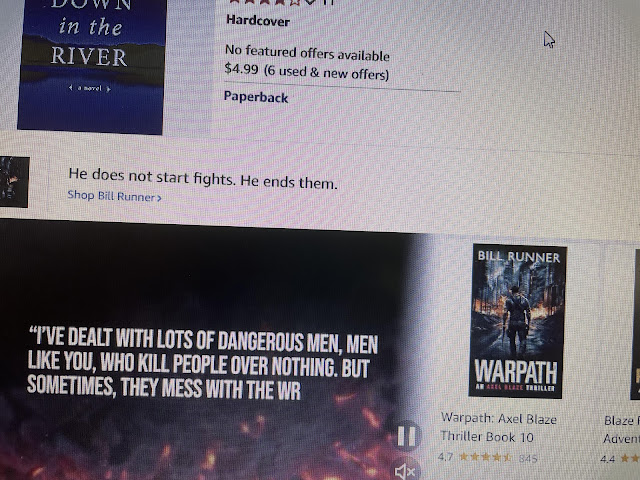
Greg has been inserting bad western books on my Amazon, Google, and Goodreads pages for my book Horses All Over Hell. Check out the series below, one called "Know Your Goats." I've seen ads for a Hee Haw book and The Dukes of Hazard.
Using false ads is another form of censorship. This false prophet ought to stand in the light of day for once and say what he thinks about me. That's the way I do it when I talk about him. Greg can't do that because he never tells the truth.

Iowa Facebook PageJuly 9, 2025. I used to post regularly at the Iowa Writers' Workshop Facebook page. Then in 2022, I posted the beginnings of my Gregory Wolfe post. It got a few likes, but one young woman wrote, "I'd like to see this, but your post says it's infected and it'll infect our computers if we click on it." Greg places "infected" banners on my posts and emails sometimes.
I wrote that people could Google me and find the post on my site, and I had a lot of visits. For a while I continued to post on the Iowa Facebook page and received just as many likes.
But soon my posts on that Facebook page were limited to one or two likes. Then my posts were restricted. I could post but never received likes. Greg can actually limit the number of likes a post gets. He can also cover a post so that it's not visible to anyone. This is part of Greg's gaslighting. He wants me to think that no one is interested.
He has done this on my own Facebook page. He seems to preset the number of likes a post will get. At one point, for about a year, I was getting five likes for every post, and all the likes were from other countries, as if he wanted to avoid Americans hearing word about his behavior.
It seems precious to bemoan your Facebook likes--until you realize that it's your censor who is limiting your voice.
Recently the "infected" post on the Iowa page was deleted. I doubt admin would hunt down that post from so many years ago and delete it. Greg deleted it.
Here is a representative Iowa Facebook post before the censorship began.

Fake AF
July 9, 2025. When a few people began boosting my posts about a year ago, my Blogger stats showed between 500 and 700 visits for each email I sent alerting people to each post. These numbers held steady for a couple of weeks until Greg saw it. Then he recorded forthcoming numbers as 2 or 15 for the day. I knew that was wrong because my own email list generated about 70 to 80 visits. The larger numbers reflected that people on my email list were sending out my posts on their own. It was a typical GW gaslight.
Later I found that my phone screen shivered when I had a huge number of visitors. Greg saw this or heard me talk about it, and he normalized my screen. I Googled how to normalize a shaky phone screen, and found several remedies, just to see if it was something that Greg could easily do. It was.
A few times Greg has forgotten to control stats and I saw the usual 500-plus visits after I posted. I recently found another way to see stats, and that is a secret.
Yesterday, a few hours after I emailed my new posts, I looked up the Blogger edit page. For the first time, it went directly to the stats page--a gift from Greg. It showed that visits for this larger GW post amounted to 1 for a week. I laughed.
 When I added another large number to the total views (seen at the top), Greg rang his bell ding ding ding. He dings his bell in warning. But at this point, the only significant warnings are issued by me and my friends.

Greg Censors Telephone Calls
July 8, 2025. Gregory Wolfe has commenced another campaign of telephone censorship. The first time he did this was two years ago, when he was also monitoring the phones of Eugene Weekly after the editor, Camille, had promised to write an article on Greg.
Often when my phone rang on a rare occasion, it only rang once. I believe Greg wanted to show me that he was canceling my calls, so he allowed some calls to ring once. What would be the fun of it if he didn't show off what he was doing?
If this sounds crazy, I believe it's because telephone interference isn't something we hear about much. It's the kind of thing that low-tech law enforcement tends not to believe, even though we know that high-tech law enforcement monitor calls as they please.
Greg is resuming this censorship, since I placed an ad for workshops on my site and included my phone number. I'm also waiting for news about "The Lord's Hacker." Perhaps most significant, these pages are aflame with damning evidence in recent weeks, when Greg prefers to move in darkness in his angel costume.
He thinks he's CIA, but really he's a deeply unhappy guy running a harassment center.
Weenies
July 7, 2025. I have begun to see the publishers, editors, and colleagues who caved to Greg's hacking as weenies. They aren't scoundrels or creeps, but they are weenies. People who care about the written word ought to exhibit toughness. They ought to resist censorship and guard the flame. History will show that Greg is a monster. But the fearful, weak weenies won't be remembered well either. (I'm speaking of potential publishers I have submitted to, not my current publisher).
Remind me never to call these weenies when a French Resistance type of situation appears in America. Men and women of the French Resistance risked torture at the hands of Klaus Barbie. The publishers and editors who showed enthusiasm in seeing my work, but then went silent when they were hacked--too afraid even to send me a rejection note--couldn't handle getting hacked for ten minutes.
But I'm enormously grateful to those who have shown up to this fight.

Immovable
July 7, 2025. Two days ago Greg reposted this "immovable object" photo from last year, then deleted it yesterday. He also blurred my screenshot of it. If you know Greg, you know he communicates in subtle ways. To him, "immovable" means he's going to hack, and nothing is going to move him. He first posted this photo when these pages were starting to bring him a lot of attention, and I believe he posted it as a response.

But we can see from his miserable photo at his Slant desk last year (posted July 2, below) that he is indeed changed and influenced by others' perceptions. The enthusiastic, happy editor is just smoke. He plays it two ways. His miserable photo is meant to show that he's a victim. His "immovable" photo presents himself as the tough guy who's unfazed and enjoying life.
I've often wondered about his wife Suzanne. I don't buy the grins and laughter in her photos. Spouses of people with narcissistic personality disorder are controlled and abused. Since they live in the same house, they are everyday objects of torment. They see the worst of it.
Suzanne is an intelligent person, a novelist who sees meaning in things, and of course she knows what her husband does. From what we know about people with Greg's disorder, it's not a leap to say that Suzanne lives in a hell of manipulation and threats--much of it subtle, but registered.
I don't believe she's a self-interested Lady Macbeth who is Greg's partner in crime. Greg's running this ghastly circus, and Suzanne knows how to perform and stay alive.
A History of Altering My Writing
July 5, 2025. Gregory Wolfe has been altering my online writing for years. In the first screenshot below, he changed the intro to my City Paper arts feature interview so that it featured my firing. Below that is a screenshot that shows the original intro (but with a new photo he inserted).
Greg easily gets into any digital system and makes his changes. But he prefers to make last-second changes on my manuscripts. I have shown that he recently cut my bio on a review of a poetry collection right before I sent it out. Etc. & etc.
I posted two days ago that he is changing my photos to pictures of women. We can observe that habit here as well.


Busted
July 2, 2025. Seeing this photo almost made me feel sorry for Greg. Lately he understands that most of his former audience knows about his crimes. That's got to hurt. Since he continues his hacking, I find little sympathy for this busted old bloke. But I'd forgive everything if he apologized and found a different path.
Since he can't feel remorse, but only anger about his "mistreatment," I doubt he'll ever change. With this photo, I believe he wants to say, "Look what they did to me." But imagine entering a person's home every day over ten years, assaulting a father and his son for pleasure, receiving notoriety for your crimes, then posting a photo that shows how beat up you feel about the exposure. It takes a real narcissist to have that perspective.

Greg Cancels My Photos
July 2, 2025. Greg can't stop censoring, harassing, and erasing people. It might have something to do with the part of his brain that is missing. Below are three screenshots of my photos online that he has replaced with photos of women.
He has published almost no women at Slant, and the swapping of my photos with women suggests he believes women are inferior. It's a way of laughing at me, as if to say, "Ha ha, I've replaced you with silly little girls, because that's all you're worth"--something like that. One of my screenshots showed two swapped women's photos next to each other, but he has deleted that.
This has been going on for months.


Forty-Percent
June 29, 2025. It's never convincing when someone says this or that person is Hitler or Ted Bundy. I don't think Gregory Wolfe is Ted Bundy. I believe he is about forty percent Bundy. Greg hasn't raped and murdered multiple women, but he has manipulated and gaslighted women and used my son's pictures along with child death images to torment me online.

Greg needed a religious community to hide in while he inflicted his harm. Bundy joined the Mormon church while he was committing his evil, and the groups found Greg and Ted to be charming and likeable. But some noted that Ted only wanted to talk about himself and praise his own accomplishments--same with Greg.
Greg prayed on Twitter while he sent me those death images of children. At the same time, he summarized one of his Slant books about a man who lost his son, and Greg pretended like he had such warmth and human feeling.
Greg has had no remorse about his child porn deliveries or his dick pics sent to my dates. Bundy also had no remorse. When hundreds of people heard about Greg's behaviors, Greg posted that he felt hated, but he never said anything about wanting to be a better man. During the trial, Bundy reported that he felt "persecuted." Greg has never owned up to his crimes. That's true of Bundy, though he did confess at the end, because he thought it would prolong his life. Greg is addicted to his hacking that he's been doing for decades. He loves that squirt of sugar in the brain. Bundy was addicted to his own form of administering torture.
Both Greg and Ted have narcissistic personality disorder. They share quite a lot in common in terms of personality. It's true that Greg doesn't break down doors and kill people, but he does try to kill people with his hacking. He put me in the hospital for five days after he made my computer hiss in a rhythmic fashion so that it harmed my inner ear, and then hammered me with more hacking until I was out of my mind. It was a specific technique to wreck a person. I describe it in greater detail elsewhere. He stopped that for a long time but he has brought it back recently.
I don't know if Greg's eyes go black like Bundy's, when he's ready to kill. Bundy's pupils expanded when he was psychotic, and one escaped woman said his eyes were completely black. I haven't seen Greg in his locked room. But since he seeks harm and sometimes murder from afar, he might be described as a gentleman's killer. I don't believe his evil behaviors are confined to hacking. He just hasn't been caught yet. Some people, like Bundy, can roam free for years. Even if Greg is forty percent Bundy, he's doing a lot of bad things.
People of the Lie
June 28, 2025. The other day, after I posted my suspicion that Greg changed one of my Observer articles years ago, he positioned my Observer app on my Google Control Panel (screenshot below). First all of all, he's not supposed to be in change of my Google Control Panel. But as a malignant narcissist with a need to control people, he still controls it, years after I withdrew Down in the River from Slant Books.
In case you missed it, my one bad review is also featured on my Google Control Page. I hope Greg's few friends and supporters can take a look at this and explain why he is controlling a page that he has no right to control. (I have posted about this issue before). You may have noticed that other authors don't have negative reviews featured on their Google pages, especially when they have many positive reviews. That's because no person or Google algorithm would ever place them there.
If you're on a phone, you might have to scroll to the right to see the Observer app.

Greg is Not Protected
June 28, 2025. Yesterday morning I was on the phone with a tutoring company trying to email the HR woman my resume. It didn’t work. Then she tried to send her email three times. I saw on the email banner on my phone that her emails were incoming, but her emails weren’t landing in my inbox, nor in spam or junk. Classic Greg! He often lets you see something that shows his hand. She and I finally got each other's emails after Greg had had some fun.
Thankfully they had a phone number and someone to talk to. Many potential employers only have an email, and it's not a surprise that they usually don't write back.
But check out this call with the HR woman. It took thirty minutes, just to deal with Greg's email interference and stupid games.

Interfering with employment is a significant crime. But like mafia bosses and pimps, Greg feels that he's protected, another fat guy in charge of the boulevard, not worried at all. But Greg's not protected from what people say about him now or in the future. I know he cares about that.
Greg Teaches Morals to Children
June 20, 2025. Today I perused the early pages of Greg's book on teaching moral values to children through books. Greg covers a moment in Little House when a little girl helps her ma do the dishes, receiving instruction in the feminine arts and learning the merits of pitching in. I know my children will benefit from this. It's too wonderful.
It's also highly civic and virtuous when Greg quotes Bill Bennett and other members of the Reagan administration in his ongoing quest for examples of virtue. God knows, it's hard to find these days!
In another passage, Greg writes, "We also need to be reminded how much repetition is required before basic moral principles set in." Though Greg receives most of his instruction from the Dark Webs, we should forgive him at age 69, remembering that every child of God learns at his own pace.
Here are a few other passages in this delicious and instructive book written by a very moral man.
"Parents need to set a good example, to encourage good habits." Isn't that true? Another moment of great substance! It's really one high moment after another.
"Across the country, teachers, parents, and police are encountering more and more youngsters who don't really think that stealing or lying or cheating is wrong." I was surprised to learn this. Could it be true? I trust that Greg is the one to alter our national course in this matter.
As readers of Gregory Wolfe, we ought to remember that using child porn and targeting children are exemplary behaviors when we are Christian leaders who dislike the person or the parent of the child we target. It's always a good idea to discuss at dinner "why dad uses illegal porn," etc., "or why dad gaslights and manipulates women," when the whole family is together and it's time to dig in to a great meal. It's a great opportunity to explain why some Christian leaders can commit crimes of enormous evil and why others can't even steal a loaf of bread when they're hungry. It's nice when Mother contributes an occasional affirming word or polite chuckle, without talking too much, while Dad explains all that tricky business about child porn and the fact that he contributes to the trafficking of children and their possible murder every time he uses it.
Someone Has Made Changes
June 22, 2025. For two days now, when I got up to work on my short story "A Study of Adam," I found the note that Greg often places on the first page of a manuscript I'm working on: "Someone has made changes since you were last here." He uses this note as harassment, to let me know that I'll have to find his changes, and also to tell me that he'll "edit" the story before I send it--or after I send it. He can easily get into Ploughshare's Submittable, or any other magazine's, and edit my story on that end.
Censorship at a High Level
June 20, 2025. Two days ago I was about to proof my Observer introduction on my main page, for the third time, when I saw that it was gone. My first thought was that Greg had deleted it, but when I scrolled back up, the Observer material was still there. Greg was able to cover it up seamlessly while I was reading. He was actually showing me one of his hacking techniques--his ability to cover material that he doesn't want certain people to view, such as an editor whose online movement he's following closely.
Since a large part of Greg's hacking is ego, he can't help but show off now and then. He's telling me he's in control and can feed my content to an editor or anyone else, hiding from them anything that might speak favorably of me.
Keeping Us In the Dark
June 13, 2025. Greg removed my Poets & Writers "featured post" that sat on the right margin of the main page of my blog. I believe Greg doesn't want people to see that my book was a Slant title, for whatever reason. But it's fascinating that he believes he's control of everyone. Whether he's censoring your site or shoving porn into your brain, he's in charge of all of us.
Fake Numbers
June 11, 2025. For ten years my blog count has recorded between twenty and forty visits each day. But ever since one or more people in my email group has been boosting these posts--resulting in about 500 extra visits to my blog--Greg has been lowering my total blog count. This action is meant to manipulate me into thinking that there is suddenly no interest in my posts. With Greg's help, my total visits amount to six or fifteen a day. I've noted his count manipulations elsewhere.

Fake Social Media Accounts
June 11, 2025. Greg often sends me avatars on LinkedIn and Facebook. Consider this woman who works at Varsity Tutors, one of the places where I work. She has her eyes closed, so of course it's not a real profile photo, and she has only one connection, because this fake account was one-minute old. Her shut eyes are meant to suggest that she's some lost loser. Not real. Sorry.

Greg cares a lot about the concept of a job. He lost his job at Image and feels ashamed about that. But he also lists "artist" or "writer" as his job on LinkedIn, so there must be a crosscurrent of desires running through him. "Academic writer" would be the best description for his avocation. I'm actually an artist and a writer, but he ridicules the part-time jobs I do so that I can write.
Greg Moving Right
June 7, 2025. According to my bookstore friend who is a longtime X-user, Greg has been creating far right alliances for a long time--guys with usernames like ChristianPatriot in them etc. I have noticed he has been doing this for a while as well. His book Beauty Will Save the World was cut from his previous publisher, and a very right-wing Christian patriot small press is now publishing it.
Though Greg says he likes to "build bridges between communities," that's largely for show. In fact he has an egotistical, warlike, and darkly sexual personality, evidenced by his Russian-style porn hacking and censorship. But he thought it was more lucrative to speak in soft voices in public and bring people together, perhaps mentioning the Prince of Peace, etc. & etc.
Greg has made many public comments about his distaste of politics. But it's the right wing who have stood up for him in the past, and he's making inroads to their more sympathetic camps.
When Greg got fired at Image, many Christian patriots stepped forward to defend this wounded Christian patriarch in comment sections. I believe Greg is intentionally befriending these types--even publishing with them--in order to have more snarky, toxic voices that dismiss those who have accused him. For the public, he talks about baseball and having a great friend for a spouse--and all the expected BS that "humanizes" and so on. But he's building more rightwing connections this time. The right make better soldiers than centrists do. Avatars can also be dispatched to surround and ridicule an online enemy, if your real friends aren't noisy enough.
When I was on Facebook, Greg used conservative avatars to harass me. The avatars always had a hundred posts on their feeds, each one made that very day. But he didn't use Facebook to build up his own profile. Apparently X is where you can create a huge, largely fake audience. I have read in a few online magazines that it's easier to populate AI avatars on X than on other social media. One can create a stadium of supporters cheering for you or laughing at your wit.
I've seen his AI avatars on Facebook, and now I can only guess at the percentage of his audience they constitute on X.
Computer Hissing Once Again
June 2, 2025. Greg is at level “total psycho” now. He’s creating the rhythmic hissing that f-ed up my inner ear and contributed to my going to the hospital two years ago. He still does this now and then, confirming each time that he's something like a murderer.
Greg and His Catholic Buddy
May 24, 2025. This morning I was looking for jobs on local sites, and twice, while I was scrolling a particular search, the screen changed to "mental health." I believe Greg did that. It's not going to change job searches twice, on different sites. Greg often likes to do something twice so I'll know it's him. He has found a thousand ways to communicate that I'm nuts, when in fact his untreated narcissistic personality disorder is an urgent concern.
When I first met Greg, he used a radio voice. I find the radio voice unsettling because it's false, suggesting the person is not who he says he is. That has proved true with Greg a thousand times. Christian humanist? Not quite. He has devoted his life to porn hacking, harassment, child-targeting, and censorship.
When I voiced my concerns about Gregory Wolfe in 2015, Ron Hansen said in public that I needed professional help. Even to raise questions about the public figure Gregory Wolfe suggests mental illness.
I have a manageable case of bipolar that I have treated with medication for fifteen years. I haven't had a manic period since then. The only time I went to the hospital was two years ago, after one of Greg's psychotic episodes. I discuss this adventure in "Psychotic Harassment."
Ron continues to ignore the mental health of his friend who has narcissistic personality disorder, who sexually harassed young women on his staff at Image and targeted my son. He has counseled colleagues to leave my email list. He has invited Greg to speak at public lectures. Greg's body count doesn't interest Ron.
Difference of opinion is fine, absolutely. Uncertainty that Greg is the perpetrator is fine, of course! But willful ignorance and snarky dismissal regarding child abuse--to help a friend, a fellow Catholic--is not okay. Greg's friends might find themselves discussed in a dark biography on Gregory Wolfe in twenty years, written by someone other than me, and it may not contribute to their positive legacies. Go ahead and be his friend, but don't be a creep.
Targets My Son AgainMay 13, 2025. Gregory Wolfe always likes to prove me wrong. After I said he isn’t hacking now in my last email to the Christian scholars, he deleted my son’s photo that I use for wallpaper on my phone. He also made the screen background dark. That's meaningful, and we can see the repetition of that theme elsewhere.
Greg Plays with Murder
May 7, 2025. Greg caused my ex-wife's computer to hiss loudly several times when I was over there taking care of my son for the last two days.
Two years ago, he produced a rhythmic hissing sound on my computer that went on for months. The noise damaged my inner ear. I believe he used this computer hissing as a way of breaking me down before a hard, hammering volley of hacks that included repeatedly sending photos of death images.
But his choice to cause my ex-wife's computer to hiss for the last two days suggests that he's resuming his song about suicide. She says her computer doesn't hiss--it's only when she's gone and I'm using it.
The most frightening thing about his technique two years ago was that I was lost to oblivion during his hacking torments. At one point, I hardly knew my name or that I had a son. In this state of mind, I might have followed Greg's invitation, but mercifully I came out of it.
With these techniques, Greg isn't simply coaxing people to make their own choice. He actually becomes a murderer.

Greg Burns It Down
May 7, 2025. There are so many acts of censorship that have happened--quietly, sometimes without opportunity for screenshots. The most egregious is altering Amazon so that my name no longer brings up my books. According to Author Central, this can happen when a name is typed into Amazon search incorrectly and too many times. But my name simply was not typed in too many times.
My book Horses All Over Hell was published right before Covid. Publishing was practically shut down for a few years. Sales of my book trickled in. Nothing happened for four years, no reviews, few sales. Then I was able to get one interview and two reviews. All told, the book sold 150 copies. It was bad luck, but in the end it turned out all right.
Greg would like us to believe that Amazon customers typed in my name enough times to awaken the algorithm of the biggest company in the world and changed the way my name is searched. That didn't happen. He made the change himself, just as he has made changes to other companies' sites.
Greg also removes my novel Down in the River [he published this book at Slant Books, and I requested its removal seven years later] from people's Facebook pages and private blogs and elsewhere. Even my ex-wife's post about its publication was deleted.
Last year I found an Idaho woman had placed my novel on her Best of Idaho list. When I checked a couple days later, my book was gone. Greg follows my perusals online.
Antioch Review posted notice about the second edition of Down in the River, in paperback, and mentioned recent national interviews. But the typed introductions of Antioch staff were erased.
Here is the deleted notice from Antioch Review. I'd say it was normal activity if it didn't happened so often and on so many different sites.

But Greg has placed the one bad review of the novel in my own Google banner. He still controls my Google Panel, its content and photos, after all these years!
Google algorithms don't stick bad reviews in authors' Google banners, of course. But Greg does.

Greg Is a World-Class CensorMay 7, 2025. Greg likes to censor pages to show off his Chinese government skills of harassment. It doesn't matter what he's censoring. In this case, he censors an article about students getting deported from Oregon. It's just something he likes to do whenever he can. The more nonsensical the better. Look at the second page. Since he doesn't have much reading to do at Slant, he can hack all day long.


Censors Two Dollar Radio
April 22, 2025. In October, 2023, I submitted The Lord's Hacker to a handful of publishers, including Two Dollar Radio, a good literary press. I believe Greg blocked this submission on Submittable. They invite concerns and update requests, but they haven't responded to my emails. Also, there is never a "success" note when I contact them via their online form. Whenever Greg blocks one of my submissions, I'm unable to contact the editor.
He picks and chooses his publishers to censor, though. He seems to censor only high-quality literary presses.
"Someone Has Made Changes"
April 18, 2025. A few days ago, when I was about twenty pages in to editing my book, the familiar note appeared when I opened the manuscript: "Someone has made changes since you last opened this document." I located where he'd made changes.
Last night when I was ready to finish editing the book, I found that note again. I'll have to read all 350 pages again, and maybe he'll change something else! This is censorship and harassment, just as bad as his habit of deleting my submissions and killing emails to editors. Gregory Wolfe is someone to avoid. He'll get you next, and for no good reason.
I emailed The Lord's Hacker to the Christian scholars this morning. The book feels like an unstable surface, and I want other people to hold onto it.
I must've seen this note twenty-five times in the last year. I've posted about it elsewhere, too.

Greg's Always Hunting and Hacking
April 13, 2025. I’m staying at my ex's and Greg is hacking her computer. If this video is allowed to go through, you can hear her computer hiss. When Greg realizes I’m videoing it, the hissing dies down. Turn up the volume all the way before you watch it.
Greg Blocks Messenger
April 1, 2025. Greg blocks my Messenger. It's not the first time, and it's not the first time somebody asked if it was Gregory Wolfe doing it. This is a post from a friend in Brazil.

Another Threat Against My SonMarch 19, 2025. Greg creates frequent updates on my computer, new updates often appearing one day after an update. That's not supposed to happen. Today's update lasted forty-five minutes. At the end of it, the wallpapered photo of my son was gone. I'd call it a glitch if it happened once, but I believe it's part of Greg's ongoing campaign against my kid.
After Greg removed the photo of my son, I deleted screenshots cluttering my desktop and put this new wallpaper photo up. Then in minutes, this one was removed too.
This is what constant, ever-present harassment looks like. The new photo is gone.
Wipf & Stock Hacked Again
March 3, 2025. Here are photos of my most recent book at Wipf & Stock and the "Related Titles" page. The related titles page shows books that are not at all related to my book. For years, until a week ago, the related titles page has shown Down in the River, my first published book at Wipf & Stock, when Gregory Wolfe was the editor of the imprint Slant Books.
I believe this is a Gregory Wolfe hack. Ever since he and Wipf & Stock parted ways, he has hacked the publisher in large and small ways. I have discussed his hacks at Wipf & Stock elsewhere in this larger post, including a nasty targeting of the CEO.
Wipf & Stock has copies of Down in the River they'd like to sell, but Greg wants to erase it from memory.
I requested to leave Greg's W & S imprint, Slant, in 2020, and two years later he turned me loose, making it look like it was his idea. Greg told my publisher that he had "canceled" the title. Everything is always a deception with Greg, a sneakiness of appearances.


[Note]. Greg added more books to my related titles on 3/5/25. He is fond of presenting the jungle cat image, as if to show that he's a vicious animal that will have his prey--he presents this image often, including on the FB profile beside the one that uses the child death image above.
The jungle cat is a 1970s concept, man as sexy predator and super-stud, in control of everyone, grabbing pussies and knocking guys around (he bullies people digitally and anonymously, when possible). He tries to engage in all of these behaviors out of view of the public, of course, but he gets caught now and then, such as his sexual manipulation of the Image women when he got fired, beginning his spiral as a Christian leader due to his own actions.
Don't underestimate his rage. He can go ballistic over a disagreement. But I have exposed his behaviors to thousands of people. Naturally, he's especially furious, and he's unwell. His willingness to threaten my small son in this fight demonstrates this. In addition, he communicates with oblique images, whether it's the promise of death, murder, hospitalization, what have you. He's not one to come out and say such things directly. This document shows repeated behaviors and many patterns.

Greg's Christian Purity
March 16, 2025. Back in 2017, Greg objected to the Image women's inclusion of a photo of a woman breastfeeding. This photo was kicked down the Google pages. Though it was a controversial issue, the image wasn't available on Google. He is able to delete or drop anything on Google. After the publication of this picture in Image, it was hard to find, and it's hard to find even now.
This piece of censorship happened shortly after Gregory Wolfe was fired. I suspected the image would violate Greg's Catholic purity, this man who sends child porn and dick pics--what a joke. There is nothing pure or Catholic about this nasty porn man. But what is more sympathetic and good than presenting a woman breastfeeding in such an understated manner as this?

Greg is like so many good Christians of the Georgia Baptist community who in recent years have molested children and demanded to remain "Christian leaders." There is a sickness in these people, and it's time to call them out on their bullshit Christian purity. Never should a Christian abuser, who targets children, ever be allowed to tell others what is right or wrong.
More Dead Kids
February 7, 2025. I Googled Anne Lamott, but I hadn’t read her for twenty years, so I couldn’t recall her name. Her quote that yelling at her son made her feel like she was bitch slapping ET is a famous and funny one. But I got a bunch of stuff on the search results that looks like presents from Greg. Most of it is Greg’s favorite theme: dead kids. He’s certainly going to want revenge at this time. (The one entry about "my adult son" doesn't clear Greg of his repeated attack on me and my family).
The Google search did find the quote and the author. You may have noticed, when you search this and that, Google doesn't throw in other random results about dead kids and suicide. But Greg certainly does.
Some of the screenshots didn't stick, so I returned to the search and screenshotted those too.
Greg Blurs More Images
February 6, 2025. I posted this fake ICloud banner in December, but Greg has since blurred the words and images. He often blurs or grays photos because he doesn't want them to be inspected.

Google alerts are part of this story. As I mentioned before, I no longer receive them. Greg receives my alerts so that he can delete most of what he finds there.
But for a week in December, I received many Google alerts for another Ryan Blacketter, whose child recently died (the photo of the candle is from a notice regarding this death). Greg is willing to feed that Google alert in my direction, very meaningfully. After all, he frequently sends me photos of my son and child death images.
This ICloud banner on my page was created to show pics of this candle, strange hacking messages, my son, etc. But these pictures are out of order and seem chosen by a person--Gregory Wolfe, I believe. Why would ICloud choose these to make such a random banner on its own? It simply wouldn't.
Here is one of the blurred pics--part of the shrine to Greg's hacking.

Deletes Screenshot and Narrative
February 1, 2025. I feature this fake blogger count again because Greg has deleted it from record. This morning I found that he also deleted my discussion of it. The high numbers of the monthly counts and the low numbers of the daily counts don't add up. Greg knows this shows his manipulations, so he censors it. I attempted to restore the post "Deleted" below.
If you can't see this screenshot, you'll know Greg deleted it again.

Kills Everyday Emails
January 31, 2025. Greg continues a ten year campaign to isolate me. It sounds like a sinister plot, and it certainly is. He has prevented my simple ability to send emails to friends and associates. Often people with whom I have exchanged emails for years don't write back. When I call or try to email again, they say they didn't receive the message or else find it in spam. I have mentioned that he kills my emails on a professional level too. Most of my emails seem to end up in spam. This can happen now and then, but now it's happening almost all the time, and the frequency is suspicious. Since other emails are simply deleted, I suspect Greg's hand at work in the whole mess.
The message below is from the chair of an English department in Prague, a former professor and writing colleague. When he didn't write back, I tried to get in touch a couple of times after that, and one email got through. He wrote back yesterday.

Don't Mess with the USPS
January 23, 2025. I had trouble filling out a change of address request online at USPS, on January 9. Each time I filled it out, a red line said "Your attempt was not successful. Try again." So, I tried a few times. When nothing went through, I attempted to use my ex-wife's as a mailing address--she approved it--and those also were "not successful."
At the post office yesterday, the manager said that all of my attempts had gone through, and my account was shut down due to a fraud alert. He said the "not successful" notices I had received sounded unusual. I told him the addresses I attempted to use. He could see those, but he said I had to cancel these forwarding attempts online or call the USPS number. He said I'd be able to sign into their system. I tried at home. The online system isn't available to me anymore. USPS is looking into the matter. Some guys in blue jackets are on it.
Greg seems to consult the Dark Webs manual on how to screw somebody. Last year, when my credit rating dropped 125 points in one day, my bank looked into it and saw no reason for the drop. In two or three months, my score popped up again, also for no apparent reason.
Kills Connections
January 9, 2025. Greg kills connections and friendships. He hammered my close friend Adam Farley, who owns a tree nursery business and was a former student, with spam or worse in 2022, so Adam had no choice but to stop talking to me. And there have been other such moments I haven't written about.
Once, in 2019 I was on a bus from Cincinnati to Harrisburg to see my ex and our son, when I received a glowing message from a guy who loved Down in the River and who had made an appearance in my book. The trouble was, the Messenger note had been written in 2014! It took five years to land in my inbox.
Another time, in 2022, a Facebook friend was singing my praises with my second book, taking photos of himself holding the book as he traveled Europe, and we were getting close. We'd been writing each other for a couple years. Then one day, without any tension between us, he went silent. I believe Greg thought he might write about the book, and so he intervened with one of his electronic assaults.
Count Manipulation
January 17, 2025. The previous version of this post, "A Christian Leader's Life in Censorship and Porn-Hacking," Greg recorded at about 400 visits. But the other day I discovered those numbers were changed to about 1400--still a low number. Maybe he was afraid someone could see the disparity between his count and the actual count, and so he changed it. See the numbers in the fifth visible entry below.

Suspicious Silence at Amazon
January 11, 2024. Yesterday my publisher told me that she emailed a ticket to Amazon Central to fix my Amazon page and got back to them three times, but no one got back to her, over two weeks. Amazon Central is very good about getting back to writers--and even better at getting back to publishers. My publisher believed this was unusual, too.
Since I know Greg views and deletes my emails--and gets into my associates' emails and deletes those too sometimes--I suspect Greg killed my publisher's emails to Amazon. After all, he has a strong motive to limit the publication of a book that exposes him. I believe he removed my Amazon page for this reason, and it's certain he will employ his hacking skills to harm the reach of The Lord's Hacker. He has earned my title for him--the censorship publisher.
Continues Email-Deletion Campaign
January 8, 2025. More thoughts about Eugene Weekly. On Monday I placed an ad for my tutoring classes. The advertising contact said she'd email me the invoice, and when it didn't arrive, I wondered if Greg had deleted yet another email. The next day I called, and there was a generic voicemail that said, "Mailbox full. You can't leave a message."
In an earlier post, I mentioned that Greg sets up fake voicemail boxes when he doesn't want me to call a certain place, and that he did so when the Eugene Weekly editor wanted to write a piece on Greg but went silent.
I went into the Eugene Weekly office yesterday and talked to the woman who had said she'd email my invoice. She printed out the email that she'd sent but that never arrived in my inbox. I asked her to call the weekly, the office we stood in, and she called it on her cell. "That's odd," she said. "The phone isn't ringing. And that's not our voicemail."
The fake voicemail appeared to be set up for anyone who called, not just me. But Greg is a fan of change-ups.
I believe Greg hacked the editor last year as a warning to stay away from me. Now that I placed an ad there, he deleted the email to show that he's marked the place, like some baboon who's in charge of a certain grove.
The editor at the weekly is a cool lady who is trying to recover from an act of embezzlement that almost tanked the newspaper last year. Greg tends to hack people he knows are weak, knowing they won't talk, because hacked people--besides me and a few others, in this case--do not want to talk about it.
This story probably sounds crazy to those who are new to Greg's behavior. But the sudden silence of the editor who'd said she wanted to investigate Greg is telling. Also telling is her refusal to acknowledge it when I told her EPD had forwarded the case to the FBI. It also shows something that these fake voicemails have popped up again and that the advertising contact observed this, and that one more email has been deleted. If it sounds crazy, it's because Greg is crazy, and unfortunately he's also very smart.
Greg Feels Hated
January 4, 2025. The rumor is that Greg feels sad and "hated" right now. Self-sorriness is a common feeling for criminals with narcissistic personality disorder. What he should feel is deep remorse--instead, he feels sorry for himself. He feels like a victim. People aren't seeing his accomplishments and so on.
Let's recall a few of his behaviors that top his "worst of" list: He targeted me with my own photos of my son at various ages, while also spoofing random child death images to me--amounting to a terrifying threat. He changed my name and address on my first police report about his behavior to the Eugene Police Department. He spoofed child porn under cover of adult material. He took my two posts about him offline (including this one). He disabled comments on my entire blog. He disabled Google analytics by removing the dropdown on "Stats." He cut more than three hundred of my followers the day my first post about him went live. Several times he rewrote this larger post to make it seem frivolous and unedited. He deleted one entry about my son, and altered evidence on another. He downloaded a death image into my son's computer. He sent dick pics to my Latina date. He sent women infected emails and banners in my name. He hacked my colleagues who had supported me or written about my work. He frequently rewrites The Lord's Hacker. He hacked and harassed me when I was writing that book. He likely hacked the editor of Eugene Weekly after she said I was "on the list" for an investigation about him. He removed from Google almost all of the blog posts on my broader site, to diminish my presence. He removed my Amazon Author page. He hacked Hobart after the editor invited my submission. He wallpapered my Google pages for three days with porn descriptions, each one including my name and words like cunt and cum and cock. He pretended to be my son on Digital Touch. Three times he placed the profile of a friend who had committed suicide years earlier, onto my Facebook Friends profile list. He hacked an elderly professor because he thought he was helping me. He deleted many of my email submissions to publishers and editors. He deleted my email to the Commission on Judicial Fitness because it partly concerned him. He tracks my logins on Google so that he can locate me on public computers. Greg placed his own photo on my blog as warning, the day he first took this post offline--a warning to me and others. And I believe a careful read of my complete post, and its discussions of motives, leads to Gregory Wolfe.
When an active criminal has no ability to feel remorse or try to change--especially when a child is involved--feeling sorry for him only goes so far. But I'd forgive him if he stopped doing these things and apologized.
The Censorship Publisher
January 6, 2025. I got an email from a publisher this morning telling me that an old manuscript I submitted to her years ago had been rejected without their knowledge, due to a "possible bug." I think that bug was named Gregory Wolfe.

In other news, minutes ago I submitted a novel to a Portland publisher and received a "success" note. But at the same instant I received a "success" note from the British vanity press Pegasus that I didn't submit to. This is how Greg spends his time, uploading a fake manuscript to Pegasus in my name, and submitting it simultaneously with my submission to the Portland publisher. We all know that people go a little batty when they're at the end of their rope.
 Who knows what his message was: either that the Portland publisher is the same quality as Pegasus, or that Pegasus is the only publisher I have a chance at, with a perverted censor canceling my submissions.
Greg Deletes Email to Judicial Fitness
January 3, 2025. I emailed Rachel a complaint at the Commission on Judicial Fitness in Salem, about the judge who bungled my restraining order request. When I called to confirm receipt of the email, I wasn't surprised when she told me she didn't receive it--yet another email deleted. The restraining order I had applied for mentioned Gregory Wolfe, and he wouldn't like any investigation that concerned him.
Later I was able to upload my complaint at Judicial Fitness onto the site, and Rachel confirmed it. But I will check with her later to see that it remains on their site.
I mentioned that the judge didn't have my complete evidence. It's possible that Greg altered my evidence file before I printed it, and that I only believed I was submitting the complete file at the court intake window. I can't know for sure.
Whatever happened, Greg is committing crimes at a high level, just as he did when he blocked my first police report at the Eugene Police in January 2024. That's why, later, in the summer, I carried my paper evidence file to the police station where Officer Anderson examined it and sent it to the FBI.
Every item in a digital file is like a ripe dandelion, ready for a hacker to pluck and blow it across a summer field.
Greg's Eternal EditsDecember 30, 2024. Greg cut a line in this document that says “Some people act like they were hacked, but weren’t,” and placed it right after my discussion of the situation at Image below, in my December 27 entry. We know he likes to make his misleading edits. Also, this move suggests that he might be hacking the women over there. Whenever Greg communicates something in this indirect manner, almost always he's denying reality.
Of course he's hacking them. He hacks many people for no good reason, and these women, justly, took away his one big achievement. I've seen evidence of his hacking there, eviscerations of certain Image content and photos, from popular issues--thrown down the long stairs of Google ranking. He's got his hands all over it. That's his way.
Greg censors in large and small ways. When he's not messing with Blogger, the spellcheck works fine. But check out my pic of "restrainin orders"--no red line today.

Greg Uses Women in Revenge Game
December 27, 2024. Gregory Wolfe specializes in wrecking friendships, especially when beautiful women are involved. To this Serbian woman, an editor who is a friend of mine, he sent infected-looking emails to turn her away from me, after she asked if I had a short story to send to her. It started a fight between me and her. Elsewhere in this post I include the screenshots of her statement that she was receiving infected-looking banners that Greg often sends. I intend this entry as an expansion of similar entries, with a slightly different focus.

I've also mentioned that he removed pictures of my then-wife from Facebook in 2015, hacked my friend Mary Owen, the daughter of Donna Reed in 2022, and in 2023 sent dick pics to my date.
For many years, while at Image, Greg hired very cute young interns. I've mentioned that he filmed them in a mock video called "The Interns," showing cleavage and flashes of panties. He tried to get at least one of them to go to bed, she said no, and he got fired by his all-women staff, for his sexual harassment, gas-lighting, brutal psychological manipulation, and panic-inducing control games and bullying. He gets off on having cute girls around, to make himself look good, and he fights men based on the attractive women they know.
Greg is a Russian-style porn hacker. He likes to play the strong man in this way.
Greg Cut This Photo and Its Blog Post
December 26, 2024. Greg has edited this entire, sprawling blog post many times, now and then cutting entries and photos. Today I looked for the entry that shows the Word note "Someone has made changes since you last opened this document"--a note that Word generated in much older versions, if a person opened the document in various computers. But I only edited my document on one computer, and I have a new version of Word. Since Greg actually rewrites passages of The Lord's Hacker--and frequently changes grammar and word choice--I believe he wanted to show me this note as a taunt.
At any rate, I couldn't find that post in this lengthy blog post today--because Greg had cut it. And he cut it because it plainly shows his interference. It also shows his high-tech ability to get into any program. As I mention elsewhere, he also placed fake login screens on Word, as if I had to sign in there to work on my manuscript. Logins to Word! There were other similar distractions, including a white "card" that he placed over the page on which I was trying to write. It only showed the text on the far right side. These cards and the login screens usually vanished in a minute, as if their purpose was to make me angry so that I couldn't write.
Fortunately I found the pic of the Word message saved in screenshots just now. Who knows what else he has recently deleted. I try to keep up with it, but there's a lot of material.
Greg started placing this note on Word when I was writing The Lord's Hacker and when he was "editing" it, earlier this year.
The last time I saw the above notice was about two weeks ago, when I was doing my third final proof of The Lord's Hacker before it goes to my editor. Greg has edited this line (below) three other times, for some reason. My original line reads, "with four or five shiny leaves on it." I keep changing it back. The censorship publisher is hard to keep up with. He has made a lot of stupid, nothing changes like this, just to be an ass.
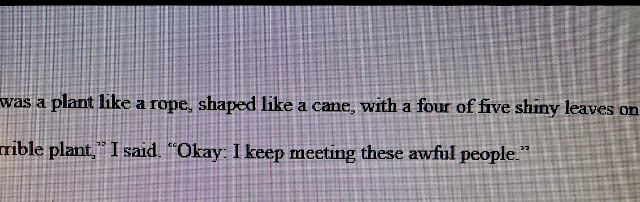
Interaction with Eugene Weekly Editor
December 26, 2024. I ran into Camille, the editor of Eugene Weekly the other day, out front of the magazine's office--the one who volunteered to do an article about my hacking but went silent. She was about to go into the office when I was stopping by to tell her the news about the police referral to the FBI. She seemed quite spooked. She put on a mask and didn't want to make eye contact. When I asked if she'd been hacked, she said, "Nope."
After I told her the news, she said nothing. I said, "Well, it seems like a momentous development, right?"
"Thanks for stopping by," was all she said about it. "Thanks for stopping by."
You never know for sure what's going on with someone, but I have learned that the hacked do not like to talk about being hacked.
This Post Is Not Online
December 23, 2024. This new post, "Eugene Police Department Refers Gregory Wolfe Hacking Case to FBI," is not online. It was posted December 14. I had cut and pasted the previous post, "A Christian Leader's Life in Censorship and Porn Hacking," into this new post and gave it a new title to see if the new one would also fail to go online. (I took the previous post down after I transferred it to this post. It had been up for six months or longer).
Neither one went online. That's because Gregory Wolfe took them offline. Who else would have the motivation? I don't believe it's possible that both posts about Gregory Wolfe would simply happen to go offline. There are many other examples in these pages of Gregory Wolfe protecting himself by manipulating online content.

InvestigateWestDecember 12, 2024. I attempted to contact InvestigateWest about a possible investigation of Gregory Wolfe. I found the same interference as when I was in touch with the Eugene Weekly editor Camille, who said I was "on the list" for an investigation but then stopped communicating.
When I first saw the InvestigateWest site, today at about 1 pm, there was a photo of two journalists front and center, two women on a couch, one wearing a backwards baseball hat. Within two hours of my first email contact, that photo was removed. This might be a coincidence or it might not be. But it's possible that Greg hacked them immediately to send out an early salvo in warning. He endured one investigative article about him in 2017--about getting fired for sexual harassment--and he doesn't want another.
When I called the InvestigateWest number, I found a robot voice telling me to leave a message. Later I took my phone off wifi and called back. This time I got the voicemail of someone who actually works there. My phone log shows I called the same number both times. Again, the exact thing happened at Eugene Weekly when I tried to call them last year, first the robot voice asking me to leave a message, then (after I cut wifi and called back) a real voicemail from someone who worked there.
Greg is able to set up a fake voicemail when I call a certain number. But this hack only works when my wifi is on.
The Seattle-based InvestigateWest number shows as Spokane on my phone log. Both calls are shown here.

Here is their website:
https://www.investigatewest.org/

Greg's Obsession with Children
November 19, 2024. For days Gregory Wolfe has been sending me more photos of my son, as a baby, as a toddler, and more recent pictures--even though I turned off Messenger a few months ago, when he was sending pictures of my son then too.
Last week, he sent a "memories" pic, with my son in view, but he disabled screenshots of it. Next day, he sent a memories bar, without my son in view, maybe so that it was impervious to screenshots that would reveal something. When I clicked the bar, it went to a pic of my son in diapers. There is clearly no uniformity in the memory shots he's sending. And there are no records of these dark gifts in "memories" or Messenger.
I include no direct photos of my son on this post.
Greg wants to communicate that something bad is going to happen to my son. He sends me death images of children for the same reason.
The other day I sent a new picture of my son to the Christian scholars. He's ten, wears a hat over his long hair, and has a natural, happy smile. Even the most hardened prisoners know that children are sacred. But Greg, a "Christian," doesn't know that.
A Sneak and a Fraud
October 17, 2024. Gregory Wolfe has committed fraud against thousands of innocent people in his various Christian enterprises. He has sold his Christian humanist idea to coax artists to his Glen retreat, all the while studying his dark webs tools to harass, bully, censor, and destroy anyone who challenged him. Let’s not forget that the author of a book on teaching morals to children harasses with adult porn, child porn, and sexually harasses young women. He made a lot of money as an outright Christian fraud.
[Note]. After I posted this fraud post, I discovered that my blog was empty. I saw that it was still there later. I mentioned that he uses two screens a lot.
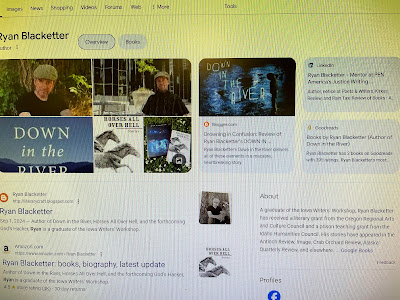.jpg)

I know Greg likes to think of himself as literary. He said so when he wrote the Gemini search result about himself. But we have made sure that adjective will not be included in his legacy. These are more appropriate designations: Porn hacker. Religious fraud. Sexual harasser. Targeter of children. Literary censor. Online imposter using avatars. Narcissist with psychotic features.
Nobody is going to add "literary" to a list like that. But "literary censor" is an appropriate use of the word.
Cording Update
September 23, 2025. I found unusual email behaviors after I added two of Robert Cording's emails in July. First, I received "undeliverable" notices for one of his emails, but then stopped receiving the notices for a while, then continued to receive them later. It seemed likely that Greg was interfering.
The other email was a Holy Cross address. When I Googled it, the search result came back with an email that doesn't exist. I wondered if my copy of Cording's email had been digitally changed, but I figured there was more to it.
This screenshot shows the "rcording" email was understood as "recording" in the search. I repeated the search over a few days. When I typed the email into the search, I also received the false email in the search result.
The search result advised that I look up the very email that I had just searched!
It appears that Cording's email was disabled on my Google app, in the search--even while it recommended the same address I was looking for. That's quite a loop!
This email exists on the Holy Cross site and elsewhere on Google. Therefore the Google search should have brought up online content.
I believe Greg didn't want Cording to see my posts--he's a Slant author with a big name--and Greg went to a lot of trouble about removing him from my email list.
Also, I never received an "undeliverable" message for this Holy Cross email. It seemed that it was fixed to go nowhere at all.
It's possible that Robert blocked my email. That's his right, and I can't know what happened. But if so, it seems he had some high-tech assistance from Gregory Wolfe.
In this entry, I want to show one thing that Greg has achieved in terms of tech. Removing his friend from my email list isn't his highest crime. But we have a glimpse of the skill level he brings to more nefarious actions, such as disabling the search of my name on Amazon and fixing a child death Image to my FB friends list.
I don't understand the tech, but it's clear that there was some doctoring of that email and of the search engine on my Google app.
Submissions, Round Two
September 22, 2025. My second round of submitting "The Lord's Hacker" is already fraught with evidence of censorship. My search results for small presses one day were extremely limited, because Greg controlled the search. Only two lists were available, and they contained information from ten or fifteen years ago. I posted about that.
When I sent an emailed submission to Clash Books the other day, I received no automated note in return, nor when I wrote them on their form. Every time I've submitted without receiving an automated note, I have received nothing back, no note, no rejection. It goes out to the wind. Greg has deleted countless emails. It's possible some presses don't use automated notes, but the fact that I don't receive rejections suggests interference.
When I submitted to Autumn House Press on the same day, I discovered that the bottom of the page was fake, and I was submitting to a vanity press. I'm sometimes hesitant to mention such things because it sounds so fantastic. But many of Greg's hacks show an impressive ability to merge pages or create a false bottom of a page.
I've posted about this censorship, but I'd like to place these and future submission hacks on my featured posts, in one ongoing entry. Greg's censorship is one of his greatest moral failings, especially since he calls himself a "renowned" literary editor and publisher. He might compartmentalize his crimes and pretend they don't exist, but that's his fantasy, not ours. This might be his last chance to salvage his reputation and do what's right. But I don't believe he'll change. It seems the only way he knows how to fix things is by hacking. But that activity is precisely what will sink his reputation and his legacy.
Greg Seeks Murder and Serves up Malicious Info. in the Meantime
September 20, 2025. I have written many entries about Greg's use of a dark webs technique that involves making my computer hiss in rhythmic patterns. It's a psyops technique. ("Psychotic Harassment," 7/26/25). He has resumed a heavy use of this technique lately, possibly because it's hard to expose.
If this "hissing computer" concern sounds like normal computer activity, I would argue that it's too complex for a computer to make on its own. Dark webs techniques are hidden for a reason: they are designed to cause physical, emotional, financial, and familial harm, even suicide--Greg covers all of those bases--and the "best" hacks seem like normal life. Law enforcement wouldn't look at those.
Though Greg is psychotic and dangerous, and actively seeks to inflict injury, he often jeers at any mental health issue. He has often ridiculed me for taking medication, for instance, although his constant surveillance and hacking are insane behaviors.
Yesterday I was revising a story that takes place in an alternative, 60s-influenced psychiatric hospital. Patients wear street clothes (no shoelaces or drawstrings) and are allowed to go outside sometimes. It's set in the 90s, but I wasn't sure such a place would be believable. I searched "what do people wear in psychiatric hospitals."
Most facilities are locked down and patients wear paper scrubs, I know that. But I wondered if there were any alternatives.
The third item on the first page was "straitjacket." The first item on the second page was "straitjacket." There is not a chance that Google algorithms would present "straitjacket," twice, to someone who is looking up psychiatric hospitals.
Page one:

Page two:

Greg Fakes Another Gemini Search Result
September 19, 2025. I found another Gemini gem that was obviously written by Gregory Wolfe. I looked up the title of a post that has been on my main site for a week, "Gregory Wolfe Hacks Another Publisher," and big surprise it wasn't online. Greg kept it offline, even though the main page of my blog is online.
The post explores why I believe Gregory Wolfe hacked the Sunbury Press publisher, months after the latter had accepted "The Lord's Hacker" for publication.
Greg had already written the search result just in case someone looked it up. No reports of hacking! That's because he took my GW post offline.

This search result is completely false.
How did Gemini know it was a headline? My language is in quotes, but any sentence could be in quotes to find exact language.
"The headline likely confuses these people, perhaps intentionally." Come on, Gemini did not come up with that line! Gemini is attempting to mindread here? Not a chance.
Is Gemini really going to respond that this is inaccurate and misleading? No, it would say there is no content for that search, something like that.
Imagine seeing this response from Gemini: I see you're looking up Pastor Johnson who you say might have raped someone, but there are no public records of that behavior. Pastor Johnson is a very reputable fellow. Here is evidence that refutes your assertion.
I imagine that Google could have some legal troubles there, telling a potential victim she's not a victim at all.
Rewriting Gemini searches is a hacking crime. I wonder who continues to write material that is negative to his enemies and positive to himself. I think we all know it's Gregory Wolfe.
Wow. I'm starting to feel like Bob Woodward in All the President's Men, shoveled under by deception.
Greg has claimed he is not a hacker, after hacking into Gemini and providing a false search result.
Here is a paper copy. The screenshot above had better continue to look like this one.
1984 Stuff
September 17, 2025. And the next round of censorship begins! Gregory Wolfe will be our literary circus master. He will sing songs about his love of literature while performing strenuous acts of censorship.
Greg removed two lists of publishers from my desktop. They were both current lists of houses that accept submissions without agents.
When I tried to find lists on a Gemini search and regular Google search this morning, I found that my search was extremely limited. Greg often limits searches. Only two lists came up.
The lists of publishers are from ten years ago or earlier, all info. out of date. One list says Graywolf accepts unagented submissions, but they stopped doing that ten or fifteen years ago!

Soho Press is listed as a publisher who accepts unagented books, but they also stopped doing that years ago.

When I submitted The Lord's Hacker to Clash Books this morning--their site requests an emailed submission--I received no "success" or "thank you for submitting" notice. That's almost always a red flag that the email didn't make it.
But what follows is the real 1984 stuff. When I looked at the Autumn House site, the screen lagged and it was slow. I've submitted here before, so I was familiar with the site. At the bottom of the page, a note said they were open for submissions. It said they partnered with Olympia Publishing. I wasn't sure who that was.
I filled out the online form, attached my ms, submitted, and received a "success" note from Olympia. When I looked them up, I discovered they are a vanity press.

When I returned to Autumn House, I saw they aren't in fact accepting submissions! I have seen Greg pull off this move before. He slows down or freezes the screen while he creates a false part of a website or writes a false note--whatever he wants to do. As I have said, he's very high tech, and quite elaborate.
In January, something similar happened. I submitted to a Portland publisher, but received a "success" note both from the publisher and from the vanity press Pegasus Publishers ("The Censorship Publisher," 1/6/25). Same technique, same hacker.
In case you missed recent updates, Gregory Wolfe is censoring The Lord's Hacker. He's out for murder, but at least it's a sign that we are crowding him again.


J.T. and Camilla, Hacked and Hiding
September 15, 2025. I have mentioned the "weenies" before, those who were hacked and failed to protest. I know what it's like to get hacked by Greg at first. He owns you. It's as if he turns you here and there and swats your butt to let you know which direction you're supposed to walk. Sometimes you almost want to show him you're a good boy, as if to say, "I won't tell."
I've explained that he deleted my essays, hacked my phone and my wife's phone, sent child porn, etc. It was scary. I wanted it to end. Then I decided that I was going to fight the pimp. Also, I have mentioned specifics about J.T. and Camilla often in this post.
Most people stay silent about hacking. Law enforcement lacks the tech to keep up with hackers, and most judges seem like relics of the 1970s in their attitudes and knowledge, even when they're young.
But Greg has committed a thousand disgusting crimes, much of it tinged with a perverted sexuality. He's so hard on you because it's important to him that you remain silent. Therefore you have made a deal with a Russian-style porn hacker and a very dangerous person, not only dangerous to you but to others. Congratulations is not in order. Your silence ensures that he'll keep doing it.
I know Greg has hacked Camilla Mortensen at Eugene Weekly and J.T. Bushnell at Oregon State University, both in my area--to name two. Camilla had signed up to write an investigative article on Gregory Wolfe. Then she was hacked and didn't talk to me again. J.T. Bushnell published an article partly about me in Poets & Writers. He was hacked and went silent as well. Greg hacked him so that he wouldn't write about me again, and removed J.T.'s many P&W publications from his top Google pages. I believe he did this so that no one would read about me there. Greg is very jealous and angry about that article.
People used to remain silent about many crimes, especially sexual crimes, even when they involved their own children or neighbors. They'd sooner climb under the bed and weep than report what they knew.
This refusal to act while under duress amounts to a profound level of negligence. It affirms that only oneself matters, as if hugging and caring for me, me, me is the important action to take.
Although they know that Greg is a dangerous criminal, they simply want normalcy to return. Who cares that other human beings are being tortured, as long as they can drink their tea on the back porch and "just breathe and feel whole again" or whatever it is they do to escape their responsibility to others.
Everyone loves to use rhetoric like fighting tyranny and speaking truth to power. But I have to roll my eyes inwardly at such utterances. Very few people actually do those things.
Greg Gone Wild at Google
September 13, 2025. Greg recently deleted my post regarding his illegal seizure of my Google Control Panel. He hasn't been my publisher since 2021, but he believes he has the authority to control and harass anyone.
In this screenshot you can see that Greg has placed my one bad review in my Google banner. No Google algorithm would ever place a bad review here, much less allow it to remain for years. It's at the top right of the page.

The "overview" section is from 2013, when my book first appeared at Slant Books. In addition, Greg has cleared most of my significant publishing history from my first Google page. He even placed twenty pages of porn descriptions in my name and placed it on Google for days. He controls my Amazon page too.
When J.T. Bushnell wrote about my novel Down in the River in Poets & Writers, Greg cleared all five of J.T.'s Poets & Writers articles from his high Google pages. But articles in this magazine are supercharged by millions of online readers, and it makes no sense that they would all simply vanish from J.T.'s Google page one day.
Greg is a highly skilled but often sloppy criminal who reorders Google content with ease. With his pants off, wearing VR goggles, and firing his candy-colored AR15 in random spirts, Greg pretty much runs Google. Don't talk to this person if you can help it.
Judicial Review
September 5, 2025. In December, 2024, Judge Jay McAlpin presided over my request for a retraining order against Gregory Wolfe. His first comment during the hearing was that the evidence I had submitted downstairs was "incomplete. There's nothing like a death image in anything you submitted."
 He said this in an accusing manner, and I knew it was impossible to tell him that my hacker follows me everywhere and deletes files, because it would have sounded crazy. But for Wolfe to drift into these Lane County offices, with no serious tech, and delete a file in their system would be a piece of cake.
Wolfe has tampered with my police reports and hacked Camilla Mortensen at Eugene Weekly after she signed up to write an investigative article on Wolfe. Wolfe certainly doesn't care about any small-town courthouse.
But I did tell him that I had submitted a complete file. I also mentioned that EPD had forwarded my files to the FBI, and I assured him that the files contained death images--at least the paper copies I dropped off at EPD contained them.
But McAlpin shook his head disdainfully. He didn't believe it. I told him the name of the EPD manager who forward the files, but he knew anyone claiming to be hacked was not to be trusted. A phone call was beyond his interest. He'd already made up his mind.
Nor did he allow that Judge Charles Carlson had found my evidence convincing two years earlier. To that assertion, McAlpin said, "No."
McAlpin said I was "obsessed," apparently since I had applied for restraining orders against Wolfe before.
I hope that Judge McAlpin brings more than his hasty judgement and prejudice to court hearings that involve jail time. He struck me as an intelligent man who had made himself stupid by his refusal to keep an open mind. I wondered how many people he had thrown in prison after glancing at documents and making conclusions based on quick assumptions.
Before the hearing, I had seen McAlpin walking in the hallways, his chin raised in self-importance, and I hoped he wasn't my judge. He carried himself like Gregory Wolfe, as if his egotism and personal feeling mattered first.
I reported McAlpin to Oregon Judicial Fitness for his refusal to look into verifiable facts that I presented in the hearing, but nothing came of it. Apparently Judicial Fitness isn't interested in such trifles.
Judge McAlpin reminded me that careful and judicious administration of court cases were minor miracles. Now and then we are lucky enough to get a judge like Charles Carlson who, despite his generally conservative leanings, didn't think I was crazy for bringing a hacking case. He knew they are more and more common, and law enforcement less and less able to handle them.
Back in 2022, Carlson suggested I sue Wolfe in civil court. He said I lacked an "I'm going to kill you note," or something like that, so he couldn't give me a restraining order. I believed Wolfe's recently targeting my child might get some interest in court this time around. McAlpin wasn't even vaguely open to the possibility.
McAlpin won a place on the bench after hiring a PR firm--a company experienced at presenting smiles, modulating voices, turning liabilities into assets, and fabricating things like character, decency, and fairness. Come on, we know what those places do. I can hear the earnest voiceover and heartfelt music as I write this. All I have to say to a commercial like that is, "No." The fact that potential judges are even allowed to use PR firms seems troubling from the start.
Greg's Porn
September 4, 2025. I'm almost positive Greg planted this porn today. He tends to do that when he's enraged, blind, full of vengeance.
Greg's porn presentations are usually sloppy--something about them doesn't make sense. I don't show the full picture here, but this one below showed a woman one second before giving fellatio--at the top of my YouTube feed! The ad promises "tips for women to feel fulfilled and happy." Huh?
Greg's not the world's only porn bomber. But to find this on YouTube doesn't make any sense. They have strong guardrails preventing actual porn. It didn't land there by any normal process. I believe Greg placed it on my app, for my eyes only. He's good at placing digital content on any site.
And I bet it contained something scary, too--probably underage girls.

Greg Deletes Entry on Suicide Helmet
September 4, 2025. Greg has deleted a few entries in this post. He deleted my story about the woman whose enemies had inserted a microscopic radio in her nasal cavity and the FBI were working with her. He deleted my entry about the digital card Greg inserted on my manuscript The Lord's Hacker, when I opened it on word, with the words "Changes were made since you were last here." I restored both of those entries.
Last April I posted that my son had found an "article" on a "suicide helmet" on his computer. He said he didn't know why it was in view. I was concerned that it was Gregory Wolfe lifting it into his view, since he is so focused on suicide with me, and my son was clearly on his radar.
Later my son told me that he and his friend had found a suicide helmet "video" online, as an example of historically strange devices, and he didn't want to admit to watching it purposefully. I still wondered if Greg was involved. But since I had no evidence, I wrote my group saying that Greg hadn't targeted him after all.
I also posted about it, but it's nowhere to be found. Greg has a habit of deleting posts that are disturbing and might reflect poorly on him.
Here is the email I wrote the group:
 Image Cover, Summer 2024
Greg Doctored My Screenshots of Image on AI
September 3, 2025. Greg has doctored my screenshots I took when initially reporting about his fake Image Journal AI content. He changed the initial language "details of closure" to "elaborate on closure." The original language suggests it's closed. The changed language suggests a level of openness to the topic of closure. It's subtle, but I believe Greg wanted to demonstrated that I was wrong about the language and wrong about a definite closure.
Here is the original post:
Greg's Fake AI Image Journal Content
September 1, 2025. I found some more sneaky GW handiwork. When I Googled Image Journal on AI, it presented Gregory Wolfe as founder, which is true, then the closure of the journal, which happened briefly. But you have to go down to the bottom of the page to see the "Details of closure," and click to a new page, to discover that the closure was only a brief one.
The presentation suggests that the closure was due to Greg's absence. Of course, Greg wanted to give that impression. And there is an obvious intention to communicate that it's still closed! You have to select an ambiguous link at the bottom ("details of closure") to see that the journal is now open.
How is the fact that it's still open a "details of closure" issue? Most viewers would catch a glimpse of the closure and move on.
This AI content is designed to reduce interest and business. It also states that "work first published in Image was featured in prestigious publications . . ." as if recent Image content is lacking. This is quite obviously a Gregory Wolfe fake.
Image Journal continues to be ranked as a top journal for writers seeking the best places to submit their work. I've been published there, and I see it often on "best of" lists. It has the added distinction of having nothing to do with the toxic Gregory Wolfe. Given what we now know about Gregory Wolfe, there is no chance that Image would still be open if he had been allowed to continue there.
I am certain this fake entry suggests only the tip of the iceberg regarding Greg's hacking of Image.
[I added another original screenshot to capture the "Details of closure" message]
[I had to click on "Details of closure" to see that Image "did not close." This information was not on the main page.]
Greg's History of Faking Screenshots
September 3, 2025. Greg has a history of tampering with my screenshots. In the case below, Greg had been harassing me with emailed notices about my own iphone photos of my son. I included a screenshot of this email notice, and told the group that iphone memories are not delivered by email. It was days later that I saw that Greg had replaced my screenshot with a new screenshot.
Here is that post:
Threat Against My Son and Tampering with Evidence
On February19th 2024 I emailed the scholars that I had a friend request from a very young prostitute. Her comment that she could “go as long as you want” struck me as false, something an old man would say when trying to sound like a young prostitute. I didn’t take a screenshot because she might have been underage.
Seconds after I sent that email I received this “New Photo Memory” with my son’s picture on it. The trouble is, iphone memories are an iphone-inclusive feature, and they don’t send out such notices via email. The purpose was to send fear and alarm about my son’s safety. My hacker reviews my emails and was probably angry that I laughed at him about the prostitute avatar.
Then I emailed the scholars again, about his fake email containing the iphone memories.
The iphone memories email was deleted that day. Luckily I had taken a screenshot as soon as I received it--but screenshots aren't always secure.
It wasn't until March 11 that I saw he had replaced my screenshot with another one. This new screenshot shows iphone memories as generated by iphone instead of the original email he had sent. This new screenshot also shows a two-minute lapse between when I sent the email about the prostitute and when he sent the iphone memories email. But when I had taken the screenshot, it recorded that only seconds had passed. This man has shown that he can put himself through quick tedium for his hacking work.
This is the screenshot that he replaced mine with. Instead of showing seconds on the bounce-back email, this one shows two minutes, enough time for him to swap the screenshot with a new one.

New Image Gemini Search
September 2, 2025. I was delighted to see that Greg fixed up Gemini's Image Journal search. The last Image search (a recent entry) was a misleading mess, revealing obvious interference. It not only suggested that the journal now is not so great, but it said that it was closed for business.
Today's Gemini search presents a continuity between old Image and new Image, and the language is positive. Results of a Gemini search might vary, but it hits the same tone every time. Greg should know such things. New AI searches are bizarrely competent. It's the old AI searches that were confusing and strange.

Greg Hacks AI Search
First Search
August 30, 2025. For the first time ever, I looked up my name on AI, and found that my novel Down in the River received "national attention." It also mentions my Poets & Writers review, etc. Then I posted about it on FB, saying "Sometimes AI knows our names when few others do." But the grim villain Gregory Wolfe sees everything, blinking at his screens. He didn't like what AI said about me.
Here is the positive AI search below.

Second Search
When I looked myself up again a half hour later, to show my son what was on the AI search, the result had completely changed. There was no mention of national attention, the photos of the books and articles have photos that have nothing to do with me. The word "prestigious" was cut to refer to the Iowa Writers Workshop. And other comments were altered or reduced. I've seen Greg change internet content right before my eyes before. Now I know he can do it on an AI search too.
This is what it's like to live with Greg--in case anyone doubted that he is a deceiver and a fraud who always sits in the chair. But I thank him for this neat before/after illustration.
Here is the second search, after Greg doctored it.

Third Search
On a third AI search an hour later, I found information about my firing from BSU, though a journalist had found false charges had been used by the university. (Control-find "Red-State Freakout"). Greg's always working, and this hacking is his real work.

Greg Hacks Another Publisher
July 14, 2025. Greg hacked Lawrence Knorr at Sunbury, who had accepted "The Lord's Hacker," and they released me from my contract after he was hacked. It's true I had complained that my editor was rewriting my characters, but I doubt it was the first time an author had complained.
Publisher Lawrence Knorr accepted "The Lord's Hacker" in September 2024. A couple of months later, he told me on the phone that the Christian leader's character was interesting. I asked him if the hacking moments seemed too fantastic, and he told me he believed they could be done.
Five months after that, he released me from my contract. He said that I had complained too much about my editor's rewriting my characters and the staff had lost their generosity toward me. They insisted they were only trying to "help" my book.
Lawrence included these lines in the email that he said was a precursor to the termination of contract: "The antagonist, StJohn, is not believable . . . Additionally, many of the hacks he performs would require an incredibly high level of technical knowledge and skill that seem very out of character."
He obviously arrived at an about face, and I believe he had Greg's help in that. Also, a publisher writing a negative review about a character in an email that promised a termination letter, seven months after the book's acceptance, seems unaccountably strange--especially since the publisher had read the book before and claimed to like that character.
I believe Greg hacked Lawrence, just as he has hacked so many other publishers, and so the latter was forced to adjust his feelings and attitudes about that character. He must've figured Greg was reviewing our emails, and he wanted Greg to leave him alone.
The one commonality hacked people share is that they say very strange things in their rubber-legged, shaky-fingered panic.
He has some kind words, but since he told me he'd read the book before, the suggestion that this was his first shot at it was disingenuous--seven months after he accepted my book.
Greg Isn't The CIA
August 28, 2025. One interesting thing about Greg is that he’s a master hacker—not easy to learn how to do that—and that he hacks like a slob. He believes he’s some CIA guy moving invisibly, leaving no evidence, and yet most people who look at this post are convinced it’s Gregory Wolfe, and many are professors, editors, and writers.
He had the motive to delete all of my blog followers, disable comment functions, delete some of my posts that focused on Greg targeting my child, delete my emails about Greg, delete emails his friends sent me, delete emails that had attachments of screenshots of his work. He had the motive to delete police reports I’ve filed about him, delete records before I requested a restraining order, delete my emails to Oregon Judicial Watch. And he had the motive to cripple my Amazon author page right after Lawrence Knorr at Sunbury Press accepted The Lord's Hacker (a book about Gregory Wolfe). When that wasn't good enough, he hacked Knorr, resulting in a dismissal of my contract, and on and on ("Greg Hacks Another Publisher"). And these are only the hacking incidents in which Greg was saving his own butt!
It’s this intense focus my hacker has in deleting so many things about Gregory Wolfe over many years that makes me think my hacker is, well, Gregory Wolfe. That’s one reason, at any rate.
Criminals say that if you want to kill someone you should kill some random person you don’t know. Then the clues won’t point at you. That’s true for choosing your hacking victim as well.
How Greg Sees ZZ Packer
August 27, 2025. Greg reduced this FB post below to having only one like. He often reduces likes on a post or page. I have mentioned that Greg was not pleased when I dated a black woman in 2020. (Control-find "Manipulates Dating Site" for details).
I mentioned that Greg altered my Observer article "Polemical Literature" and renamed it "ZZ Packer." ("Greg Changes Observer Article").
Here is the FB post with its likes removed.

Maybe he wanted to show me how he feels about ZZ, as if to demonstrate that he's not only using her name on my Observer article, but that he disliked her anyway. Whatever is the exact calculation here, it's ugly.
ZZ was a visiting teacher when I was at Iowa. I talked to her a few times at the Foxhead. We discovered that our backgrounds were similarly religious, though she grew up in Atlanta and I grew up in Idaho. She's one of the most friendly, independent, and non-ideological people I've ever met, and her writing creates a similar impression.
Greg must see her as some kind of "angry black woman," without having read her book, of course. But her story collection Drinking Coffee Elsewhere often presents rough surfaces that give way to moments of light, forgiveness, misunderstandings resolved, and decency.
It's exhausting to try to communicate the petty intricacies of Gregory Wolfe. He has the mind of an ingrown toenail.
Uses False Avatars
[I present this older entry because it shows Greg's longtime interest in faking bad news about me].
My hacker has used a hundred avatars to harass me. The following blog entry was posted in September 2021 and shot up to number one on my Google page overnight (That doesn't happen with a brand-new student blog with one post).
Here "she" lists "a mild case of bipolar disorder" as my major literary accomplishment, no mention of my graduation at the Iowa Writers' Workshop, only negative or questionable achievements. This post was the first and only offering on the blog. (I have a manageable case of bipolar disorder, and have had two manic periods in my life. I haven't had a manic period since I began taking medication in 2010.)
This disparaging list reveals a bias against working class people and those who have struggled with mental health--a recuring theme with Greg.
This fake blog appeared right after Poets & Writers published an article that explores my novel Down in the River. Greg wanted people to see this in case anyone looked me up.
.png)
Enemy of the Church
August 26, 2025. I had a positive experience at my Catholic school, but of course I've wondered why the church is such a magnet for perverts. I believe a small percentage of very bad people are drawn to the church, either to hide as "holy" people while they continue their behaviors, or else to try to change, but are unable to change. I believe Greg is in the former category. He likes to hide as a holy man while performing his ghastly maneuvers.
Greg blocked my post about "The Keepers" two years ago, about a priest who raped girls in his school where he was the principal. He has restricted other such posts, except for posts that are positive about the church.
Last night I started watching "The Wolf of God," when I discovered the subtitles were off. When I tried to turn them on, the screen froze, then I was kicked out. I tried again and was thrown out. Then I discovered the subtitles were on, but the screen was black. (Two screenshots below). It was definitely a Gregory Wolfe operation.
Like some of the very bad characters I mentioned above, Gregory Wolfe has a surface belief in the church. He has devoted a lot of time to writing about his faith, but he compartmentalizes his evil behaviors, justifies them as holy acts in defense of the church, and probably even forgets about them sometimes. He wants to believe that he's a true son, and so he works fast to disable or hush up any negatives about the one true faith. In this way, he proves to himself that he really is working on the side of the church. I doubt he has any trouble justifying the illegal porn, child targeting, and all the rest of it.
It's also strange that he'd believe that covering up evil in the church is somehow working on the side of the church. Since that makes no sense, I think he simply decides to believe it, while forgetting that the evil people are in fact enemies of the church, and that he's one of them.
The photo of "Marcial, The Wolf of God," and the photo of the black screen with subtitles aren't visible on my phone. I put them up again. They will probably be removed again.


Suzanne Knows What's Going On
August 24, 2025. Gregory Wolfe uses his wife, Suzanne, to bolster his image as a Christian man who is happily married. He often reports on some cute note she penned for him, or something quirky she said about their marriage. A few days ago, she apparently made him a T-shirt that said "Another day, another dolor." That's witty, since her menacing husband had recently lost his audience and experienced true pain and panic at a level he may not have known before.

But I wonder how much we should trust his account of his wife's cute and witty contributions to his public life. After he was fired, Greg announced that he and Suzanne now owned Slant together, and they shared editorial duties. This statement gave Slant a "woman owned" vibe, and seemed to promise that a woman would work on staff to temper Greg's mistreatment of women.
But of course that was nonsense. It was just another item in Greg's PR factory, churning out more and more Suzanne material to soften the edges of a man who is increasingly known as a manipulator of women and a child predator.
I'm sure Greg signs his wife up to be a regular happy contributor on his daily Slant show. But Greg is in that locked room of his for twenty-plus hours each day, doing mostly nefarious things. Suzanne might welcome this cage that Greg calls his work station, or she might feel abandoned and isolated--or a combination.
It can't be easy living with a narcissist who is constantly scheming about how to trick people into thinking this or that about him. Since she receives little sustenance and attention in this marriage, her frequent pop-ins for light-hearted comments feel suspect and cynical. She is probably living under duress, enduring Greg's manipulations and threats every day. It's common and quite easy for children and adults who are controlled and manipulated to play intensely cheerful roles. They learn that this role is required of them.
When you have a hacker, you know his habits, and I know that Greg is almost always in his office hacking. The only change recently is that he seems to be going to church again. I've also heard from his former friend that he only sleeps about two hours a night. Greg hacks me in the early morning and late into the night, dropping in here and there at all hours. I suspect he has many people he keeps under total surveillance.
Suzanne knows what's going on in her house and in Greg's locked room. It's not convincing that the wife of Gregory Wolfe has the energy to exist as some digital bobblehead that gives the quirky and fun news about her insane, abusive marriage. Instead, I believe Greg directs her as needed. He probably demands they need to be a team. He tells her it's time for a Suzanne contribution and she gives him one, because he wouldn't talk to her for a week if she failed to comply.
I respect Suzanne for neglecting to fight for her man publicly when he was fired. In that news article about his firing, Greg said no, he didn't harm or manipulate or harass or gaslight any young women, and Suzanne didn't stand by her husband's side. She offered no public statement, though Greg probably tried to force her to do so. She saw all the terrible things he'd done over the years, and she wasn't going to play the role of the dutiful Christian wife and say what she didn't believe.
Greg in Photos
August 22, 2025. Greg uses pictures of himself to manipulate his audience. The photos he presents might seem random, but each one is carefully calculated to hide his nature and intentions and bolster a false self. This PR strategy is all the more unsettling given the seriousness of Greg's misbehaviors, and it turns more menacing as the years unfold.
Photo One. All smiles.

This photo presents a smiling and successful Gregory Wolfe, editor of Image Journal. He's got the Christianity Today vibe. He looks warm here, and probably wants to fit in with normal Christian culture to make his brand attractive. I know he had narcissistic personality disorder then, but at this time his illness remained hidden.
Photo Two. Intellectual heavyweight.

Later he used photos that were more serious--a heavy thinker, an intellectual. Something dark seemed to emerge in Greg in this period. With a new taste for power, he enjoyed it when others kissed his ring, and anger shook him when people failed to honor him. He could turn everyday misunderstandings or disagreements into years' long grudges. That was my experience with him, and I know others who disliked his need for a constant show of respect.
Photo Three. Devil-may-care.

After Greg was fired at Image for sexual harassment & etc., his ego received a slap down. There were credible reports that he'd harmed women on his staff. I believed this photo mocked and jeered at the serious moment.
As news swirled about his attempts to get women in the sack, he placed this devil-may-care image of himself online, his body twisted in a grand, entitled manner. There's no remorse here, no introspection, just a pretentious grandiosity, an assertion of image and ego, a high-flown F-you to the young women on staff who had given him many chances to improve.
Greg has two sides always. He's pious, but he uses porn as a weapon. He claims fidelity, but he tried to parlay his power into sex. He might publicly denounce rakish behavior, but he'd like to enjoy some of that young stuff.
Therefore this photo is not only tone deaf, it asserts a swaggering defiance that he can do whatever he pleases, even enjoy the fruits of the office place at his pleasure, as many other Christian leaders have done.
Photo Four. Out for murder.

But Greg's creative persona only went so far. He discovered that he was vulnerable, despite his money, position, and grandiose projections. I believe Greg presented this scary photo to show his anger and give a warning to those who might mess with him again. He looks dangerous, not serious anymore, and dangerous he is. His expression says, I will tear you apart if you hurt me again. This entire post bears witness to that intention.
Photo Five. Hated and hurting.

This picture was taken at NY Encounter after Greg's audience learned of his Russian-style porn hacking and all the rest of it. He looks like someone had fetched him out of the bay and wheeled him on a gurney to his table. He must've asked someone to take this photo of him at his lowest. He knew the pic would be useful to him.
He kept this awful photo on his site for months, along with a quote about feeling hated. Greg wanted to interrupt the tide of contempt that people had for his behaviors and to make them feel sorry for him. Instead of feeling remorse for what he'd done, he wanted to cash in on the pity.
Photo Six. Greg resurrected.

Greg turned from the audience that had closed the door on him, and found a new church and a new, smaller audience. I believe this new audience knows next to nothing about him.
He hasn't changed his hacking frequency. His ego demands keeping that going, to control people and find revenge. He believes he can keep his ugly behaviors in the dark by presenting an agreeable image suitable for daylight.
As a narcissist, Greg doesn't feel remorse. There's never a new Greg, washed clean in Christ's love or anything like that. It's always the same old Greg, seeking to manipulate.
To his previous audience, he said almost nothing about his troubles with me and others who were fighting him, as if hoping his credentials would argue his side for him. Now he's taking charge to let people know that he's really a victim in all this.
I'm getting a lot more views on LinkedIn and more Facebook requests with false profiles. (Greg uses avatars when I'm signed in, but curious people send fake friend requests to have a look around). I believe Greg's talking more this time around, taking charge, standing up. That's his right, but he tells a lot of lies. He's almost always telling lies--in his words, in his deeds, and in his photos.
This picture of Greg is a good one. I'm sure it feels good to have new friends, a new church. But since I know Greg, I know that everything he does has some Machiavellian purpose.
I believe he's returning to his early years as a Christian editor at Image Journal, where he smiled and smiled, to get an audience, to trick people into thinking he's a good Christian. The image of the tough-minded intellectual carries no weight anymore. In this way, he can build a new audience who loves him, make some more money, and try for a second chance at power like some invigorated Napoleon.
Now he's the light-filled Christian, the gentle monk who has seen Christ in the forest and tends to animals that are hunted and frightened. Gregory Wolfe has come full circle.
Greg's Friends
August 21, 2025. I believe Greg's friends will have a consequence for looking the other way on his behaviors. I'm not addressing this to anyone who will read this post, but to others, who know vaguely about Greg and may not want to look too closely.
Greg's friend Ron Hansen, who dismissed my evidence outright, in a snarky fashion, reeks of old-boy's-club defensiveness. He strikes me as one who'd look the other way on Greg's crimes.
That's not evidence against Hansen, but Greg has a pretty sleezy past, full of sexual manipulation of women, porn hacking, targeting kids, sending dick pics, and using child porn as a weapon. Meanwhile, Ron Hansen lights Greg's cigars and slaps him on the back. He probably does so because they're old friends and Greg hasn't been caught yet. Rather, he has been caught, but not by law enforcement--not yet.
As we've discussed, it took twenty years to catch Jeffery Epstein, despite people contacting the FBI the whole way. Don't think Greg is "free" simply because the FBI hasn't knocked on his door yet.
I doubt many people know exactly what Greg does, but there is a stink regarding the house of Wolfe now. After losing thousands of people in his audience a few months ago, he rushed off to a new church and found a new, smaller audience of people who most likely don't know who he is. But he will surely shape the story for his benefit, casting himself as victim.
It seems unlikely that most Christians would spend time with some random child porn "director" they met in a park. They wouldn't hang out with someone they met at Safeway who harassed women and tried to manipulate them for sex. They would stop hanging around them as soon as they found out.
But history demonstrates that many Catholics will spend time with priests who are known child molesters. In the 90s, families socialized with such priests, in many American cities. In the Georgia Baptist church, many Christians socialized or conducted business with men in power who were known rapists of kids.
I suppose it has something to do with power, or former power. We like it, and we're willing to excuse it or look the other way. At any rate, it happens, and the friends of such people often appear in the biographies later.
Greg often communicates that he's dangerous. He is, and I suspect he'll be especially dangerous if his name is attached to ours in a friendly way.
Gregory Wolfe and what he has done can't be a national story yet. It's too soon. As in the Epstein case, it might take decades. But there will be a national story, with all participants presented.
Censors Marymount Study Guides
August 21, 2025. I've argued that Gregory Wolfe is erasing my name, deleting my books from WorldCat, personal websites, and FB posts of literary journals such as the Antioch Review. I've mentioned a hundred other cases.
After a professor at Marymount University taught my story "She's Back to Sleeping" (from Horses All Over Hell) in 2019, this midterm assignment appeared in various online study guides. I posted about it in 2021.

In 2022, only one of the study guides showed the midterm essay prompt, but most of it was bot language, beeps and bops, with my name or the name of the short story appearing. Then it turned into a student business essay at the bottom of the page.
This action fits Greg's pattern of censoring my name often. He does it selectively, for the sake of appearances, but he does it.
But Greg sure wouldn't like seeing any record of my story being taught at a Catholic university. No way.
Online study guides may update their content, but I doubt they all delete the same material at the same time. I further doubt that any one of them is going to turn material into bot language and place a business essay at the bottom of it. That's Gregory Wolfe's style.
Greg has done this kind of thing so many times, I believe it was another brazen act of censorship.
This is why I hope to be named a censored author in the future. Not to profit from this experience, but to have a chance to reach an audience that Gregory Wolfe has blinded from my books.
Law Enforcement Tips the Scale
June 24, 2025. I had a terrific conversation with the Eastern University HR manager last month. When Greg announced that he was teaching there this summer--and exclaimed how happy he was--I called HR. Greg has shot down several of my applications to teach at universities, as I have discussed. But more than that, I wanted to let her know that Greg sends child porn and all the rest of it. People like Greg should be challenged.
HR's biggest concern was that Eugene law enforcement had found alarming items in this GW file. She said it wouldn't be legal to fire Gregory Wolfe without having been convicted first. But she agreed it was a brand issue for the college, and my city's law enforcement action gave credibility to my allegations. She said she was going to look at these pages and have some "meaningful conversations."
A few weeks afterwards, Greg hacked me especially hard. He wasn't "happy." When he's happy, he doesn't hack so much. I imagine that HR had a conversation with Greg's department and others on campus and someone spoke to him. This placed him in a position of needing to tell his usual lies: that I've been trolling him for years and that I'm mentally ill, etc. He was probably forced to say "no, I'm not a hacker."
Greg can't stop committing this daily evil, but he wants to keep it covered up. He doesn't like any consequences for his behaviors. "I'm Gregory Wolfe!" I imagine he exclaims to himself in frustration. For many years, he was able to hack without consequences. Almost nobody believed he was doing these things. No matter what happens with the FBI, a police department was alarmed by Greg's scary behavior, and that seems to have changed some things.
Fake OED Music
August 16, 2025. I recently posted that Greg made a fake, generic hold music for my call to the Oregon Employment Department. They have a distinctive hold music, and this is not it. The whole call was fake, and no one answered after three hours. That is Covid era hold time. You have to click twice to hear the fake music. (I describe his motivation in a different post below.)
This is how OED hold music actually sounds:
https://www.youtube.com/watch?v=57QX9XICGTY
A Preponderance of the Evidence
August 13, 2025. Determining the accuracy of a hack isn't an exact science. Sometimes I know what happened right away, and I continue to know what happened. Other times I decide a post is weak or it doesn't illustrate what I had thought, and I cut it.
Regarding Sunbury Press, at first I believed I was simply let go from my contract, and I didn't think about it for a couple of months. Then, out of the blue, several facts presented themselves to make me certain that Greg had hacked the publisher. Your mind can work on an issue while you're not thinking about it, of course. Those posts that take a little time are often the most illustrative.
In other posts, I simply believe Gregory Wolfe did it. He has a history of sending me porn, for instance, and I know that he has sent other people porn. In 2018 I found a fake Gregory Wolfe Facebook account that had a banner full of penises. I discuss this elsewhere. Whoever made that account knew about Gregory Wolfe's dick pics. I came to know about them personally five years later when he spoofed pics to my date via my phone.
That might not add up in criminal court every time, without an IP. But as Judge Charles Carlson told me, it could add up in civil court, where a "preponderance of the evidence" test is used. That's the test I do my best to follow here. I'm not a lawyer, but I try to present the reasonableness of my assertions in my own layman's way.
When this post first went online, Greg's face appeared on my blog in warning. All my blog followers were deleted. Comments were disabled. And the post went offline. Only Greg had the motivation to control this post about him, and he executed the attack on multiple levels, within two or three days. The connections are obvious and persuasive, despite the lack of an IP. This satisfies the preponderance of the evidence test.
In other cases, patterns are revealed. Greg has sent many death images and many pictures of my son. Since I know he likes to create terror with illegal porn, I extrapolate the same motivation when I receive child death images and other death images of old friends who are actually dead. I know I don't have two hackers, one for porn and one for child death. It's Greg doing both of those.
It's fascinating that Greg doubles down on his hacking when he's been exposed. I believe he started hacking as a way to scare his enemies and protect his brand, but now his motivation has devolved into pure ego. He's like an insane, dying general lying in the desert outside of a village, shooting at anything that moves--women going to the well, children playing soccer, his own men. There's no point to it anymore. He just wants blood.
. . .
I have generally discussed Greg's porn hacking in vague terms. In the next entry, I'm a bit more direct, to create a picture of what Greg does.
Greg Spoofs Porn
Disturbing content
August 13, 2025. I took this photo after Greg used it to spoof a ten year old girl in August 2023. Spoofing means that a hacker presents one image that seems to represent the content, but when you click it, there is an image that you didn't ask for. This is the image I clicked on, an adult woman with an obviously developed body. I cropped it now so that she is concealed as much as possible.

The ten-year-old that appeared after I clicked on this photo was fully clothed but sexualized by her makeup and clothes, sitting on a bed and talking. I clicked out instantly. I gave up looking at porn all together at this time, as I didn't want Greg spoofing me any more kids. (Who would have thought he'd plant child porn on FB reels? I suppose such escalation is common to porn hackers).
Greg spoofed material in 2015 as well. When I clicked on an adult image, I discovered many nude fourteen-year-olds and some that seemed younger. I clicked out of it.
These actions show the height of Gregory Wolfe's malevolence, and his interest in terrorizing and controlling people.
Creepy ContentAugust 11, 2025. I was scanning Facebook "reels" today, as I am recently back on social media. One of them in thumbnail showed a man walking past an eight-year-old girl, and turning to check out her backside. Hmm. It seemed very creepy for reels, the setup lascivious, with obvious kid content. Of course I didn’t click on it, but it seemed bad. Greg can slip into any app.
He would be the one who could do it. He doesn't need to ask permission, because of his hacking skills. He can travel invisibly. I think Greg is feeling murderous again, and likely planted some child porn on reels. It makes sense as I called him a pedophile. He gets blind with rage and sometimes does scary, stupid things.
He can also plant something only on your app of any site. He posted an ad for an apparently underage prostitute on my FB page two years ago--only for me to see. But other items he posts for everyone to see, such as the Danish porn descriptions. Those were public. But he has demonstrated a longstanding interest in dropping porn on pages.
Greg might believe that since he uses child porn (and other porn) to get others in trouble or scare them, he's not using it for the worst reasons. But planting child porn on reels doesn't go a long way to show he's not preoccupied with kids in a dangerous way. As I have said, if he's using child porn now and then, he's comfortable with the material, and probably enjoys it sexually.
Greg Disables Contact Info.
August 11, 2025. Greg blocked my contact information on social media years ago. My email is listed at the bottom of the FB page below, but the privacy has been changed to "only me." It's still there, and it remains frozen, so I'm unable to change it to "public." He has a strong desire to make sure that no one tries to get in touch with good news or even to say hello.
Greg has developed more sophisticated methods to censor my communication. He corrals my emails on his server and deletes ones that he doesn't want me to see, and sends the other emails on to me. I've shown that he sometimes rewrites my emails after I send them. Since he corrals my emails, he can rewrite or delete them before sending them, or not, to their destination.
I presented a screenshot of this technique in "Rewrites My Emails" on June 15, 2024. I also mentioned that I received Messenger notes from old friends many years after they were sent, and that Greg spoofed dick pics to my dates.
One time, a female friend placed this picture online with my name attached to it, as a gesture of goodwill. Greg deleted it and placed it in his Google Control Panel, so people would think he received the picture.

Some of Greg's hacking of my communication is hidden, and some of it is for me to see. Since the primary intention is to inflict harm, he lets me see some of it. Look at the privacy setting of my email on FB below.

Two Suspicious Email Blocks
August 10, 2025. A few days ago I received two block notices hours after I had emailed the group, one from Robert Cording and one from Daniel Taylor. Block notices typically come back right after an email is sent, not hours after it is sent. Also, both block notices appeared at the same time, as if they were blocked not singly, but as a pair. Therefore both of these blocks seem suspicious.
Robert Cording is a Slant author and respected professor emeritus at Holy Cross. When I added his email to my group list two weeks ago, I received a block notice immediately, but it went away. Greg had generated false blocks before, over the years, and it seemed he was doing it again.
I assumed Greg didn't want Cording to hear the news I was posting. Therefore when I received another block notice from him (a few days ago), I didn't trust that Cording had blocked me.
The other block notice I received was from Daniel Taylor, a Christian conservative reporter in Alabama. The trouble is, I didn't add Taylor to my email list. The only people I added to the list recently were from Slant Books and Holy Cross. I looked back to emails I'd sent months ago, and Taylor wasn't on my list.
Here's what I believe happened. Greg had some right-wing support when he was fired from Image. They believed Greg was fired by feminists seeking to take down a strong Christian patriarch.
Therefore Greg thought he'd place Daniel Taylor's email on my group list, at the same time that I added the Slant and Holy Cross emails. He hoped the reporter would be outraged at my treatment of the noble Christian leader Gregory Wolfe. He thought Taylor might write an article about Greg and his mistreatment at the hands of liberals and feminists--something like that.
If Greg did place Taylor's email on my list, you can bet that he would keep him under surveillance to see if he wrote to friends or colleagues about Gregory Wolfe. I suspect Taylor did write to someone, but in a way that wasn't favorable to Gregory Wolfe, so Greg fabricated a block.
I'm speculating here, but I have a good sense of Greg and the way he thinks and operates. Also, only Greg and I can add emails to my group list. I didn't add that email, so it must have been Greg who did. He had a motivation in doing so, and I believe I described what it was. Why else would Greg add a Christian reporter to my email list?
I've never read Daniel Taylor, but it's possible he has more integrity than Greg hoped. I'm sure many conservatives have looked at this post and not wanted to jump to Greg's defense.

A Miscellany of Madness
August 8, 2025. Greg doctored my "updates" feature on my computer a few days ago, so that it lacks the "shut down" option. That means he was in a hurry for me to start his updates that will increase surveillance and screw up my computer. It took ten hours to update. After it was finished, my cursor lagged so that it was nearly impossible to type. God knows what other junk was added to my computer.
This morning, I found yet another update! This picture shows the absence of a shut down option, so I updated it again.

Suicide friend: The other day, my friend Michael, who committed suicide two years ago, was once again presented in my friends photo list--below. Two years ago, Greg included his photo in three different places on the photo list, as I describe elsewhere. Greg did this after his hacking sent me to the hospital for five days. His commentary was that he wanted me to follow in my friend's footsteps.
There is no way my dead friend is finding his way into my friends photo list now. After all, it's quite difficult for him to generate any activity, given his current state. He's dead.
I've included a piece of my Stephen King post, starting with "I've enjoyed," as a way to date this photo.
Constant updates: After posting the above, I went to turn off my computer and found yet another update ready for me, and the computer is impossible to turn off. Yet another update, thirty minutes since the last one! Once again, there is no shut down option.

I imagine that Greg is very sullen and angry that people are talking about the things he does. He liked it better when nobody knew. Wasn't it nice back then, when people thought he was a good Christian and not the high priest in the Church of Satan? I heard the latter organization has cleaned up its image somewhat. Greg might consider working with them to tidy up his own garden.
Strange Block Notices
August 7, 2025. Yesterday, ten hours after I had sent an email to the group, I received these two "address not found" or "block" notices. Usually I get such notices immediately after I send an email. They indicate that the person has blocked me or that he or she has left an organization to which the email belongs. It seems irregular to receive these notices out of the blue.
But Greg has been fixated on the robert.cording email. I received a block notice two weeks ago, but after that I received no block notice until now. I believe Greg wants to conceal his shocking behaviors from the Holy Cross community. He won't ever quit these behaviors, but he wants them to remain hidden from certain colleges.
I have posted about Greg's fake block notices before. In other cases, I've received block notices with numbers on them instead of email addresses. It's part of Greg's gaslighting. He wants me to believe people in my group are finally frowning on my efforts, and turning to him.
Greg has also hacked people in my group. In that case, they write saying things like "REMOVE ME FROM THIS LIST IMMEDIATELY."
It's also possible that they did block me. That would be fine--unless Greg gave them a gentle hacking to coax them. But the appearance of both block notices out of the blue, when I hadn't sent an email, makes them seem doctored and suspicious.
You can see by recent posts that this is one of Greg's insane periods. That's usually when he does his most invasive hacking.


Another Fake Call
August 5, 2025. Greg blocked my call to the Oregon Employment Department yesterday--an action that could land him in prison. I have three weeks off now, and I have the right to file. Greg has blocked this call before. Here's his typical setup.
When I called a few times, I found this "User Busy" card on my phone. The initial block gave Greg a moment to set up a fake call that seems successful, with the OED introduction and instructions, but when I'm finally waiting for someone to answer, fake hold music comes on the line. OED has characteristic hold music, but this generic classical was not it. He allowed the real call to play for a moment, then attached the false hold music that went on forever.
I knew it was a fake call, but I let it play for three hours just to show it was a doctored call. A three-hour wait is something we saw during Covid, not now.
Greg has set up false hold music and voicemails before, so that my calls don't go anywhere. I've posted about his phone splicing before, and also shown that he placed a fake voicemail at Eugene Weekly, when he was hacking them.
Greg often blocks applications to "services." On the one hand, he's a secret Texas Republican encouraging personal responsibility, but for the most part he uses that position as an excuse to hack.

Fun with NPDs
August 4, 2025. Greg has achieved the wildest dream of anyone with narcissistic personality disorder (NPD). He has put the whole world under surveillance.
According to Barton Family Law, NPDs often use GPS tracking, stealing passwords, and social media blocking to control everyone in their house.
Cameras might be used in rooms with a "trust but verify" justification. A family member might be forced to strip for an underwear inspection to ensure that he or she hasn't recently had sex. Gaslighting and shaming are used to cast the NPD as a victim and the family member as a perpetrator, in all situations. Even small disagreements are seen as acts of murderous disloyalty that must be punished.
Greg believes the whole world is under his fatherly control. He drops into anyone's computer to view emails, private posts, and catch a peek if possible. He tracks people's movements on their phones. He limits or alters internet job searches to show you that you can't see what you want to. In cases of extreme "disobedience," he hacks your family to make those around you unhappy. He spoofs dick pics from your phone so that your dates and others believe you're sending the pics. He will produce psyops noises on your computer to disturb and physically harm you. He will create errors in your manuscripts. He will hack your current publisher or employer. He has hacked my publisher Wipf & Stock and Sunbury Press, accomplishing my removal in the latter case.
Some people he has hacked will show out publicly as Greg's friend. A few years ago, a Seattle Pacific faculty member who was on my email list wrote me this panicked note: "Greg is a friend of mine! He has made an incredible contribution! There's no one else like him!" Hacked people often seem panicked like that.
Since Greg dominates, controls, and terrifies his coworkers, I read this man's testimony as a tortured person's declaration of obedience.
One time, when we were FB friends, Greg posted, "Should I forgive her?" Just that one line. Greg's always wounded, always the victim, another common feeling of NPDs. How could the world not love his deep hunger for abuse? Can't people see his accomplishments and love of God?
Greg likes to believe he has achieved something large and world-changing, and he has: He has developed a system to keep all the world under surveillance and to punish anyone who disagrees with him.
The Cruel Giant Who Sank in the Bog
August 2, 2025. Yesterday I posted that Bukowski's poetry was much finer than his raunchy novels--his poem "The Genius of the Crowd" is gorgeous, perfect--and Greg commented with an avatar named Gary Rowan, who says I have no "well known literature." Recently, elsewhere in this larger post, I mentioned that Gregory Wolfe is going to be a hyperlink in my biography, and my assertion roused the narcissist. Greg wanted to push back.
Gary Rowen is clearly an avatar. Why would this Gary Rowan happen to subscribe to a private FB Bukowski group? How would he happen to have the same view of me that Greg has? If I'm so unknown, why does Gary Rowan know me and have such strong opinions of me, especially when I didn't mention my writing in the post?

It's true my books haven't seen a lot of sales. That's partly due to Greg trying his best to cancel them. He disabled my Amazon account, cut the Antioch Review's FB posts about my books, deleted Down in the River from people's personal websites, and hacked Sunbury Press's publisher so that he released me from my "The Lord's Hacker" contract for no good reason, and etc. I explore these and many other similar actions elsewhere in this post.
Then I became more well-known than Greg wanted. In the coordinated anti-censorship campaign of this post, I was able to reach thousands of people regarding Greg's scary behaviors, with some valuable help.
Since my books enjoy some critical success, I believe they will be known one day as censored books and will live on despite Greg's efforts to cancel them. That's all I hope for. I have no grandiose visions, only the wish that my books are not buried by a tyrant.
People don't like censors. They side with authors who were censored. Therefore Greg's obsession to ruin my career backfired--a benefit I didn't expect, as I didn't know my posts would get passed around as much as they were. But of course I hoped my news would get out there somehow. Half of my posts explore his erasure of me and my works, and his interference with my submissions. The chance that something positive could come from this ten-year nightmare is welcome. Any censored author would rejoice at such a possible benefit, even if doesn't come till long after he's gone.
I hope I discuss the possible resurrection of my work with some humility. It's not guaranteed to happen, but it gives me a measure of hope that I haven't had in a while.
Greg's books sold well due to his position at Image Journal. He received good notice from friends and well-wishers. But their critical success is spotty. In Beauty Will Save the World, he presents several strong introductory essays from Image volumes, but there is no structure to the book. It fails to rise as a narrative, and it reads like a flatline. I read this book after Greg had published me at Slant. I saw the power of the writing, and the weakness of the book, and many reviewers also noticed these conflicting qualities.
I can't be sure if "Beauty," his most well-known book, will live. But I suspect that the world will not tolerate a censorship publisher, porn-hacker, and targetter of children to teach it about finding beauty and saving the world. Nor is Greg fit to discuss the best ways to build character in children through reading. I present my mock review of Books that Build Character in featured posts. It's a bad book up and down.
Greg used hacking as a way to secure power in his little empire, and it was hacking that brought him down. Now that, my friends, would be a great story, about a cruel book-hating giant who sought to control everyone in his kingdom and finally sank in the bog. It would be fit for children and anyone else who has a natural love of justice.
Greg Plucks Out an Email
July 31, 2025. When I was searching emails for Slant authors, I found rcording@holycross and placed it in my email shoutout list. Later I saw that the email had been removed. Only Greg and I can remove addresses from my shoutout email. And it wasn't me.
Greg probably thinks the guy would be grossed out by his behavior, so he doesn't want him to hear the news.
I found a different email address for this author, though, and that one came back blocked just now. Something seems fishy. Maybe this author blocked me, but I know Greg can reconfigure emails so they just go out the window. He could easily fabricate a block. Since he removed the first email, I'm especially suspicious about it.
Note, one hour later: I just saw that Greg has restored that first email to my list. Not only that, but I emailed a new post just now and I didn't get a "blocked" notice this time for the second email. But I got one after I sent my previous post.

Total Surveillance
July 30, 2025. The need to place people under total surveillance is common among those with narcissistic personality disorder. Jeffery Epstein had hidden cameras in every room in his NYC mansion, even the bathrooms of guests and staff, as Greg likely does in his house. A person doesn't reserve psychotic behavior only for outside the home. He demonstrates it on the inside too. Therefore I can guarantee his wife and kids have experienced his total surveillance and all the rest of it.
In many posts, I've shown that Greg monitors my phone. I've shown that he interferes with my email and deletes many of my submissions. He regularly hacks my ex-wife's computer, employing the usual hacks when I use it. He's everywhere. He receives alerts when I log into Google accounts, so he can find exactly what public computer I'm using at any library or home. A few months ago when I posted at the library, my entire blog was deleted, and restored later. Greg only wanted to show me that he was watching.
The Eugene Police were impressed by his skill level. Officer Anderson said he must've practiced his skills on many people over years. Since Greg requires total allegiance and acceptance at every moment, he has triggered irritation in hundreds of people who didn't know they were dealing with a psychotic who would stalk and harass them and peek at their wives and children and threaten to ruin them simply because they refused to "honor" him absolutely.
Also common to narcissists is their passion to destroy anyone who disagrees with them or breaks with them. Epstein promised to ruin young women who finally got the strength to leave his abuse. He told many of them he'd find them and make sure their lives were ruined. If any of them planned to testify against him, he hired aggressive PIs who shined their headlights into the families' windows all night, threatening their safety.
Greg's targeting of my son, deleting submissions of manuscripts, hacking editors and publishers, killing my opportunities to teach, and performing psyops on my computer amount to similar psychotic behaviors.
Eventually Greg's personality caught up with him. He lost Image Journal nearly ten years ago, and has been living on that money ever since. Recently he lost thousands of people in his old audience when they learned that he targets children etc. He alternates between hiding Slant Books on his main page and cheering its successes. Mostly, on his Google panel, he presents his earlier victories at Image Journal, but often pretends that he is now wildly successful, as if employing a "fake it till you make it" PR technique.
Now he's trying to create a new "audience," a mixture of people he's met online and hundreds of AI bots that cheer his wit and charm. I have encountered his bot armies on Facebook, avatars with hundreds of posts all created that very day. But there are real people in his audience too. Naturally, his most urgent concern will be to keep them in the dark about who he really is.
Hacking has been part of Greg's power. He's been able to terrorize anyone who challenged him. Now his precious hacking--his need to watch, surveille, terrorize, and control--is the vice that finally knocked him down.
Those Harmed by the ChurchJuly 29, 2025. Once I watched a lecture that Greg gave at a Christian college, possibly Hillsdale, on YouTube. He made light of those who left their faith because they were "harmed by the church." He said this as if it was something humorous and pathetic, as if we're supposed to take our rapes, molestations, and child-porn-hacks in stride, and pray even harder in the joy of faith. As if the destruction of human life, at the hands of evil church leaders, is not something adults take seriously.
It was a stupid thing to say. But it was more frightening than that. It showed that Greg, due to his narcissism, has no feeling for other people's suffering. It reminds me now of Jeffery Epstein's smirks when he discussed his harassment and rape of teenaged girls.
Greg and Ghislaine
July 27, 2025. I was watching a Netflix program on Ghislaine and Epstein this afternoon. Some of their victims reported on them twenty-five years ago, but their wealth and lifestyle gave them a cloud of innocence so that police were reluctant to check them out. I believe Gregory Wolfe enjoys a similar cloud, but his actions will eventually come out.
One of Ghislaine's acquaintances described her in ways that I have described Greg.


Email to Gregory Wolfe
July 27, 2025. I can send Greg little mirthful communications about serious matters too, but I do so in my own name, in the light of day.

Greg Drops Calls with My Student
July 27, 2025. Greg dropped a telephone class with my student six times yesterday. We were discussing "A Good Man is Hard to Find." During the second hour I compared the dishonest Grandmother to Gregory Wolfe, though the latter is more sinister and closer to the devil, The Misfit. I also said, "That guy is going to be a hyperlink in my biography." The call dropped the first time within seconds.
I know Greg listens to my calls. Since he's high-tech, he may receive an alert when his name is mentioned. Who knows. As I mentioned, he's angry I included Slant emails on my shoutout list. But I'm fairly annoyed to have a censorship publisher and sexual predator in my life. If he's going to commit these crimes, he's going to feel it.
My phone records six calls from my student.

Psychotic HarassmentJuly 26, 2025. Greg has been making my computer hiss again. It's hard to talk about this because it sounds crazy. I repeat the telling of this since it's ongoing. Also, my previous post about this issue has been deleted.
Criminals use these dark webs techniques more than we know, and Greg is more of a criminal than we might know.
I mentioned the woman, a friend of a friend, who claimed that someone had planted a microscopic radio in her nasal cavity [Post deleted. Greg might restore it, but I can't find it now]. From a remote distance, this psychopath could fill her head with shrieks and sounds by moving his joy stick. Who's going to believe that? Nobody. She's obviously crazy! But the FBI believed her and worked to find the villain who did this to her.
Greg is also very high-tech and interested in achieving similar torments. When I was writing "The Lord's Hacker"--a book he didn't want me to write--he repeatedly employed a rhythmic hissing at a certain pitch, and it affected my inner ear. Then he finished it off with a volley of hacking techniques that wore me out and reduced me to an incoherent state and I went to the hospital for five days.
It was an impressive hack, with a rising arc, a climax, and a skillful denouement, almost as if he were laying me out for the night or beyond--in a long box, perhaps.
Greg seems to save the hissing for when he's really angry, such as when I introduced new email addresses to my shoutout page the other day.
He uses this psyops method because it does physical and psychological damage. I've captured the sound on a video recording and posted it in another entry here, but it's hard to experience it through the recording. After all, computers do hiss sometimes. It's normal.
But when my computer awakens to sustained and rhythmic hissing, at times when Greg would be especially angry--like when I was writing a book about him--I witness a meaningful pattern. It's not a normal computer sound. Also, this psyops seems of a piece with his other death-dealing hacks presented here. He's surely one of the evil characters who hunts the skies in the dark webs.
Greg Changes Observer Article
June 26, 2025. Back in 2017, I felt like my "Polemical Literature" essay was a little off when I read it after it was published in the Observer. It seemed to contain items that I had not put in. At the time, I didn't suspect Gregory Wolfe, my hacker, though he had deleted or changed parts of my novel and short story manuscripts. My Observer editor wouldn't have changed anything without telling me first. I had a sense of mysterious uncertainty about the changes, but I moved on from it.
"Polemical Literature" has sat in my Observer app for eight years. It was a bad title and never got much attention. Recently Greg renamed the essay "ZZ Packer," a more clickable title, detached it from the Observer app, and positioned it high on my Google pages, so that people will see the changes he made and think I wrote those lines.
He played this game with my 2015 BSU firing notice. When I secured an interview at Southern Oregon university two years ago, he instantly lifted the firing notice fifteen Google pages to page two, where the chair would surely see it. I'd expected him to do this, and was keeping track. Many clicks will cause something to rise on Google, but when the rise is sudden and swift, I know Greg's doing it.
If Greg renamed my essay and repositioned it on Google a few days ago, it's not a stretch that he included text in the essay in 2017. He added a line about La Raza, though I was unfamiliar with La Raza. His few changes altered the tone of my essay.
Today I finally understood that the guy who was changing all of my novel and story manuscripts was very likely the one who changed my essay.
Take a look at this link to my article on 60s writers in the Observer. My essays explore culture wars and aren't always nice, when I'm taking some ideologue to task on the left or right, for instance, but I took care to be as respectful as possible.
Changing my writing must be one of Greg's most enjoyable hacks. Throughout this larger post, one finds this "someone has made changes" notice quite often. He creates grammar and spelling errors in my manuscripts. Sometimes he wants me to know it--and supplies this notice--and sometimes he keeps it a secret.
Hides FB Fiction Titles Page
July 22, 2025. A friend has confirmed there is a roadblock to viewing my Fiction Titles page on Facebook. Greg has messed with this page many times, including wiping it all together a couple of years ago.
Now there is a login required to view it. My friend was already signed into Facebook, so an extra login isn't necessary. Greg saw that a lot of people are looking at this page, so he wanted to slow it down. My ex-wife found the same extra login. He also doesn't want people to see the note about Yale Library accepting my book, because he deleted that on WorldCat and many other libraries that purchased my books. Nor does he want anyone to see that Antioch Review congratulated me for the second printing of Down in the River and for various interviews.
Keep in mind that half of Greg's censorship activities--at least with respect to me--includes hiding my accomplishments from people, whether it's dropping my content online or hiding my material on Facebook, WorldCat, etc.
The other half involves censoring my books that I'm trying to submit. That's why he's called the censorship publisher--an interesting title that history will sort out, no doubt unfavorably to Greg.

Greg's Hunt for New Blood
July 9, 2025. I read in the New York Times two days ago that only half of the grizzliest crimes are solved in the US, while other rich nations have solved crimes at seventy, eighty, or ninety-percent. Greg is a hacker who sends child porn and targets fathers with images of their own children and death images of children. But waiting for law enforcement can be a long wait in the U.S. Greg would likely be in prison if he lived in the UK.
But we've shown what can be done instead of waiting around for law enforcement. This blogging campaign is tantamount to seeing Greg's name on a child sex offender list.
Greg keeps seeing his audiences sour on him. Then he staggers down some new road with his arms outstretched, smiling like a cracked preacher, to embrace the next audience, and the next. But he can't find fresh audiences forever. America is finally learning about Gregory Wolfe.
False Ads
July 9, 2025. Greg changes Amazon ads for my Slant book, Down in the River, now and then, but they always have the same theme. Some incredibly noble, tough American is going to hunt down someone who treated him badly. I guess that's an example of how narcissists get turned around--especially ones who pick fights, send child-porn, target children, harass women, and commit censorship every day.

Greg has been inserting bad western books on my Amazon, Google, and Goodreads pages for my book Horses All Over Hell. Check out the series below, one called "Know Your Goats." I've seen ads for a Hee Haw book and The Dukes of Hazard.
Using false ads is another form of censorship. This false prophet ought to stand in the light of day for once and say what he thinks about me. That's the way I do it when I talk about him. Greg can't do that because he never tells the truth.

Iowa Facebook PageJuly 9, 2025. I used to post regularly at the Iowa Writers' Workshop Facebook page. Then in 2022, I posted the beginnings of my Gregory Wolfe post. It got a few likes, but one young woman wrote, "I'd like to see this, but your post says it's infected and it'll infect our computers if we click on it." Greg places "infected" banners on my posts and emails sometimes.
I wrote that people could Google me and find the post on my site, and I had a lot of visits. For a while I continued to post on the Iowa Facebook page and received just as many likes.
But soon my posts on that Facebook page were limited to one or two likes. Then my posts were restricted. I could post but never received likes. Greg can actually limit the number of likes a post gets. He can also cover a post so that it's not visible to anyone. This is part of Greg's gaslighting. He wants me to think that no one is interested.
He has done this on my own Facebook page. He seems to preset the number of likes a post will get. At one point, for about a year, I was getting five likes for every post, and all the likes were from other countries, as if he wanted to avoid Americans hearing word about his behavior.
It seems precious to bemoan your Facebook likes--until you realize that it's your censor who is limiting your voice.
Recently the "infected" post on the Iowa page was deleted. I doubt admin would hunt down that post from so many years ago and delete it. Greg deleted it.
Here is a representative Iowa Facebook post before the censorship began.

Fake AF
July 9, 2025. When a few people began boosting my posts about a year ago, my Blogger stats showed between 500 and 700 visits for each email I sent alerting people to each post. These numbers held steady for a couple of weeks until Greg saw it. Then he recorded forthcoming numbers as 2 or 15 for the day. I knew that was wrong because my own email list generated about 70 to 80 visits. The larger numbers reflected that people on my email list were sending out my posts on their own. It was a typical GW gaslight.
Later I found that my phone screen shivered when I had a huge number of visitors. Greg saw this or heard me talk about it, and he normalized my screen. I Googled how to normalize a shaky phone screen, and found several remedies, just to see if it was something that Greg could easily do. It was.
A few times Greg has forgotten to control stats and I saw the usual 500-plus visits after I posted. I recently found another way to see stats, and that is a secret.
Yesterday, a few hours after I emailed my new posts, I looked up the Blogger edit page. For the first time, it went directly to the stats page--a gift from Greg. It showed that visits for this larger GW post amounted to 1 for a week. I laughed.
 When I added another large number to the total views (seen at the top), Greg rang his bell ding ding ding. He dings his bell in warning. But at this point, the only significant warnings are issued by me and my friends.
Greg Censors Telephone Calls
July 8, 2025. Gregory Wolfe has commenced another campaign of telephone censorship. The first time he did this was two years ago, when he was also monitoring the phones of Eugene Weekly after the editor, Camille, had promised to write an article on Greg.
Often when my phone rang on a rare occasion, it only rang once. I believe Greg wanted to show me that he was canceling my calls, so he allowed some calls to ring once. What would be the fun of it if he didn't show off what he was doing?
If this sounds crazy, I believe it's because telephone interference isn't something we hear about much. It's the kind of thing that low-tech law enforcement tends not to believe, even though we know that high-tech law enforcement monitor calls as they please.
Greg is resuming this censorship, since I placed an ad for workshops on my site and included my phone number. I'm also waiting for news about "The Lord's Hacker." Perhaps most significant, these pages are aflame with damning evidence in recent weeks, when Greg prefers to move in darkness in his angel costume.
He thinks he's CIA, but really he's a deeply unhappy guy running a harassment center.
Weenies
July 7, 2025. I have begun to see the publishers, editors, and colleagues who caved to Greg's hacking as weenies. They aren't scoundrels or creeps, but they are weenies. People who care about the written word ought to exhibit toughness. They ought to resist censorship and guard the flame. History will show that Greg is a monster. But the fearful, weak weenies won't be remembered well either. (I'm speaking of potential publishers I have submitted to, not my current publisher).
Remind me never to call these weenies when a French Resistance type of situation appears in America. Men and women of the French Resistance risked torture at the hands of Klaus Barbie. The publishers and editors who showed enthusiasm in seeing my work, but then went silent when they were hacked--too afraid even to send me a rejection note--couldn't handle getting hacked for ten minutes.
But I'm enormously grateful to those who have shown up to this fight.
Immovable
July 7, 2025. Two days ago Greg reposted this "immovable object" photo from last year, then deleted it yesterday. He also blurred my screenshot of it. If you know Greg, you know he communicates in subtle ways. To him, "immovable" means he's going to hack, and nothing is going to move him. He first posted this photo when these pages were starting to bring him a lot of attention, and I believe he posted it as a response.

But we can see from his miserable photo at his Slant desk last year (posted July 2, below) that he is indeed changed and influenced by others' perceptions. The enthusiastic, happy editor is just smoke. He plays it two ways. His miserable photo is meant to show that he's a victim. His "immovable" photo presents himself as the tough guy who's unfazed and enjoying life.
I've often wondered about his wife Suzanne. I don't buy the grins and laughter in her photos. Spouses of people with narcissistic personality disorder are controlled and abused. Since they live in the same house, they are everyday objects of torment. They see the worst of it.
Suzanne is an intelligent person, a novelist who sees meaning in things, and of course she knows what her husband does. From what we know about people with Greg's disorder, it's not a leap to say that Suzanne lives in a hell of manipulation and threats--much of it subtle, but registered.
I don't believe she's a self-interested Lady Macbeth who is Greg's partner in crime. Greg's running this ghastly circus, and Suzanne knows how to perform and stay alive.
A History of Altering My Writing
July 5, 2025. Gregory Wolfe has been altering my online writing for years. In the first screenshot below, he changed the intro to my City Paper arts feature interview so that it featured my firing. Below that is a screenshot that shows the original intro (but with a new photo he inserted).
Greg easily gets into any digital system and makes his changes. But he prefers to make last-second changes on my manuscripts. I have shown that he recently cut my bio on a review of a poetry collection right before I sent it out. Etc. & etc.
I posted two days ago that he is changing my photos to pictures of women. We can observe that habit here as well.

Busted
July 2, 2025. Seeing this photo almost made me feel sorry for Greg. Lately he understands that most of his former audience knows about his crimes. That's got to hurt. Since he continues his hacking, I find little sympathy for this busted old bloke. But I'd forgive everything if he apologized and found a different path.
Since he can't feel remorse, but only anger about his "mistreatment," I doubt he'll ever change. With this photo, I believe he wants to say, "Look what they did to me." But imagine entering a person's home every day over ten years, assaulting a father and his son for pleasure, receiving notoriety for your crimes, then posting a photo that shows how beat up you feel about the exposure. It takes a real narcissist to have that perspective.

Greg Cancels My Photos
July 2, 2025. Greg can't stop censoring, harassing, and erasing people. It might have something to do with the part of his brain that is missing. Below are three screenshots of my photos online that he has replaced with photos of women.
He has published almost no women at Slant, and the swapping of my photos with women suggests he believes women are inferior. It's a way of laughing at me, as if to say, "Ha ha, I've replaced you with silly little girls, because that's all you're worth"--something like that. One of my screenshots showed two swapped women's photos next to each other, but he has deleted that.
This has been going on for months.


Forty-Percent
June 29, 2025. It's never convincing when someone says this or that person is Hitler or Ted Bundy. I don't think Gregory Wolfe is Ted Bundy. I believe he is about forty percent Bundy. Greg hasn't raped and murdered multiple women, but he has manipulated and gaslighted women and used my son's pictures along with child death images to torment me online.
Greg needed a religious community to hide in while he inflicted his harm. Bundy joined the Mormon church while he was committing his evil, and the groups found Greg and Ted to be charming and likeable. But some noted that Ted only wanted to talk about himself and praise his own accomplishments--same with Greg.
Greg prayed on Twitter while he sent me those death images of children. At the same time, he summarized one of his Slant books about a man who lost his son, and Greg pretended like he had such warmth and human feeling.
Greg has had no remorse about his child porn deliveries or his dick pics sent to my dates. Bundy also had no remorse. When hundreds of people heard about Greg's behaviors, Greg posted that he felt hated, but he never said anything about wanting to be a better man. During the trial, Bundy reported that he felt "persecuted." Greg has never owned up to his crimes. That's true of Bundy, though he did confess at the end, because he thought it would prolong his life. Greg is addicted to his hacking that he's been doing for decades. He loves that squirt of sugar in the brain. Bundy was addicted to his own form of administering torture.
Both Greg and Ted have narcissistic personality disorder. They share quite a lot in common in terms of personality. It's true that Greg doesn't break down doors and kill people, but he does try to kill people with his hacking. He put me in the hospital for five days after he made my computer hiss in a rhythmic fashion so that it harmed my inner ear, and then hammered me with more hacking until I was out of my mind. It was a specific technique to wreck a person. I describe it in greater detail elsewhere. He stopped that for a long time but he has brought it back recently.
I don't know if Greg's eyes go black like Bundy's, when he's ready to kill. Bundy's pupils expanded when he was psychotic, and one escaped woman said his eyes were completely black. I haven't seen Greg in his locked room. But since he seeks harm and sometimes murder from afar, he might be described as a gentleman's killer. I don't believe his evil behaviors are confined to hacking. He just hasn't been caught yet. Some people, like Bundy, can roam free for years. Even if Greg is forty percent Bundy, he's doing a lot of bad things.
People of the Lie
June 28, 2025. The other day, after I posted my suspicion that Greg changed one of my Observer articles years ago, he positioned my Observer app on my Google Control Panel (screenshot below). First all of all, he's not supposed to be in change of my Google Control Panel. But as a malignant narcissist with a need to control people, he still controls it, years after I withdrew Down in the River from Slant Books.
In case you missed it, my one bad review is also featured on my Google Control Page. I hope Greg's few friends and supporters can take a look at this and explain why he is controlling a page that he has no right to control. (I have posted about this issue before). You may have noticed that other authors don't have negative reviews featured on their Google pages, especially when they have many positive reviews. That's because no person or Google algorithm would ever place them there.
If you're on a phone, you might have to scroll to the right to see the Observer app.

Greg is Not Protected
June 28, 2025. Yesterday morning I was on the phone with a tutoring company trying to email the HR woman my resume. It didn’t work. Then she tried to send her email three times. I saw on the email banner on my phone that her emails were incoming, but her emails weren’t landing in my inbox, nor in spam or junk. Classic Greg! He often lets you see something that shows his hand. She and I finally got each other's emails after Greg had had some fun.
Thankfully they had a phone number and someone to talk to. Many potential employers only have an email, and it's not a surprise that they usually don't write back.
But check out this call with the HR woman. It took thirty minutes, just to deal with Greg's email interference and stupid games.

Interfering with employment is a significant crime. But like mafia bosses and pimps, Greg feels that he's protected, another fat guy in charge of the boulevard, not worried at all. But Greg's not protected from what people say about him now or in the future. I know he cares about that.
Greg Teaches Morals to Children
June 20, 2025. Today I perused the early pages of Greg's book on teaching moral values to children through books. Greg covers a moment in Little House when a little girl helps her ma do the dishes, receiving instruction in the feminine arts and learning the merits of pitching in. I know my children will benefit from this. It's too wonderful.
It's also highly civic and virtuous when Greg quotes Bill Bennett and other members of the Reagan administration in his ongoing quest for examples of virtue. God knows, it's hard to find these days!
In another passage, Greg writes, "We also need to be reminded how much repetition is required before basic moral principles set in." Though Greg receives most of his instruction from the Dark Webs, we should forgive him at age 69, remembering that every child of God learns at his own pace.
Here are a few other passages in this delicious and instructive book written by a very moral man.
"Parents need to set a good example, to encourage good habits." Isn't that true? Another moment of great substance! It's really one high moment after another.
"Across the country, teachers, parents, and police are encountering more and more youngsters who don't really think that stealing or lying or cheating is wrong." I was surprised to learn this. Could it be true? I trust that Greg is the one to alter our national course in this matter.
As readers of Gregory Wolfe, we ought to remember that using child porn and targeting children are exemplary behaviors when we are Christian leaders who dislike the person or the parent of the child we target. It's always a good idea to discuss at dinner "why dad uses illegal porn," etc., "or why dad gaslights and manipulates women," when the whole family is together and it's time to dig in to a great meal. It's a great opportunity to explain why some Christian leaders can commit crimes of enormous evil and why others can't even steal a loaf of bread when they're hungry. It's nice when Mother contributes an occasional affirming word or polite chuckle, without talking too much, while Dad explains all that tricky business about child porn and the fact that he contributes to the trafficking of children and their possible murder every time he uses it.
Someone Has Made Changes
June 22, 2025. For two days now, when I got up to work on my short story "A Study of Adam," I found the note that Greg often places on the first page of a manuscript I'm working on: "Someone has made changes since you were last here." He uses this note as harassment, to let me know that I'll have to find his changes, and also to tell me that he'll "edit" the story before I send it--or after I send it. He can easily get into Ploughshare's Submittable, or any other magazine's, and edit my story on that end.
Censorship at a High Level
June 20, 2025. Two days ago I was about to proof my Observer introduction on my main page, for the third time, when I saw that it was gone. My first thought was that Greg had deleted it, but when I scrolled back up, the Observer material was still there. Greg was able to cover it up seamlessly while I was reading. He was actually showing me one of his hacking techniques--his ability to cover material that he doesn't want certain people to view, such as an editor whose online movement he's following closely.
Since a large part of Greg's hacking is ego, he can't help but show off now and then. He's telling me he's in control and can feed my content to an editor or anyone else, hiding from them anything that might speak favorably of me.
Keeping Us In the Dark
June 13, 2025. Greg removed my Poets & Writers "featured post" that sat on the right margin of the main page of my blog. I believe Greg doesn't want people to see that my book was a Slant title, for whatever reason. But it's fascinating that he believes he's control of everyone. Whether he's censoring your site or shoving porn into your brain, he's in charge of all of us.
Fake Numbers
June 11, 2025. For ten years my blog count has recorded between twenty and forty visits each day. But ever since one or more people in my email group has been boosting these posts--resulting in about 500 extra visits to my blog--Greg has been lowering my total blog count. This action is meant to manipulate me into thinking that there is suddenly no interest in my posts. With Greg's help, my total visits amount to six or fifteen a day. I've noted his count manipulations elsewhere.

Fake Social Media Accounts
June 11, 2025. Greg often sends me avatars on LinkedIn and Facebook. Consider this woman who works at Varsity Tutors, one of the places where I work. She has her eyes closed, so of course it's not a real profile photo, and she has only one connection, because this fake account was one-minute old. Her shut eyes are meant to suggest that she's some lost loser. Not real. Sorry.

Greg cares a lot about the concept of a job. He lost his job at Image and feels ashamed about that. But he also lists "artist" or "writer" as his job on LinkedIn, so there must be a crosscurrent of desires running through him. "Academic writer" would be the best description for his avocation. I'm actually an artist and a writer, but he ridicules the part-time jobs I do so that I can write.
Greg Moving Right
June 7, 2025. According to my bookstore friend who is a longtime X-user, Greg has been creating far right alliances for a long time--guys with usernames like ChristianPatriot in them etc. I have noticed he has been doing this for a while as well. His book Beauty Will Save the World was cut from his previous publisher, and a very right-wing Christian patriot small press is now publishing it.
Though Greg says he likes to "build bridges between communities," that's largely for show. In fact he has an egotistical, warlike, and darkly sexual personality, evidenced by his Russian-style porn hacking and censorship. But he thought it was more lucrative to speak in soft voices in public and bring people together, perhaps mentioning the Prince of Peace, etc. & etc.
Greg has made many public comments about his distaste of politics. But it's the right wing who have stood up for him in the past, and he's making inroads to their more sympathetic camps.
When Greg got fired at Image, many Christian patriots stepped forward to defend this wounded Christian patriarch in comment sections. I believe Greg is intentionally befriending these types--even publishing with them--in order to have more snarky, toxic voices that dismiss those who have accused him. For the public, he talks about baseball and having a great friend for a spouse--and all the expected BS that "humanizes" and so on. But he's building more rightwing connections this time. The right make better soldiers than centrists do. Avatars can also be dispatched to surround and ridicule an online enemy, if your real friends aren't noisy enough.
When I was on Facebook, Greg used conservative avatars to harass me. The avatars always had a hundred posts on their feeds, each one made that very day. But he didn't use Facebook to build up his own profile. Apparently X is where you can create a huge, largely fake audience. I have read in a few online magazines that it's easier to populate AI avatars on X than on other social media. One can create a stadium of supporters cheering for you or laughing at your wit.
I've seen his AI avatars on Facebook, and now I can only guess at the percentage of his audience they constitute on X.
Computer Hissing Once Again
June 2, 2025. Greg is at level “total psycho” now. He’s creating the rhythmic hissing that f-ed up my inner ear and contributed to my going to the hospital two years ago. He still does this now and then, confirming each time that he's something like a murderer.
Greg and His Catholic Buddy
May 24, 2025. This morning I was looking for jobs on local sites, and twice, while I was scrolling a particular search, the screen changed to "mental health." I believe Greg did that. It's not going to change job searches twice, on different sites. Greg often likes to do something twice so I'll know it's him. He has found a thousand ways to communicate that I'm nuts, when in fact his untreated narcissistic personality disorder is an urgent concern.
When I first met Greg, he used a radio voice. I find the radio voice unsettling because it's false, suggesting the person is not who he says he is. That has proved true with Greg a thousand times. Christian humanist? Not quite. He has devoted his life to porn hacking, harassment, child-targeting, and censorship.
When I voiced my concerns about Gregory Wolfe in 2015, Ron Hansen said in public that I needed professional help. Even to raise questions about the public figure Gregory Wolfe suggests mental illness.
I have a manageable case of bipolar that I have treated with medication for fifteen years. I haven't had a manic period since then. The only time I went to the hospital was two years ago, after one of Greg's psychotic episodes. I discuss this adventure in "Psychotic Harassment."
Ron continues to ignore the mental health of his friend who has narcissistic personality disorder, who sexually harassed young women on his staff at Image and targeted my son. He has counseled colleagues to leave my email list. He has invited Greg to speak at public lectures. Greg's body count doesn't interest Ron.
Difference of opinion is fine, absolutely. Uncertainty that Greg is the perpetrator is fine, of course! But willful ignorance and snarky dismissal regarding child abuse--to help a friend, a fellow Catholic--is not okay. Greg's friends might find themselves discussed in a dark biography on Gregory Wolfe in twenty years, written by someone other than me, and it may not contribute to their positive legacies. Go ahead and be his friend, but don't be a creep.
Targets My Son AgainMay 13, 2025. Gregory Wolfe always likes to prove me wrong. After I said he isn’t hacking now in my last email to the Christian scholars, he deleted my son’s photo that I use for wallpaper on my phone. He also made the screen background dark. That's meaningful, and we can see the repetition of that theme elsewhere.
Greg Plays with Murder
May 7, 2025. Greg caused my ex-wife's computer to hiss loudly several times when I was over there taking care of my son for the last two days.
Two years ago, he produced a rhythmic hissing sound on my computer that went on for months. The noise damaged my inner ear. I believe he used this computer hissing as a way of breaking me down before a hard, hammering volley of hacks that included repeatedly sending photos of death images.
But his choice to cause my ex-wife's computer to hiss for the last two days suggests that he's resuming his song about suicide. She says her computer doesn't hiss--it's only when she's gone and I'm using it.
The most frightening thing about his technique two years ago was that I was lost to oblivion during his hacking torments. At one point, I hardly knew my name or that I had a son. In this state of mind, I might have followed Greg's invitation, but mercifully I came out of it.
With these techniques, Greg isn't simply coaxing people to make their own choice. He actually becomes a murderer.
Greg Burns It Down
May 7, 2025. There are so many acts of censorship that have happened--quietly, sometimes without opportunity for screenshots. The most egregious is altering Amazon so that my name no longer brings up my books. According to Author Central, this can happen when a name is typed into Amazon search incorrectly and too many times. But my name simply was not typed in too many times.
My book Horses All Over Hell was published right before Covid. Publishing was practically shut down for a few years. Sales of my book trickled in. Nothing happened for four years, no reviews, few sales. Then I was able to get one interview and two reviews. All told, the book sold 150 copies. It was bad luck, but in the end it turned out all right.
Greg would like us to believe that Amazon customers typed in my name enough times to awaken the algorithm of the biggest company in the world and changed the way my name is searched. That didn't happen. He made the change himself, just as he has made changes to other companies' sites.
Greg also removes my novel Down in the River [he published this book at Slant Books, and I requested its removal seven years later] from people's Facebook pages and private blogs and elsewhere. Even my ex-wife's post about its publication was deleted.
Last year I found an Idaho woman had placed my novel on her Best of Idaho list. When I checked a couple days later, my book was gone. Greg follows my perusals online.
Antioch Review posted notice about the second edition of Down in the River, in paperback, and mentioned recent national interviews. But the typed introductions of Antioch staff were erased.
Here is the deleted notice from Antioch Review. I'd say it was normal activity if it didn't happened so often and on so many different sites.

But Greg has placed the one bad review of the novel in my own Google banner. He still controls my Google Panel, its content and photos, after all these years!
Google algorithms don't stick bad reviews in authors' Google banners, of course. But Greg does.

Greg Is a World-Class CensorMay 7, 2025. Greg likes to censor pages to show off his Chinese government skills of harassment. It doesn't matter what he's censoring. In this case, he censors an article about students getting deported from Oregon. It's just something he likes to do whenever he can. The more nonsensical the better. Look at the second page. Since he doesn't have much reading to do at Slant, he can hack all day long.


Censors Two Dollar Radio
April 22, 2025. In October, 2023, I submitted The Lord's Hacker to a handful of publishers, including Two Dollar Radio, a good literary press. I believe Greg blocked this submission on Submittable. They invite concerns and update requests, but they haven't responded to my emails. Also, there is never a "success" note when I contact them via their online form. Whenever Greg blocks one of my submissions, I'm unable to contact the editor.
He picks and chooses his publishers to censor, though. He seems to censor only high-quality literary presses.
"Someone Has Made Changes"
April 18, 2025. A few days ago, when I was about twenty pages in to editing my book, the familiar note appeared when I opened the manuscript: "Someone has made changes since you last opened this document." I located where he'd made changes.
Last night when I was ready to finish editing the book, I found that note again. I'll have to read all 350 pages again, and maybe he'll change something else! This is censorship and harassment, just as bad as his habit of deleting my submissions and killing emails to editors. Gregory Wolfe is someone to avoid. He'll get you next, and for no good reason.
I emailed The Lord's Hacker to the Christian scholars this morning. The book feels like an unstable surface, and I want other people to hold onto it.
I must've seen this note twenty-five times in the last year. I've posted about it elsewhere, too.
Greg's Always Hunting and Hacking
April 13, 2025. I’m staying at my ex's and Greg is hacking her computer. If this video is allowed to go through, you can hear her computer hiss. When Greg realizes I’m videoing it, the hissing dies down. Turn up the volume all the way before you watch it.
Greg Blocks Messenger
April 1, 2025. Greg blocks my Messenger. It's not the first time, and it's not the first time somebody asked if it was Gregory Wolfe doing it. This is a post from a friend in Brazil.
Another Threat Against My SonMarch 19, 2025. Greg creates frequent updates on my computer, new updates often appearing one day after an update. That's not supposed to happen. Today's update lasted forty-five minutes. At the end of it, the wallpapered photo of my son was gone. I'd call it a glitch if it happened once, but I believe it's part of Greg's ongoing campaign against my kid.
After Greg removed the photo of my son, I deleted screenshots cluttering my desktop and put this new wallpaper photo up. Then in minutes, this one was removed too.
This is what constant, ever-present harassment looks like. The new photo is gone.
Wipf & Stock Hacked Again
March 3, 2025. Here are photos of my most recent book at Wipf & Stock and the "Related Titles" page. The related titles page shows books that are not at all related to my book. For years, until a week ago, the related titles page has shown Down in the River, my first published book at Wipf & Stock, when Gregory Wolfe was the editor of the imprint Slant Books.
I believe this is a Gregory Wolfe hack. Ever since he and Wipf & Stock parted ways, he has hacked the publisher in large and small ways. I have discussed his hacks at Wipf & Stock elsewhere in this larger post, including a nasty targeting of the CEO.
Wipf & Stock has copies of Down in the River they'd like to sell, but Greg wants to erase it from memory.
I requested to leave Greg's W & S imprint, Slant, in 2020, and two years later he turned me loose, making it look like it was his idea. Greg told my publisher that he had "canceled" the title. Everything is always a deception with Greg, a sneakiness of appearances.


[Note]. Greg added more books to my related titles on 3/5/25. He is fond of presenting the jungle cat image, as if to show that he's a vicious animal that will have his prey--he presents this image often, including on the FB profile beside the one that uses the child death image above.
The jungle cat is a 1970s concept, man as sexy predator and super-stud, in control of everyone, grabbing pussies and knocking guys around (he bullies people digitally and anonymously, when possible). He tries to engage in all of these behaviors out of view of the public, of course, but he gets caught now and then, such as his sexual manipulation of the Image women when he got fired, beginning his spiral as a Christian leader due to his own actions.
Don't underestimate his rage. He can go ballistic over a disagreement. But I have exposed his behaviors to thousands of people. Naturally, he's especially furious, and he's unwell. His willingness to threaten my small son in this fight demonstrates this. In addition, he communicates with oblique images, whether it's the promise of death, murder, hospitalization, what have you. He's not one to come out and say such things directly. This document shows repeated behaviors and many patterns.

Greg's Christian Purity
March 16, 2025. Back in 2017, Greg objected to the Image women's inclusion of a photo of a woman breastfeeding. This photo was kicked down the Google pages. Though it was a controversial issue, the image wasn't available on Google. He is able to delete or drop anything on Google. After the publication of this picture in Image, it was hard to find, and it's hard to find even now.
This piece of censorship happened shortly after Gregory Wolfe was fired. I suspected the image would violate Greg's Catholic purity, this man who sends child porn and dick pics--what a joke. There is nothing pure or Catholic about this nasty porn man. But what is more sympathetic and good than presenting a woman breastfeeding in such an understated manner as this?

Greg is like so many good Christians of the Georgia Baptist community who in recent years have molested children and demanded to remain "Christian leaders." There is a sickness in these people, and it's time to call them out on their bullshit Christian purity. Never should a Christian abuser, who targets children, ever be allowed to tell others what is right or wrong.
More Dead Kids
February 7, 2025. I Googled Anne Lamott, but I hadn’t read her for twenty years, so I couldn’t recall her name. Her quote that yelling at her son made her feel like she was bitch slapping ET is a famous and funny one. But I got a bunch of stuff on the search results that looks like presents from Greg. Most of it is Greg’s favorite theme: dead kids. He’s certainly going to want revenge at this time. (The one entry about "my adult son" doesn't clear Greg of his repeated attack on me and my family).
The Google search did find the quote and the author. You may have noticed, when you search this and that, Google doesn't throw in other random results about dead kids and suicide. But Greg certainly does.
Some of the screenshots didn't stick, so I returned to the search and screenshotted those too.
Greg Blurs More Images
February 6, 2025. I posted this fake ICloud banner in December, but Greg has since blurred the words and images. He often blurs or grays photos because he doesn't want them to be inspected.

Google alerts are part of this story. As I mentioned before, I no longer receive them. Greg receives my alerts so that he can delete most of what he finds there.
But for a week in December, I received many Google alerts for another Ryan Blacketter, whose child recently died (the photo of the candle is from a notice regarding this death). Greg is willing to feed that Google alert in my direction, very meaningfully. After all, he frequently sends me photos of my son and child death images.
This ICloud banner on my page was created to show pics of this candle, strange hacking messages, my son, etc. But these pictures are out of order and seem chosen by a person--Gregory Wolfe, I believe. Why would ICloud choose these to make such a random banner on its own? It simply wouldn't.
Here is one of the blurred pics--part of the shrine to Greg's hacking.

Deletes Screenshot and Narrative
February 1, 2025. I feature this fake blogger count again because Greg has deleted it from record. This morning I found that he also deleted my discussion of it. The high numbers of the monthly counts and the low numbers of the daily counts don't add up. Greg knows this shows his manipulations, so he censors it. I attempted to restore the post "Deleted" below.
If you can't see this screenshot, you'll know Greg deleted it again.
Kills Everyday Emails
January 31, 2025. Greg continues a ten year campaign to isolate me. It sounds like a sinister plot, and it certainly is. He has prevented my simple ability to send emails to friends and associates. Often people with whom I have exchanged emails for years don't write back. When I call or try to email again, they say they didn't receive the message or else find it in spam. I have mentioned that he kills my emails on a professional level too. Most of my emails seem to end up in spam. This can happen now and then, but now it's happening almost all the time, and the frequency is suspicious. Since other emails are simply deleted, I suspect Greg's hand at work in the whole mess.
The message below is from the chair of an English department in Prague, a former professor and writing colleague. When he didn't write back, I tried to get in touch a couple of times after that, and one email got through. He wrote back yesterday.

Don't Mess with the USPS
January 23, 2025. I had trouble filling out a change of address request online at USPS, on January 9. Each time I filled it out, a red line said "Your attempt was not successful. Try again." So, I tried a few times. When nothing went through, I attempted to use my ex-wife's as a mailing address--she approved it--and those also were "not successful."
At the post office yesterday, the manager said that all of my attempts had gone through, and my account was shut down due to a fraud alert. He said the "not successful" notices I had received sounded unusual. I told him the addresses I attempted to use. He could see those, but he said I had to cancel these forwarding attempts online or call the USPS number. He said I'd be able to sign into their system. I tried at home. The online system isn't available to me anymore. USPS is looking into the matter. Some guys in blue jackets are on it.
Greg seems to consult the Dark Webs manual on how to screw somebody. Last year, when my credit rating dropped 125 points in one day, my bank looked into it and saw no reason for the drop. In two or three months, my score popped up again, also for no apparent reason.
Kills Connections
January 9, 2025. Greg kills connections and friendships. He hammered my close friend Adam Farley, who owns a tree nursery business and was a former student, with spam or worse in 2022, so Adam had no choice but to stop talking to me. And there have been other such moments I haven't written about.
Once, in 2019 I was on a bus from Cincinnati to Harrisburg to see my ex and our son, when I received a glowing message from a guy who loved Down in the River and who had made an appearance in my book. The trouble was, the Messenger note had been written in 2014! It took five years to land in my inbox.
Another time, in 2022, a Facebook friend was singing my praises with my second book, taking photos of himself holding the book as he traveled Europe, and we were getting close. We'd been writing each other for a couple years. Then one day, without any tension between us, he went silent. I believe Greg thought he might write about the book, and so he intervened with one of his electronic assaults.
Count Manipulation
January 17, 2025. The previous version of this post, "A Christian Leader's Life in Censorship and Porn-Hacking," Greg recorded at about 400 visits. But the other day I discovered those numbers were changed to about 1400--still a low number. Maybe he was afraid someone could see the disparity between his count and the actual count, and so he changed it. See the numbers in the fifth visible entry below.

Suspicious Silence at Amazon
January 11, 2024. Yesterday my publisher told me that she emailed a ticket to Amazon Central to fix my Amazon page and got back to them three times, but no one got back to her, over two weeks. Amazon Central is very good about getting back to writers--and even better at getting back to publishers. My publisher believed this was unusual, too.
Since I know Greg views and deletes my emails--and gets into my associates' emails and deletes those too sometimes--I suspect Greg killed my publisher's emails to Amazon. After all, he has a strong motive to limit the publication of a book that exposes him. I believe he removed my Amazon page for this reason, and it's certain he will employ his hacking skills to harm the reach of The Lord's Hacker. He has earned my title for him--the censorship publisher.
Continues Email-Deletion Campaign
January 8, 2025. More thoughts about Eugene Weekly. On Monday I placed an ad for my tutoring classes. The advertising contact said she'd email me the invoice, and when it didn't arrive, I wondered if Greg had deleted yet another email. The next day I called, and there was a generic voicemail that said, "Mailbox full. You can't leave a message."
In an earlier post, I mentioned that Greg sets up fake voicemail boxes when he doesn't want me to call a certain place, and that he did so when the Eugene Weekly editor wanted to write a piece on Greg but went silent.
I went into the Eugene Weekly office yesterday and talked to the woman who had said she'd email my invoice. She printed out the email that she'd sent but that never arrived in my inbox. I asked her to call the weekly, the office we stood in, and she called it on her cell. "That's odd," she said. "The phone isn't ringing. And that's not our voicemail."
The fake voicemail appeared to be set up for anyone who called, not just me. But Greg is a fan of change-ups.
I believe Greg hacked the editor last year as a warning to stay away from me. Now that I placed an ad there, he deleted the email to show that he's marked the place, like some baboon who's in charge of a certain grove.
The editor at the weekly is a cool lady who is trying to recover from an act of embezzlement that almost tanked the newspaper last year. Greg tends to hack people he knows are weak, knowing they won't talk, because hacked people--besides me and a few others, in this case--do not want to talk about it.
This story probably sounds crazy to those who are new to Greg's behavior. But the sudden silence of the editor who'd said she wanted to investigate Greg is telling. Also telling is her refusal to acknowledge it when I told her EPD had forwarded the case to the FBI. It also shows something that these fake voicemails have popped up again and that the advertising contact observed this, and that one more email has been deleted. If it sounds crazy, it's because Greg is crazy, and unfortunately he's also very smart.
Greg Feels Hated
January 4, 2025. The rumor is that Greg feels sad and "hated" right now. Self-sorriness is a common feeling for criminals with narcissistic personality disorder. What he should feel is deep remorse--instead, he feels sorry for himself. He feels like a victim. People aren't seeing his accomplishments and so on.
Let's recall a few of his behaviors that top his "worst of" list: He targeted me with my own photos of my son at various ages, while also spoofing random child death images to me--amounting to a terrifying threat. He changed my name and address on my first police report about his behavior to the Eugene Police Department. He spoofed child porn under cover of adult material. He took my two posts about him offline (including this one). He disabled comments on my entire blog. He disabled Google analytics by removing the dropdown on "Stats." He cut more than three hundred of my followers the day my first post about him went live. Several times he rewrote this larger post to make it seem frivolous and unedited. He deleted one entry about my son, and altered evidence on another. He downloaded a death image into my son's computer. He sent dick pics to my Latina date. He sent women infected emails and banners in my name. He hacked my colleagues who had supported me or written about my work. He frequently rewrites The Lord's Hacker. He hacked and harassed me when I was writing that book. He likely hacked the editor of Eugene Weekly after she said I was "on the list" for an investigation about him. He removed from Google almost all of the blog posts on my broader site, to diminish my presence. He removed my Amazon Author page. He hacked Hobart after the editor invited my submission. He wallpapered my Google pages for three days with porn descriptions, each one including my name and words like cunt and cum and cock. He pretended to be my son on Digital Touch. Three times he placed the profile of a friend who had committed suicide years earlier, onto my Facebook Friends profile list. He hacked an elderly professor because he thought he was helping me. He deleted many of my email submissions to publishers and editors. He deleted my email to the Commission on Judicial Fitness because it partly concerned him. He tracks my logins on Google so that he can locate me on public computers. Greg placed his own photo on my blog as warning, the day he first took this post offline--a warning to me and others. And I believe a careful read of my complete post, and its discussions of motives, leads to Gregory Wolfe.
When an active criminal has no ability to feel remorse or try to change--especially when a child is involved--feeling sorry for him only goes so far. But I'd forgive him if he stopped doing these things and apologized.
The Censorship Publisher
January 6, 2025. I got an email from a publisher this morning telling me that an old manuscript I submitted to her years ago had been rejected without their knowledge, due to a "possible bug." I think that bug was named Gregory Wolfe.
In other news, minutes ago I submitted a novel to a Portland publisher and received a "success" note. But at the same instant I received a "success" note from the British vanity press Pegasus that I didn't submit to. This is how Greg spends his time, uploading a fake manuscript to Pegasus in my name, and submitting it simultaneously with my submission to the Portland publisher. We all know that people go a little batty when they're at the end of their rope.
 Who knows what his message was: either that the Portland publisher is the same quality as Pegasus, or that Pegasus is the only publisher I have a chance at, with a perverted censor canceling my submissions.
Greg Deletes Email to Judicial Fitness
January 3, 2025. I emailed Rachel a complaint at the Commission on Judicial Fitness in Salem, about the judge who bungled my restraining order request. When I called to confirm receipt of the email, I wasn't surprised when she told me she didn't receive it--yet another email deleted. The restraining order I had applied for mentioned Gregory Wolfe, and he wouldn't like any investigation that concerned him.
Later I was able to upload my complaint at Judicial Fitness onto the site, and Rachel confirmed it. But I will check with her later to see that it remains on their site.
I mentioned that the judge didn't have my complete evidence. It's possible that Greg altered my evidence file before I printed it, and that I only believed I was submitting the complete file at the court intake window. I can't know for sure.
Whatever happened, Greg is committing crimes at a high level, just as he did when he blocked my first police report at the Eugene Police in January 2024. That's why, later, in the summer, I carried my paper evidence file to the police station where Officer Anderson examined it and sent it to the FBI.
Every item in a digital file is like a ripe dandelion, ready for a hacker to pluck and blow it across a summer field.
Greg's Eternal EditsDecember 30, 2024. Greg cut a line in this document that says “Some people act like they were hacked, but weren’t,” and placed it right after my discussion of the situation at Image below, in my December 27 entry. We know he likes to make his misleading edits. Also, this move suggests that he might be hacking the women over there. Whenever Greg communicates something in this indirect manner, almost always he's denying reality.
Of course he's hacking them. He hacks many people for no good reason, and these women, justly, took away his one big achievement. I've seen evidence of his hacking there, eviscerations of certain Image content and photos, from popular issues--thrown down the long stairs of Google ranking. He's got his hands all over it. That's his way.
Greg censors in large and small ways. When he's not messing with Blogger, the spellcheck works fine. But check out my pic of "restrainin orders"--no red line today.

Greg Uses Women in Revenge Game
December 27, 2024. Gregory Wolfe specializes in wrecking friendships, especially when beautiful women are involved. To this Serbian woman, an editor who is a friend of mine, he sent infected-looking emails to turn her away from me, after she asked if I had a short story to send to her. It started a fight between me and her. Elsewhere in this post I include the screenshots of her statement that she was receiving infected-looking banners that Greg often sends. I intend this entry as an expansion of similar entries, with a slightly different focus.

I've also mentioned that he removed pictures of my then-wife from Facebook in 2015, hacked my friend Mary Owen, the daughter of Donna Reed in 2022, and in 2023 sent dick pics to my date.
For many years, while at Image, Greg hired very cute young interns. I've mentioned that he filmed them in a mock video called "The Interns," showing cleavage and flashes of panties. He tried to get at least one of them to go to bed, she said no, and he got fired by his all-women staff, for his sexual harassment, gas-lighting, brutal psychological manipulation, and panic-inducing control games and bullying. He gets off on having cute girls around, to make himself look good, and he fights men based on the attractive women they know.
Greg is a Russian-style porn hacker. He likes to play the strong man in this way.
Greg Cut This Photo and Its Blog Post
December 26, 2024. Greg has edited this entire, sprawling blog post many times, now and then cutting entries and photos. Today I looked for the entry that shows the Word note "Someone has made changes since you last opened this document"--a note that Word generated in much older versions, if a person opened the document in various computers. But I only edited my document on one computer, and I have a new version of Word. Since Greg actually rewrites passages of The Lord's Hacker--and frequently changes grammar and word choice--I believe he wanted to show me this note as a taunt.
At any rate, I couldn't find that post in this lengthy blog post today--because Greg had cut it. And he cut it because it plainly shows his interference. It also shows his high-tech ability to get into any program. As I mention elsewhere, he also placed fake login screens on Word, as if I had to sign in there to work on my manuscript. Logins to Word! There were other similar distractions, including a white "card" that he placed over the page on which I was trying to write. It only showed the text on the far right side. These cards and the login screens usually vanished in a minute, as if their purpose was to make me angry so that I couldn't write.
Fortunately I found the pic of the Word message saved in screenshots just now. Who knows what else he has recently deleted. I try to keep up with it, but there's a lot of material.
Greg started placing this note on Word when I was writing The Lord's Hacker and when he was "editing" it, earlier this year.
The last time I saw the above notice was about two weeks ago, when I was doing my third final proof of The Lord's Hacker before it goes to my editor. Greg has edited this line (below) three other times, for some reason. My original line reads, "with four or five shiny leaves on it." I keep changing it back. The censorship publisher is hard to keep up with. He has made a lot of stupid, nothing changes like this, just to be an ass.

Interaction with Eugene Weekly Editor
December 26, 2024. I ran into Camille, the editor of Eugene Weekly the other day, out front of the magazine's office--the one who volunteered to do an article about my hacking but went silent. She was about to go into the office when I was stopping by to tell her the news about the police referral to the FBI. She seemed quite spooked. She put on a mask and didn't want to make eye contact. When I asked if she'd been hacked, she said, "Nope."
After I told her the news, she said nothing. I said, "Well, it seems like a momentous development, right?"
"Thanks for stopping by," was all she said about it. "Thanks for stopping by."
You never know for sure what's going on with someone, but I have learned that the hacked do not like to talk about being hacked.
This Post Is Not Online
December 23, 2024. This new post, "Eugene Police Department Refers Gregory Wolfe Hacking Case to FBI," is not online. It was posted December 14. I had cut and pasted the previous post, "A Christian Leader's Life in Censorship and Porn Hacking," into this new post and gave it a new title to see if the new one would also fail to go online. (I took the previous post down after I transferred it to this post. It had been up for six months or longer).
Neither one went online. That's because Gregory Wolfe took them offline. Who else would have the motivation? I don't believe it's possible that both posts about Gregory Wolfe would simply happen to go offline. There are many other examples in these pages of Gregory Wolfe protecting himself by manipulating online content.

InvestigateWestDecember 12, 2024. I attempted to contact InvestigateWest about a possible investigation of Gregory Wolfe. I found the same interference as when I was in touch with the Eugene Weekly editor Camille, who said I was "on the list" for an investigation but then stopped communicating.
When I first saw the InvestigateWest site, today at about 1 pm, there was a photo of two journalists front and center, two women on a couch, one wearing a backwards baseball hat. Within two hours of my first email contact, that photo was removed. This might be a coincidence or it might not be. But it's possible that Greg hacked them immediately to send out an early salvo in warning. He endured one investigative article about him in 2017--about getting fired for sexual harassment--and he doesn't want another.
When I called the InvestigateWest number, I found a robot voice telling me to leave a message. Later I took my phone off wifi and called back. This time I got the voicemail of someone who actually works there. My phone log shows I called the same number both times. Again, the exact thing happened at Eugene Weekly when I tried to call them last year, first the robot voice asking me to leave a message, then (after I cut wifi and called back) a real voicemail from someone who worked there.
Greg is able to set up a fake voicemail when I call a certain number. But this hack only works when my wifi is on.
The Seattle-based InvestigateWest number shows as Spokane on my phone log. Both calls are shown here.

Here is their website:
https://www.investigatewest.org/

Greg's Obsession with Children
November 19, 2024. For days Gregory Wolfe has been sending me more photos of my son, as a baby, as a toddler, and more recent pictures--even though I turned off Messenger a few months ago, when he was sending pictures of my son then too.
Last week, he sent a "memories" pic, with my son in view, but he disabled screenshots of it. Next day, he sent a memories bar, without my son in view, maybe so that it was impervious to screenshots that would reveal something. When I clicked the bar, it went to a pic of my son in diapers. There is clearly no uniformity in the memory shots he's sending. And there are no records of these dark gifts in "memories" or Messenger.
I include no direct photos of my son on this post.
Greg wants to communicate that something bad is going to happen to my son. He sends me death images of children for the same reason.
The other day I sent a new picture of my son to the Christian scholars. He's ten, wears a hat over his long hair, and has a natural, happy smile. Even the most hardened prisoners know that children are sacred. But Greg, a "Christian," doesn't know that.
A Sneak and a Fraud
October 17, 2024. Gregory Wolfe has committed fraud against thousands of innocent people in his various Christian enterprises. He has sold his Christian humanist idea to coax artists to his Glen retreat, all the while studying his dark webs tools to harass, bully, censor, and destroy anyone who challenged him. Let’s not forget that the author of a book on teaching morals to children harasses with adult porn, child porn, and sexually harasses young women. He made a lot of money as an outright Christian fraud.
[Note]. After I posted this fraud post, I discovered that my blog was empty. I saw that it was still there later. I mentioned that he uses two screens a lot.
.jpg)


No comments:
Post a Comment